

5 Small SUVs With Better Ratings Than The Mazda CX-30
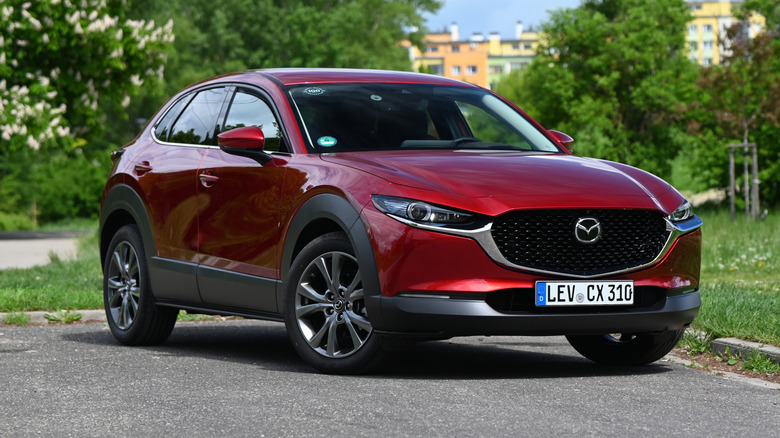
The Mazda CX-30 debuted at the 2019 Geneva Motor Show and reached North American dealerships as a 2020 model. It is positioned between the now-discontinued CX-3 and the larger CX-5. It quickly became one of Mazda's steadiest sellers, and 2024 turned out to be its record sales year yet in the U.S., with 96,515 units sold.
That momentum didn't carry into 2025: Mazda purposefully tanked CX-30 production due to tariff uncertainty tied to its Mexico-built assembly, and sales fell to 56,684 units for the year. Buyers are drawn to the CX-30 for reasons that go beyond price: it offers you a genuinely sporty driving character with an interior that regularly gets compared to more premium offerings, all while starting well under $30,000.
For Mazda, the CX-30 plays a specific role in the lineup — it's the automaker's entry point into SUV ownership, giving budget-conscious buyers a taste of the brand's design and driving-feel philosophy before they step up to the CX-5 or CX-50. However, entry-level pricing doesn't mean the CX-30 wins on merit against every rival in its class. Here are five small SUVs with better ratings than the Mazda CX-30.
Hyundai Kona
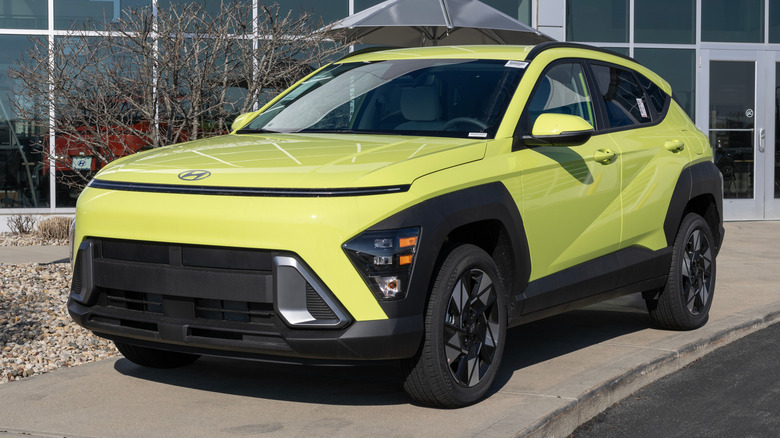
Edmunds ranks the Hyundai Kona No. 1 among X-Small SUVs with a 7.9 out of 10 rating, well clear of the Mazda CX-30's 6.1 out of 10 and No. 16 spot on that same 17-vehicle list. The gap comes down to space and tech. With the rear seats in place, the Kona holds 25.5 cubic feet of cargo — roughly 5 more than the CX-30's 20.2 cubic feet.
The Kona's touchscreen supports touch input, while the CX-30 relies on a rotary knob for its main system. KBB reaches a similar conclusion, giving the Kona a 4.8 out of 5 expert score and the No. 1 spot in its Best Subcompact SUVs list — a ranking KBB has awarded the Kona for three years running — compared with the CX-30's 4.2 out of 5 and No. 9 spot.
Carwow (a European outlet) scores the two evenly, giving both the Kona and the CX-30 a 7 out of 10. U.S. News & World Report is the one outlet that breaks the pattern, rating the CX-30 at 9.1 out of 10 and ranking it No. 1 in Subcompact SUVs, ahead of the Kona's 9.0 out of 10 and No. 3 spot. The reasoning there points the other direction entirely: U.S. News lists the CX-30's turbo engine, handling, and cabin materials among its top strengths.
On the other hand, it counts its infotainment system, back-seat room, and fuel economy against it — the same practicality gaps that cost the CX-30 points on Edmunds and KBB barely register in U.S. News's scoring, while the driving experience counts for more. Our own review of the 2025 Kona Electric N Line found its price could be steep for budget-minded buyers, though we still called it a quiet, comfortable machine.
Chevrolet Trax
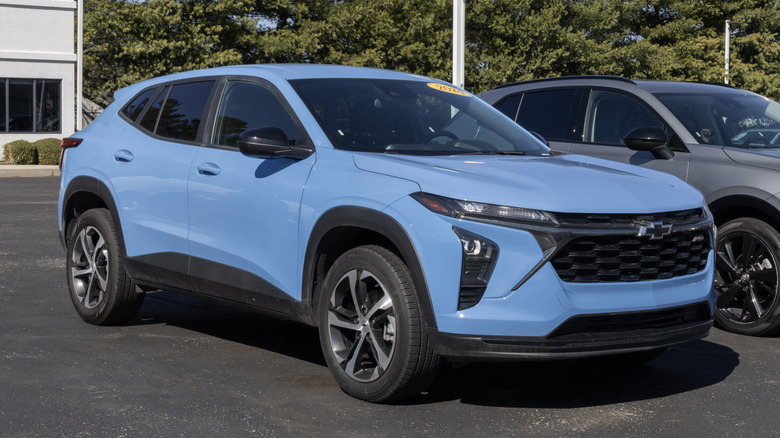
At $21,700 to start, the Chevrolet Trax undercuts the Mazda CX-30's $26,375 base price by nearly $4,700, and Edmunds rewards it for more than just the sticker: a 7.0 out of 10 rating and the No. 5 spot among X-Small SUVs, compared with the CX-30's 6.1 out of 10 and No. 16 finish on the same list. Cargo capacity tells a similar story — 25.6 cubic feet behind the Trax's rear seats versus 20.2 in the CX-30.
Not everything tilts toward the Chevy, though. The CX-30 comes with standard all-wheel drive; the Trax doesn't offer it in any configuration. KBB still lands on the Trax's side even accounting for that, putting it at 4.3 out of 5 and No. 5 on its Best Subcompact SUVs list, just ahead of the CX-30's 4.2 and No. 9.
U.S. News & World Report breaks from the pack again, scoring the CX-30 at 9.1 out of 10 and No. 1 in Subcompact SUVs against the Trax's 8.6 and No. 8. Its logic tracks the same split seen elsewhere in this list: cargo space and value carry the Trax, missing all-wheel drive and weak acceleration hold it back, while the CX-30 gets credit for power and handling and loses points on tech and rear-seat room.
The Car and Driver list of the best subcompact SUVs is led by the Trax thanks to a perfect 10 out of 10 rating, but the CX-30 is ranked second with an equally impressive 9.5 out of 10. When we reviewed the 2025 Chevrolet Trax, we gave it a 9 out of 10, slightly edging out the CX-30 (8 out of 10) in the eyes of our reviewers.
Kia Seltos
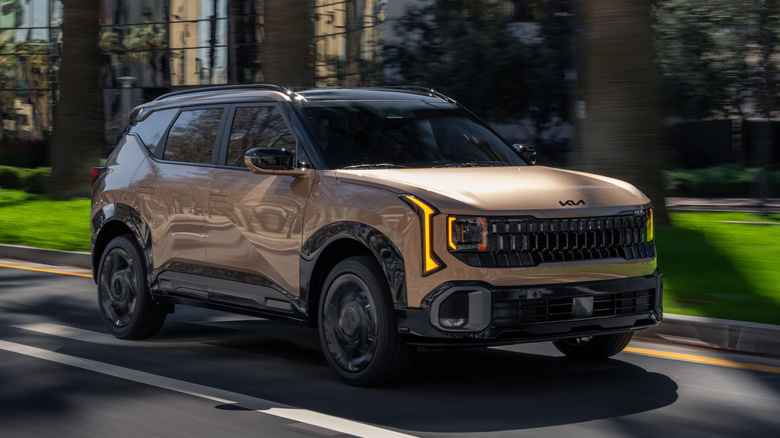
The Kia Seltos is also a very popular small SUV within this segment, and it seems to be trading punches with the CX-30 in many categories. KBB puts these two at a dead even: the 2027 Kia Seltos scores 4.2 out of 5 and lands at No. 9 on the outlet's Best Subcompact SUVs list, while the Mazda CX-30 matches the 4.2 out of 5 and likewise ties for the No. 9 slot.
Edmunds has the two closer together but still gives the Seltos the edge, at 6.4 out of 10 and No. 12 among X-Small SUVs against the CX-30's 6.1 and No. 16. Price plays a role in that gap: the Seltos starts at $24,990, undercutting the CX-30's $26,375 opener by nearly $1,400.
However, although every Seltos trim is available with AWD, the CX-30 offers it as standard. When we reviewed the 2024 Kia Seltos, we found the CX-30 more engaging, but noted that its turbocharged version climbs to nearly $34,000, while the Seltos X-Line started at $28,690 with AWD included.
U.S. News & World Report is the holdout, same as it's been for every other rival on this list — it scores the CX-30 at 9.1 out of 10 and No. 1 in Subcompact SUVs, ahead of the Seltos's 8.8 and No. 4. Its own comparison of the two calls the CX-30 the swifter, sportier drive with a classier cabin, while crediting the Seltos with a roomier interior for adults — a trade-off buyers will have to weigh for themselves.
Toyota Corolla Cross
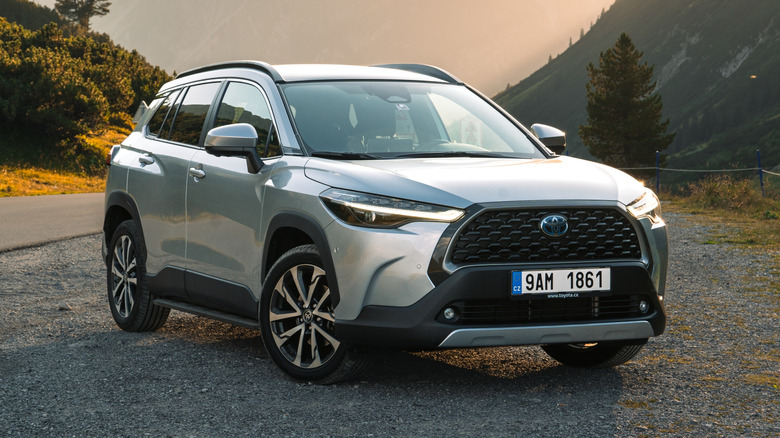
Edmunds gives the Toyota Corolla Cross a 6.2 out of 10, and the Corolla Cross Hybrid climbs to 6.7, both ahead of the Mazda CX-30's 6.1. KBB puts more distance between them, rating the Corolla Cross 4.5 out of 5 against the CX-30's 4.2. Other outlets tell a different story. Car and Driver's comparison tool gives the CX-30 a 9.5 out of 10 and an Editors' Choice badge, while the Corolla Cross scores 7.5 with no award — the widest gap of any outlet.
TrueCar's owner ratings favor the CX-30 too, at 4.9 out of 5 across 501 reviews versus the Corolla Cross's 4.6 from 66 reviews, though that's a measure of owner satisfaction rather than expert testing. Internationally, the result splits by a hair. Driving.ca, a Canadian outlet, scores the Corolla at 3.5 out of 5 against the CX-30 GT's 3.4 in its rating system.
WhichCar, an Australian outlet testing different regional trims, scored both vehicles dead even at 8 out of 10 — but still named the Corolla Cross the winner of their head-to-head test. Taken together: the Corolla Cross wins outright on Edmunds and KBB, loses clearly on Car and Driver and TrueCar, and splits a razor-thin margin internationally.
It's the most genuinely contested matchup. Our own review of the 2024 Toyota Corolla Cross Hybrid, which we rated 8 out of 10 (same as the CX-30), found its 21.5 cubic feet of seats-up cargo space edges out the CX-30's 20.2 cubic feet, though we also judged the Mazda's materials to look and feel noticeably nicer by comparison. This one is tough.
Honda HR-V
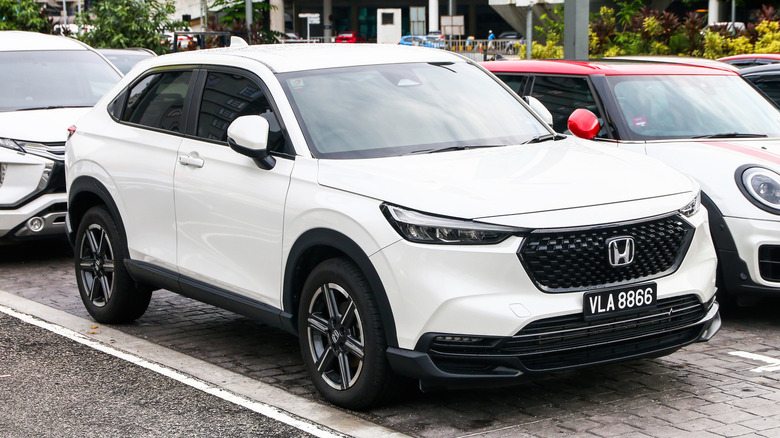
The Honda HR-V — one of the best Honda SUVs available today according to experts — is a different kind of rival than anything else on this list. Nobody's calling it fun to drive, but it beats the CX-30 on the outlets that matter most for everyday buyers. KBB gives the HR-V a 4.4 out of 5, clear of the CX-30's 4.2.
Edmunds agrees, scoring the HR-V 6.6 out of 10 and no. 11 among its Best Subcompact SUV list, against the CX-30's 6.1 and No. 16. U.S. News & World Report is the one holdout, same as it's been for every other rival on this list — it scores the CX-30 at 9.1 out of 10 and No. 1 in Subcompact SUVs, ahead of the HR-V's 8.6 and No. 8. Its own comparison of the two doesn't hedge: the CX-30's styling "constrains" its back seats and cargo space area.
As such, it makes it "less practical and spacious than the HR-V." That practicality edge shows up in the numbers, too. The HR-V's cargo hold measures 24.4 cubic feet behind the rear seats — over 4 more than the CX-30's 20.2. Price is close: the HR-V starts at $28,050, about $1,675 more than the CX-30's $26,375 opener.
How we made this list
Ratings like these can be directly compared, but they're never a zero-sum game. There are simply too many variables at play — different engines, trim levels, markets, pricing, incentives, and, ultimately, personal preference — for any of us to say one car is objectively better than another in every situation.
Still, the goal of this list was to find rivals that beat the Mazda CX-30 in expert scoring from reputable outlets that have driven and tested these cars firsthand. To keep that process honest, we included outlets that sometimes handed the win to the CX-30 and sometimes took it away, rather than cherry-picking only the sources that supported our premise.
Those sources include Carwow, Car and Driver, KBB, Edmunds, TrueCar, Driving.ca, WhichCar, and U.S. News & World Report, alongside manufacturer specs and hands-on impressions from our own reviewers who've spent real time behind the wheel of these cars.
Given how often the results split depending on which outlet you ask, it's safe to say this segment is remarkably competitive. There's rarely a case where one model clearly dominates the other across the board — just a shifting balance of strengths, depending on what you value most in a small SUV.