

10 Car Mods That Are Illegal In The US
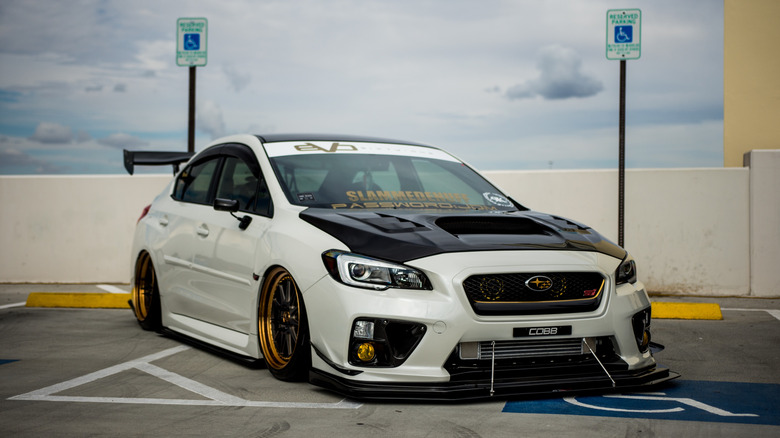
Beyond being transportation vehicles that carry people from one point to another, cars can often be an extension of the owner's personality. From basic choices like color, wrapping, and even choosing a name — there've been some fun car nicknames over the years — to more involved tweaks under the hood and on the interior, car owners can spice things up to suit their tastes. While many don't care much beyond driving and keeping their cars in good condition, a good portion of drivers take an active interest in their car's aesthetic and how it functions.
According to 2023 data from the Special Equipment Market Association (SEMA), which broke down the likelihood of drivers to mod their cars by age bracket, the least likely to accessorize were between the ages of 50 and 59 — but even that group stood at a respectable 15 percent. By the numbers, though, car mods are a young driver's game; half of all modding drivers were under 40. With the target demographic in mind, it's pretty much expected that some of these mods would toe the line of what's legal in America and what isn't.
Most of the laws surrounding car mods depend on where you reside. You could get away with, say, installing radar detection technology in your car provided you live in any state other than Virginia. So, before you order the next custom part to complete your puzzle or make an appointment with a car shop, you should check what car mods are illegal in the US. We cover 10 of them here.
Exhaust muffler cutouts
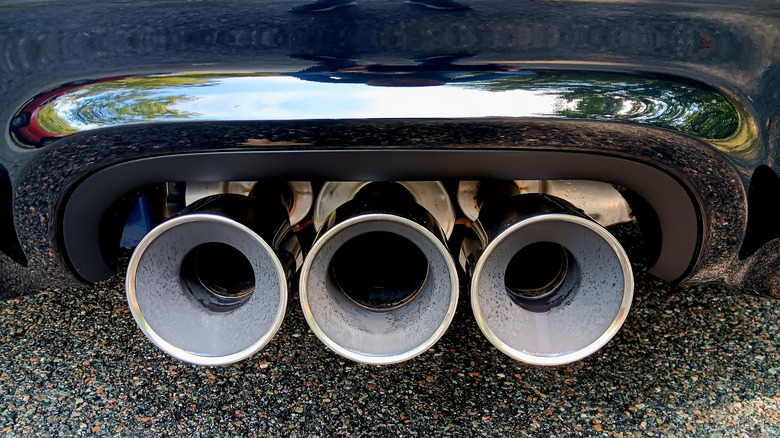
One of the most common mod procedures is known as the "muffler delete". It's exactly what it sounds like: removing the exhaust muffler. Modders do this to make their cars sound loud and sporty, as well as get some extra juice flowing through the engine. The idea that birthed this technique can be traced back to cars specifically designed for performance, and having large exhausts unencumbered by mufflers allows air to flow through the engine better. That usually results in a horsepower boost with the removed backpressure — we've previously explained the technicalities of whether or not mufflers increase horsepower.
So, in a bid to make their cars run faster and sound more impressive, modders may try to cut out their mufflers. Unfortunately, this procedure has a significant impact on the environment: noise. The primary job of an exhaust muffler is to control engine noise. Without one, driving a car becomes an obnoxiously loud affair. Most cars operate within a 55 to 65 dB noise profile; a muffler delete adds between 15 and 25 dB to that.
As you can imagine, legislation exists against this ruckus in nearly every state in America. Texas and Florida, for instance, state that a motor vehicle must be equipped with a muffler in good working condition and explicitly ban the use of a muffler cutout, bypass, or any other device engineered to magnify sound in their statutes.
Removing catalytic converters
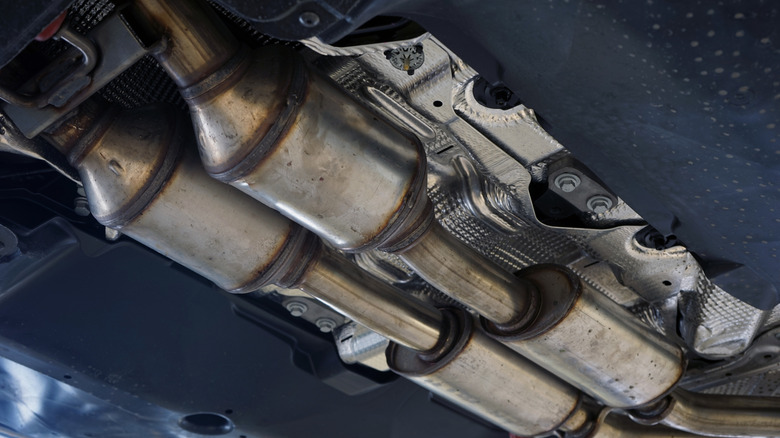
In the same vein as muffler cutouts, removing catalytic converters is another practice believed to increase horsepower. It also gives that throaty rasp that makes cars sound like they were made for the race track. Unlike muffler cutouts, though, this "cat delete" practice is more frowned upon since it has two-pronged environmental consequences.
You see, while mufflers are engineered primarily to serve as a silencer, catalytic converters play a more crucial role in gas-powered cars. Their engines emit harmful pollutants such as carbon monoxide and nitrogen dioxide as part of the internal combustion process. Catalytic converters reduce the toxicity of car engine emissions by transforming those pollutants into gases such as water vapor and carbon dioxide. So, by performing a cat delete, you're essentially polluting the environment with both noise and poisonous gases. It's a pretty common mod, too; the Environmental Protection Agency (EPA) estimates that such emissions controls were removed from 550,000 diesel pickup trucks between 2010 and 2019.
Where muffler cutout legislation is a state affair (although it's illegal in every single one), cat delete is embedded in federal statutes. Under Section 203 of the Clean Air Act, it's illegal to circumvent EPA emission standards by rendering any part of a vehicle's emission control system inoperable. Civil penalties for flouting this law can reach as high as $48,192 per vehicle or engine for manufacturers and dealers, and $4,819 for individual offenders.
Tinted tail lights and brake light covers
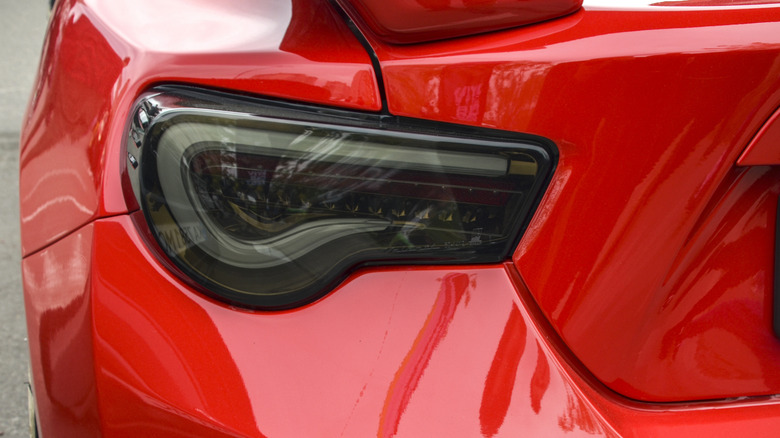
Not every car mod is geared towards improving performance. Some drivers are content with simply changing the base appearance of their cars so they appear distinct on the highways. When you hear the word "tint", the first thing that comes to your mind is probably windows, and we'll get to that soon enough. Windows aren't the only surfaces car modders tint, though: Rear lights can also get a customized makeover to reduce their brightness. Brake lights get a similar treatment, too. It's easy to conflate tail lights and brake lights since they typically share the same housing; however, they're not the same thing.
If you're considering covering either of these lights with spray tint or vinyl film, you'll want to think again. Before we get to the technicalities of the law, the function of tail and brake lights is to alert other drivers behind you that you're slowing down. That way, they can slow down too, or take measures to overtake if conditions allow. Dimming your lights for cool points will get you rear-ended sooner or later since your car is harder to see. Considering that not every driver pays rapt attention throughout their journeys, you shouldn't want to put yourself in that danger.
That's why tinting rear lamps is illegal in most states, albeit to varying degrees in terms of visibility. Texas, for instance, imposes a minimum visibility distance of 1,000 feet and mandates that the light be red. For specifics, you'll need to research the exact tint laws in your state.
Window tints
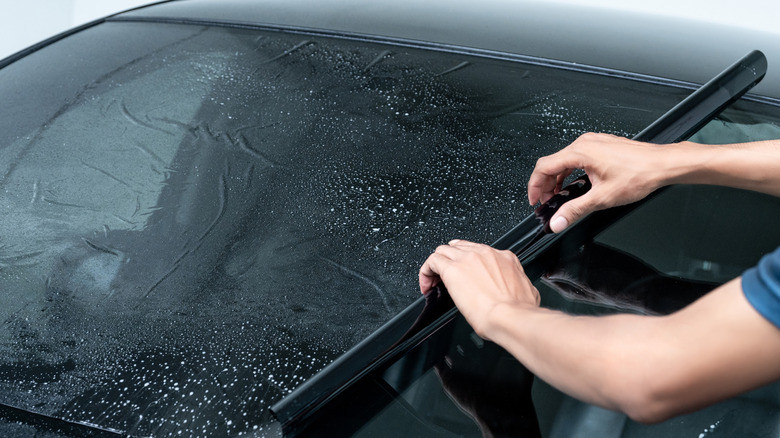
Tinting is one of the more popular techniques along this customization path for two reasons: it's cool, and it gives car occupants privacy from the prying eyes of the outside world. We've already discussed taillight tints, but there's a distinction between the two types that could blur the lines of what is legal and what isn't.
In fact, tinted windows can be beneficial; they block UV rays, keeping the car cool and protecting the dashboard and upholstery from cracking. However, studies have shown that window tinting makes it harder to detect targets that are already difficult to see through clear glass, so that's ostensibly one of the reasons it's frowned upon — although the exact threshold of what constitutes an offense depends on your jurisdiction and where the tint is.
Vermont and New Hampshire, for example, prohibit any tint on the front windows, although New Hampshire allows drivers to darken the top 6 inches of their windscreens and the rear windows (provided they let at least 35% of light to pass through them). California cuts it even closer, with only 4 inches of tint allowed on the windscreen — although any degree of tint on the rear window behind the driver is fair game. Other states aren't so specific about the inch requirements on the windscreen; they permit tints up to the AS1 line. Hence, if you plan to tint your car windows, do your research specific to your location to make sure you're on the right side of the law.
Non-white/amber headlights
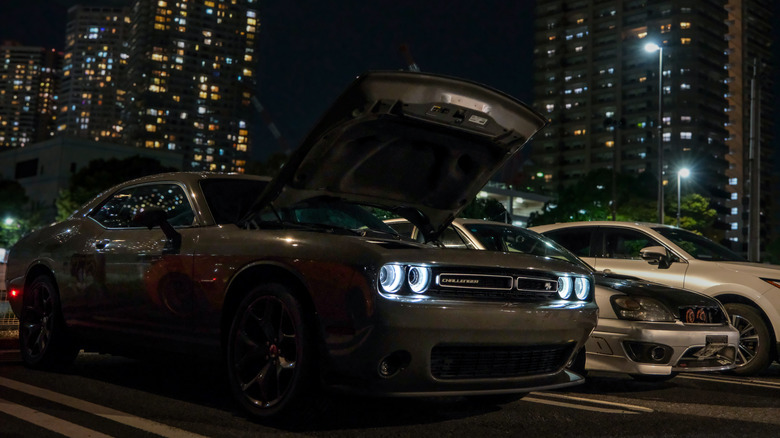
Just as tail lights are an area car modders like to explore, headlights are also on the menu. Virtually every vehicle on American roads has the same glare profile despite cosmetic differences in headlight shape (and in some cases, adaptive nature), so there's no individualism when the lights come on. Car modders don't necessarily like to conform to a norm; that's why a handful go looking for tints or install alternate-colored headlights to stand out from the crowd.
Section 571.108 of the Federal Motor Vehicle Safety Standards (FMVSS) expressly forbids this. Headlights are only permitted in white or amber per the legal code, and the colors must be uniform. Any modification that alters the emitted light, be it through a film, spray, or custom bulb, is therefore illegal. Logically speaking, a couple of factors influence this stance. First, any other color probably wouldn't reflect as well off the paint markings on the asphalt. Secondly, with red, blue, or flashing lights, a regular passenger car could easily be mistaken for an emergency vehicle by other road users.
Blue lights, for instance, are commonly associated with law enforcement vehicles, so a regular car using them could disrupt traffic as others try to clear a path for it. The FMVSS is a federal statute, and nearly all states in America have an outright ban on tinting headlights or using other colors. The only exception is Arizona — its vehicle code doesn't expressly single out tinting as illegal. It does state, though, that headlights must be visible at a minimum distance of 500 feet.
Underglow lighting

Not all mods have the same staying power in the community. In the case of underglow lighting (also called neon lights or ground effects), this customization detail peaked between the late '90s and the early 2000s amidst the rise of the "Need for Speed" and "The Fast and the Furious" franchises. Powerful engines and stunts were the main draw, but the aura that underglow lighting gave cars like Suki's pink 2000 Honda S2000 was enough to turn it into a fad. It's not all that common these days; legislation may have played a role in curbing its relevance in the modding scene.
As with most mods in this piece, the legality of installing underglow lighting in a car varies by jurisdiction. Neon lights are legal in California provided they are not installed within 12 inches of required lights or lamps, the luminosity doesn't exceed 0.05 candela per square inch, and they don't display red light at the front of the car. Other states like Montana, Arkansas, and Idaho extend the color restriction to include blue, but underglow is legal in those areas.
On the flip side, Massachusetts has a blanket ban on aftermarket lighting devices that don't comply with FMVSS, which expressly prohibits neon lights. So, if you're planning on installing underglow lighting, check your state's vehicle code to be sure.
Radar detectors and laser jammers
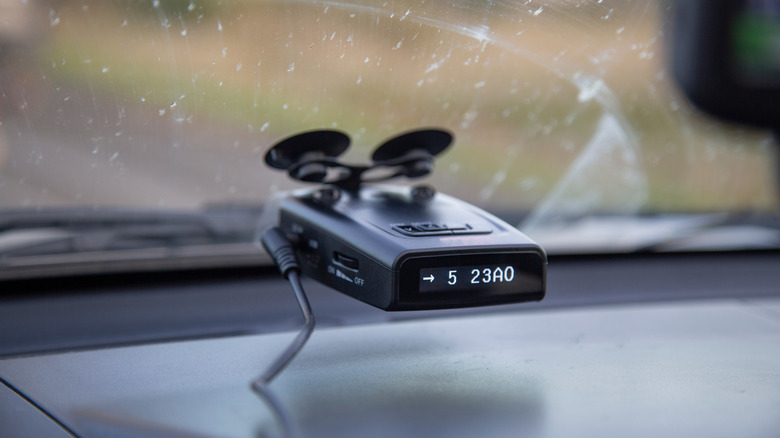
If you're a car modder leaning towards performance tuning rather than aesthetics, chances are you'll be speeding quite a bit. Sometimes maybe even past the legal speed limit. We all like to let our hair down and step on the gas a little, but we don't recommend anyone engage in needless speeding; more than a quarter of all traffic fatalities are attributed to overspeeding. If that isn't enough of a motivating factor to curb your behavior, at least the threat of a speeding ticket should be. That's where radar detectors and laser jammers come into play.
The primary goal of both technologies, at least from a car modding standpoint, is to reduce the likelihood of racking up speeding tickets. Radar detectors do this by picking up signals from radar guns in the vicinity, which indicates that law enforcement is measuring someone else's speed nearby. The idea is for drivers to slow down once the detector picks up a signal. Laser jammers work differently; they essentially scramble light detection and ranging (LiDAR) devices, so police officers can't properly measure your speed.
Despite both technologies practically encouraging drivers to speed unless there's a police car around, they're actually mostly legal. In fact, radar detectors are legal in all states except Virginia (and Washington, D.C.). Laser jammers have a slightly longer list: California, Colorado, Illinois, and nine other states explicitly prohibit them. You should also watch out for obstruction laws; radar and laser jammers may not be illegal everywhere, but blocking your car from detection could still get you a ticket.
License plate covers
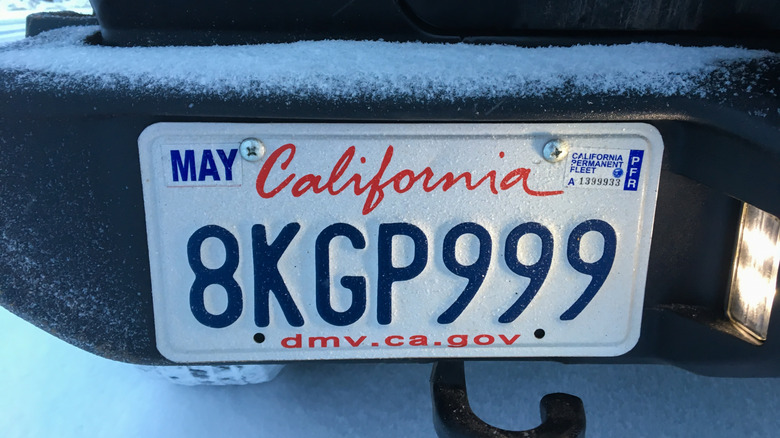
Another car mod that comes under legal scrutiny is license plate covers. Stylistically, there are some advantages to using them: they protect license plates from scratches, fading, and other damage, and they also enhance a car's aesthetic. With these benefits, one might be inclined to ask why law enforcement frowns upon their use.
The main reason is visibility. Covering your license plate means that police vehicles can't identify your car at a glance. Given the numerous infractions that occur on the roads every day from running traffic lights to speeding, all cars need to be easily identifiable. As license plate covers hinder this, it's no wonder they're generally illegal across America.
In Illinois, for example, except frames supplied by your dealership, plate coverings are illegal. That includes clear plastic, tinted plastic, and reflective coating. Even a plate covered by mud, snow, or other road debris gives law enforcement reason to stop your car if they want to. California has largely the same stance, although there are minor allowances for weather covers on parked vehicles and security covers that don't hinder identification.
Wheels that extend beyond fenders
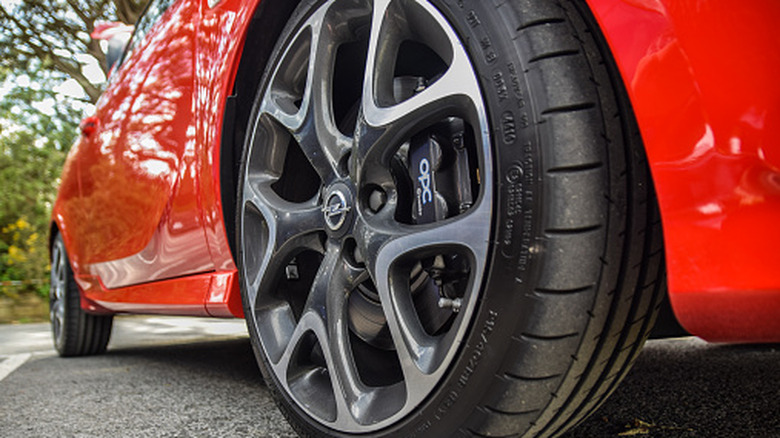
Having wider tires than necessary may sound unnatural to most drivers, but it's another mod that some owners make to give their cars a certain aesthetic. Although the origin of this mod isn't exactly clear, it's logical to point to off-roading trucks as a source of inspiration. The demands of climbing over rocks and hills call for sturdier tires than you'd typically see on normal roads — they need all the flex they can get to avoid running the risk of a flat in the middle of nowhere.
However, using wheels that aren't matched to your fender size has risks. First, such a configuration renders mud flaps ineffective; they can't contain debris like rocks that the tires climb over. That debris launches into the air instead, which can damage other vehicles on the road. Secondly, in the event of a collision, mismatched wheels can ride up the body of another car. That significantly increases fatality risk.
With these dangers in mind, it makes sense for this mod to be illegal. California's Vehicle Code 27600 is one example of such prohibition. Flaps, fenders, and devices must be at least as wide as the tire tread. Thus, if you're thinking about getting bigger tires (be it for off-roading or the aesthetic), you'll need to be familiar with your state's vehicle code and take steps to prevent debris from being launched, at the very least.
Non-standard horns

Horns might be another car part on your modding checklist. Every other car sounds almost identical, and you may want to break that mold by going for something that grabs attention more than the traditional sound. Train blares or musical horns are usually the other options in this category, but, like the other items on this list, their legality depends on where you live and drive.
In Pennsylvania, Title 75 under Section 4535 (b) dictates that certain sounds such as sirens, bells, whistles, or similar noises are not permitted in vehicles. California's law is less stringent; Article 1 of Chapter 5 in its Vehicle Code only states that a horn's sound must be audible at a minimum distance of 200 feet, although it does contain a caveat about loudness. There's no exact decibel measurement to describe what "too loud" sounds like, so it's left open to interpretation by law enforcement. Nearly every state in America has a similar stance to California, so while the actual sound coming from the horn may not be the usual "beep", you could still be issued a ticket.