

12 Downsides Of Daily Driving A Sports Car
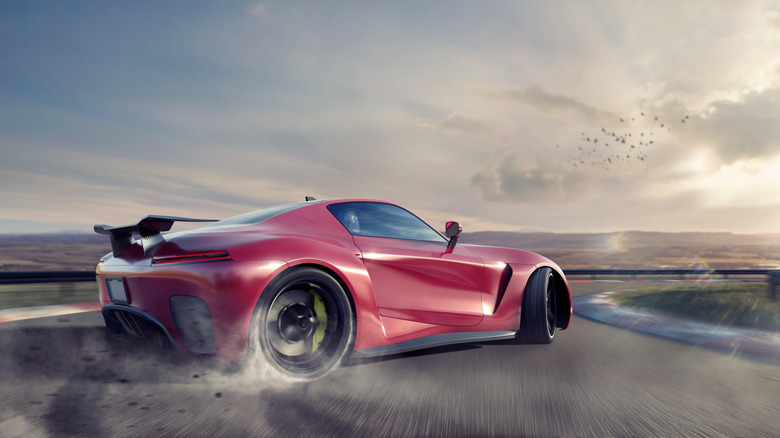
Anybody who appreciates the wonders of engineering has probably been swept off their feet by a high-performance car at some point. From the aesthetic appeal to engines that rev with a throaty quality, sports cars are optimized for one thing: speed. If you're the type of driver who cares deeply about what's going on under the hood of your car and the thrill of zipping past traffic on freeways, you probably have one on your wish list.
It's a niche wish; just over one in 10 Americans dream of owning a sports car. That's part of the beauty: standing out from the crowd of thousands of vehicles on the roads by both sight and sound. The thrill of driving a faster car than most could tempt you to make your sports car your daily driver if and when you buy one. After all, what good is a car you don't drive often?
However, romanticizing sports cars before walking into a dealership can blind you to a key decision-making factor: There's a difference between driving for commuting and driving for pleasure. The latter is where you want to be with sports cars, not the former. Looking for reasons why this is the case? We cover 12 in this piece.
Low ground clearance limits places you can go
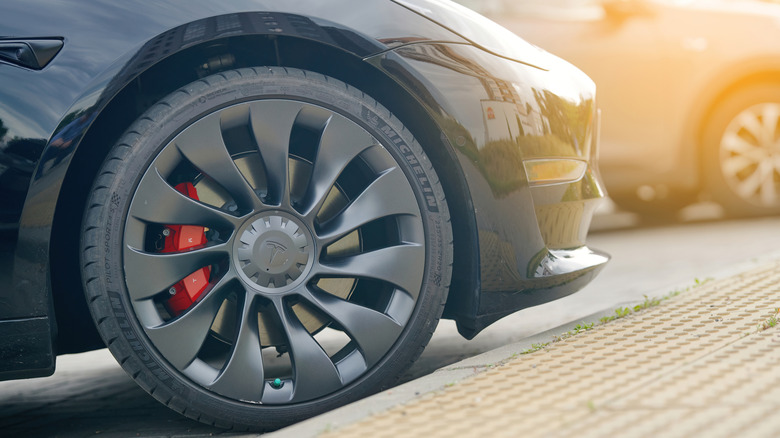
If there's one thing that's nearly universally true in the sports car genre, it's that cars ride low. That's a design characteristic: The car's body can't be so far off the ground that its center of gravity shifts uncomfortably when navigating around corners and bends. That extra bit of handling is critical at the high speeds that manufacturers build sports cars for, so you'll often be just a few inches off the ground.
The problem here is that inclines and terrain that isn't smoothly graded throughout suddenly become a big challenge to overcome. At that low ground clearance, approach and departure angles become very significant for climbing hills — the last thing you want is to go up a steep road and damage the front splitter. Replacing one could cost around $100 or more depending on your make (and as much as $450 for some models), while labor could run upwards of $80 per hour.
There's also the risk of curb rash — the cosmetic damage when wheels come into contact with hard surfaces like curbs and potholes. Since many sports cars use low-profile tires to maximize performance, frequent impacts from potholes in your daily driving mean bracing yourself for curb rash. That's an expense that will set you back anywhere from $100 to $250 per wheel — and it's a bill that will stack up over time with regular commuting.
Fast wear of performance tires means you'll change them often
If you're going to drive a sports car at all, you should do it right. That means shelling out on premium fuel, top-of-the-line replacement parts, and frequent oil changes. Tires are also included — choosing the right tire for your car's needs is critical to getting the full experience. To this end, conventional wisdom dictates that you should opt for low-profile tires. Wondering what the difference between low-profile and standard tires is?
The logic is simple: Low-profile tires have short, stiff sidewalls, which means there's less rubber that can flex. This characteristic is particularly important for grip around bends; regular tires roll onto the sidewall itself and produce a rubbery sensation in the steering, while low-profile tires let you keep your steering feel and response.
Unfortunately, the same intrinsic quality that makes them so great for your handling needs makes them susceptible to damage. The thinner sidewalls on low-profile tires mean that instead of flexing away from an impact when you drive into a pothole, for instance, the sidewalls themselves are squeezed hard between the rim and the pothole. Thus, you're exposed to what is called "pinch shock," where a hard impact can damage the tire's internal structure and cause a bulge to appear in the sidewall. If you're going to make a sports car your daily driver, you should expect to change your tires more frequently, and those costs can compound quickly: Consumer Reports' testing shows that high-performance tires generally have shorter tread lives and tend to cost more.
Rougher ride quality
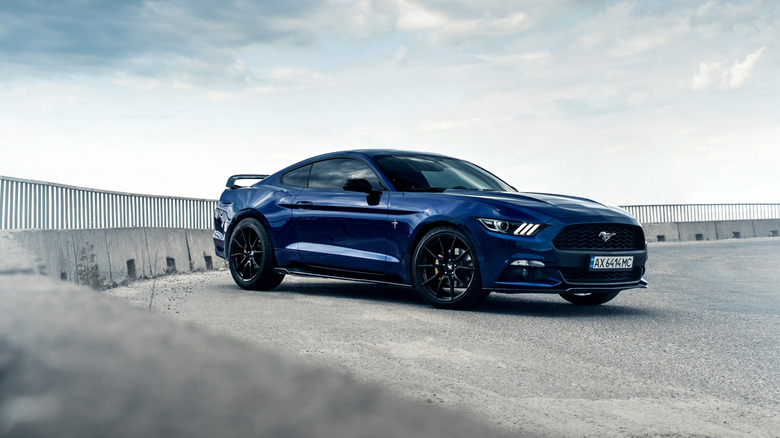
There's no denying the thrill of driving in a fast car. The feeling of a gentle push back into your chair while accelerating is one that never gets old. So, if you're experiencing it for the first time, you might want to drive your sports car everywhere since a "normal" car has now become too mundane for your newly acquired tastes.
As much as we'd like for the shine of the powerful experience to stay permanent, it wears off eventually. Instead of appreciating the engineering, you can get nitpicky, and the first victim of this critical outlook is usually the ride quality. The firm suspension that's common in sports cars helps improve handling and body control, but it can become uncomfortable when you're dealing with rough roads every day.
Couple the bumpy rides with the low-profile tire conundrum and low seating positions, and riding around in a sports car doesn't sound so fun. You may not notice these constraints when you're driving for leisure on a relaxing weekend, but when a sports car becomes your daily driver, there's bound to be some annoyance.
Gas costs more

Gas prices in the United States have been a major economic talking point this year. At its peak in May, a gallon cost motorists just over $4.5, although the national average has slowly trickled down to $4.07 as of the time of writing. However, that figure isn't specific to sports car owners — it lumps regular, mid-grade, and premium gas together into one average.
Premium grade fuel is usually recommended for sports cars because of its resistance to engine knock under high-load conditions, but whether it's required depends on the engine and manufacturer's recommendations. Unfortunately, premium gas is more expensive than regular and mid-grade, reaching nearly $6 per gallon in some states like California.
The price per gallon isn't the only issue for daily driving. Sports cars generally have poor fuel economy. It's a necessary trade-off for giving you that turbo boost. Some models are great; if you lean electric, the likes of the Hyundai Ioniq 5 N — we reviewed the 2025 model — can give you EPA-estimated 221 miles of range before needing a recharge. On the gasoline side of things, though, you'd be hard-pressed to find a sports car that gets over 25 mpg in the city. The Mazda MX-5 Miata and Subaru BRZ make the cut, for example, but you'd be shelling out a ton of money on gas if you made a sports car your main vehicle.
Minimal cargo space
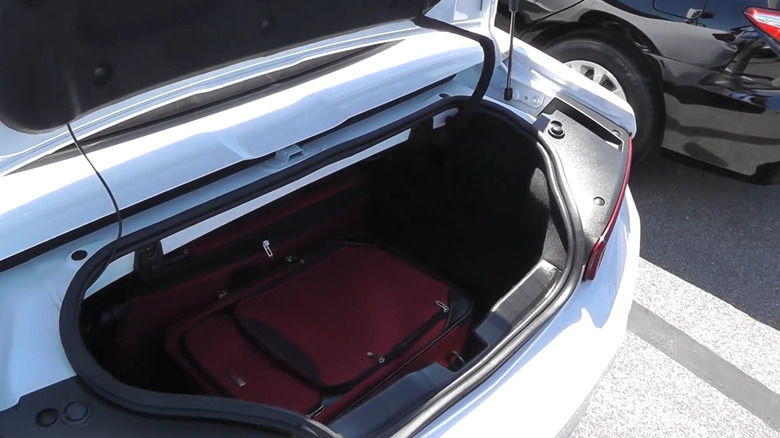
There are certain things you expect from your car beyond performance. When you walk into a grocery store to buy some items as part of your day-to-day activities, or say you're going on a trip with luggage to pack, you don't want to start scratching your head thinking about space. In fact, space considerations are one reason Americans gravitate to SUVs — there's enough room for the family and luggage.
With sports cars, though, you'll be getting a very different profile. Take a Chevrolet Camaro, for example. The 2024 coupe has just 9.1 cu-ft of trunk space, and the convertible is an even tighter fit at 7.3 cu-ft. Contrast those figures with a regular sedan like the 2026 Toyota Corolla, which offers 13.1 cu-ft of trunk space, and you get a picture of just how much cargo room you're losing out on.
It makes sense when you consider that sports cars weren't made to haul more than a few personal items; everything is optimized for speed, and extra cargo not only slows down your vehicle but also alters its balance. So, unless you're willing to drive around town knowing you can carry little more than a couple of shopping bags, daily driving a sports car can be tedious work.
Cabin noise becomes irritating down the line
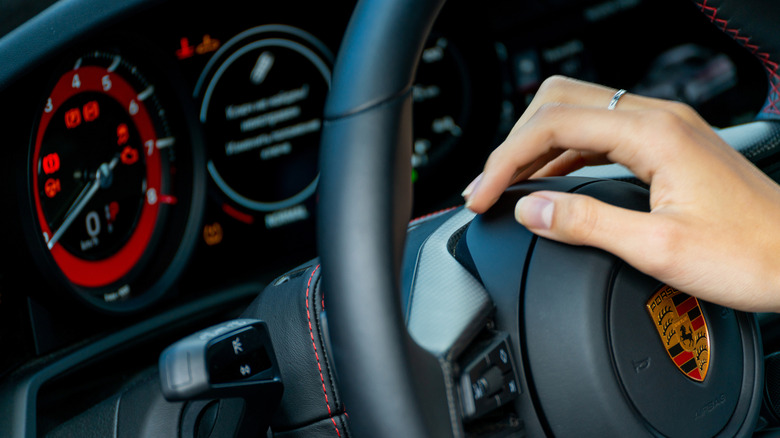
After the honeymoon period where you're finding excuses to get behind the wheel of your sports car, some inconveniences you glossed over at the start become more prominent. Ride quality is one of these; bumps in the road make themselves known in the cabin, and the low seating can also make posture awkward. That's not all you have to contend with, though; cabin noise is another element that could sour your experience the more routinely you drive your sports car.
Noise-insulated cabins go a long way toward making a car comfortable, which is why luxury vehicles these days take special care to deliver them. Unfortunately, you won't always get that treatment with cars built specifically for speed — especially the non-electric ones. First, the powerful engines in such cars can generate noise that permeates the cabin as they accelerate.
The quietest passenger cars are usually electric (around 50 to 55 dB), and much of the car population measures under 65 dB. Sports cars, though, are very noisy machines. Some of the options in the category, like the Chevy Corvette C7 ZR1 and the Dodge Challenger Hellcat, come very close to breaking 100 dB. All that sound has to go somewhere; the bulk of it will be on the outside, but some transfers back to the cabin. Driving one of these machines may be a novelty at the start, but the cabin noise is bound to get on your nerves.
Cramped rear seats mean uncomfortable rides for your passengers
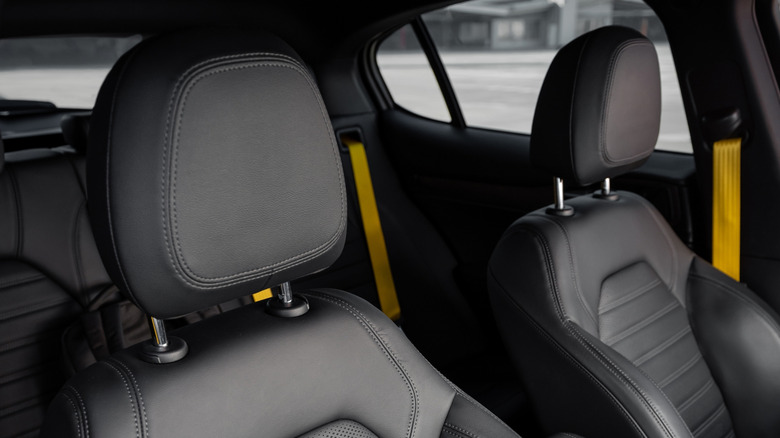
If you're going to make a car your daily driver, you can expect guests riding with you once in a while. Whether it's heading to a social event or a drop-off after work, we've all had to share our cabins with multiple passengers at some point. In a regular sedan or SUV, this wouldn't be a problem (depending on the number of passengers, anyway). Those classes of cars are built to provide adult passengers with enough legroom to stretch out; a 2026 Corolla features 34.8 inches of legroom and 37.1 inches of headroom to match.
A Corolla may not be as exemplary as some of the most comfortable cars you can buy, but it'll do — for passengers who don't stand too high on the height scale, at least. Contrast those figures to, say, a Ford Mustang. A 2026 Mustang registers just 29 and 34.8 inches of leg and headroom, respectively, at the rear.
The legroom poses the starker contrast with its 5.8-inch discrepancy. That's a material difference that can make rides seem much longer than they are. The Mustang is merely one example of a defining trait you'll find throughout the sports car niche. It's understandable: These machines were never built for the demands of day-to-day driving. Even though most models may come with four seats, they're really only designed for front-row comfort.
Weaker performance in adverse driving conditions

Seasons change, and with them, your driving needs evolve. There's usually an entire checklist of tasks to prepare your car for the summer or winter, as the case may be. If you're going to be driving a sports car during challenging weather conditions, though, you'd better strap up — it's not going to be a walk in the park.
A good chunk of sports cars use RWD drivetrains for their weight distribution and power delivery, both of which are critical for handling and acceleration. Some models like the Porsche 911 and the Nissan GT-R offer AWD variants, but such drivetrain configurations are usually in the minority in this niche. RWD is fine when the weather is clear and the roads are dry, but when there's moisture from rain or snow, navigating the roads becomes far more difficult.
In such conditions, you want as much grip as possible from every wheel. With RWD, though, the engine power is sent to the rear wheels, which makes it easier to oversteer and lose control. You definitely shouldn't be speeding in that weather either, so the usual allure of sports cars — acceleration — is a moot point.
Tendency to form bad driving habits
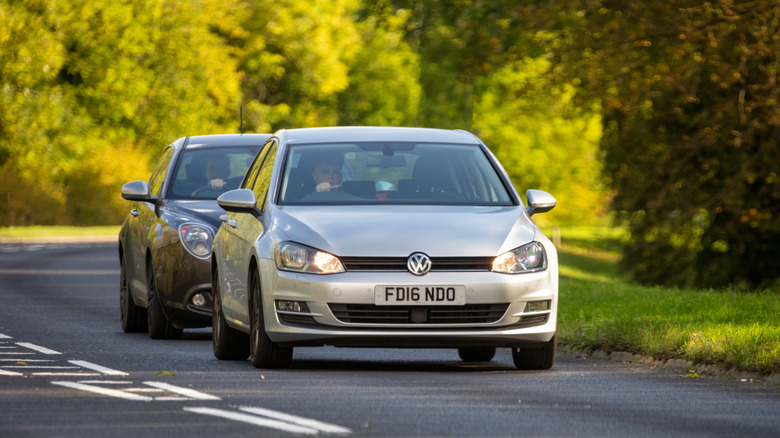
We've all seen a video or two online where a careless driver in a fancy performance car puts other road users in danger by zipping and weaving between lanes in heavy traffic. That's not to say sports car drivers are the only perpetrators of reckless driving — not by a long shot. However, statistics from Insurify show that while the average speeding ticket rate across all car models in America is just over 8%, a Subaru BRZ driver, for instance, is almost three times more likely to be ticketed for speeding.
The Subaru BRZ stat is just one representative example of a tendency for sports (or sports-leaning) cars to flout driving rules; the Hyundai Genesis Coupe and the Volkswagen GTI stand at over double the national average, too. One could infer that sports car drivers are more reckless or impatient than other road users, but that conclusion isn't necessarily supported by the statistics.
Sports cars are typically much quicker than the average vehicle, at least when it comes to acceleration. Hence, it takes a conscious effort not to weave about in traffic to get ahead of others. Even then, tailgating is another habit to be wary of; with the combination of enhanced speed and braking power, what used to be an established safe distance from the car ahead of you becomes a "boring" drive.
Elevated maintenance costs
There are two costs of ownership when it comes to cars: What you pay to own one, and what you pay to keep it in good condition. The first one is something you're prepared to shell out from the get-go. With maintenance, though, it can sneak up on you depending on the car you drive. Some cars are more expensive to maintain than others, and sports cars belong in this category.
One reason for this is labor costs. The cost of car maintenance and repair has risen substantially over the years. Some sports cars can demand a higher level of expertise to keep them running than the average car. That skill gap, where the mechanic you're hiring has to know every esoteric detail that makes up your high-performance engine, can set you back more than maintaining a regular sedan would. Factor in daily driving, which means putting more miles on the car, and the already expensive trips to the mechanic become more frequent.
Labor costs are just one piece of the puzzle; car parts form the other. High-performance spares are costlier than regular ones for two main reasons: They're not as common, and they use higher-grade materials. If you're going to be driving a sports car every day, get ready to splash the cash on maintenance.
Stop-and-go traffic nature can stress you and your transmission

Driving in traffic is annoying for every driver — constantly alternating between the brakes and the accelerator every few meters can be a chore. It's even more discomfiting for sports car drivers. They're most enjoyable on open highways and race tracks, so driving in traffic is already a mild frustration. When you consider the transmission type in some of these sports cars as well, it starts to make sense why sports car drivers can be reckless.
Take the Subaru BRZ, for example; well over 70% of its owners opt for the manual transmission in 2024. In traffic jams, the repetitive cycle of clutching and shifting is physically draining. There's little upside to enduring that exertion every day, no matter how fun your car may be to drive. However, the discomfort is not all stylistic or physical. Many modern sports cars like the Porsche 911 and Chevrolet C8 use dual-clutch transmissions (DCT), and this configuration comes with its own issues.
There have been two high-profile lawsuits concerning DCT wear against Ford and Volkswagen, both of which featured unexpected shuddering and jerking, particularly at low speeds. Ford's litigation settlement included buybacks under the lemon law, as well as cash payments. While this may not be a widespread phenomenon, it's a cause for concern if you plan to drive a DCT-powered sports car.
Discomfort in egress and ingress builds over time

Sports cars are optimized for aerodynamics and grip, so you'll find that most sit low to the ground and are shaped for minimal drag. At first, this wouldn't pose any problem beyond getting used to the low view from the dashboard. However, as you stack up the trips in your sports car, entering and exiting that low-sitting position can become tedious.
The low ground clearance as well as the shorter rooflines that dominate the design of the niche means you'll have to contort your body to enter and leave the vehicle every time. That's especially true if you're part of the taller population; I have a six-foot-four friend whom I often call shotgun with, and they have to crouch significantly to access their Lexus IS 250, and watching them leave the vehicle would be comical if it didn't look so painful.
The Lexus IS 250 isn't even a true sports car — its 5.3-inch ground clearance has a solid advantage over the 3.3 to 3.9-inch mark in a Porsche 911 GT, for instance. Driving a car like that could really put some pressure on your spine, and it's a reality you'll have to deal with if you decide to drive it daily.