

6 Classic Cars Boomers Loved That Younger Generations Don't Understand
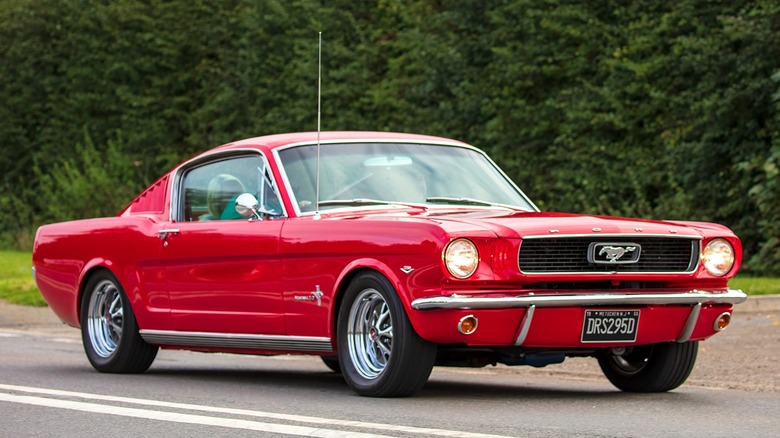
There's a certain kind of car that lights up the face of an entire generation the moment it rolls past, while barely registering with anyone under 40. That gap says more about the generations than the cars. Boomers came of age during an era when owning a car wasn't just about easing transportation but a statement about who you were and how much personality you were willing to put on public display.
Younger buyers, meanwhile, often judge these classics against modern benchmarks. For example, a 150-horsepower engine sounds unremarkable next to a base Camry, and a three-speed automatic feels primitive beside a ten-speed dual-clutch, but what gets lost in that comparison is the historical context of how these cars were built to be the most exciting and attainable version of speed and style.
This list unpacks why the classics below mean so much to boomers and why younger generations can't relate to them. Some of it comes down to engineering that was genuinely significant for its era; some of it comes down to the stories attached to limited production runs, while others are simply the emotional pull of a shape or a sound that became inseparable from an entire decade.
Shelby Mustang GT350 (1965-1970)
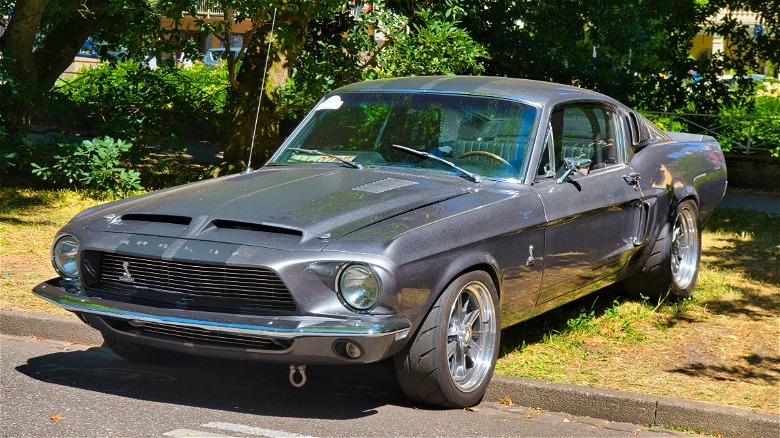
By 1964, Ford knew that the Mustang had more performance hidden under its skin, so they gave the job of unlocking it to Carroll Shelby, who already had GT40s, Daytonas, and Cobras in his pedigree. The brief was simple: extract something special from the 2+2 fastback body even though the car was already moving off lots in massive numbers. The result turned out to be one of the best-looking Mustangs from Ford—the GT350—even though many younger enthusiasts know it only by reputation.
The car arrived as a two-wheel-drive fastback with panel stripes and a 289 V8 paired to a four-speed manual, producing 271 horsepower across around 572 units in SCCA requirements. Output climbed to 306 horsepower after the exhaust routing and induction setup were upgraded under the fiberglass lid, and those who wanted more could bolt on a supercharger to push that figure to roughly 390 horsepower, enough to send a 2,800-pound car to 126 mph at full throttle without much drama.
The lineup kept evolving from there, appearing in campaigns like the Goodrich Comp and eventually offering an optional three-speed automatic transmission alongside fresh paint options beyond the original Wimbledon White, including black, blue, red, and green. Hertz got in on it too, commissioning the famous black-and-gold rental edition in 1966, and the convertible joined the lineup in 1968, rounding out the body styles before the run was discontinued in 1970, with a total of 7,104 examples produced.
Jaguar E-Type (XKE) (1971-1974)
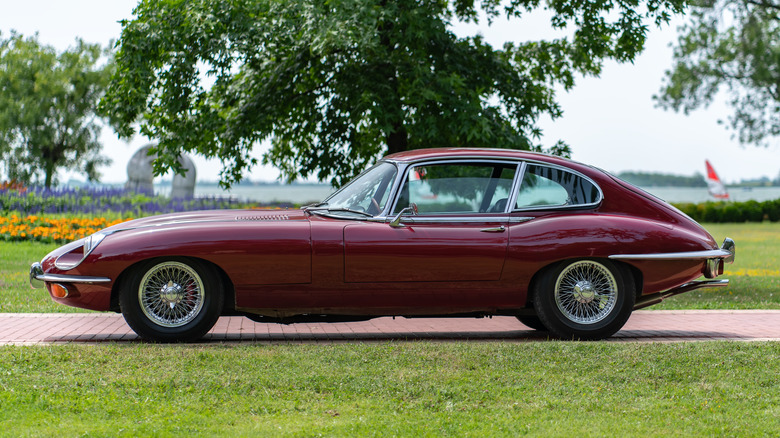
Boomers who fell for the E-Type early on were sold on the Series I, and by the time the third series launched a full decade after the car's original 1961 debut, the whole formula had changed. Under the classic hood sat a 5.3-liter aluminum-alloy, single overhead-cam V12, equipped with a dry sump, putting out roughly 272 hp and 303 lb-ft of torque through four sets of carburetors while still managing around 15 miles per gallon. Buyers had up to 15 exterior colors to choose from across the 2+2 coupe and roadster configurations, with either a four-speed manual or a newly introduced self-shifting three-speed gearbox, depending on preference.
The grand tourer also came with features like Jaguar's OPUS ignition system, grilles, basic power-assisted steering, a stretched chassis, dashboard-mounted rocker switches, and a seatbelt alert system that resonated far more with that generation of buyers than is easy to appreciate today. American buyers in particular, who knew the car simply as the XKE, took the Series III in a big way by snapping up roughly 70% of the 15,917 overall examples produced.
Some enthusiasts still call this the best Jaguar ever made, but younger buyers looking at spec sheets today just see a more complicated engine bay sitting on top of a monocoque construction and stop there, missing that the V12 was Jaguar's way of keeping the E-Type relevant under emissions regulations all the way through to 1974.
Chevrolet Camaro (1967-1969)
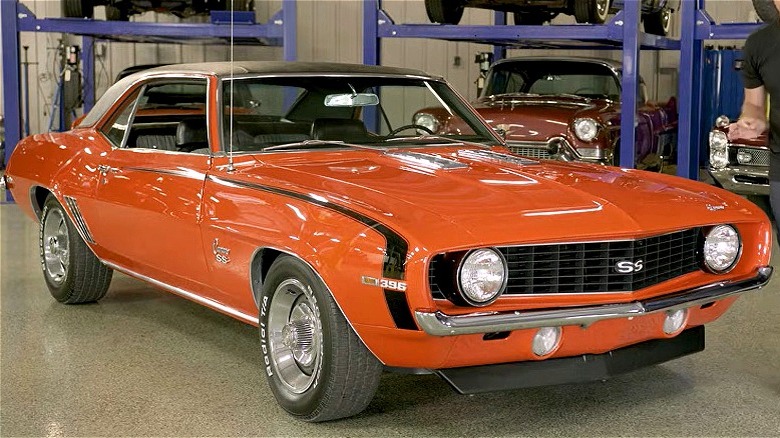
When Chevrolet launched the first-generation Camaro on the Nova's architecture in 1967, the target was explicit — take sales away from the Mustang — and the market responded immediately, with more than 220,000 units sold in that first year alone, cementing its status as one of the most popular classic Chevrolets ever built.
The lineup came in convertibles or coupes with an engine range that stretched from a 155-horsepower inline-six all the way up to small-block and big-block V8s capable of at least 210 horsepower depending on the trim, and regardless of where buyers landed on the powertrain side, an extensive menu of about 80 factory choices gave them room to personalize things far beyond what most competitors were offering at the time.
That level of customization has largely disappeared from the segment entirely, which is exactly what younger buyers browsing listings today tend to miss, even in the sixth-generation Camaro they watched get discontinued. Back then, buyers could dress it up with the Rally Sport's hidden headlights and additional chrome, step into the Super Sport for performance suspension and a hood to match, or go straight to the Z/28 — all 602 of them — where 290 horsepower is produced with a four-speed manual gearbox paired to the 302 small block V8 in accordance with SCCA Trans-Am homologation requirements.
Chevrolet kept that momentum going in 1968 with another 235,147 units sold, then closed out the generation the following year with 243,085 more, but despite its age, the car still somehow manages to look even cooler today.
Triumph TR4 (1961-1967)
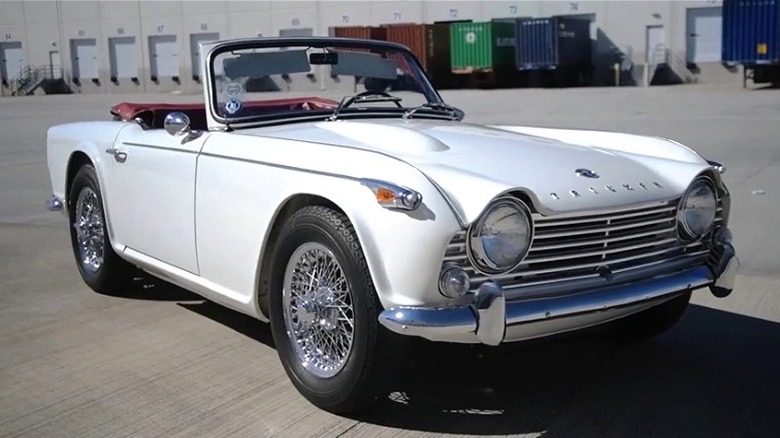
Only boomers who came of age when British sports cars were a genuine cultural force in the American market would truly understand what the TR4 represented when it arrived in 1961. Designed by Giovanni Michelotti, the car traded the TR3's divisive grille for a cleaner two-door roadster body with a movable roof panel – all put together in Coventry with a level of craftsmanship that made it feel unique rather than just another imported sports car.
Power came from a front-mounted 2.1-liter four-cylinder engine paired with a four-speed manual transmission, producing around 98 horsepower and driving the rear wheels through a solid rear axle and rack-and-pinion steering. The American market absolutely embraced it, and by the time the TR4's run closed in 1965, roughly 90% of the 40,253 units Triumph produced had been shipped as left-hand drive straight from the factory.
The TR4A picked up from there and ran through 1967, swapping the old live-axle arrangement for an independent rear suspension, though people who preferred the previous configuration could still request it that way. Output nudged up to around 102 horsepower with a top end of 109 mph, and Triumph closed out the TR4A chapter with approximately 28,000 examples before handing things over to the TR5.
Cadillac DeVille (1965-1970)
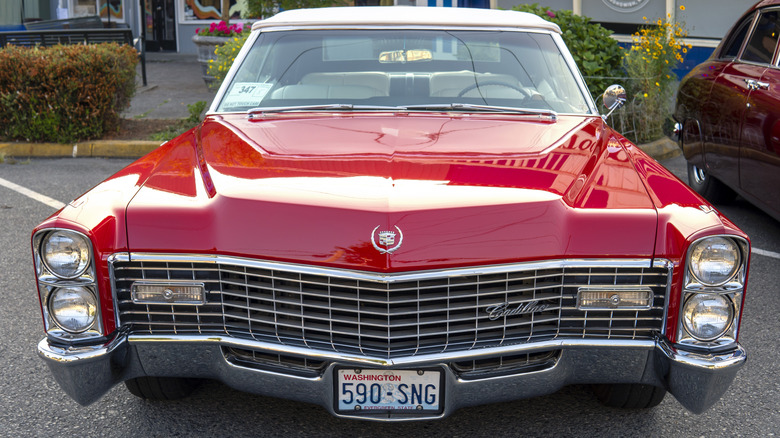
The DeVille name had been synonymous with American luxury since 1958, and by the time the 1970 model rolled off the line, it took the brand to its peak in automotive confidence. Those Cadillacs came as coupes and sedans, but the DeVille convertible in particular holds a special place: with just 15,172 units made, the 1970 marked the last year Cadillac offered a droptop before the convertible body shifted exclusively to the Eldorado, making it something of an overlooked gem that deserves a spot on any collector's radar, even if it rarely gets talked up alongside flashier icons.
Inside, it could seat about four people, and buyers could pile on options like automatic speed control, remote-operated door locks, Firemist paint, and a tilt wheel. Under the hood sat one of Cadillac's most powerful V8s — a 472-cubic-inch engine — giving the nearly 4,700-pound car real muscle, with 375 horsepower to match its presence, delivered through a three-speed automatic gearbox.
Boomers remember riding in one as kids or, as adults, finally being able to afford one themselves; they understand instinctively that a Cadillac in the driveway meant someone had truly arrived, and that had little to do with specs. For Gen Zs and younger millennials, raised on compact SUVs and fuel-economy stickers, the appeal won't come that easily, especially for cars with bench seats and door handles flush against the body, which would be hard to compute in an era that prizes tech-forward designs even before anyone starts worrying about mileage or emissions.
Chevrolet Corvette (1963-1967)
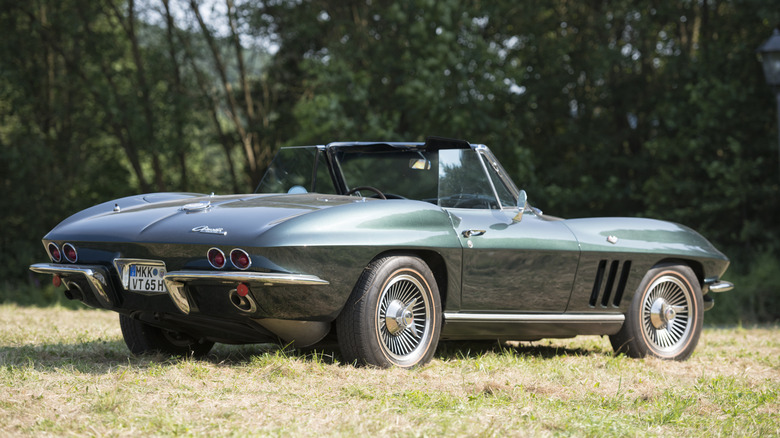
There's a reason over one-third of second-gen Corvette ownership sits with that generation: they were around when the C2 rolled out in 1963, featuring an independent suspension on a stiffer frame that replaced the old solid rear axle setup, in the form of fastback coupes and convertibles. That first year, they moved 21,513 examples across both configurations, and the coupe's split rear window became an instant talking point, making it one of the most sought-after cars among collectors today, even though Chevrolet dropped it after just one year.
On the engine side, power started with a 327 small-block V8, and the port-injected variant mated to the basic three-speed manual could put out 360 horsepower with the power assist option in play. From there, the C2 really evolved, introducing a revised steering wheel in 1964, and by 1965, four-wheel disc brakes and the Mark IV 396-cubic-inch big block had arrived. The 427 followed in 1966, the same year sales peaked at 27,720 cars before easing back to 22,940 in 1967 as the generation wound down. Since then, all restorations have been possible thanks to its well-supported aftermarket, helping clean examples sell for six figures and occasionally push past the million-dollar mark at auction.
Millennials tend to see a dated standard equipment list, like drum brakes, and assume the car was underbuilt, not knowing that this was the generation that made the Corvette a genuine contender in the American sports car conversation.
Methodology
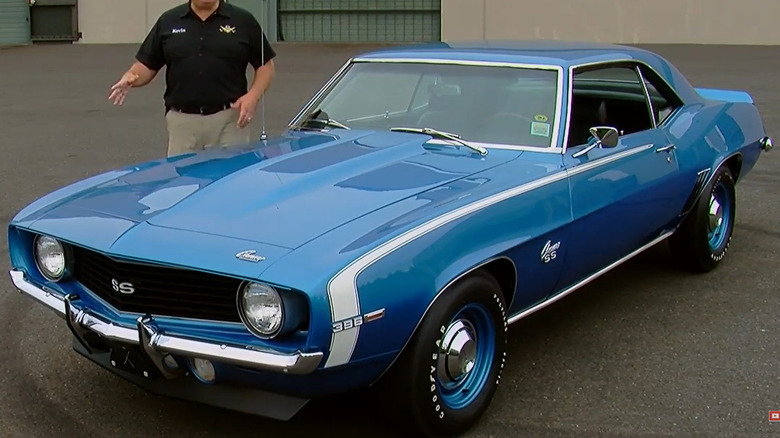
To earn a spot, every car had to have a documented, meaningful connection to the boomer generation. This meant cross-referencing ownership data, auction result demographics, and collector community surveys to confirm if these cars actually carried real cultural weight from the era in which boomers came of age, whether that meant showing up in period advertising, dominating the road courses, or sitting in the driveways of the houses they grew up around.
Also, there had to be a clear and documentable gap between how boomers understood the car and how younger buyers tend to perceive it today, and that disconnect could be in several ways, whether in auction room demographics, in online forum conversations, or in the way younger collectors consistently undervalue certain models relative to what the market data actually supports.
To wrap it up, every claim made about a car's history, specifications, production numbers, and market value was cross-referenced against at least two credible independent sources, including publications like Hemmings, Hagerty, MotorTrend, Car and Driver, and Autoevolution, as well as auction house records from Bring a Trailer, Classic.com, and Mecum, which were also used throughout.