

5 Under-The-Radar Cars Classic Collectors Should Know About
We may love our classic cars, but the market and media are in a sorry state. This is because so-called tastemakers obsess over the same cars, while genuinely interesting ones sit on the sidelines, ignored. We're not saying that the Mustangs, Camaros, and Corvettes of the world are uninteresting — they have earned their spot for sure. But if a market begins to consider Oldsmobiles and Studebakers to be "if you know, you know" cars, then something is seriously wrong.
This has resulted in several blind spots where some really interesting classic cars remain undervalued and underappreciated, simply because they didn't have the right badging or didn't star in a big Hollywood film. All five cars discussed here remain relatively accessible, commanding prices far lower than, say, a Ford Mustang Boss 429.
All of these cars are significant in their own way, each with a story to tell. One was a bold experiment that failed commercially but succeeded mechanically; another was overshadowed by a flashier stablemate; and a third was an ugly sleeper car that could beat almost anything on the road. So, with all that said, here are five classic cars that fly under the radar.
Dodge Aspen R/T
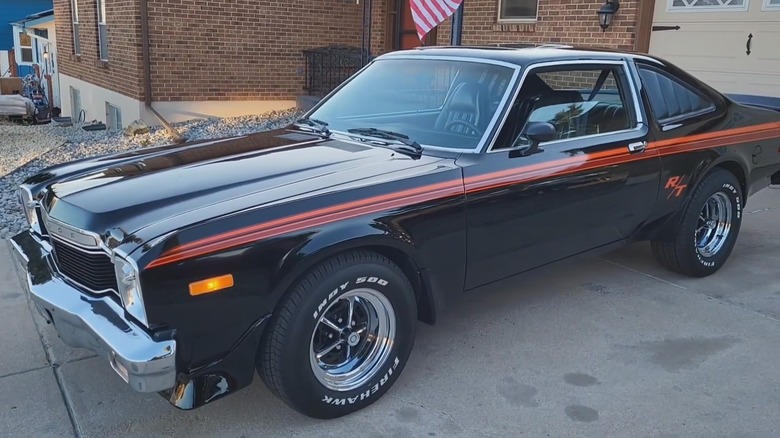
At the outset, we should mention that the Dodge Aspen R/T had its fair share of problems — and we're being diplomatic. From mechanical problems galore to recalls upon recalls, the ownership experience was unpleasant for many. However, if you were to pick up a restored version today, chances are most of these kinks would have been ironed out, leaving you with only the standard issues that every multi-decade-old classic car faces.
It was available as a two-door coupe and a four-door sedan. Power came from (in most units) a 318 cubic inch (5.2 liter) good old-fashioned American V8 motor, paired to either a three-speed automatic, though some versions also had a tri-speed manual gearbox. Total output for the automatic-gearbox versions stood at 166 hp and 246 lb-ft of torque, which gave the base-model Aspen coupes a 0-60 mph time of 10.2 seconds.
It could also run the standing quarter-mile in 18.2 seconds, and had a sister car in the form of the Plymouth Volare. If we're to talk about price, with a base MSRP in the high $3,000s in the 1970s, this was by no means a cheap car. Units today sell for around $15,000, which, in 1970s dollars, works out at about $3,300 – so the car has only just held its value. So, let's learn to love the Aspen R/T for what it is: a flawed, expensive, but very cool classic American muscle car.
Jeep CJ-8
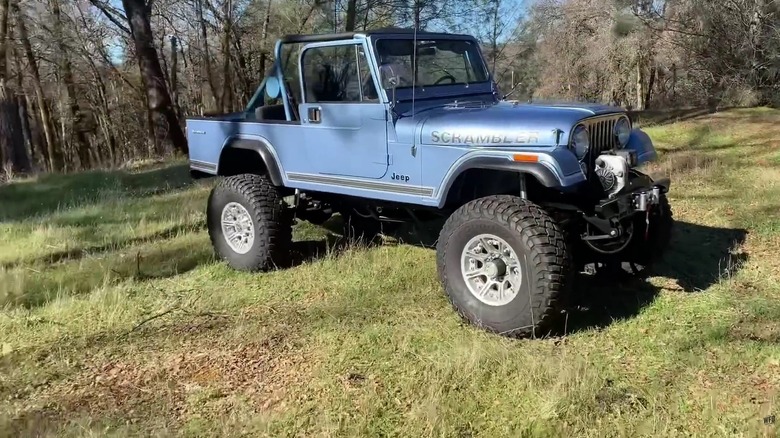
While not the first pickup truck made by Jeep — that honor goes to the 1947 Willys Overland 4x4 – the CJ-8 is from the same family of vehicles. Introduced in 1981, it quickly became a hyped vehicle, not least because of its distinctive looks.
Nicknamed the "Scrambler," this small pickup could be had with a canvas roof, which, while not standard, was a zero-dollar option. It featured two bucket seats in the cab for a driver and a single passenger, which was odd, given the popularity of the front bench seat in many other vehicles of the time. Why the engineers at Jeep refused to stuff a V8 or even a V6 inside this ostensible work truck is beyond us.
What we do know is that the Scrambler came with a 150-cubic-inch (2.5-liter) four-banger engine that made 86 hp and 125 lb-ft of torque, paired with a four-speed transmission. In the following year, another (optional) five-speed stick-shift box would also be offered. Of course, given the time, fuel injection was not mainstream, so the Scrambler shipped with a dual-barrel carb to shovel fuel into the engine. This setup meant that peak power arrived at the screaming rev range of 4,000 RPM, while maximum torque was available from a sensible (and impressive, for a car) 2,600 RPM. The Scrambler was phased out in 1987, when Jeep abandoned the CJ platform entirely.
Ford SVT Contour
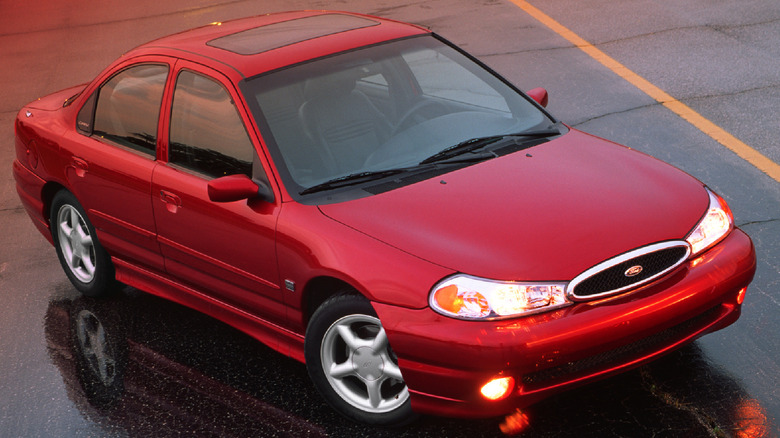
At first glance, anyone would wonder what was special about the Ford Contour from the late 1990s or the early 2000s. It seemed like the American version of the ever-popular Ford Mondeo from the UK, and looked quite similar to the Taurus of the same era. However, this unassuming family sedan was quite the sleeper car, at least the version made by Ford's SVT, or Special Vehicles Tuning division, was.
For the uninitiated, Ford's SVT department was tasked with tuning regular models, resulting in such gems as the Ford SVT Mustang Cobra and the legendary Ford SVT Lightning F-150 pickup truck. So, if we set aside the accountant-mobile looks of the SVT Contour, we're left with a 2.5-liter, six-cylinder engine mated to a manual five-speed transmission. Power outputs for the SVT Contour stood at 200 hp, alongside a respectable 169 lb-ft of torque, where peak torque was available at 6,600 RPM.
Largely due to this engine (built on the Duratec/Power Stroke platform), the SVT Contour could rocket from standing to 60 mph in 7.5 seconds. It could also run the standing quarter-mile in 15.7 seconds — and remember, this was a four-door sedan that looked like your everyday econobox. It was criminally underrated when it was introduced in 1997, and it remains so to this day.
Buick Regal T-Type
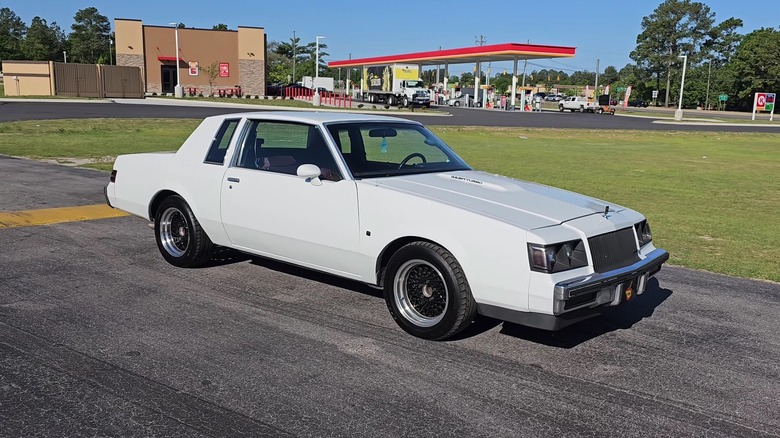
If the picture above reminds you of the Buick GNX, you should probably spend less time browsing classic car pages and go outside more. But you wouldn't be wrong, since the Buick T-Type was similar to the GNX, both in terms of looks and the underlying mechanical bits. Often overshadowed by the G-series offerings from Buick, the Regal T-Type coupe cars were really a class apart, and in our opinion, looked a little better, too.
In fact, what many people don't remember is that when it was released, the T-Type boasted serious performance. It hit 60 mph in 6.5 seconds and covered the quarter-mile in 15.2 seconds. This performance was thanks in large part to the six-cylinder, 3.8-liter (231 cubic inch) engine from Buick, which had its roots in the engine program that kicked off after the first gas crisis.
The power output was striking for a six-cylinder engine of the time, especially considering that America had just seen some of the highest-ever gas prices in history. The T-Type made 200 hp — and that was at the crankshaft, after accounting for loss — along with a punchy 300 lb-ft of torque. Sadly, the Regal has been confined to the footnotes of history.
Cadillac Seville
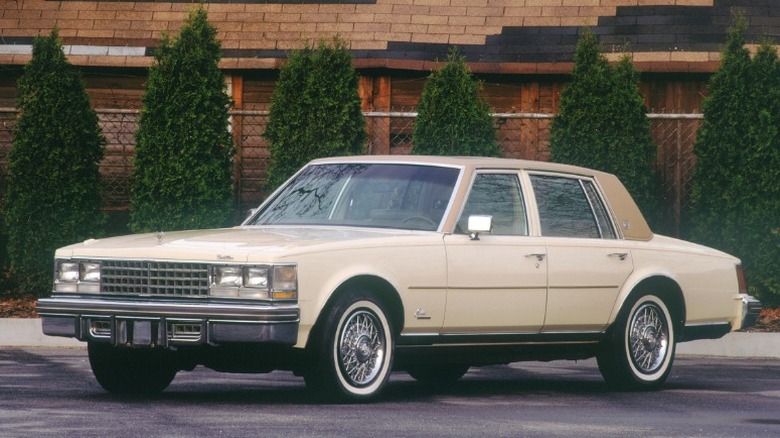
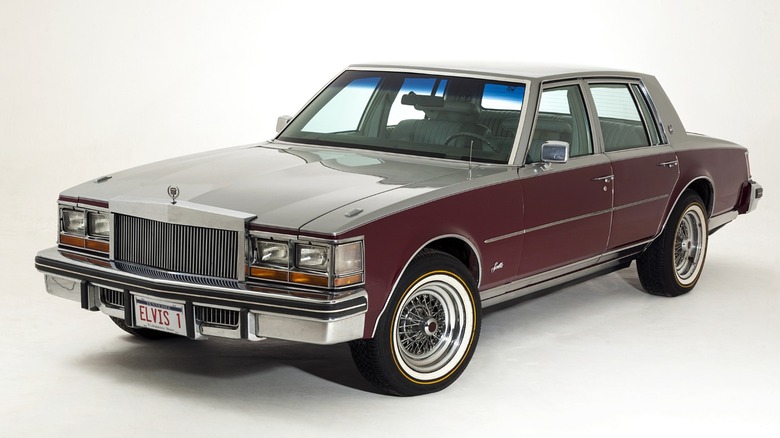
At the outset, let's clarify that we've not made a typo in the name. The Cadillac Seville was very much its own model, not to be confused with the legendary Cadillac Deville, though both were among the best-looking Cadillacs of all time. Interestingly, the model was to be christened the La Salle, a nod to the model of the same name from the 1940s, but was changed in the end. Launched in 1976, the first-generation Seville is the one we want to talk about, though the 1990s version was also pretty cool, but that's a topic for another day.
At 204 inches in total length, the Seville was actually tamely-sized compared to Cadillac's other land yachts. However, being smaller in the middle of the 1970s wasn't exactly frowned upon, thanks to the worst gas crisis in American history being in full swing. The engine in this (relatively) little Caddy came from Oldsmobile (albeit modified) and was a 350-cubic-inch V8.
We'll save you the napkin math — it had a 5.7-liter displacement (and a three-speed transmission). The car made 180 hp, available from 4,400 RPM, along with 275 lb-ft of torque delivered at 2,200 RPM. Towards the end of the decade, a diesel engine was also offered, though we don't think it's worth talking about.