

This Tech Was Initially Dunked On - Now Almost Everyone Uses It
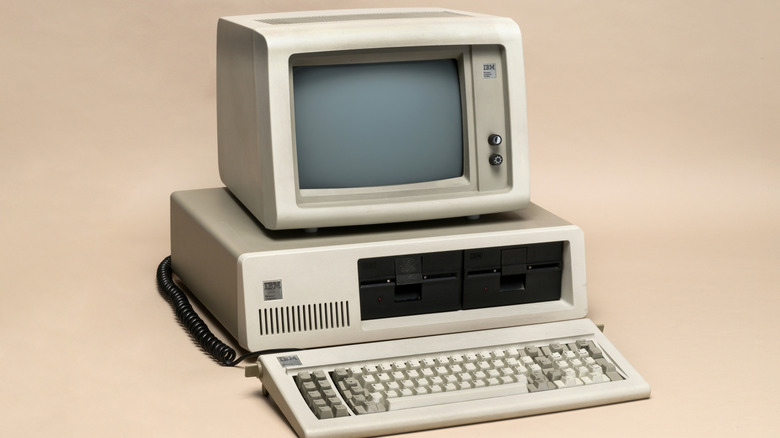
Countless tech products and services get released every year. Some of them stick around, while others don't. The Humane AI Pin and Apple Vision Pro are recent examples of gadgets no one wanted to buy — and they ultimately flopped. Every once in a while, however, we see products heavily scrutinized at launch, only to prove their critics wrong.
A recent example of a technology with polarizing public perception is generative AI. Tools like ChatGPT and Claude are exceptional in what they offer, but many of the concerns surrounding generative AI aren't entirely unfounded. Beyond the moral and ethical dilemmas surrounding copyright and privacy, critics have understandably brought up concerns about job displacement, misinformation, and academic integrity. Yet, the generative AI industry is growing rapidly. Only time can tell whether GenAI will go down as one of the defining technologies of our time.
What we do have broader insights about, however, are several other technologies or gadgets that were initially criticized by skeptics but eventually became part of our daily lives. From smartphones to modern USB standards, here are five technologies that had to endure their fair share of doubters before becoming commonplace.
The iPhone
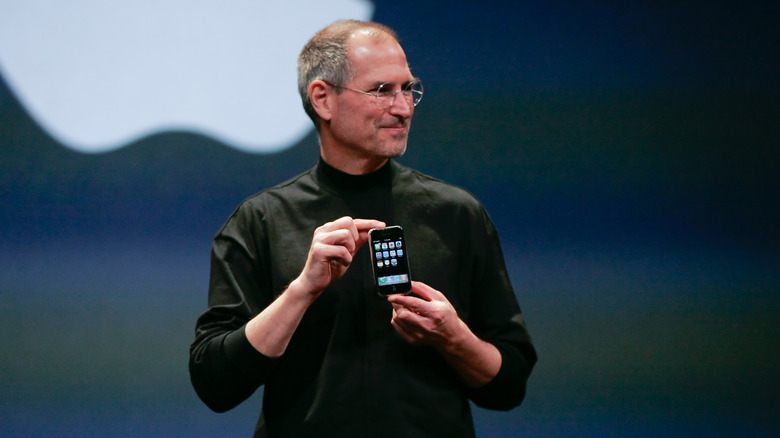
iPhones aren't perfect — they cost a premium, offer a comparatively more locked-down experience than Android, and aren't exactly known for offering the best specifications on paper. Yet none of these were reasons the iPhone was heavily mocked by industry observers and even the tech-savvy when it was first unveiled in 2007. The original iPhone was dismissed largely due to its form factor. It boasted a touch-first interface, which meant it lacked a physical keyboard, something many considered almost as important as touchscreens are today.
Microsoft CEO Steve Ballmer laughed off the iPhone in an interview, saying it costs too much and doesn't appeal to business customers "because it doesn't have a keyboard, which makes it not a very good email machine." Yet here we are, nearly 20 years later, with basically every smartphone shipping with a touchscreen. A few BlackBerry alternatives with physical QWERTY keyboards are on the rise again, but regular smartphones aren't going anywhere.
Funnily enough, plenty of Apple's other decisions have been mocked by other companies before, only for those same features to be adopted by the rivals. Examples include the removal of the 3.5mm headphone jack, the introduction of the notch, or how smartphones no longer ship with charging adapters in the box.
USB Type-C
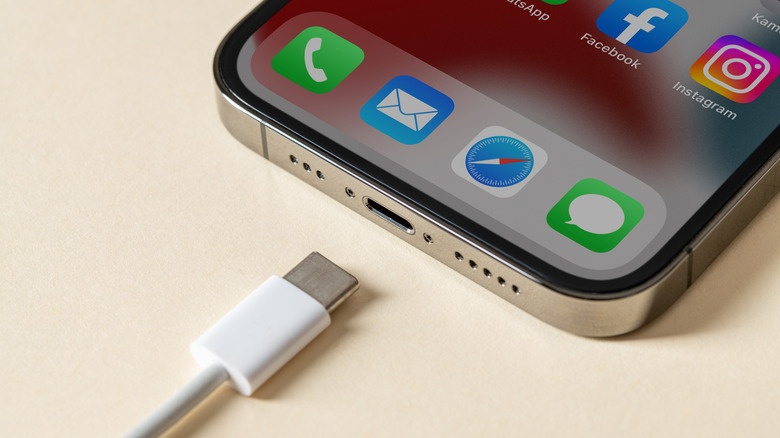
Take a look at your smartphone, laptop, headphones, or any gadget you can find lying around. If they were released in the past few years, there's a good chance that all of these items share the same port for charging and data transfer — USB-C. The connector type is actually not that old, so you may remember just how challenging it was for the world to migrate over to the USB Type-C standard. The first couple of years had everyone struggling with dongles and adapters just to connect their peripherals to their laptops.
To be fair, Apple's execution wasn't exactly helping matters. The 12-inch MacBook that the company unveiled in 2015 had a grand total of one USB-C port. That's it. Just a single port that was somehow supposed to accommodate charging, video output, and file transfers. Things are much better now that people have grown used to using USB-C for everything. Modern MacBooks still don't offer USB-A ports, but they at least come with up to three USB-C ports now, alongside a dedicated MagSafe port for charging.
The perks of the USB-C standard have become clear now that we have technologies like USB Power Delivery and DisplayPort Alt Mode that allow a single, compact port to handle tasks that used to require bulkier connectors. The right USB-C cable can fast-charge your phone, let you hook your laptop to an external display, and allow you to transfer files between devices.
Personal computers
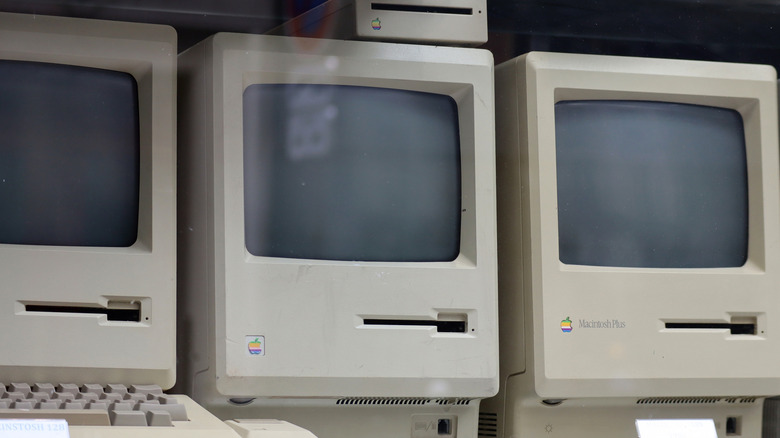
The term "personal computer" isn't even something most people stop to think about anymore. Be it a desktop workstation, gaming PC, laptop, or an all-in-one, computers are almost taken for granted today. Back in the day, though, when computers used to be the size of entire rooms, the idea of having one in every household seemed too absurd to many. "There is no reason anyone would want a computer in their home," said Ken Olsen, the founder of Digital Equipment Corporation (DEC), in 1977.
To be fair, Olsen was probably picturing room-sized computers, but even then, the idea of a personal computer wasn't an easy sell. Computers were expensive and didn't exactly appeal to the general consumer. Software was limited, the internet wasn't really a thing, and command-line interfaces were far too complicated for the average person who wasn't already well-versed in computers.
With advancements in semiconductor technology, though, computers could be made smaller and slightly more affordable. The MITS Altair 8800, released in 1974, is widely regarded as the first commercially successful personal computer, though it still wasn't the PC we would recognize today. The original Macintosh, launched in 1984 for a whopping $2,500, popularized the graphical user interface (GUI) and mouse controls that felt dramatically more natural.
Of course, computers have only been getting faster, smaller, and more popular since then. Some of the most powerful laptops can handle demanding games and professional software without breaking a sweat.
Larger smartphones
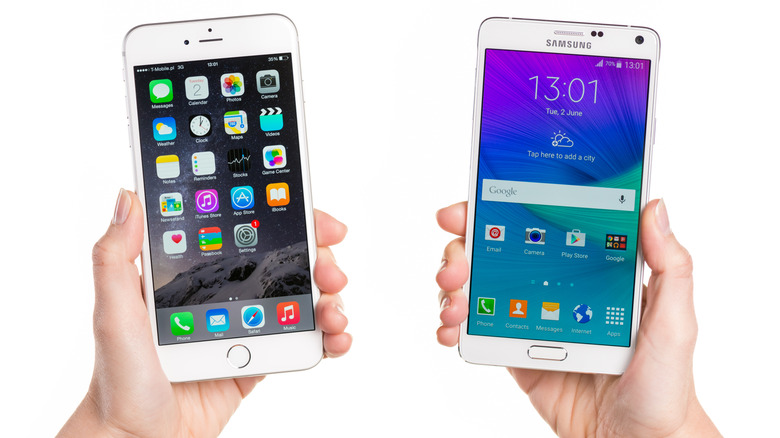
Up until the original iPhone in 2007, most mobile phones featured screens that were barely large enough to accommodate more than a few lines of text. The 3.5-inch touchscreen of the iPhone therefore felt massive, considering the device didn't have to accommodate a physical keyboard. Just as people were getting used to bigger phones, the early 2010s popularized the "phablet" — a form factor that fit right between regular smartphones and tablets. Samsung released the Galaxy Note in 2011 — a 5.3-inch smartphone that got dunked on for being too large.
In 2013, the Galaxy Mega took things even further with its 6.3-inch display. Its footprint was an aspect that was brought up as a possible dealbreaker in nearly every review. Fast forward a decade, and we now have iPhones and Android devices with displays approaching 7 inches. What's funny is that a 6.3-inch display is now considered compact — granted, large-screened smartphones are a lot more manageable now that we have nearly bezel-less displays.
The reason most people own large phones today is simple — there aren't many compact smartphones around anymore, especially in the budget segment. Plus, it's tough to complain about a bigger screen and a larger battery now that most people have gotten used to accommodating phablet-sized devices in their pockets. Accessories like PopSockets have therefore risen in popularity, along with a few clever software tricks that make one-handed usability mostly a non-issue.
The internet

The internet has become such a fundamental part of everyday life that we almost take it for granted, only realizing its worth when the Wi-Fi suddenly stops working. Yet, like the personal computer, the idea of the world being connected through computers and networks was criticized at one point. The evolution of the internet spans several decades, beginning with the government-funded ARPANET in the late 1960s, which eventually helped lay the foundations for the World Wide Web in the early 1990s.
Although many were excited about its potential, others had their fair share of doubts about whether the internet would ever become genuinely useful or simply die out as a fad. "The truth is no online database will replace your daily newspaper, no CD-ROM can take the place of a competent teacher, and no computer network will change the way government works," said astronomer and author Clifford Stoll in a popular 1995 Newsweek column. Yet here we are, three decades later, reading the news on our phones, attending classes via platforms like Zoom and Google Meet, and filing taxes through online government portals.
In fairness, Stoll also noted that the internet was "one big ocean of unedited data, without any pretense of completeness," and worried about how the technology would affect human interaction — both of which remain relevant today. The useful aspects of the internet, though, have undeniably turned it into an essential tool, with nearly 75% of the human population now online.