

5 Car Brands That Never Abandoned The V8
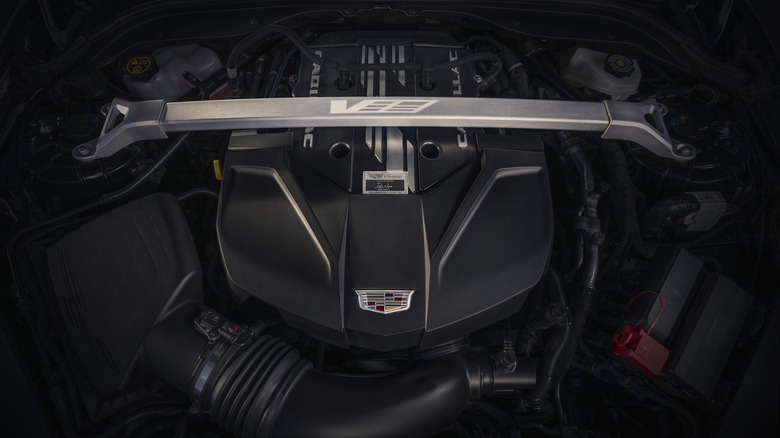
The V8 engine has been many things to many people, from a workhorse powerplant in American pickup trucks to an exotic marvel in some extremely fast mid-engined supercars. At one point, it may have seemed like the V8 engine would be around forever, but recent years have seen some automakers drop V8s from their lineup altogether, usually to be replaced with some variant of a smaller, turbocharged engine. Needless to say, this hasn't pleased V8 fans and automotive purists.
Other brands, though, have resisted those regulatory and market forces and kept their V8 engines alive, while others have brought back their V8s after a hiatus. Some brands have gone even further, doubling down on the V8 with new and improved engines announced for upcoming models
With all this recent movement both towards and away from the V8, we wanted to look back through automotive history and point out some global car brands that have offered V8 engines without interruption ever since introducing them to their lineups. While these brands weren't necessarily the first to offer V8s, once they started selling them, they've stuck around. Below, we've rounded up five notable automakers who have never abandoned the V8, with some offering these engines for over a hundred years running.
Ford
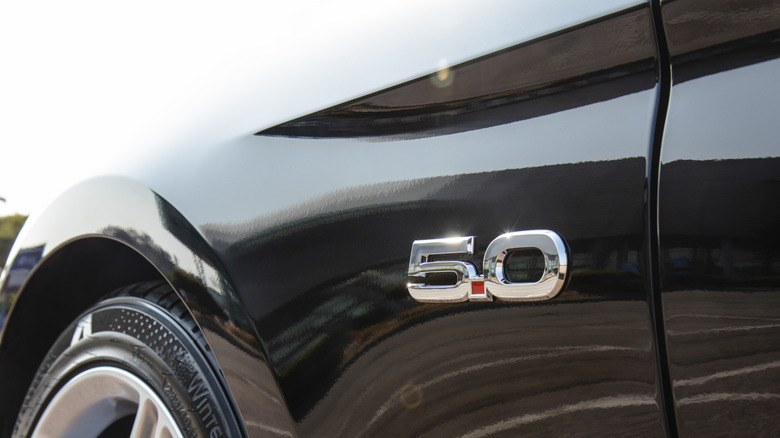
The Ford Motor Company sold its first car in 1903, but it wasn't until 1932 that the company introduced its first V8 engine, the legendary and groundbreaking Flathead. The Ford Flathead helped bring V8 power to the masses, and from that point on, there's always been a V8 engine of some sort available in Ford's lineup.
The Ford V8 family would evolve and grow significantly, moving through the Y-block era in the '50s, and then the big-block FE era shortly after. The new Ford small-block V8 would arrive in the early 1960s, and it stuck around all the way through the 1990s, when it was phased out in favor of the company's new modular V8 engines.
In the 2010s, Ford began introducing its new turbocharged EcoBoost engines, which replaced the V8 in some applications, but the company has nonetheless continued to build and develop its traditional V8 lineup. In the modern era, much of Ford's V8 focus has been on the double overhead cam, 5.0-liter Coyote V8 that powers the Mustang GT, but recently the Coyote has been joined by Ford's massive and unique 7.3-liter V8 Godzilla V8. Designed for Ford's Super Duty truck applications, the Godzilla engine is a bit of a throwback with its huge displacement and old-school, overhead valve design.
Ferrari
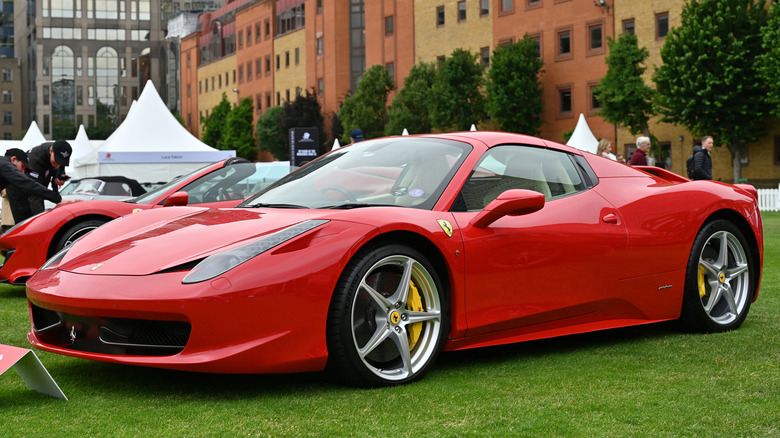
The V8 engine has taken many different forms over its long history. On one side of the spectrum, you have the Ford V8 engines designed for the masses, and on the other side, you have Ferrari's much more exotic flavor of the V8, which has now been offered in the company's mid-engined sports cars for more than 50 years continuously, with some extremely impressive Ferrari V8s in that lineage.
Compared to other brands on this list, Ferrari was relatively late to the V8 game. The company's first V8 engine arrived in the 1970sand displaced just 2.9 liters, beginning a tradition of Ferrari's V8s always making big horsepower from relatively small, race-bred engines. The Ferrari V8 would get larger and more powerful over the decades, and in the modern era, the engines have shifted to using both turbochargers and hybrid electrification, which have boosted their power output into the stratosphere.
Supercar purists and old-school Ferrari fans might argue that the turbocharged and electrified V8s don't have the same romance as those earlier, naturally aspirated engines — and that might be true. However, the company has remained committed to the V8 moving forward, and most fans would probably agree that turbo and hybrid Ferrari V8s are certainly better than no V8s at all.
GMC
Chevrolet might be a brand that's associated with V8 engines more than any other, but there was actually a fairly long period in the brand's history when no V8 was offered. Chevy's first V8 arrived very early in the form of the 1917 Model D engine, but that engine was only around for a couple of years — and it wouldn't be until 1955 when the Chevrolet V8 finally returned in a bigger and longer-lasting way.
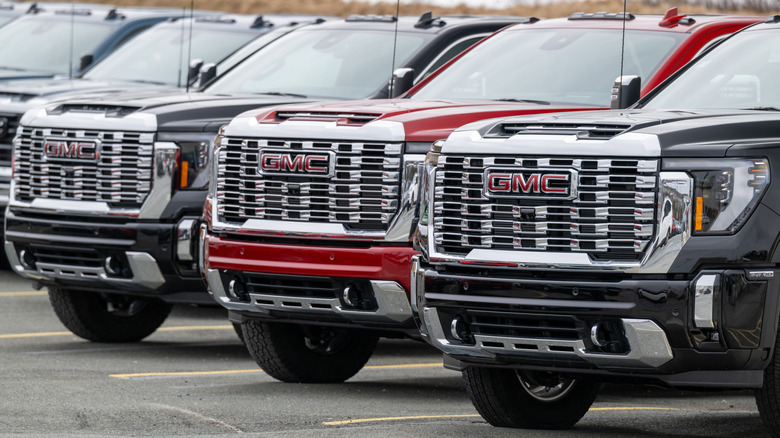
GMC, however, has never had a period where it dropped the V8 from its lineup. The first V8-powered GMC truck models arrived in 1955, and GMC's trucks and SUVs have since used all manner of General Motors V8s. Without question, one of the most unique GMC engines was the enormous, GMC-specific 637-cubic-inch V8 used in the brand's heavy-duty trucks during the late '60s and early '70s.
In the modern era, GMC's V8 offerings are virtually identical to those offered in Chevrolet's pickup trucks and SUVs. Most recently, GMC has announced that its all-new 2027 Sierra 1500 pickup trucks will be getting GM's all-new 5.7-liter and 6.6-liter V8s. In other words, both Chevy and GMC remain very much committed to the traditional, naturally aspirated V8 engine for the foreseeable future.
Mercedes-Benz
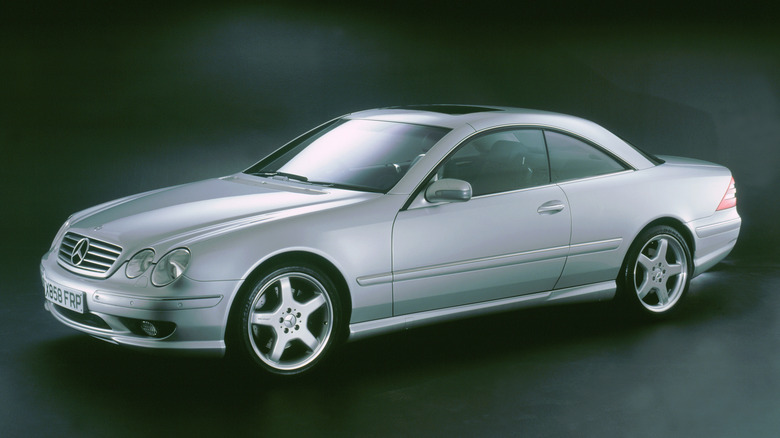
As far as non-American car brands go, Mercedes-Benz might be the one most closely identified with the V8 engine. Mercedes' V8 history began in the early 1960s with the arrival of its M100 engine, which stood out with its advanced overhead cam design in an era when American V8s were all using overhead valve heads.
The V8 would be a big part of the Mercedes lineup from then onward, adding lots of horsepower and new technology along the way — including both superchargers and turbochargers. There were also unique, hot-rodded V8s honed and developed by the company's AMG division. However, there was a point recently where it looked like the Mercedes V8 might have reached the end of the road. With the company struggling with supply chain issues and the broader trend toward engine downsizing, for the 2022 model year, Mercedes announced it would be dropping most of its V8 models, causing many to fear the V8 would soon be gone for good.
Notably, the latest AMG C63 even dropped its V8 engine in favor of a four-cylinder hybrid powerplant, and the brand's pivot away from the V8 caused significant backlash among customers. Fortunately, Mercedes has responded by confirming its commitment to the V8 engine moving forward. It's not just that Mercedes is keeping its old V8s alive, its now among the brands bringing back the V8 – and in a big way, with a new flat-plane crank V8 arriving in its high-end models.
Cadillac
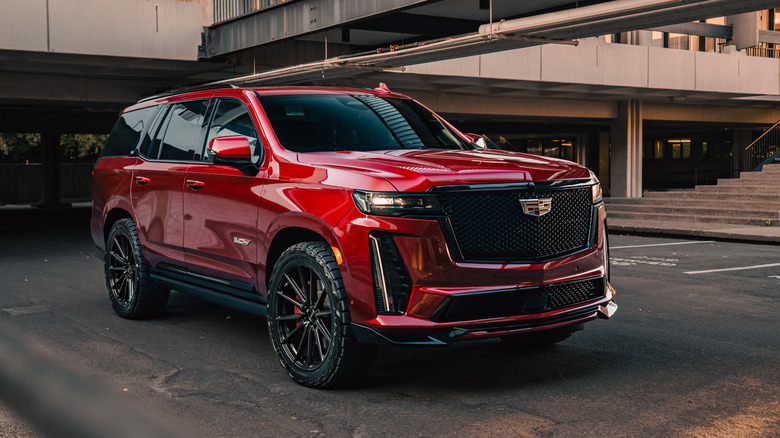
Cadillac's first V8 engine arrived over 110 years ago, and though the size, tech, and shape of Cadillac vehicles have changed immensely, a V8 engine has remained part of the brand's identity. It was for the 1915 model year that the world's first mass-produced V8 engine arrived in the Cadillac Type 51 , and for a good part of its history, Cadillac developed and built its own V8 engines, which were unique from other General Motors brands. These engines included, among others, a massive 500 cubic-inch V8 that was offered during the 1970s.
While many Cadillac models had begun to use corporate General Motors engines by the 1980s, the 32-valve Northstar V8 of the 1990s represented a performance revival for Cadillac, and was a very different type of engine from the larger, overhead-valve V8 engines used in other GM vehicles. It's sometimes overlooked today, but the Northstar engine family had a fairly long production run, lasting until 2010 when they were replaced with more traditional GM engines.
Modern car enthusiasts should be familiar with high-performance V8s used in Cadillac's V and Blackwing-branded sport sedans, but in the modern era it's not in sedans where you'll find the majority of Cadillac's V8 engines — it's in the Escalade SUV. Currently topping the Escalade engine line is the burly, supercharged 6.2-liter V8 found in the 682-horsepower Escalade-V-Series.