

The Best And Worst MacBooks Of All Time
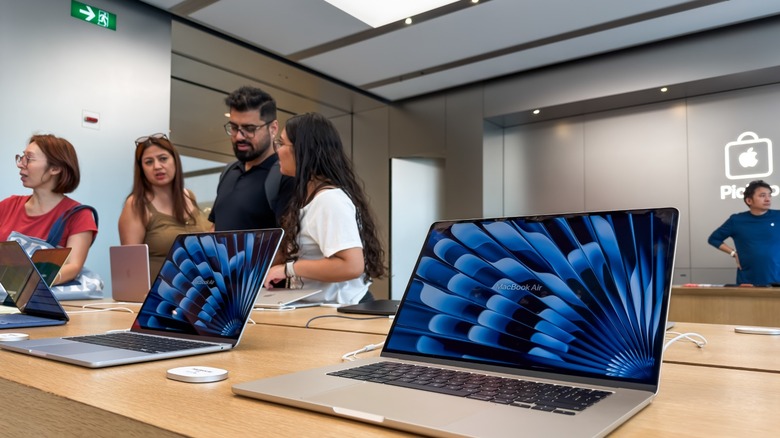
The MacBook lineup was introduced as "One more thing..." in Steve Jobs' 2006 keynote address. Powered by Intel processors, it welcomed a new era for Apple's laptops. Since then, it has become one of the world's most popular computer product lines, with its most recent release, the MacBook Neo, shipping 1.1 million units in its first quarter. But while the Neo was met with wide applause, the same cannot be said for all the MacBooks that came before it.
Some MacBooks were so problematic that Apple had to shell out tens of millions in lawsuit settlements. Outside the courts, the company was tried by the court of public opinion over questionable design choices, such as the butterfly keyboard on the 12-inch MacBook. Overall, the MacBook's track record isn't really hit-or-miss. Most have been solid, though a handful have swung to the extremes, some genuine genius, others a genuine disaster. That said, here are the best and worst MacBooks of all time.
BEST: The Original MacBook Air (2008)
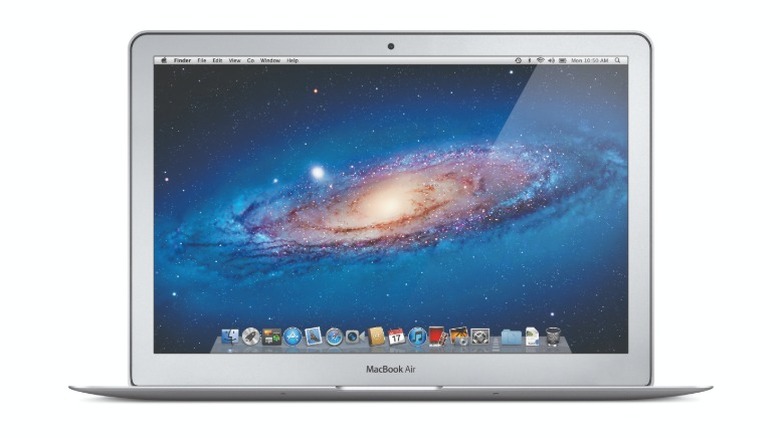
On 15 January 2008, the world witnessed one of history's most memorable product reveals on the Macworld Expo stage. Facing the crowd, Steve Jobs pulled the MacBook Air out of a manila envelope and said, "We've built the world's thinnest notebook — without sacrificing a full-size keyboard or a full-size 13-inch display."
At 0.16 inches at its thinnest point and weighing around 3 pounds, the Air was an engineering breakthrough. It ran a custom low-power 1.6GHz Intel Core 2 Duo with 2GB of fixed memory. Storage started with an 80GB hard drive, though buyers could pay an extra $999 for 64GB SSD storage, the first time Apple had offered solid-state storage on a Mac. The starting price was $1,799, which may have been expensive at that time. Almost two decades later, the MacBook Air models would be one of the world's best-selling computers.
Over time, its real impact became industry-wide: the Air arguably pushed other brands to treat thinness as a genuine design priority. This, in part, inspired the ultrabook category that followed, a lineage SlashGear has covered from the MacBook Air to today's lightest Windows competitors.
WORST: The Cracking White MacBook (2006–2009)
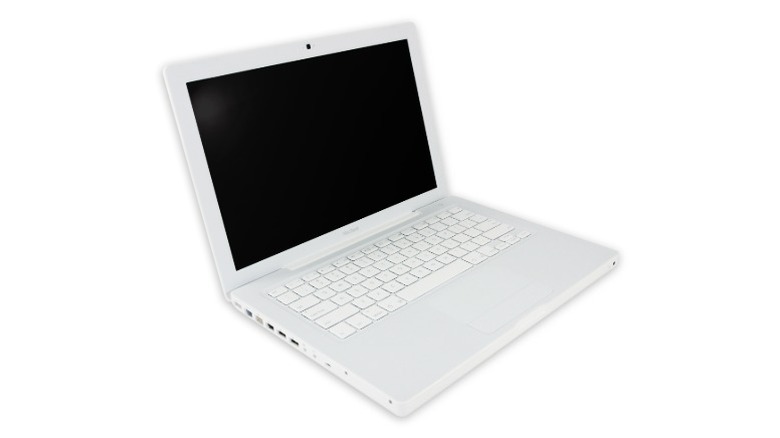
The MacBook launched in May 2006, and unlike the pricier MacBook Pro, it was encased in polycarbonate plastic, which is cheaper than aluminum. This allowed Apple to set the entry price at $1,099. As a result, the laptop was a massive sales success and became the best-selling MacBook to date.
However, it developed two separate, well-documented defects that plagued it for years. The first was cosmetic. Apple first admitted in a 2006 internal service bulletin that some white MacBooks were turning orange after only light use, for reasons the company didn't explain. As a result, they agreed to replace the affected parts if the Mac met warranty requirements.
Secondly, owners reported that the plastic casing was splitting and cracking in various areas of the Mac, especially around the trackpad. Even after getting it repaired once, some owners complained that the same cracks reappeared. At first, Apple would only fix a Mac if the crack was around the trackpad area. Later, the company instructed service agents to address tiny cracks on any white MacBook, even if the warranty had expired.
BEST (tie): The Intel MacBook Pro (2006)
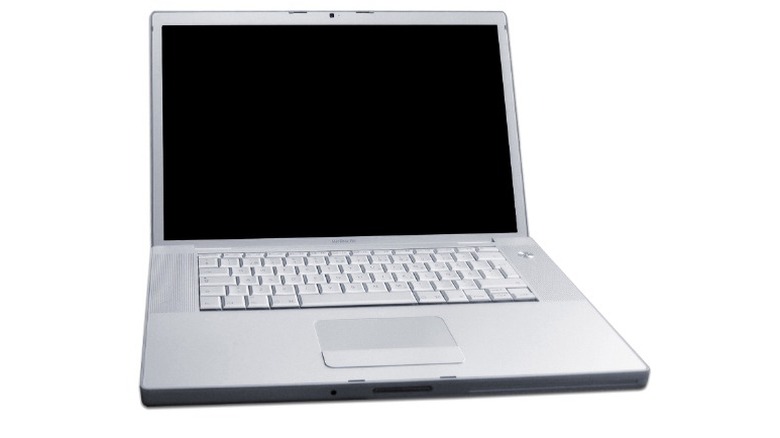
Apple announced the first MacBook Pro on January 10, 2006. It kept much of the PowerBook's look but added Apple's new MagSafe power connector and a built-in iSight webcam. These features stuck around for years.
The added features improved the laptop's appeal, but its real distinctive trait was its speed. Apple shipped the MacBook Pro with quicker processors than it originally planned, boosting performance nearly fourfold over the outgoing PowerBook G4. It came with an Intel Core Duo processor, the first MacBook to do so. As Steve Jobs put it, "The new MacBook Pro, with its Intel Core Duo dual-core processor, delivers the performance of not just one, but two G5 processors in the world's most stunning one inch thin design."
However, the transition wasn't entirely flawless. Early units shipped with reported whining noises, AirPort connectivity issues, and overheating. The leap in raw performance, though, overshadowed the various pains, and Intel-based Macs quickly became and remained the new standard for the entire lineup until Apple switched to silicon in 2020.
BEST (tie): The MacBook Neo (2026)
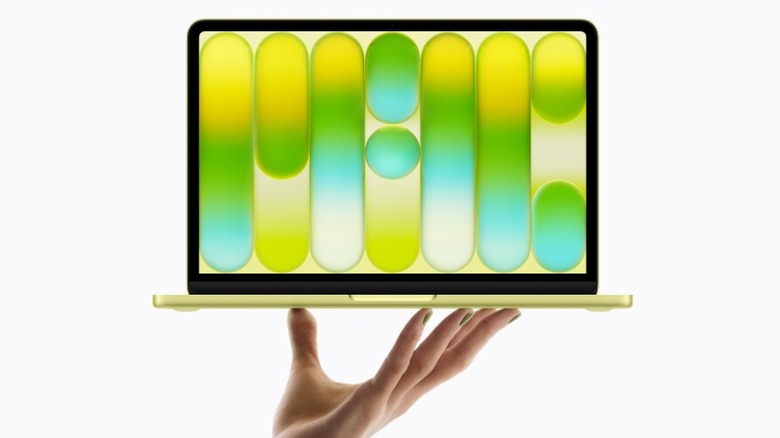
Typical of Apple releases, the Neo was already the subject of a lot of speculation before it launched. One leaker said Apple might skip the backlit keyboard entirely, a sacrifice unheard of on any Mac in 15 years. There was also worry that "budget" might mean noticeably lower specs. Then, in early March 2026, Apple revealed the MacBook Neo: a $599 aluminum laptop running the A18 Pro chip normally found in an iPhone, in four colors, without a backlit keyboard. It's also one of the most affordable laptops you can get right now.
While this Mac wasn't built to target heavy power users, reviews confirmed it's capable of handling day-to-day tasks and even running modern games without buckling. And judging by the reception, this kind of budget-friendly approach may be what convinced longtime Windows holdouts to make the switch. In an X post, Tim Cook called it the "best launch week ever for first-time Mac customers."
WORST: The USB-C Only MacBook Pro (2016)
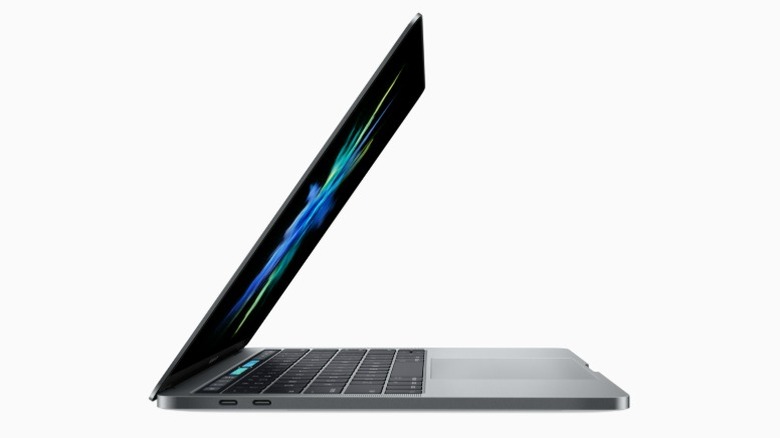
The 2016 MacBook Pro came to market full of promise with a sleek new design, but it would mark the start of one of Apple's failed experiments, the Touch Bar. The Touch Bar replaced the existing function keys with an interactive OLED interface. It gave the Mac a really cool look, but customers seemed to prefer the tactile feel of the function keys. The Touch Bar feature was later removed from the MacBook Pro lineup in 2023, seven years after its debut.
Another issue that plagued this MacBook iteration was the infamous FlexGate. This design flaw caused the display loop to strain when the lid was repeatedly opened and closed. Over time, that led to uneven backlighting, and in the worst cases, the display going off entirely.
As if those weren't bad enough, this was also the MacBook that replaced the ports. The 2015 MacBook Pro had a MagSafe 2 power charging port, two Thunderbolt ports, two standard USB Type-A ports, an HDMI port, and a full-sized SDXC card slot. But this MacBook had only two to four Type-C ports when most of the industry still used standard USB ports. To connect a device that needed another port, you had to use a dongle that came at an extra cost, though cheaper third-party alternatives existed alongside Apple's pricier option.
BEST: The M1 MacBook Air (2020)
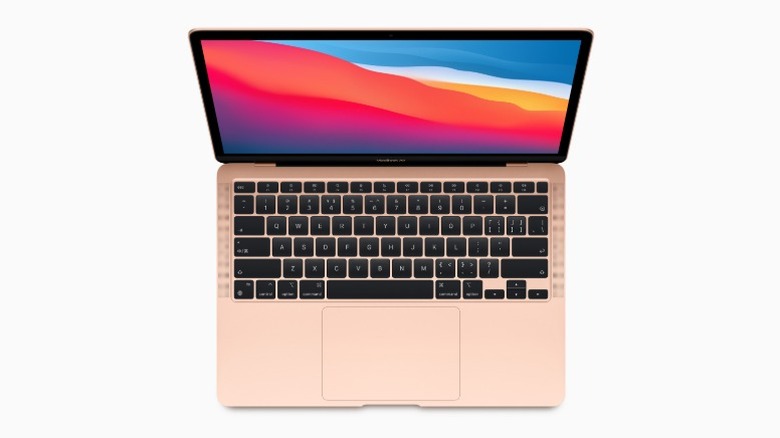
In 2018, the world first learned that Apple had begun serious development of its first in-house laptop chip. When the M1 MacBook Air landed two years later, its benchmark scores earned it a genuinely warm reception. It performed almost twice as well as the Intel-based Core i9 MacBook Pro from the previous year and held its own against that year's Pro counterpart, despite having no fan to combat thermal throttling.
The fanless design was the real party trick. A laptop that could run completely silent while genuinely outperforming Intel-based MacBook Pros from just months earlier felt like it shouldn't be possible, but it was. The M1 MacBook Air managed to keep up with newer competitors years after its 2020 launch, and that's what sealed its reputation. Years down the line, well after four newer generations of Apple Silicon had shipped, reviewers are recommending it as a used laptop that's still worth buying.
WORST: The 12-inch MacBook (2015)
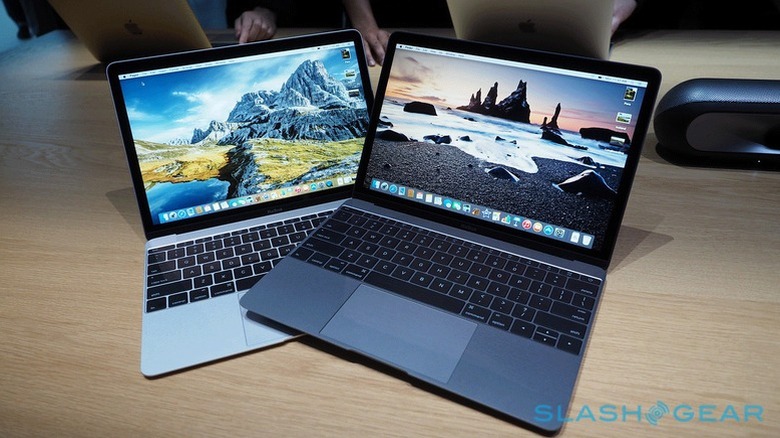
When the 12-inch MacBook was introduced, it was marketed as Apple's thinnest and lightest Mac ever. At a glance, it was obvious Apple had taken minimalism further than almost any laptop before, whether that was intentional or not. At roughly 2.02 pounds and 0.52 inches thick, it shipped with just a single USB-C port handling charging, data transfer, and video output all at once. This meant that if you wanted to plug it in to charge, you would lose any other connection.
The lackluster internals didn't help its case. It shipped with a fanless Intel Core M chip, so it would stay silent even under heavy use. This sounded great on paper, but in reality, it could never handle heavy use. While it could handle everyday tasks, it struggled with gaming and had zero internal upgrade potential once you'd bought it. People even described it as being closer to an iPad bolted to a keyboard than an actual MacBook, which wasn't entirely a compliment.
Its real legacy, though, is what it introduced rather than what it removed. This laptop marked the debut of the butterfly keyboard, the infamous low-travel mechanism that would go on to plague the entire MacBook Pro line for the next four years and end in a class-action settlement. Without ever directly addressing the controversy, Apple quietly discontinued the 12-inch MacBook in 2019 without a direct replacement, letting the Air series take the position as the "ultra-portable" device in the MacBook lineup.
BEST: The M1 Pro/M1 Max MacBook Pro (2021)
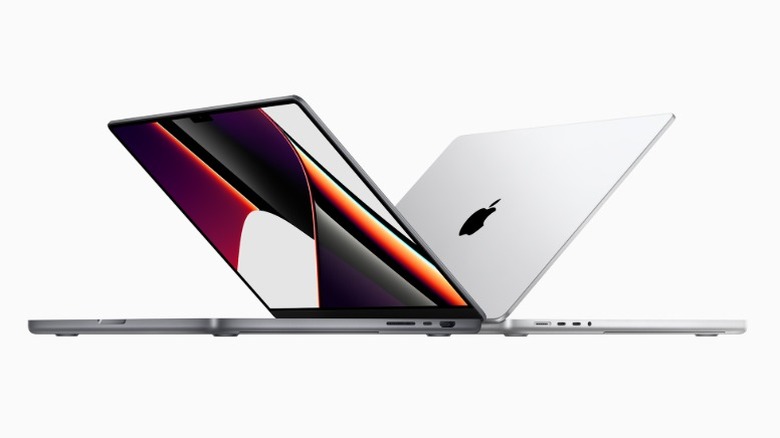
The M1 Pro and Max were a breath of fresh air, offering the best performance among MacBooks at the time of their release. The benchmark scores measuring graphics processing performance were off the charts; the M1 Pro's score of 40,991 was double that of the base M1 from 2020, and the M1 Max was 3.2x higher than the M1. Another area where the 2021 M1 Pro and M1 Max MacBook Pros received major upgrades is the display, which now features ProMotion technology. Unlike previous MacBook models, which had their refresh rates capped at 60Hz, the ProMotion-enabled models offered adaptive refresh rates up to 120Hz.
As if to undo all the mistakes of the 2016 MacBook Pro design, the 2021 MacBook Pro saw the return of function keys, saying goodbye to the Touch Bar. It also saw the return of an HDMI port, an SDXC card slot, alongside three Thunderbolt ports and MagSafe 3, which supported fast charging up to 140W.