

7 Car Parts You Can 3D Print (And 6 You Probably Shouldn't)
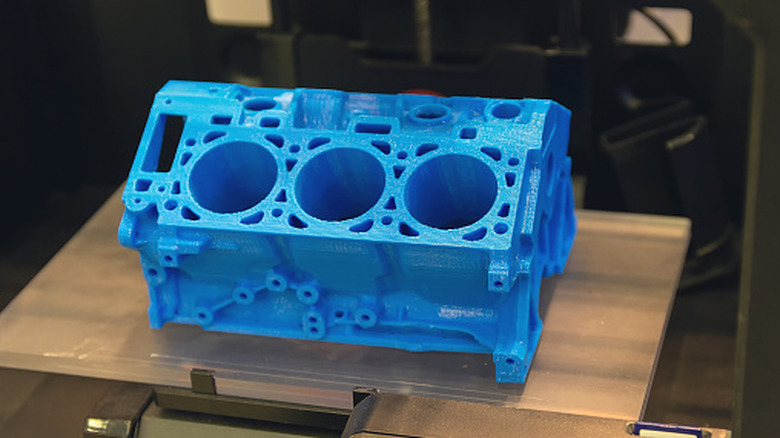
Not too many years ago, it was unheard of to make your own car parts. That is, unless you're the MacGyver type, although duct tape is not a viable replacement for a manufactured part. Technology has come a long way, though. These days, it's even possible to 3D print a Lamborghini. The investment required to print your own luxury car is even lower than the price tag of an actual Lamborghini. Still, there are some drawbacks to 3D printing an entire car.
For one thing, most household filaments won't stand up to, say, hot asphalt or direct sunlight. That's not to say you can't 3D print car parts, however. Especially when it comes to in-cabin parts that don't need to withstand tough conditions, there's a nearly endless list of car parts you can 3D print.
You might find that a printer and filament are cheaper than sourcing your own parts. At the very least, 3D printing them might be faster. Plus, in cases where you can't find OEM car parts, being able to either create or download a 3D print file is priceless. All of that said, you probably shouldn't 3D print every single replacement part your car needs. Here's a non-comprehensive list of what you can — and probably shouldn't — 3D print for your car.
Print: Cap tethers and holders
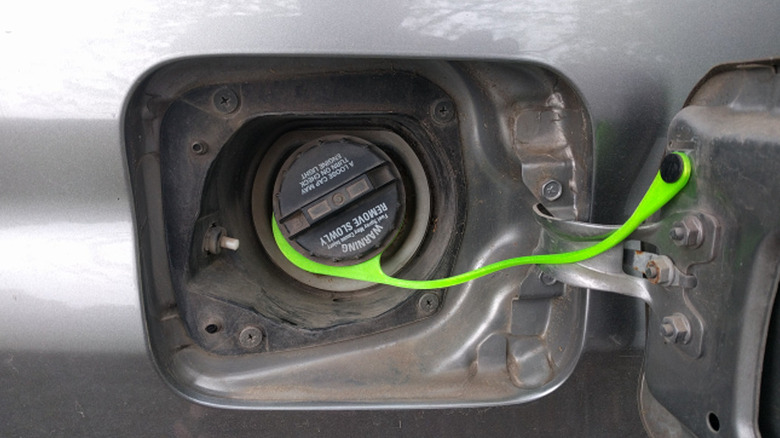
Most modern cars come with gas cap tethers or, at the very least, a slot to pop the cap into while you're pumping gas. What happens, though, if your gas cap tether breaks? Or, if you have an older vehicle, you might have to resort to holding the cap or setting it on your bumper while at the pump. Depending on the make of your vehicle, you may be able to easily find a replacement cap. Or, you might scour the internet and turn up empty-handed, or decide that it's not worth gambling on a pricey part from eBay (been there).
Whatever your motivation — financial, convenience, or both — a quick online search can bring you to replacement tether files for 3D printers. While replacement tethers abound, there's also no rule saying you can't retrofit a tether to any vehicle's gas door. You could also find or create a file to print a bracket for holding the gas cap.
For obvious reasons, we don't recommend trying to replace your actual gas cap with a 3D-printed version, but any kind of attachment or tether is fair game. Keep in mind that the exterior of your car, even if it's covered by the gas door, can get hot. Thus, your best bet may be an outdoor-friendly filament, like PET-CF.
Print: Custom shift knob
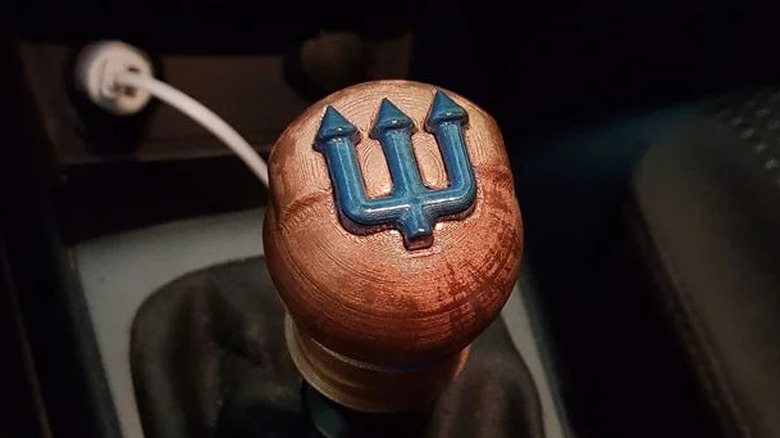
One of the things I loved, years ago, about driving an older Volkswagen Beetle was the ability to buy replacement parts that made my car more unique. Back in the early 2000s, that involved skimming a catalog and finding the part I wanted, then asking my mechanic to order it. These days, all you need is your 3D printer and some creativity (or someone else's by way of a prepared file), and you can have a whole arsenal of custom shift knobs.
Sites like Thingiverse have free files for replacement shift knobs, plus more elaborate options. Before deciding on a design, make sure it's compatible with your current shifter. While some knobs screw off with a bit of elbow grease, others might have screws or clips holding them on.
Although a shift knob will be protected somewhat as it's inside your car, some filament types may still melt after a day in the sun (or even the shade). ABS and nylon, specifically, have higher heat resistance, according to Creality. Considering that on an 88-degree day, a car's interior can hit more than 130 degrees Fahrenheit, ABS filament, which can handle temperatures over 400 degrees, seems like a very safe bet.
Print: Hubcaps
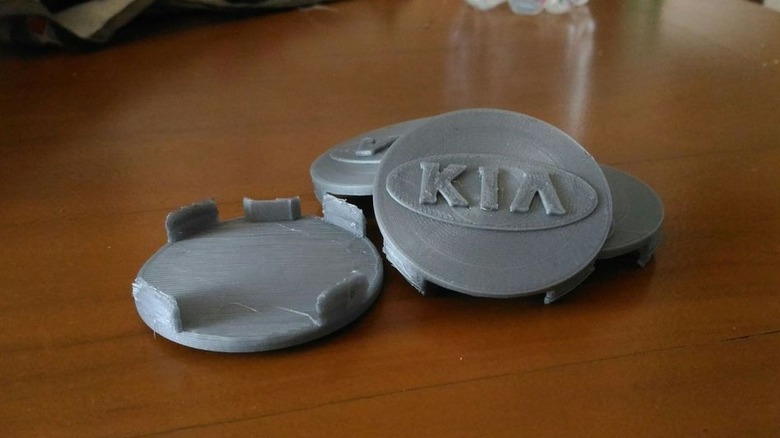
Fortunately for drivers, hubcaps are mostly decorative. In theory, they might keep your wheels a bit cleaner, but otherwise, they're just for looks. Given how many hubcaps you might spot on the side of the road (or in the median on the freeway) in a day, it's a relief. Yet, if you've ever lost a hubcap and tried to replace a single one, you might already be eyeing your 3D printer and taking measurements.
There's a reason some of the most valuable parts from junk cars include hubcaps. It might be because people really just want a matching set. Although I don't have a preference for my Prius, it seems to really bother some folks that one hubcap is missing. What's nice to know is that you have options if you have a 3D printer.
Like other assorted car parts, hubcaps are easy to experiment with and 3D print. You can find premade hubcap files on sites like Thingiverse or take the DIY approach and attempt to create your own. There are also options, from full-on replacement hubcaps to smaller center caps that let the wheel and rim show.
Print: Air vents
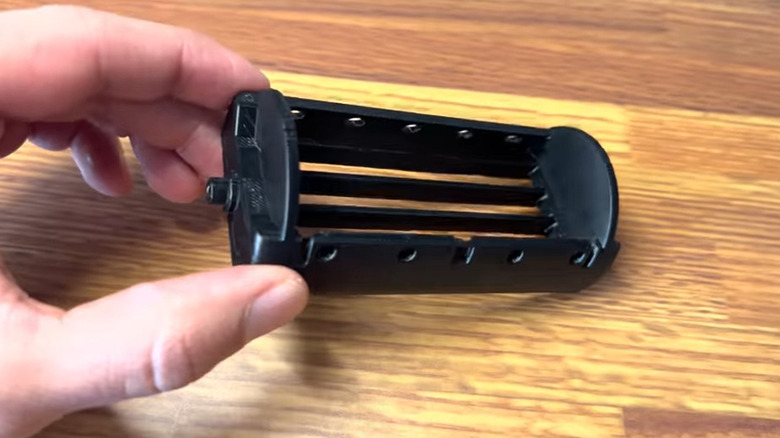
The older your vehicle gets, the more likely it is that you'll struggle to find replacement parts. Unfortunately, manufacturers may discontinue parts, which is what happened when the YouTube channel The Everyday Build tried to find replacement parts for a Land Cruiser. The good news is that with the assistance of some 3D printing experts, even discontinued Land Cruiser parts are within reach.
If you're particularly savvy with a 3D printer, you might not need to take all the steps that The Everyday Build did. Hiring a CAD expert also isn't necessarily cheap, although it may still be preferable to going without those replacement parts. With a combination of experts who can create 3D print files, existing files on the web, and a bit of experimentation on your personal 3D printer, you might be surprised at how many spare parts you can cobble together.
The Everyday Build did it with everything from sun visor clips and spacers to plastic screws and a cassette deck phone holder. Accessories like drink holders, door handles, and miscellaneous clips are also on the menu. Possibly the most impressive of these was the AC/heater vent. While some cleanup is probably required due to the stringy nature of most filaments, a functional replacement vent isn't beyond the realm of possibility.
Print: Accessories
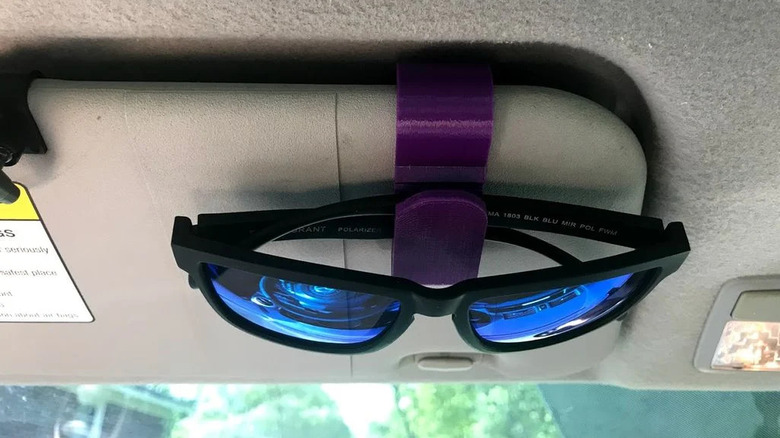
The great news about 3D printing car parts is that anything you can imagine, you can create. It might take some tweaking (or sanding) to fit perfectly, but there are tons of 3D-printed car accessories you can churn out with nearly any size printer. Especially if you have filament sitting around, why not make a mini trash can or a visor clip for your sunglasses? If you want something equal parts kitschy and functional, printing a gimbal cup holder is perfect; it keeps your drink balanced and serves as a conversation piece.
Hooks and cargo anchors are some other handy 3D-printed items for the car that go beyond the cockpit area. For example, car seat hooks can hold shopping bags, clothes hangers, trash bags, or even your smart devices (or the kids'). You can even find files for cupholder organizers that hold miscellaneous small items like coins and paper.
Although you'll still want to aim for a higher heat resistance level with your filament, most interior accessories avoid direct sunlight. Still, it's worth experimenting with what conditions are like in your area and inside your particular vehicle before printing a full set of accessories.
Print: Replacement knobs
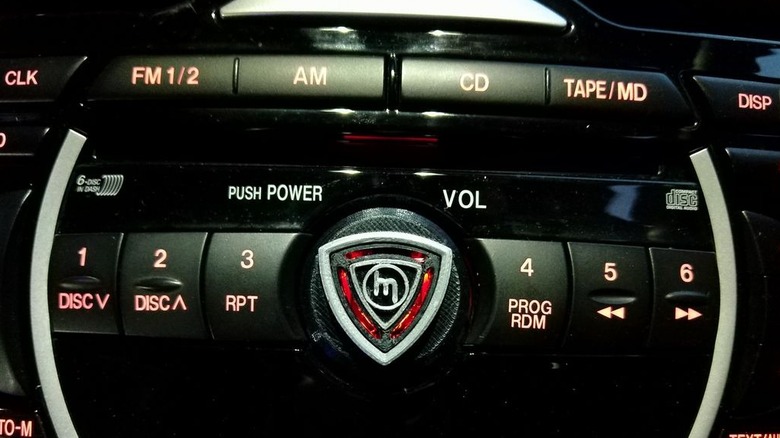
One of the parts older vehicles may need replaced (at least, mine did in an older VW and Toyota Camry) is interior knobs. Unless you have easy access to a Pick-N-Pull type car parts lot, it can be tough to track down the knobs you need. Even if they no longer exist, 3D printing could save the day once again.
3D file sites like Printables and Thingiverse host tons of free files for various types of replacement knobs. Among the most notable? A radio knob for 2003 to 2009 Volkswagen Golf V models, and a Chevy S10 radio tuner knob. Of course, there's nothing stopping you from modifying an existing file or going the DIY route to create a knob that fits your vehicle perfectly.
Then again, if you have an aftermarket stereo, you may also find replacement knobs for Kenwood and other head units. In some cases, generic alternatives may also fit if you get the sizing just right. While eagle-eyed passengers may be able to spot the difference between filament and molded plastic, getting creative with your filament type and color can customize your car's interior even more.
Print: Interior trim pieces
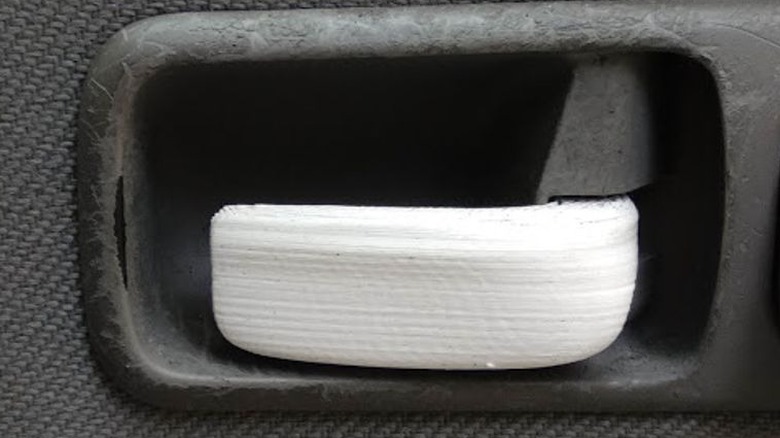
If you've never had a door handle or window crank snap off in your hand, consider yourself lucky. Drivers of older vehicles, especially, are likely to experience this, and like any other aftermarket part, handles can be hard to find. Again, the good news is that anything you can imagine, you can 3D model, which means door handles and interior trim pieces are well within reach.
Land Cruiser owner The Everyday Build even printed replacement screws for a floorboard trim piece, so all is not lost even if your attachment pieces are. Even if you drive a Volkswagen Lupo with a broken door handle, there's a solution out there — in this particular case, on Thingiverse.
Some other neat ideas for interior accessories are clips to keep cables out of the way and a stereo-mounted tray for miscellaneous in-vehicle items. If you're more into replacement parts that help revive older or damaged vehicles, try searching on Thingiverse or Printables. For example, PealPrint on Printables even made a replacement door lock trim ring for their Volvo.
Don't print: Brake components
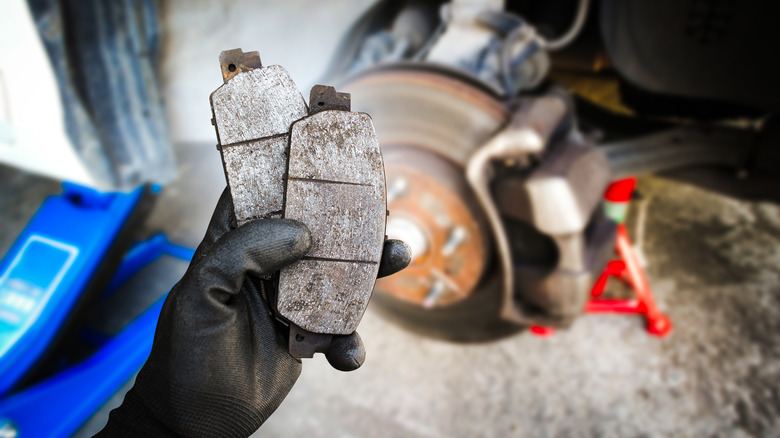
Many of the car parts you probably shouldn't 3D print come down to two factors: safety and heat resistance. Most automotive components have undergone decades (or more) of testing, something you can't really replicate with a 3D printer at home.
Brake components are one of those things that aren't worth taking a chance on, even in the interest of saving money. Consider the fact that, under normal conditions, brakes can easily exceed 300 degrees Fahrenheit, and in some situations can even hit 700 degrees. You don't want to test 3D-printed parts at those temperatures, even if they're brake-adjacent. We'd like to assume no one would try to use 3D-printed brake pads in any application, but just in case you were considering it, please don't.
Another aspect of your car's braking system is, of course, friction. If you think that 3D printing any brake component is a good idea, spend some time rubbing two 3D-printed pieces together and see what happens. Then, head to the auto parts store for an actual brake kit.
Don't print: Seatbelt pieces
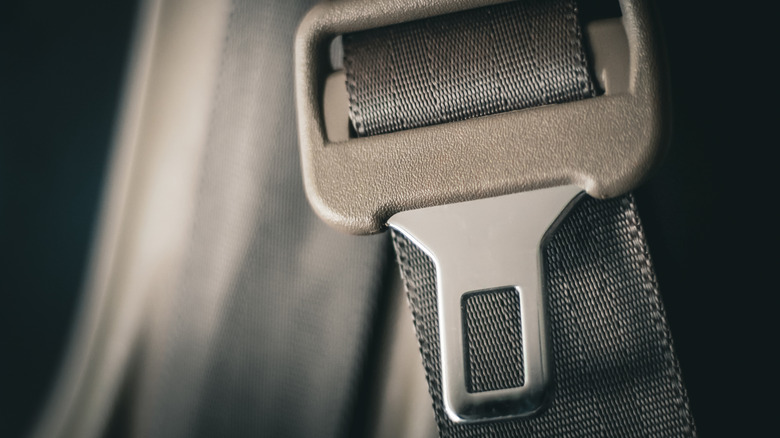
It may be tempting to 3D print accessories for your vehicle's seatbelts. After all, some of us who are shorter may struggle with seatbelt burn on our necks, and it's not fun. The thing is, seatbelts are crucial safety equipment. The NHTSA specifically emphasizes that properly wearing your seatbelt — positioning the lap belt on your hips and keeping the shoulder belt over your shoulder — is a necessity.
Keep in mind that vehicle manufacturers can and do offer seatbelt adjusters and extenders (that's according to the NHTSA). Heading straight to the dealership is a safe bet when it comes to getting the right fit.
Although there's not a simple solution to the seatbelt burn problem for shorter folks, it's something to think about when you're test-driving a new or used vehicle. Looking for the right fit out of the gate can help you avoid discomfort and safety risks, and the desire to improperly modify your car.
Don't print: Under-the-hood parts
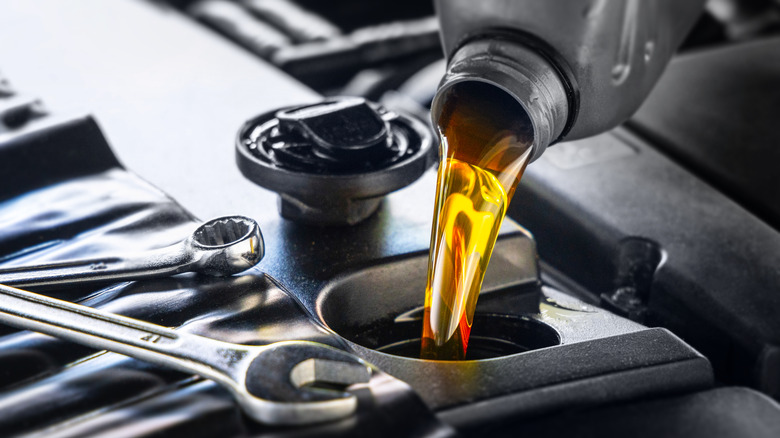
Although some high-performance filaments like nylon or ABS might be able to withstand engine heat, it's not a good idea to 3D print parts that go under the hood. For one thing, there's more than just heat to contend with in the engine compartment. A variety of fluids (some under pressure), potentially wet conditions, and electrical components all lie under the hood of your vehicle.
We can't think of any part that's worth the DIY effort that we wouldn't also worry about banging around under the hood. Even a fluid cap could melt, depending on the conditions, and scraping melted filament off a build plate is bad enough — no need to get out the scraper for your engine block, too.
Plus, DIY enthusiasts may have good intentions, but there's no at-home testing that can replace decades of industry testing. Certain filaments can also off-gas potentially harmful fumes under different conditions. Thus, we suggest leaving anything under the hood to vehicle manufacturers.
Don't print: Load-bearing pieces

Plenty of 3D printing experts model parts that they then subject to stress. Emily the Engineer's skateboard project comes to mind; Emily designed an entirely 3D-printed skateboard. In the end, she was successful, but getting the skateboard to carry a person and roll along took a fair amount of engineering.
Transfer Emily's early failures on a few-foot scale to a large vehicle, and you can see why we don't recommend putting any 3D-printed part in a position where it carries your car's load. Not only is a skateboard under far less stress than a vehicle's suspension system, but friction alone could destroy 3D-printed parts.
If you want to hear it from an industry expert, 3D printer brand Creality specifically says not to 3D print critical car parts. In terms of "critical," Creality defines those parts as anything that gets hot, vibrates, or is otherwise placed under mechanical stress. That includes ball joints, brackets, belt tensioners, and a long list of other parts that have to be specifically engineered — by experts — for performance and safety.
Don't print: Anything electrical-adjacent
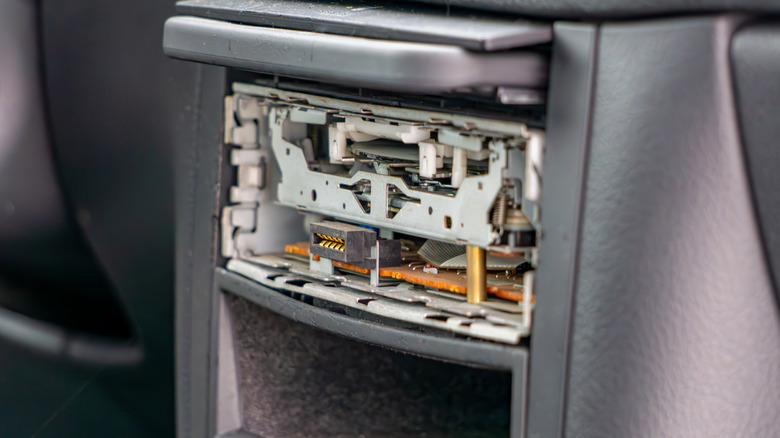
For the same reason that we don't recommend 3D printing engine or brake components, we'd also steer you away from printing anything that could be exposed to electrical systems. While brackets and clips may seem like simple DIYs, making sure that anything that comes into contact with wires and possible sparks is industry-grade is crucial.
Generally, our rule is to stick to in-cabin projects when 3D printing car parts. There might be some cases where a clip or part (like a hubcap) can be designed and printed to handle a lot of heat, sunlight, and moisture. However, electricity is a different ballpark entirely.
Wiring is something that's best left to the professionals, and those professionals should make sure there are no exposed wires anywhere in your vehicle. Especially if your car has seen recalls for electrical concerns — for example, in-glass defrosters that malfunction — we say it's better to be safe than sorry.
Don't print: Steering wheel components
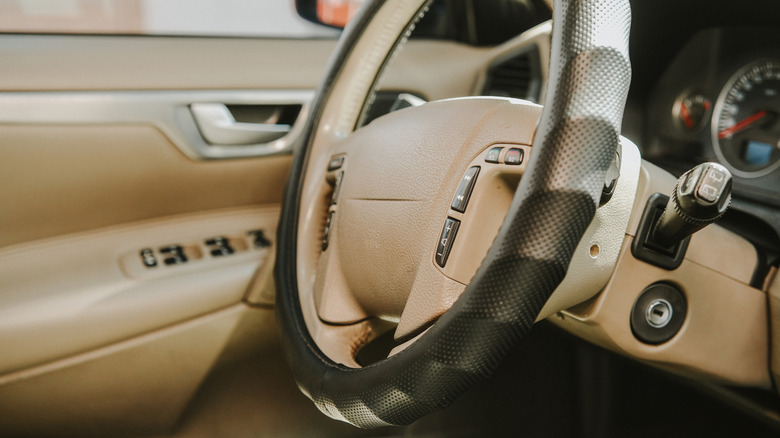
When I drove a 1972 Volkswagen Beetle, it was hard to find a replacement steering wheel when mine was damaged. Not only was my car old and somewhat rare, but it was also a Super, which meant a handful of special additions for that and precious few other years. Thus, I can see where a vehicle owner would be tempted to 3D print their own replacement steering wheel or steering wheel components.
However, a few safety functions — even in older cars — mean it's not a good idea to 3D print anything related to your steering wheel. As early as the 1960s, vehicle manufacturers began putting collapsible steering columns into cars in an effort to make driving safer. Because of safety features we can't necessarily see, adding anything to the manufacturer's steering wheel sounds like a bad idea.
An aftermarket steering wheel design could also impact how your airbags deploy, if your vehicle is new enough to have them. Airbags deploy quickly, and the driver's airbag comes directly from the steering wheel. Anything hanging on or near the steering wheel could become a projectile (or worse) in an accident. Even seat covers can affect airbags, and they're soft. Overall, it makes sense to avoid any add-ons that can get in the way of safety equipment, even if it's a super cool 3D-printed accessory.