

Can You 3D Print Car Parts? Here's What You Need To Know
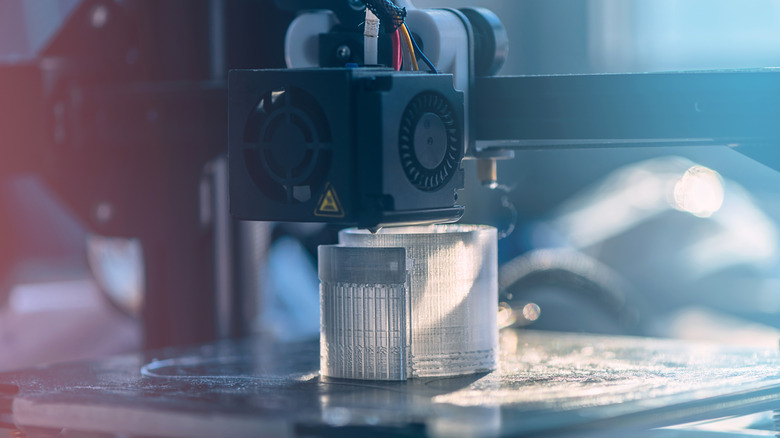
In a sea of less-than-desirable technological advancements over the years, and especially in recent history, one of the coolest things is undoubtedly 3D printing. It's exactly what it sounds like: instead of printing text or a photo on a piece of paper while complaining about it pretty much constantly, 3D printers use filament to create actual objects, often based on CAD data or 3D models. They used to be really expensive, but nowadays, there are some pretty affordable and surprisingly decent consumer-grade 3D printers, though there are some things you should know before actually buying a 3D printer.
As well as being a fun thing to do for creative people, 3D printing has also found plenty of real world uses, from medicine to car parts. You might have seen some people on the internet claiming they saved tons of money by 3D printing a certain part for their car, instead of ordering it from the manufacturer or their local O'Reilly Auto Parts. Can you do that as well? Absolutely. Obviously, there's quite a bit that goes into it, but as long as you do it correctly, stick to a specific subset of car parts, and you either own or have access to a quality 3D printer, you're off to the races.
How to print your own car parts
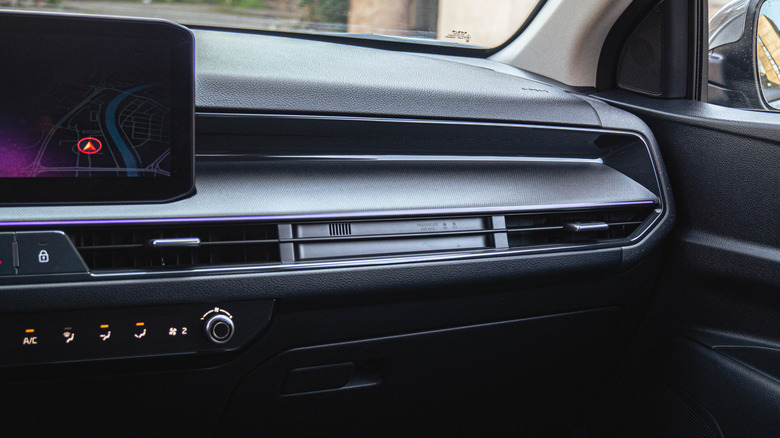
Let's get the basics out of the way: yes, you can 3D print some car parts, but don't go trying to print something major like an intake manifold. Most consumer 3D printers on the market aren't big enough to handle parts of that size, and while it still can be done with metal filaments, you'd have to fork over tens of thousands on a higher-end 3D printer that can handle metal. It's a good idea to stick to basic stuff, like trim pieces, climate control knobs and buttons (if you still have them), clips and mounting brackets, and air vents. Jan, a 3D printing expert, showed the process in great detail on the VWIDTalk Podcast. Starting out with a basic headphone stand, Jan showed off the workflow.
The workflow is almost always the same — it's a matter of putting together the custom part in CAD software like Autodesk Fusion, and then using a slicer, the software that prepares your 3D model for printing. This breaks it down into how long it'll take, and the amount of filament required, and then the printing can begin.
The great thing about 3D printing is that if a part doesn't look like how you envisioned, you can make a few adjustments and do it again, or print a different one altogether. You would have to prepare a good amount of filament, but it's still a fairly simple process if you're well-versed in CAD and 3D modeling. If you want to skip the modeling process, websites like Thingiverse offer a massive collection of objects ready to 3D print, including trim pieces and other components for cars.