

Can Seat Covers Affect Your Airbags? Here's What You Need To Know
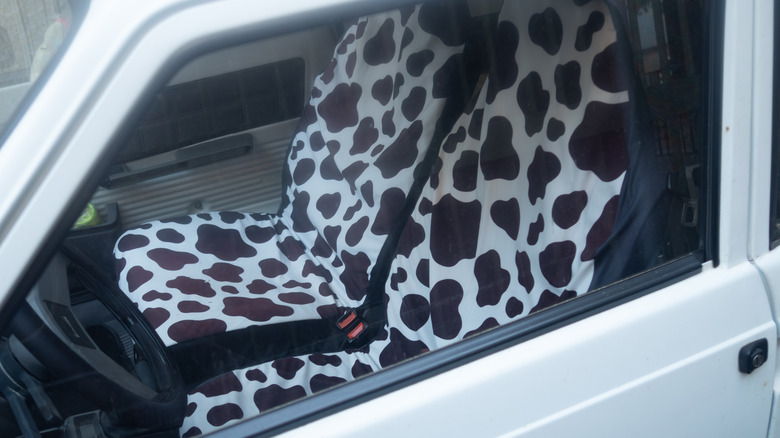
Our love affair with cars is well documented, and personalizing our precious rides is one way to express that love. From big-ticket changes like custom paint jobs, tinted windows, chrome wheels, and upgraded sound systems to less wallet-busting touches like adding hula girl dashboard dolls, interior lighting, fuzzy dice hanging from your rearview mirror, and seat covers, there are endless ways to deck out your car. In fact, so many of us bedazzle our vehicles that a $50 billion industry focused on aftermarket goodies for vehicles exists.
While most of these accessories don't affect the function of your vehicle, some of them, like seat covers, may pose a problem. According to the Insurance Institute for Highway Safety (IIHS), many seat covers weren't designed to work with your car's restraint system and may, in fact, block or redirect a deploying airbag as it tries to keep you safe during an accident.
Thanks to the National Highway Traffic Safety Administration (NHTSA), all new vehicles since 1999 are required to have airbags. Since their introduction, they've saved over 70,000 lives, so they do indeed work as intended. While the law only requires vehicles to be equipped with front airbags, most manufacturers also install them in the doors to meet federal side protection requirements. Where those airbags are located will influence what kind of seat cover is most compatible with your particular vehicle.
Choose safety over personal taste when it comes to seat covers
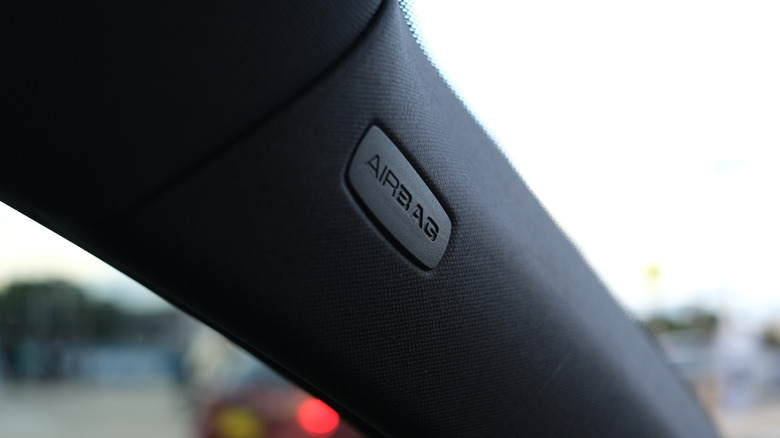
When considering new seat covers, a good rule of thumb is to just assume that every set of covers you're interested in — either because they're plastered with a cool design or have the perfect color scheme — isn't going to work. Guessing or hoping isn't helpful, so instead, make sure they're specifically compatible with your car's make and model. That way you'll know for sure they won't block any sensors or other important features of the supplemental restraint system (SRS).
Knowing exactly where the airbags are located inside your vehicle is key to compatibility. Plus, it gives you a piece of critical information into how your car works. If you drive an older model that doesn't have them, or they're built into the door pillars, your options open up as there's less chance of interference. Checking the user's manual can help, but searching the internet may be more useful. You can also thoroughly inspect the car's interior, looking for the distinctive airbag logo somewhere on the seats.
If you do find them on the seat, options become limited because seat-mounted airbags either use special stitching or have a weak area designed to burst open, allowing the airbag to deploy and do its thing. In this case, you'll need covers designed specifically for seats with integrated airbags. Choosing the wrong one can interfere with or prevent deployment and won't protect you properly in an accident. And no one wants to become just another National Highway Traffic Safety Administration stat for the sake of personal taste.