

2026 Kawasaki Versys 650 Review: Can An Affordable Daily-Rider Also Be A Road-Trip Hero?
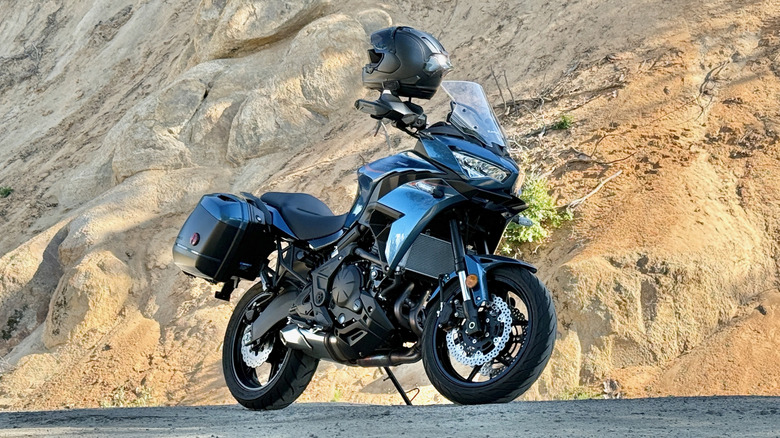
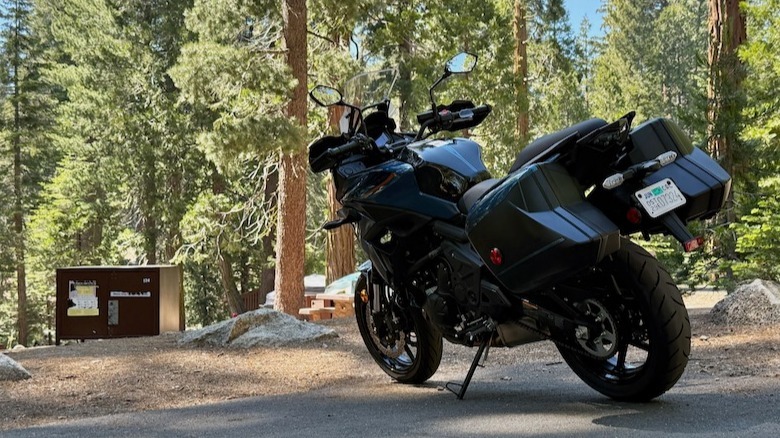
The best use I can think of for a touring motorcycle of any kind is to go to some far-off destination with winding roads and experience the most beautiful landscapes possible, all with an open-air experience. So, that's exactly what I set out to do on the 2026 Kawasaki Versys 650: headed north out of Los Angeles, pointed towards Kings Canyon National Park. It's about 250 miles from my front door to the entrance of the park, and once I arrived, there was all sorts to explore from the back of the Versys.
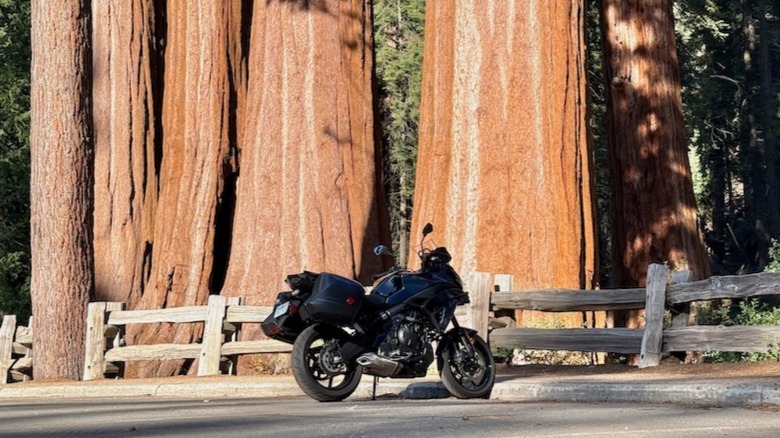 Travis Langness/SlashGear
Kawasaki loaned me their middleweight sport touring bike, and for a few weeks I'd been riding it around Los Angeles. It provided a tall, commanding view of the road. It had hard cases large enough to hold some groceries and an extra jacket for cool weather. And from what I could tell, it was comfortable enough to tackle most rough city commutes, so it was likely up to the task of transporting me over 500 miles.
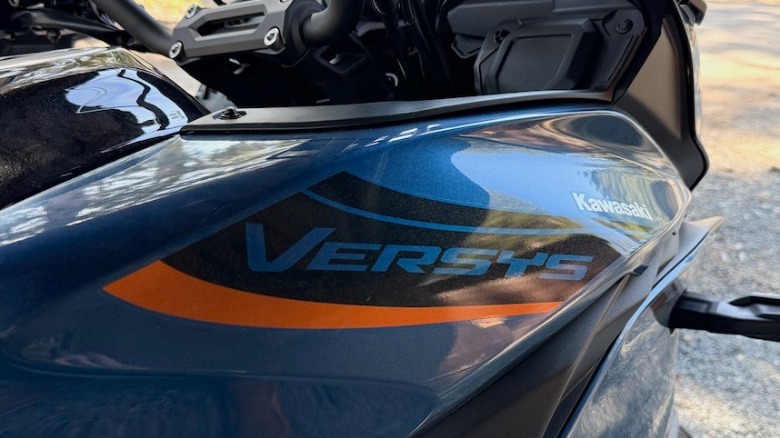 Travis Langness/SlashGear
In the middleweight world, bikes like the Versys 650 typically lack premium features as standard–stuff like cruise control, center stands, heated grips, and USB ports–but they're way less expensive than big bikes like the Versys 1100. If you can do without the extra amenities, you might save a bit of cash. But after a long weekend in the saddle, even without the premium feel of a larger, more-expensive bike, I was a believer in this middleweight and its can-do attitude.
Overpacking is having just enough stuff
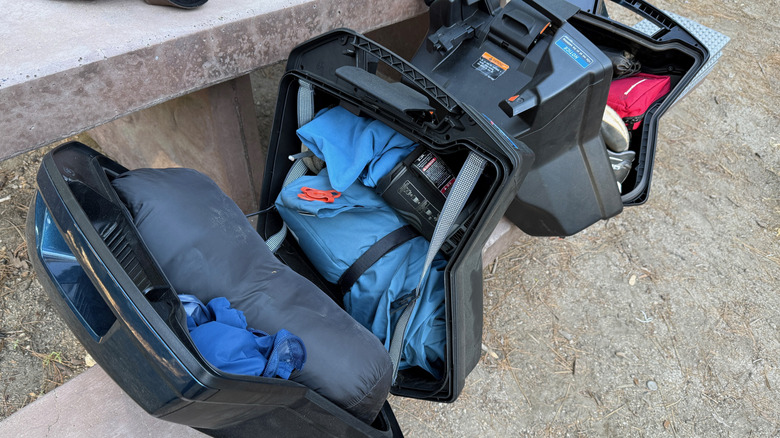
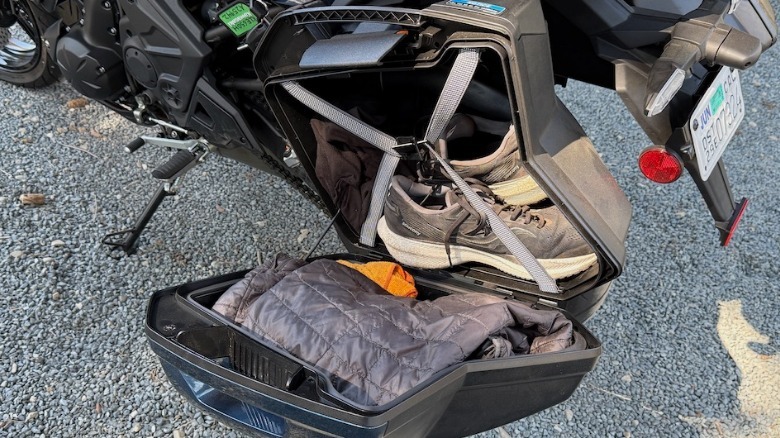
Before I set out on my road trip, I needed to make sure I could bring all the essential gear along on the Versys. More than just all the proper riding gear, I'd need the essentials for camping and hiking. I've done some backpacking trips over the last few years and I've got a friend who's obsessed with lightweight packs, so I've got a lot of minimalist gear. Still, even the lightest of packing for three days of adventure overwhelmed the Versys' side cases.
 Travis Langness/SlashGear
In practical terms, the two side cases were able to fit the following items on my camping trip: Sleeping roll, sleeping bag, Jetboil, a small quick-dry towel, a few dehydrated meals, camp shoes, tire inflator, tent, and a first aid kit. Everything else–including my clothes, water, and a tiny fold-up camping chair–all had to be packed into my backpack and strapped down to the back of the bike. This is where a top case would come in particularly handy, but this bike didn't have one; Kawi does offer a bracket and a few choices for top cases for around $300 each.
 Travis Langness/SlashGear
In the city, the Versys 650's side cases proved a point I've had for a while now: that a top case is better than side cases, and that a top case paired with side cases is the best scenario for long-distance motorcycle riding. Whether you're riding solo or two-up, this is the best way to fit the most appropriate luggage without sacrificing seating, and when you're just bringing home some groceries, a top case is better suited for splitting lanes here in California. It's nice that the side cases come with the Versys 650, but I'd prefer a standard top case instead.
Proper placement of power
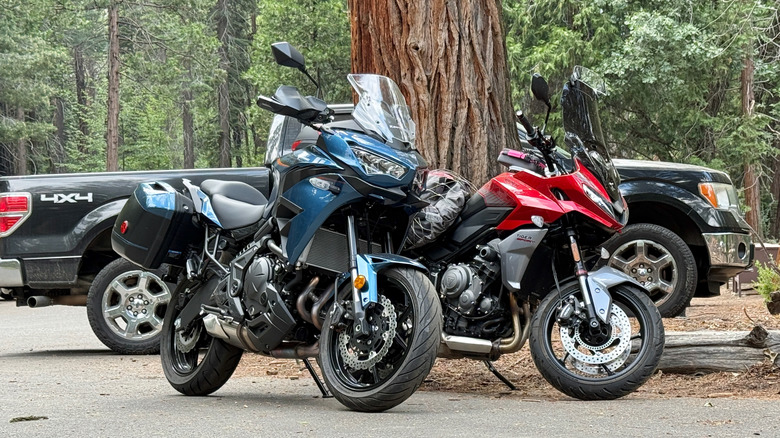
A potential drawback of middleweight bikes like the 650 are that they're often modestly powered, potentially reducing their road-trip appeal. And while it wasn't a speed racer in any sense, the 650's power felt totally adequate for just about every scenario on my trip. The 649cc parallel twin makes a healthy 66 horsepower and 45 lb-ft of torque, and it sends that power to the rear wheel via a six-speed transmission. This isn't the sort of power that thrills, but it's capable of pushing the Versys forward at a respectable pace.
 Travis Langness/SlashGear
The 650's torque comes on early and flattens out pretty low in the rev range, but it's easy to modulate the power. With the bike fully loaded with me as a rider, two full side cases, and a backpack tied down for good measure, the engine did feel a bit stressed, though. It required me to rev it a bit higher in certain scenarios than I'd typically prefer, often dropping down a gear or two just for a climb. I'd experienced this on the highway around Los Angeles a bit, but it was even more pronounced on the long uphill grades that led to Kings Canyon with all that weight.
Who's in a rush?
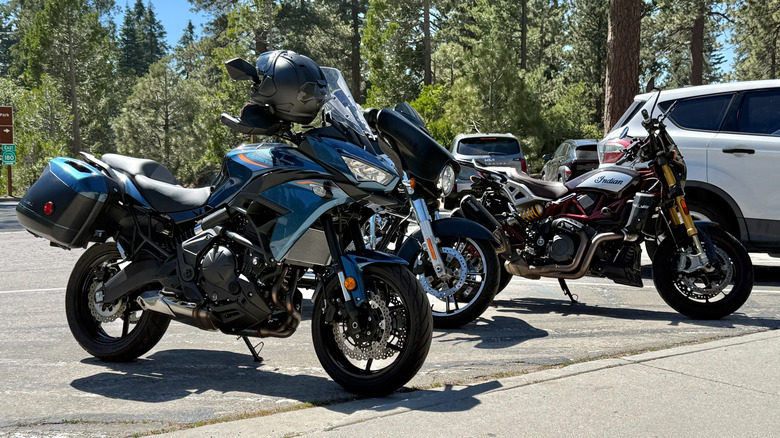
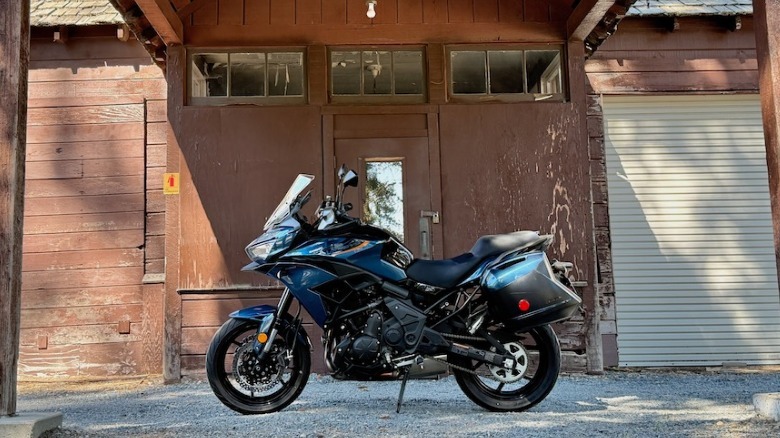
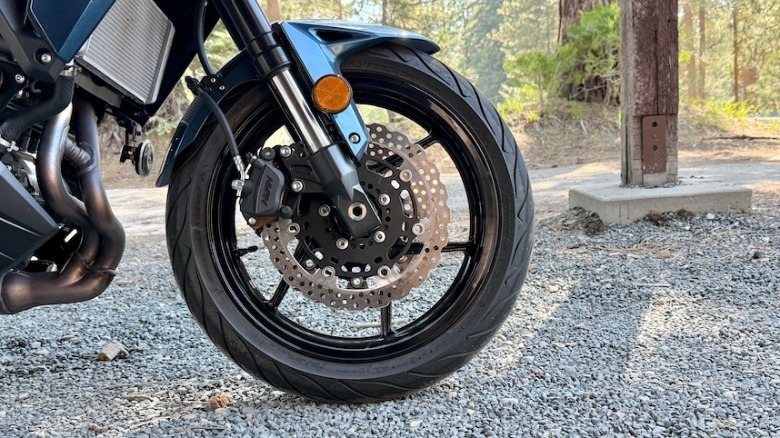
Thankfully, I'm not riding motorcycles on long, fully-weighed-down trips most of the time, so the Versys' power was generally sufficient. All the other riding dynamics added up to an enjoyable experience, too. With a curb weight of around 500 pounds (including the saddlebags), the Versys 650 felt light on its feet and quick to turn in. It had impressive confidence through corners, too, even though it was riding on a thin-ish 160/60 rear tire.
 Travis Langness/SlashGear
As far as the levers go, both the front brake and the clutch had a strong feel. The clutch was easy enough to squeeze, with a reasonable range of adjustability. The front brake had near-immediate feedback, and the rear brake did too, though neither felt too sensitive to the touch. Shifting up and down through the gears was easy thanks to a light clutch. A quick shifter is one of the missing features on the Versys 650, but it wasn't a deal-breaking omission from the spec sheet.
In it for the long haul
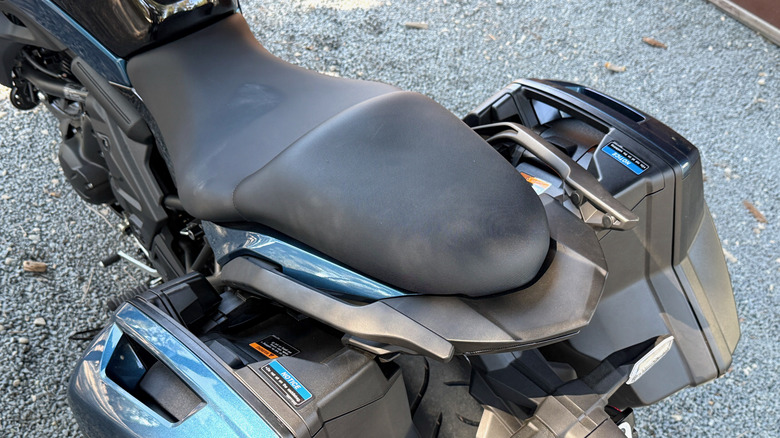
A highlight of the trip, however, was just how comfortable the seat and ride were. The typical single-piece seat on the Versys that stretches back for a pillion rider was seriously well-padded. I took a second person on the back during my first few weeks on the bike, and even they commented how comfortable it was: a strong compliment coming from a seasoned rider.
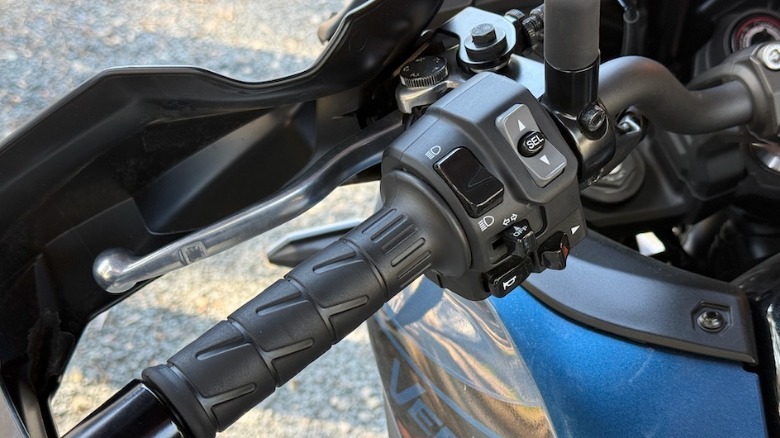
What turned out to be over 600 miles in the saddle of the Versys over my road trip weekend was an easy stretch. I never got seat-sore, and what's more, the riding position was top-notch, too. All the controls could be reached easily, and an upright seating position was doable the whole way.
 Travis Langness/SlashGear
Lending more to the Versys' long-distance skill set, fuel economy on my trip was excellent. On several different occasions I averaged in the high 50s for mileage, getting close to 60 mpg on one particularly flat stretch of highway. Combine that with a 5.5-gallon fuel tank, and the Versys is more than capable of going over 200 miles between fill-ups, with a fully weighed-down setup and a not-very-aerodynamic rider.
The windscreen problem all over again
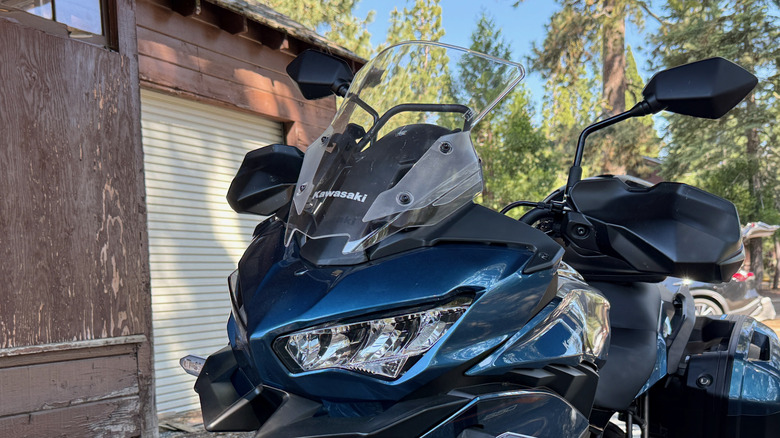
If the seat and ride comfort were highlights of my trip on the Versys, the windscreen was a lowlight. I had this same problem with the Ninja 1100: the screen is the wrong height for someone who's 5-foot-9. Even though the screen is adjustable, I couldn't get it low enough or high enough to keep my helmet out of the turbulent wind zone.
That meant that anywhere above 55 mph or so, the noise in my helmet was much louder than it would be even on a naked bike – I know, because I own a naked bike and I rode it back-to-back with the Versys, with much less in-helmet noise. And, just like I did with the Ninja 1100, I tried out the 650 with multiple full-face helmets, but it made no difference.
Standing up on the pegs was a temporary solution to alleviate some of the wind noise on my trip, but I couldn't stand up on the highway, especially not for long distances. I could do my best MotoGP-body-position impression and duck down a little bit, but after a while, going full-tuck on the upright sport touring bike got pretty annoying, too. In the end, I just made sure I had good earplugs in and tried to ignore it, but I'd absolutely buy a taller windshield for the Versys if I owned one, or remove this one altogether.
What it has and what it doesn't
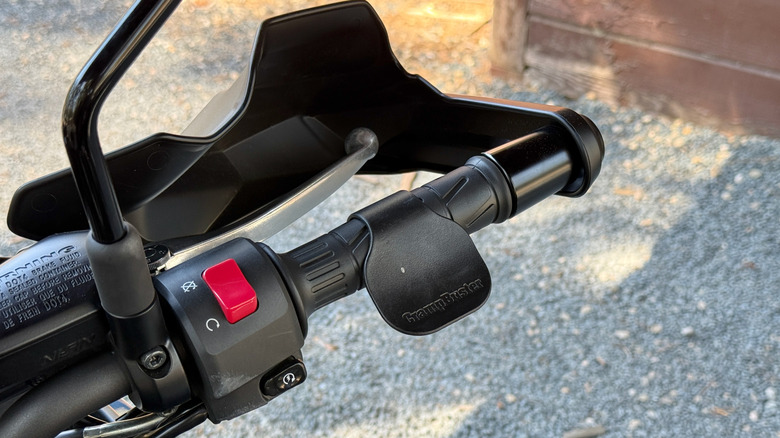
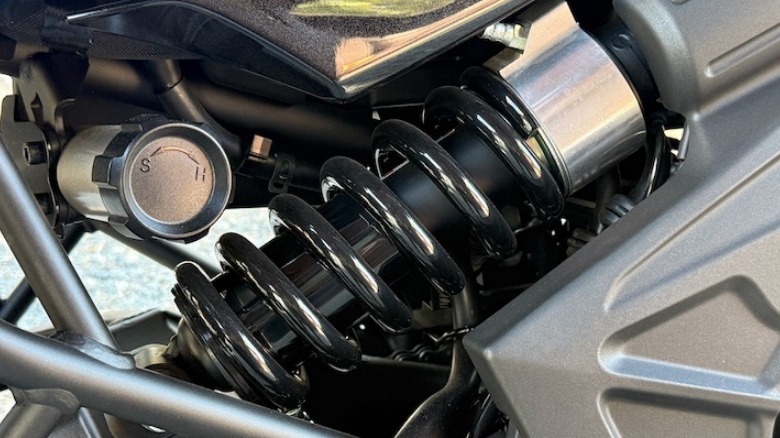
There aren't a lot of sport touring bikes in Kawasaki's Versys lineup, just the small Versys-X 300, the big, well-equipped 1100 SE LT, and the in-betweener I was riding, the 650. It has an MSRP of $11,084 (including a $685 destination fee) and comes with a decent amount of gear, but not everything is included. For instance, it had standard hand guards that were excellent for protection from errant rocks or bugs, and pretty good at keeping the cold air off my hands when I rode at night, but heated grips would've been an extra to the tune of $476.79. Other standard equipment included the hard saddlebags, the adjustable windscreen, and adjustable preload for the suspension.
 Travis Langness/SlashGear
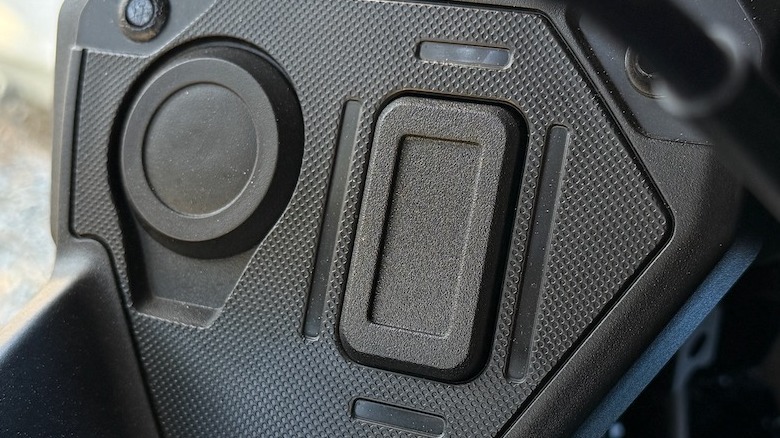
Kawasaki's Rideology app will connect you to the Versys 650, and a nice, clear and legible rider display is part of the package, too. A DC power outlet ($114.51) and a USB socket ($156.39) are also available, but they'd have to be added on as accessories; you'd probably want to add them with the super-obvious empty spaces that are there in their place otherwise.
 Travis Langness/SlashGear
Cruise control isn't included on the 650, nor is it available as an option, but I used a little device called a Crampbuster to reduce wrist fatigue (it's just over $10) and it worked really well for the length of the trip.
2026 Kawasaki Versys 650 verdict
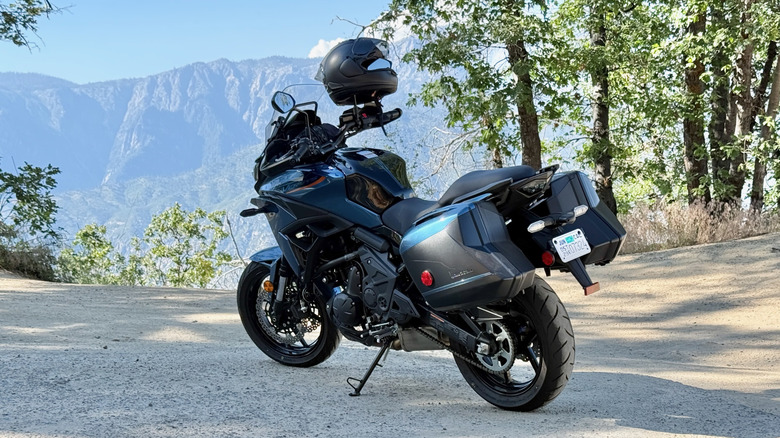
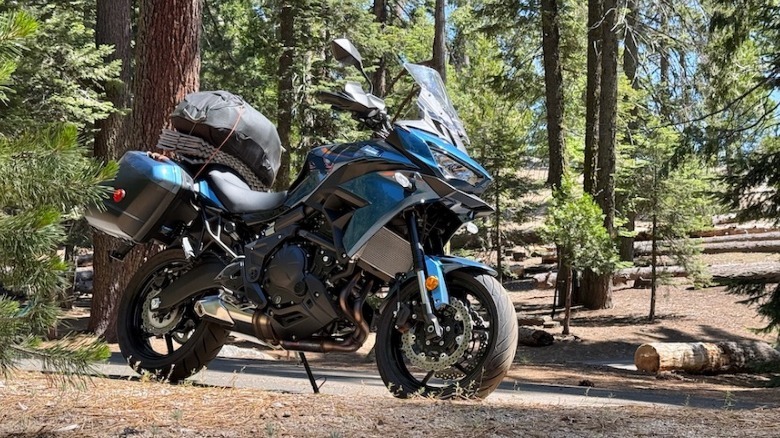
The 2026 Kawasaki Versys 650 is a great stop-gap between some of the basic, no-frills bikes out there and more lavish long-distance cruisers. It's an excellent daily rider with broad appeal that I'd be happy to have as a one-bike solution. It's missing some of the high-end equipment, but add a few options and you've got a bike with a ton of potential. It doesn't quite have what it takes to be the bike I'd select as a continent crosser, but it's packed with the sort of character that would make it an excellent commuter bike with enough talent to take on weekend expeditions.
 Travis Langness/SlashGear
If you're looking for more off-roading prowess, the Yamaha Ténéré 700 should be one of the first models from this class you take a closer look at. If you want a bit more in the way of equipment for money, definitely check out the Suzuki's new SV-7GX as well. It's priced at just $9,249 and comes standard with a quick shifter and a top-case mount — though it doesn't get side cases as standard.