

11 Annoying Power Tool Myths That Simply Refuse To Die

Conventional wisdom surrounds and informs every facet of human endeavor. From something as routine as mowing a lawn to driving a car, there are trains of thought that are viewed as universal truth when it comes to carrying out specific tasks. For instance, if you grew up around cars before the 2010s, you probably saw drivers taking special care to warm up their engines before going about their daily business — especially during the colder months of the year.
However, as technology advances, the beliefs we hold should be updated accordingly; the arrival of fuel-injected engines rendered that piece of conventional wisdom obsolete. So, while it doesn't hurt to idle your car engine for a few minutes a day, it's not needed anymore. It's now one of the many annoying myths about cars that have persisted to this day.
The same logic applies to power tools. Advice that may have been logically sound for protecting you and your tools a decade or two ago isn't necessarily true in today's landscape. Others might never have had any truth to them in the first place. Following outdated or unfounded advice when using power tools in construction or DIY projects could actively harm you or your productivity. In this piece, we'll be debunking 12 of the most persistent myths surrounding power tools.
Myth: a higher voltage always means a more powerful tool
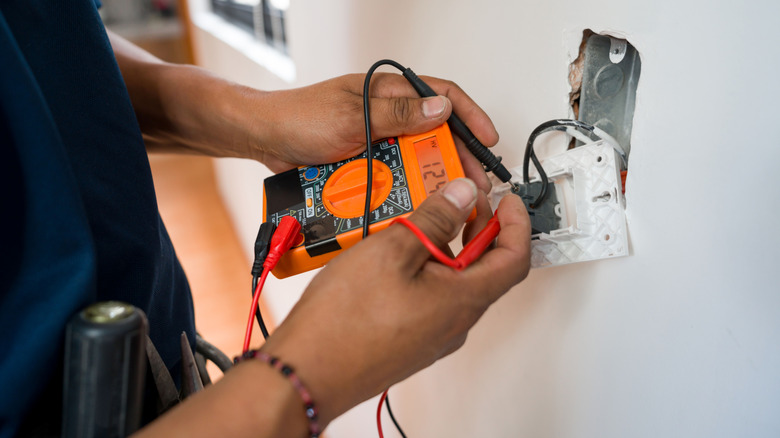
It's pretty common to check the voltage specs on any new tool you want to purchase. When the pricing gap between options you're looking at isn't so steep, there's a tendency to buy the more powerful one since you'd logically have more situations to apply the tool to down the road.
However, that rule of thumb doesn't always hold. In the case of 20V Max tools, opting for one over an 18V-rated counterpart might make sense purely because, numerically, 20 is greater than 18. Following this line of reasoning would be wrong, though. Battery cells have multiple rating systems for their voltages, two of the most common being nominal and maximum. Nominal voltage represents how much power a cell would typically output under load, while maximum, as the name implies, is the absolute most output it can give safely.
The trick is that some power tool providers advertise the maximum voltage while others advertise the nominal. That's misleading because a tool that's marketed as 20V Max actually has the same power as an 18V tool. 20V Max basically represents the maximum allowable voltage, so in a typical battery pack made of five cells, each would be rated 4V. The nominal voltage on each of these, though, is 3.6V. Multiply that figure by five, and you get 18V right back. It's purely a marketing tactic deployed by manufacturers like DeWalt in America — which is why you'll likely see an asterisk like "20V MAX*" on the packaging.
Myth: the higher the Ah rating, the more powerful the tool
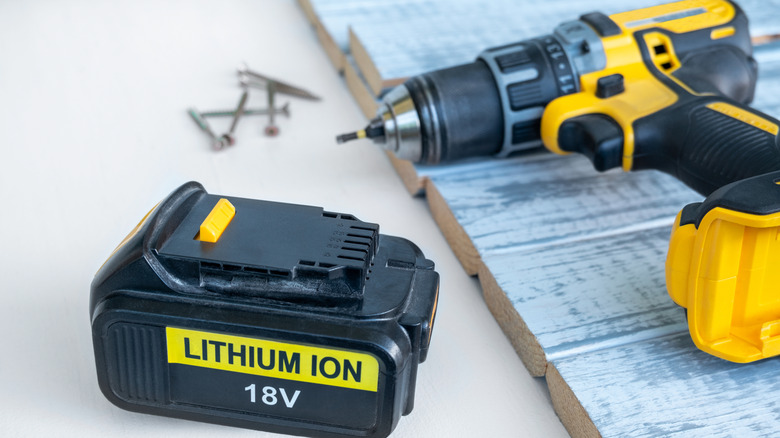
Although this myth is largely born from blindly trusting metrics, like with the voltage misconception, it has a slightly different basis. It usually rears its head when you're shopping for a replacement battery for your power tool. At this point, if you're new to buying equipment, the "Ah" rating is probably your sole guide and decision-making factor. So, it's easy to fall into the voltage trap of "the bigger the better" and opt for a battery that has a high Ah rating in a bid to maximize your power output.
Unfortunately, amp-hour (Ah) measures an entirely different quantity: capacity. In simple terms, it measures how long a battery can deliver at a certain amperage. Hence, buying an 8 Ah battery won't give you a power output advantage over a 4 Ah pack; it'll just run for twice as long before you'll need to swap it out with a fresh one.
However, while this explanation holds for most battery cells, some battery types can actually deliver more power to your tools. Ryobi's HP batteries, for instance, use different cells from their regular versions. These were reportedly Sony 18650 cells, and the maximum continuous power draw on the 4 Ah selection reached up to 60A compared to the 40A seen in other battery cell models. That kind of wide gap in maximum power in batteries of the same capacity isn't a regular thing, though.
Myth: you need to fully drain a battery before recharging it
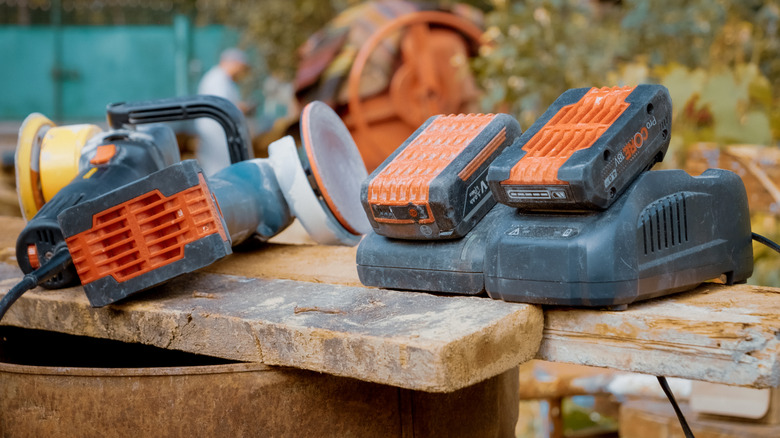
This is one of the more common pieces of conventional knowledge in the power tool ecosystem. In the past, power tool batteries would gradually lose charging capacity if they were used to a certain level and then recharged again, repeatedly. After a while, the battery would become "blind" to any charge below that level and behave partially charged even when full. This phenomenon was termed the "memory effect", and it plagued batteries for decades.
To adapt to this effect, it became widespread knowledge that you needed to fully drain a battery before recharging it. That way, you wouldn't experience any odd voltage drops in the course of operation, and you could use a battery to its full capacity. However, times have changed, and the memory effect is now largely a thing of the past: lithium-ion cell typeslike nickel manganese cobalt (NMC), nickel cobalt aluminum (NCA), and lithium cobalt oxide (LC) are resistant to it altogether.
However, if you use tools that are powered by older style nickel-cadmium (NiCd) batteries, you should still heed the advice to prevent the buildup of the memory effect in the cells, largely due to crystalline formation in these types of batteries that led to the memory effect. However, the vast majority of modern power tools don't require any such precautions.
Myth: cordless tools are always weaker than corded ones
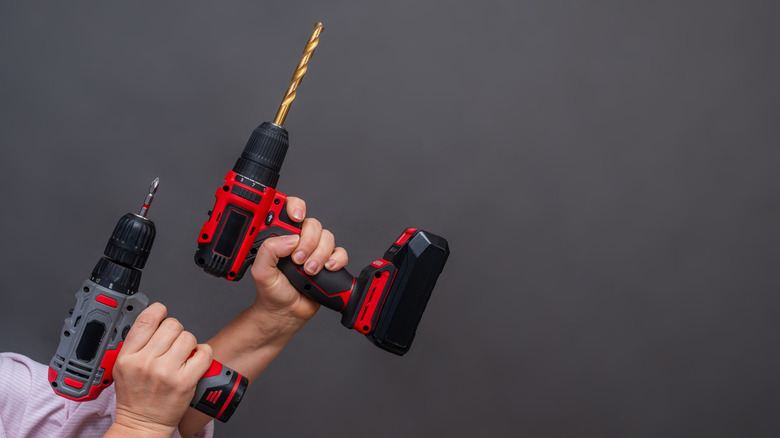
From a logical standpoint, it's easy to see why this sentiment has persisted for so long. Corded tools, by definition, constantly draw on power from an outlet. So, as long as that power outlet is functional, you're going to get a steady supply of current to carry out your tasks. On the other hand, cordless tools rely on batteries. If you've ever sawed through metal or thick hardwood and needed to change batteries multiple times, you'd agree that corded ones are far better suited to heavy-duty tasks. That doesn't make cordless tools any weaker in terms of raw power, though.
This may have been true in the past, but these days, cordless tools use a combination of brushless motors and higher-voltage battery packs to close the power gap. That has meant that cordless tools are virtually on par with their corded counterparts and even dominate specific categories of power tools. Drills, nailers, and even outdoor equipment like lawn mowers are largely battery-powered. In such cases, the power demands are not so strenuous that corded tools hold a clear advantage.
Now, for tasks that need a continuous draw of power, corded tools are the way to go, but only because batteries can only take so much abuse. Hence, while corded tools are better suited to certain tasks, cordless ones are not necessarily weaker.
Myth: a cordless tool's power fades significantly as the battery drains
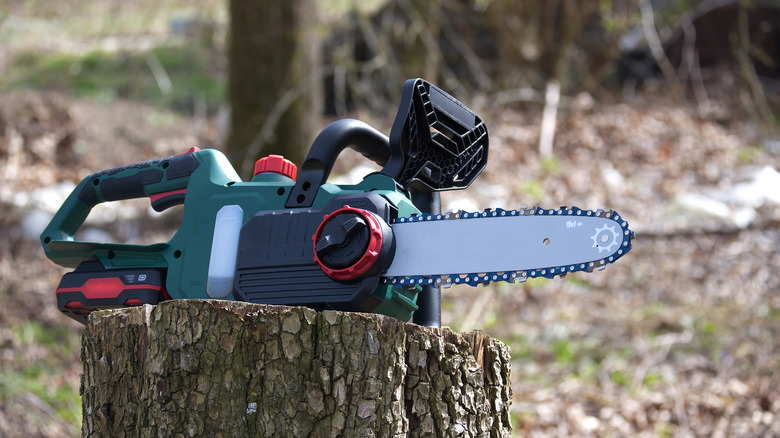
The sentiment that cordless tools are weaker than their corded counterparts has some of its roots in misconceptions around battery drain. If you aren't conversant with the intricacies of battery technology, it's easy to conflate active discharging with a loss of power. With that outlook, corded tools are more appealing because their power delivery is essentially constant. The appeal is even stronger when you consider that corded tools are generally cheaper than cordless.
However, lithium-ion batteries don't operate that way. These battery cells discharge on a relatively flat curve for most of their capacity — although there is a rapid voltage drop towards the end of the battery's life. This may sound antithetical to its classification as a myth. Yes, a cordless tool does lose power as you work, but it happens in a predictable and almost unnoticed manner until the battery charge is nearly exhausted.
Take a 20V tool for example. When you first start using it, the battery dips to around 18V. By the time the battery has only about 10 percent capacity, the voltage should be hanging around 16V, after which the battery cuts out before it goes any lower. That's roughly a 20 percent variance in power delivery from full charge to drained in this hypothetical example — and some tools may have a much tighter range in real life. So, while it's true that a battery loses some power, it usually isn't significant enough to impact your experience with a cordless power tool.
Myth: using a third-party battery automatically voids tool warranty
It's no secret that power tools are delicate pieces of engineering. With this in mind, if you're shopping for a replacement battery down the line, chances are you stick with the exact brand and battery type that came with your tool. You wouldn't be wrong for doing that — these batteries have specific configurations that are designed to meet a tool's needs, so shopping from another manufacturer isn't the most optimal business decision.
However, flexibility is important. If for whatever reason you find the OEM battery unsatisfactory, you should be able to switch to another provider. That's where this myth is born; it's believed that using a third-party battery with your tool automatically voids the tool's warranty. This stance is actually illegal under the Magnuson-Moss Warranty Act of 1975. In 2022, the Federal Trade Commission ruled against MWE Investments (the manufacturer of Westinghouse outdoor power equipment) regarding warranty coverage voiding for consumers using third-party components.
Now, is it advisable to use third-party batteries? Not really — they weren't made for your specific tool, and so something could easily go wrong. While your warranty can't be voided under the law just for using them, if a fault occurs and it can be proven that the third-party component caused the fault, the warranty will not extend to cover any damages.
Myth: keeping a battery fully charged in storage is best for longevity
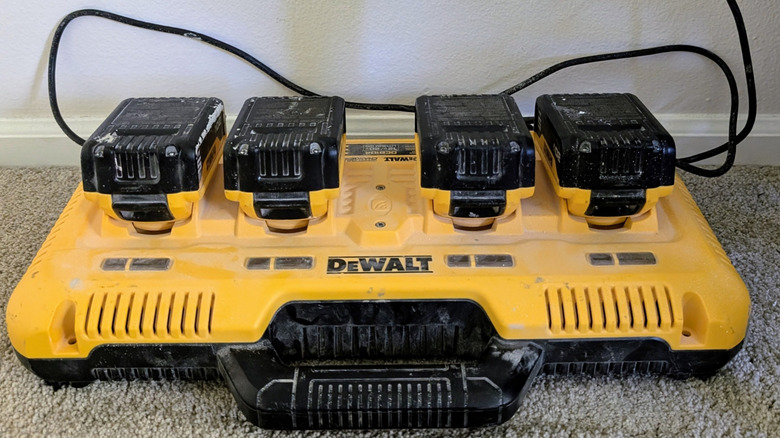
If you're going on a trip for an extended period and your tools wouldn't be in use over that time, you've probably researched the best way to store them. With cars, for instance, it's common practice to fully charge the lead-acid batteries before storing to avoid freezing damage and prevent deterioration caused by sulfation. That practice may lead you to assume that all battery-powered tools should be handled the same way.
That assumption would be wrong, though. Lead-acid and lithium-ion battery cells are fundamentally different; a high state-of-charge actually accelerates calendar aging in lithium-ion batteries. There's three factors to consider before storing your battery: storage duration, state-of-charge, and temperature. At a higher state-of-charge, say 90 percent, battery capacity drops by almost 5% in ideal conditions of 10 degrees Celsius beyond 400 days of storage.
The damage is worse at elevated temperatures — battery capacity fades below 85 percent by the 600-day mark at such a high charge level. Conversely, lower states-of-charge handle the fading effect much better, maintaining a nearly flat capacity fade curve after a slight drop at the beginning. Per Battery University, you'd be better off storing your lithium-ion batteries at around 40-50 percent state-of-charge to keep them good as new over time.
Myth: pressing down on a sander speeds up the job

Sanding any wooden surface is a pretty involved process; nailing the degree of finish that fits your touch or aesthetic in a consistent form can be difficult at any skill level. Regardless of the type of sander you're using, be it orbital or belt, the rule of thumb when running it over the grain of wood is to apply steady pressure on the surface.
Somewhere along the line, though, you could get the idea that adding more pressure can get the job done faster. After all, it's a good bit of pressure that gets the job done in the first place — the only logical challenge in going down this path would be sustaining that elevated pressure throughout the sanding process. Unfortunately, that line of reasoning doesn't hold up; the added force bogs down the motor, not to mention the heat and wear the sanding pads will have to endure.
On orbital sanders, you'd likely run into swirl marks and even deep scratches, both of which are the opposite of what you're trying to achieve with the sanding process. Let the sander's own weight determine the pressure, not your time constraints.
Myth: more teeth on a saw blade always means a cleaner cut
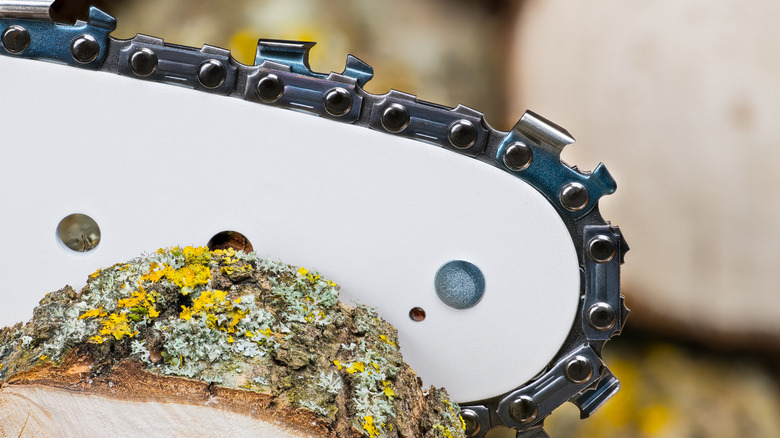
When choosing any power tool, it's easy to fall prey to a subconscious bias that more means better. We see it with the voltage advertising trick, and the same thing applies to tools like saws. A common misconception with saw blades is that the more teeth they have, the easier and cleaner it is to cut through whatever surface you're working with.
While tooth count makes your life easier in certain tasks, it's by no means a universal upgrade. For instance, if you're looking for a clean finish on hardwood, you might lean towards a thin-kerf crosscut saw; it has many finely spaced teeth. However, while the logic holds for crosscutting, the opposite is the case for ripping.
In that scenario, which you're likely to find on construction sites, you'd actually want fewer teeth to remove material quickly and produce smoother cuts with reduced drag. Hence, having more teeth does help in some applications, but it's not a rule of thumb you should follow across the board.
Myth: an impact driver is basically the same as a drill
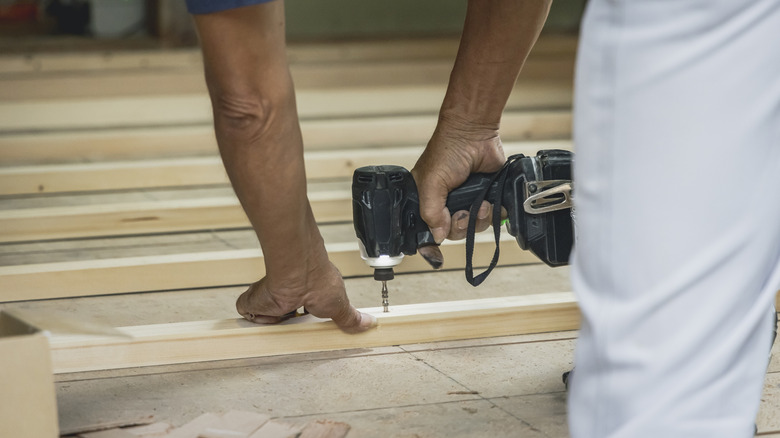
If you're new to the DIY or construction scene, an impact driver and a drill could be identical twins for all you know. There isn't much difference between them stylistically; the impact driver is a little shorter and more compact, but that's about it. Several other features like the handle and trigger are similar.
They don't do the same job, though. A drill is designed specifically to cut holes in materials via a steady rotational torque. An impact driver, on the other hand, drives and secures fasteners. The conflation of the two tools stems from the interchangeability. With a driver bit attached to the drill, it can double as an impact driver and secure and release fasteners. The same goes for an impact driver: In a pinch, you can also use it to drill a hole.
That dynamic doesn't mean they're the same. Operationally, a drill only outputs rotational torque; impact drivers use an internal hammer and anvil mechanism to deliver more torque if they sense any resistance in the material. That's a contrast to a drill that needs you to apply a bit of pressure while you work. If you need a more in-depth explanation, SlashGear has you covered with our own drill vs. impact driver guide.
Myth: a dull blade is safer than a sharp one

At surface level, duller tools are by intuition less of a risk to accidentally cut yourself with. Take a kitchen knife for example. It will lose its edge over time as you chop with it repeatedly, and when that happens, things become more difficult to sever — but the knife is ultimately safer to you, the operator. So, intuitively — especially as a beginner — one might prefer to work with dull blades to protect themselves from errant cuts.
Yet that train of thought couldn't be more wrong. Since a dull blade requires more pressure to cut through items, the chances of a blade slipping are higher; a sharp blade would simply bite the surface with precision. To relate this phenomenon to power tools, imagine a dull table saw. In this scenario, the dull blade would call for more force to push the wood through, which increases the risk of kickback.
The last thing you want as an operator is a piece of wood flying back towards you at speed. So, always work with a sharp blade and take precautions to avoid getting cut instead.