

7 Good Reasons Why You Should Replace Your Gas-Powered Lawn Mower With An Electric One
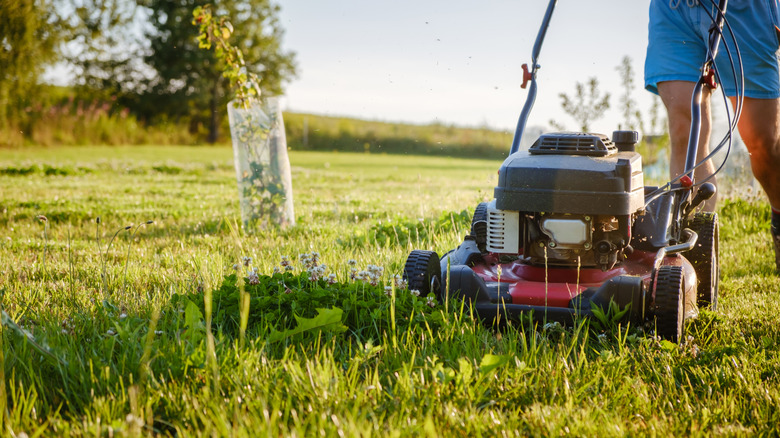
Few things accentuate a home's aesthetic better than a lawn that is well-trimmed and properly cared for. It's a common feature across the American landscape — roughly 75% of homes have them — and over the years, lawns have become the symbol suburban America. Keeping a lawn in good condition isn't a walk in the park, though. As a homeowner, you'd need to water, fertilize, weed, and mow regularly; it's generally advisable to mow your lawn once a week. That brings us to the matter of choice. There's more than one type of lawn mower out there, and you might already have a perfectly good gas-powered version stored in your garage. Or, so you think.
When shopping for a lawn mower, you're likely to consider two main variables: price and speed. Gas-powered lawn mowers win both categories. In the price range that goes up to $500, you'll find cheaper gas mowers than any battery or electric models, and these are also considerably faster to boot. Unless you're a green thumb, you likely don't want to spend more time than necessary taking care of your lawn, so it makes sense for gas-powered lawn mowers to be more popular.
That said, while gas mowers have some advantages over electric, in the grand scheme of things, you'd actually be better off opting for the latter for several reasons. There's more to operating a mower than speed and price tags; these are seven reasons you'd want to go with an electric mower.
Lower cost of ownership

This might raise an eyebrow, especially since we said before that gas lawn mowers are usually cheaper than their electric counterparts. However, that's just the beginning of what you'll have to pay for throughout your mower's life. You're going to be adding fuel to the tank when it runs low on gas, as well as conducting routine maintenance.
At first glance, these costs may not seem like much. If you spend an hour mowing your lawn, consumption will be between 0.25 and 0.5 gallons. With these estimates, mowing once a week should require a maximum of 26 gallons of gas per year. According to Forbes, the average price of gas in the US is $3.87 per gallon at the time of writing, so operating a gas lawn mower would set you back at most $100 a year. You likely will spend a little less, either because you spend less time mowing, or because you have a more efficient mower model.
That exposure to gas prices, volatile as they can be, illustrates how expensive things can get a year or two down the line. Sure, with electric models, you'd still need to replace batteries, but most brands estimate their lifespans to be between three and five years. They cost only a few hundred dollars to replace, meaning operating an electric lawn mower is still cheaper. As for maintenance, tune-up services can usually cost between $100 and $350, while major repairs like replacing the crankshaft or head gasket can exceed $1,000. Compared to electric models, where the battery is the main expense, gas lawn mowers will cost more as the years pile up.
Better handling
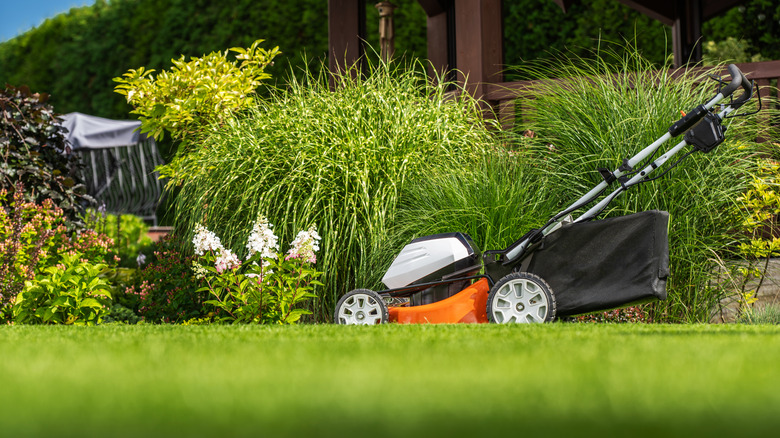
Speed is one area where electric mowers admittedly lag behind their gas peers. The higher and more consistent horsepower that gas models churn out means that you'll finish mowing your lawn bright and early on a Saturday morning, allowing you to focus your time on other things. We should note, though, that performance isn't just about speed.
Specific movements like making U-turns and maneuvering in tight spots can become tedious very quickly with a walk-behind gas mower. They're typically about 30 pounds heavier than electric models, which makes a big difference when it comes to maneuverability. Testing from Consumer Reports backs up this theory: on a five-point scale, electric mowers outscores gas by an average of 0.4 points (4.2 versus 3.8).
There's an added layer of convenience to be found if you opt for autonomous robotic mowers. These are essentially Roombas for your lawn, in that they travel around a designated area, mowing the lawn as they move, and then return to their charging docks when they're done. That way, you don't even need to be there to direct the equipment — unless, for instance, it runs into obstacles or gets low on charge. The trade-off with electric mowers is that, generally speaking, they're slightly less precise with the evenness of their cuts, but if this isn't a deal-breaker to you, they can save you a lot of time.
Less noise
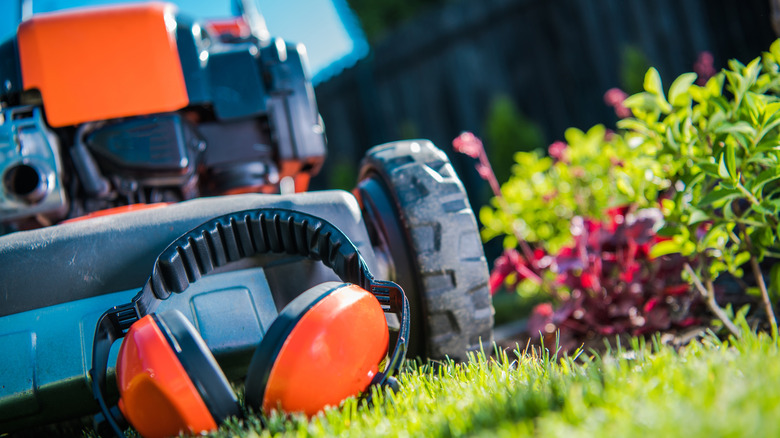
We all know how annoying mowers sound, both to the person doing the cutting and to others living around them. The persistent buzz isn't merely an annoyance, either. Over time, the noise from gas mowers can be harmful to the operator. You see, most gas lawn mowers emit between 85 and 95 decibels of noise, with some models, especially riding mowers, even hitting the 100dB mark.
Unfortunately, even in the 85 to 95 decibel band, prolonged exposure can become damaging over years. According to the CDC, at 85dB you can safely operate a machine for eight hours. Then, for every 3dB of noise added, exposure time should be cut in half. So, a 94dB tool should only be operated for one hour at a time (possibly more, if you use safety equipment). The exact noise level of a gas lawn mower varies depending on manufacturer specifications, but since they usually exist within this band, there's a chance they could permanently damage your hearing if you aren't careful.
While you may never need or intend to run your mower for up to an hour, the grating noise is undeniably unpleasant. Electric mowers, on the other hand, produce between 55 and 80 decibels, which translates to a far quieter experience for you and your neighbors. According to Consumer Reports, the noisiest electric lawn mower is actually easier on the ears than the quietest gas model. So, if noise is a source of friction between you and the neighbors during your lawn maintenance, you should give electric mowers a look.
No fuel storage issues/hazards
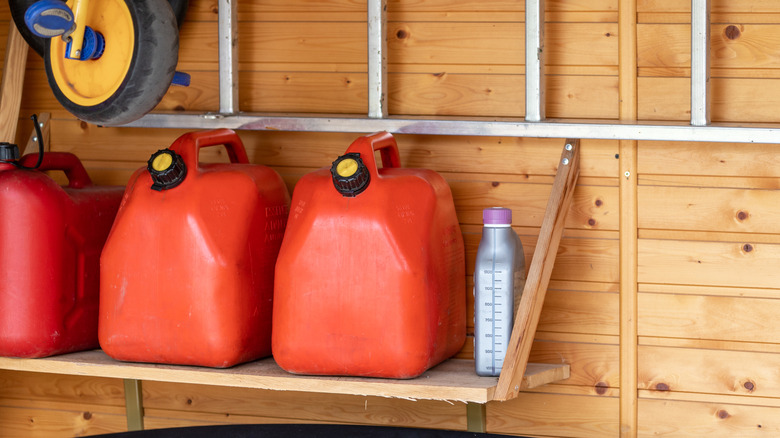
Earlier, we estimated how much you could expect to spend on fueling your gas-powered lawn mower. Beyond cash considerations of actually buying gas, there are two more logistical problems to factor into your mowing workflow: storing said fuel and storing it safely. These are two distinct issues that roll into one, and we'll explain why.
The struggles of properly organizing a garage are well-documented. Over three in five American adults told Craftsman that their garages were the most cluttered spaces in their homes. For 36%, that clutter means they can't even park their cars inside. And when gasoline enters the equation, things become an even bigger organizational nightmare. Although gasoline is typically stored in jerry cans, it's a highly volatile substance, so vapors can eventually escape into the surrounding air. In an enclosed space like a garage, the vapors have nowhere to escape to, thus posing a significant explosion risk in the presence of the slightest catalyst — like static electricity, for instance.
Ideally, you'll want to store gas in a well-ventilated area such as an outdoor shed, away from living spaces, pilot lights, or electrical sources. It doesn't end there; if you're going to store gasoline, you'll need to take special measures during winter, like keeping the cans nearly full and in a dry area. Finding (or creating) such a space can be a hassle, and that's a problem you can easily avoid by opting for electric or battery-powered lawn mowers.
Better environmental footprint and personal health

Health-wise, noise pollution is just one of the drawbacks of using a gas-powered lawn mower. Like cars, these mowers also directly impact the surrounding environment every time we use them. According to the US Environmental Protection Agency, operating a gas lawn mower for an hour emits as much nitrogen oxide and other compounds as driving a new car for 45 miles.
Additionally, refilling a gas tank is an error-prone process; The EPA estimates over 17 million gallons of fuel are spilled on the ground each year when refueling garden equipment. There's also the personal health angle to consider. Between 1990 and 2004, 11% of all incidents of non-fire-induced carbon monoxide exposure came from garden tractors and lawn mowers. The fatality percentage was roughly the same, at 10.4%. Beyond carbon monoxide poisoning, emissions from gas-powered engines are linked with respiratory diseases and even forms of cancer like leukemia and lymphoma.
Granted, the chances of developing terminal illnesses via emissions from a lawn mower alone are low. Most studies focus on prolonged inhalation in children and professional drivers, but the presence of mowers in statistically significant findings on the topic should give you pause.
No risk of electric mowers being banned

In the interest of protecting the Earth from all forms of pollution, zero-emission tech has rapidly taken over across industries, from cars to energy generation itself. The landscape of lawn mowing isn't insulated from this attention either; Cities are actively taking steps to curb the noise, the pollution, and the health risks of using gas-powered lawn mowers.
Leaf blowers and lawn mowers sold in California have been required to be zero-emission since 2024, per measures approved by the California Air Resources Board. While this legislation doesn't directly target previously owned gas-powered equipment, cities have passed enactments prohibiting their use. In Los Angeles, for instance, a gas-powered blower or lawn mower cannot be used within 500 feet of a residence at any time.
Minnesota, New York, and New Jersey may be moving to restrict the use of gas-powered lawn equipment. Texas and Georgia are on the other side of the proverbial fence, but there are some dissents within those ranks. Dallas, for example, had been considering outright bans before Texas blocked them. Those plans may be turned into incentives instead, with rebates of up to $200 discussed for switching from gas to electric. There's no telling how this battle will play out in the long term, but electric lawn mowers are the safe bet from the current picture.
No restriction on when you can mow
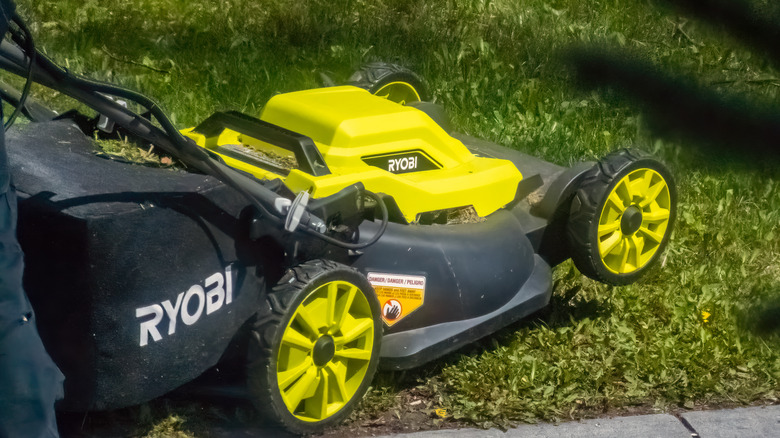
Mowing your lawn can be loud business, and noise is not just a hazard for your hearing. While municipalities might be slow to take a stance on gas-powered lawn equipment, noise ordinances are already in place in more than 200 of the 500 largest metro areas in the United States.
In most locales, you're allowed to mow your lawn between 8 AM and 8 PM; any earlier or later could attract noise complaints and fines in some places. While this is a reasonable timeframe to work in for most people, it can be inconvenient for some. Say, for instance, that your work shift only affords you time in the evenings or early mornings — such restrictions will either have you delegate the task to another member of the household or pay a company to mow the lawn for you.
Electric lawn mowers are much quieter than their gas-powered counterparts, and especially quiet ones (under 50dB) shouldn't run afoul of the noise ordinance in place in your locality. So, if your mowing schedule includes early mornings or late evenings, you should consider switching from gasoline to electric.