

5 Gadgets No One Wanted To Buy (And They Were Right)
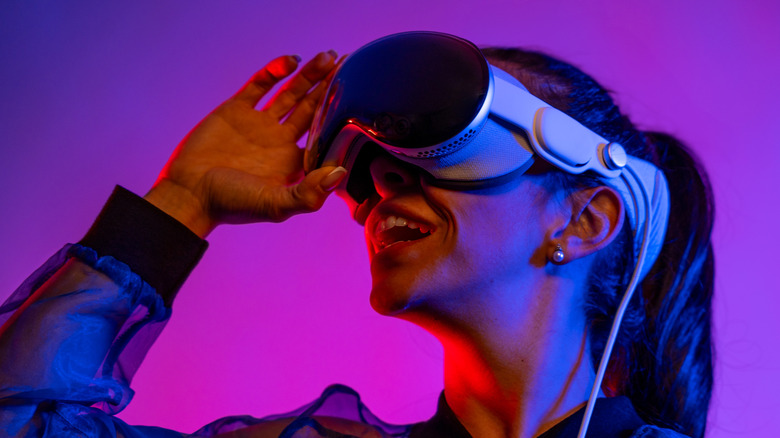
Every year, we see the launch of countless smartphones, audio products, televisions, and software services. We pick our favorites and go about our lives, but not every gadget is destined to catch on. Sometimes, though, certain products look like the next big thing, only to end up with poor adoption rates and eventually fade into obscurity.
A product category that instantly springs to mind is 3D TVs. They were all the rage for a brief moment in the early 2010s, with nearly every major TV manufacturer rushing to release its own lineup. Yet, they are rarely seen today. Why 3D TVs never caught on comes down to a combination of limited content, expensive hardware, and the fact that wearing 3D glasses for extended periods was simply uncomfortable for many people.
There have also been a few tech disasters that are difficult to ignore, like the Galaxy Note 7, which ended up costing Samsung billions of dollars, or Microsoft Zune, which didn't even make a dent in the iPod's dominance. Here's a look at a few other tech gadgets that failed to attract a sustainable user base.
Google Stadia
Google is synonymous with web search but is also known for its Android operating system and Pixel devices. Those even remotely tech-savvy will know how vast Google's product portfolio is. Unfortunately, Google is infamous for sunsetting services that fail to gain enough traction. One that comes to mind is Google Stadia — a cloud gaming service that let users play PC and console games on any screen without the need for dedicated hardware. Less than four years after its launch, Google Stadia was discontinued.
Cloud gaming itself wasn't the problem — we have a handful of strong contenders like Amazon Luna and GeForce Now that continue to operate today. Where Google Stadia failed was its business model. Stadia initially required a paid hardware bundle, but it later added a free tier that let you stream games at up to 1080p and 60 fps. You still needed to buy titles at their usual retail prices for a platform that wasn't well established at all. While the $10 per month Stadia Pro subscription included a rotation of claimable titles each month, the library was limited compared to Xbox Game Pass or PlayStation Plus.
Google Stadia's heart was in the right place — it wanted to make high-end gaming possible for anyone. Unfortunately, expecting users to build a game library from scratch on an unproven platform was too much to ask for. Google discontinued the service in 2023, citing lower-than-expected user traction.
Humane AI Pin
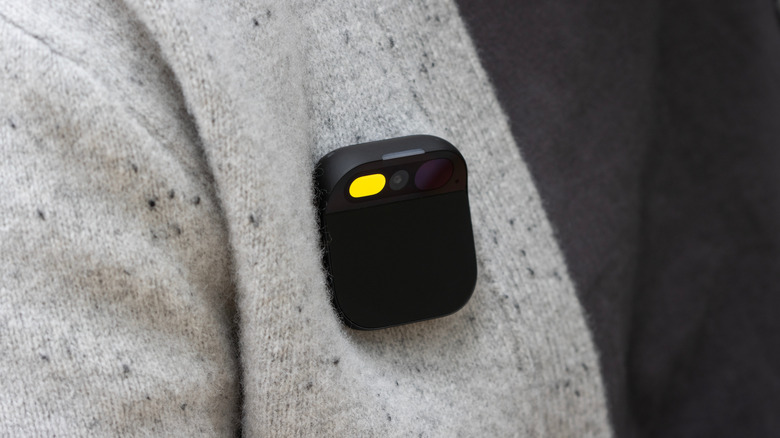
Ever since the launch of ChatGPT in 2022, we've seen nothing but incredible leaps in AI, creating an opening for manufacturers to build and sell a new generation of AI-powered devices. The Humane AI Pin, released in 2024, was pitched as a smartphone replacement that users could wear on their clothing and use to get tasks done through voice commands or hand gestures.
The AI Pin was a small, square, screenless wearable that featured a camera, microphone, and built-in projector that displayed information on your palm. It ran Humane's own operating system, CosmOS, and relied on OpenAI's GPT-4 and other AI models to handle requests. A review by The Verge mentioned how the AI Pin was slow and unreliable when answering queries, how the projected screen was difficult to see outdoors, and how uncomfortably warm it would get. It just didn't make sense why anyone would want an additional device to handle tasks that their phone could do faster and better.
To add insult to injury, a monthly subscription of $24 was required to keep the Humane AI Pin functional. That's more than a ChatGPT Plus subscription, which is a lot more capable on a traditional smartphone or computer. Needless to say, not enough consumers threw their money at the wearable, and Humane ended up discontinuing support for the AI Pin less than a year after its launch. HP would go on to acquire what it described as "key AI capabilities from Humane," and the majority of the people who owned the device weren't eligible for a refund. Yikes.
Google Glass
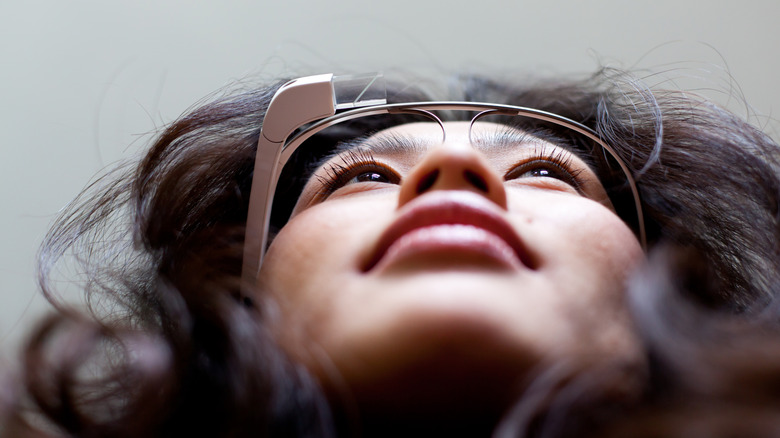
The story behind Google Glass is actually quite fascinating. It was launched to consumers in 2014 in a state that was far from ready for the mass market. For starters, the glasses looked like something you would see fictional characters wearing in a sci-fi movie. Its launch price of $1,500 didn't help. For comparison, the Ray-Ban Meta smart glasses that feature a high-resolution camera, several microphones, and a speaker start at $380 — all the while looking (mostly) like a regular pair of glasses. They also shine a white light whenever the camera is active, letting others know that a photo or video is being captured.
Google Glass, on the other hand, featured no such mechanism, turning it into a potential privacy nightmare. To be fair, the glasses looked anything but normal, but this also made them instantly recognizable. There are reports of users being asked to leave movie theaters or being ticketed for having the contraption on while driving a vehicle. The funniest part is that Google Glass, like other smart glasses, didn't last very long on a single charge, especially when recording video.
As cool of a concept as it was, Google ended up discontinuing the consumer version of Google Glass in 2015. Perhaps the tech giant will have better luck now that the technology has finally caught up and it's more socially acceptable to wear a camera on your face. In fact, we have intelligent eyewear incoming from Google later in 2026.
Microsoft Surface Duo
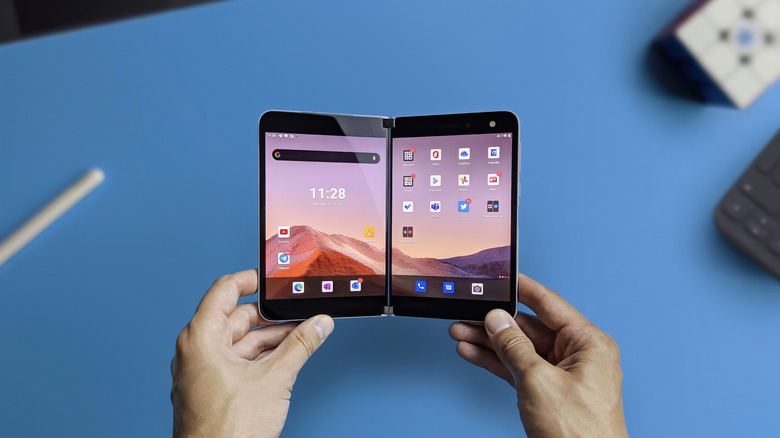
Microsoft isn't known for making smartphones, which is why the Surface Duo announcement in 2019 caught many people by surprise. A couple of Android manufacturers, like Samsung, had already started shipping foldable devices to the masses, but Microsoft's solution was a bit different. Instead of relying on a flexible display, the Surface Duo offered two separate screens connected by a 360-degree hinge. This approach had its advantages. For starters, the Surface Duo could fold completely backward, something other foldable smartphones couldn't do at the time. Also, since the hinge went all the way around, you didn't need a third, smaller outer screen just to use it as a regular smartphone.
Unfortunately, the Surface Duo was held back by unpolished software, an awkward form factor, and questionable hardware choices. For a device that started at $1,400, the Surface Duo offered 128GB of storage, 6GB of RAM, a single 11-megapixel camera, and a processor that was nearly two years old. It also didn't feature NFC or 5G.
One of the most common complaints about the Surface Duo was how buggy the software experience was. The screens wouldn't respond properly to changes in orientation, Bluetooth devices would keep disconnecting, and the device would randomly switch off with the screens folded. Microsoft did launch a Surface Duo 2, but the device also failed to gain traction. Although Microsoft delivered three years of security patches to the Duo 2, it only ended up receiving one major Android OS update.
Apple Vision Pro
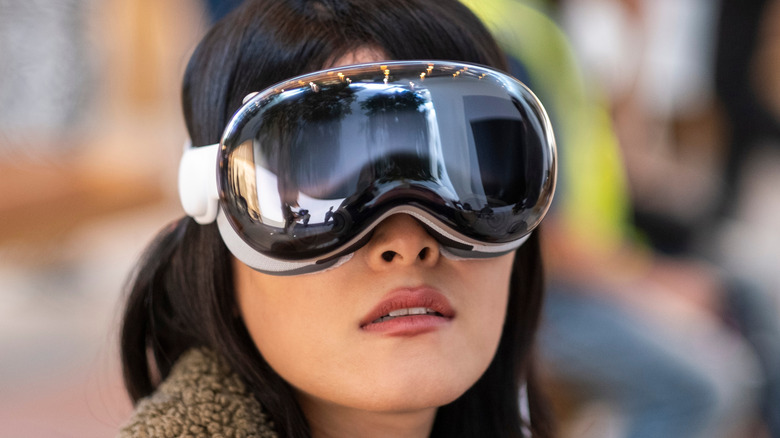
Apple doesn't usually take risks by launching first-generation products before the technology has matured enough to become mainstream. The Vision Pro didn't exactly seem like a risk, given that VR headsets had been around for years by the time it came out. In classic Apple fashion, the headset was packed to the brim with cutting-edge hardware, and everything about its marketing suggested that this was the mixed-reality headset that everyone had been waiting for. Unfortunately, it didn't come cheap, with the base 256GB model retailing for $3,500.
Many reviews of the Apple Vision Pro mention its incredible hardware, build quality, and thoughtful software experience, only to reach the same conclusion — it's uncomfortable to wear for extended periods and far too expensive for most people to justify.
Apple actually refreshed the Vision Pro in 2025 with the more powerful M5 chip and a refresh rate of up to120Hz. However, reports suggest that a successor to the product is unlikely. According to third-party estimates, Apple only sold a few hundred thousand units of the Vision Pro. Like Google Glass, the problem here wasn't the underlying technology. If anything, several features of the Vision Pro are genuinely impressive. Unfortunately, the headset doesn't seem to give people a compelling enough reason to replace workflows that are handled perfectly well by multiple monitors and laptops.