

12 Under-Powered Trucks With Disappointingly Weak Engines

When you think about trucks, capability, rather than the lack thereof, should come to mind: cargo-filled beds hungry for more, heavily laden trailers getting easily yanked up scenic alpine terrain, and tire-smoking torque flinging dirt on some mud-filled job site. With over a century of truck culture under our collective belts we have come to see trucks as heroes in their own right, but not every truck of the last few decades has been a Hercules.
Often forgotten in this day of heavy duty diesel trucks with nearly 1,000 lb-ft of torque on hand, is the fact that some real hardworking trucks have provided years of service for millions of owners despite having power outputs that could be regarded as disappointing if you are feeling charitable and absurdly anemic if you are not so charitably inclined.
All trucks have their virtues: some are fuel efficient, some are reliable, others agile or stylish, but none of the following will be accused of being overpowered or particularly fast. In fact, some would need a head start to get out of their own way. These trucks have disappointingly weak power output and the numbers to prove it. However, they're also more than simply weaklings hiding amidst a brawny crowd, offering other charms to ease the pain of patient owners as they work toward 60 mph.
1983-1985 Ford Ranger
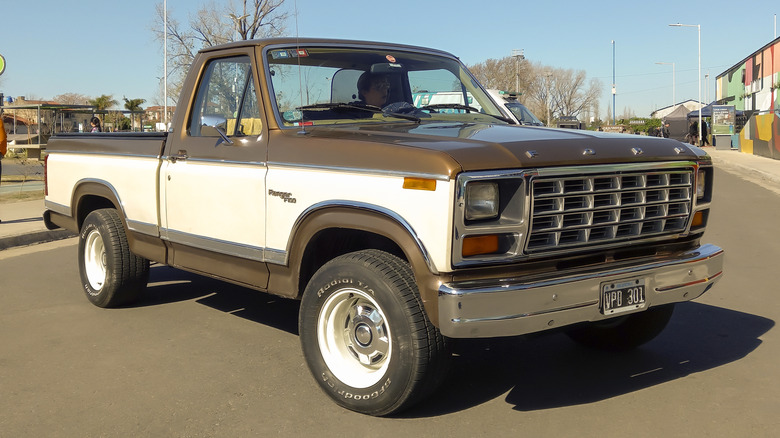
If, back in 1983, you laid your money down for a Ford Ranger equipped with the 2.0L inline-four, you were getting a truck that produced a whopping 73 hp at 4,000 RPM. Its modest 107 lb-ft of torque didn't bring much to the party either. However, many owners felt as though they got what they paid for: A solid small truck with relatively high load capacity. This allowed the Ranger to do real work despite its diminutive power output.
The oil crisis of preceding years meant getting work done with nothing more than the mandatory minimum was the name of the game at this point in American automotive history. That philosophy left the poor Ranger with a 0-60 mph time that stretched to 15 seconds, even with nothing in the truck but a driver and a pack of gum. Load it to its 1,200-pound capacity and you were taking your life in your hands... you might die of old age before you finished merging onto the highway.
On the other hand, moving over a half ton of cargo with just over 70 hp on tap is impressive and many owners loved these little trucks for it. There is still a lively market for these small Fords. Well-kept used examples with low miles can occasionally bring eye-wateringly high valuations at specialty auto auctions attracting buyers who are nostalgic for the days when little trucks did big jobs without many bells and whistles.
1980 Volkswagen Rabbit/Caddy Pickup
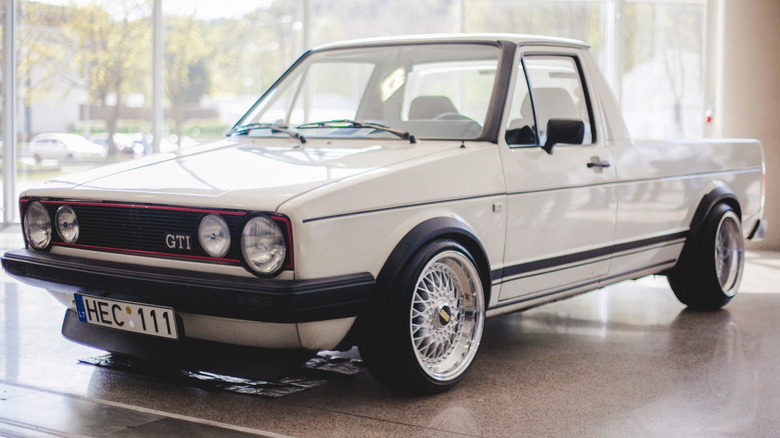
In the late 1970s if you heard that Volkswagen was going to make use of the Rabbit subcompact car platform as the basis for a new pickup truck you probably wouldn't have thought "sounds like it is going to be a real beast." You may not have been surprised then to find out its 1.6L diesel only let slip a miserly 48 hp @ 4,800 RPM.
Some owners of the Caddy, as it came to be called, may have been surprised to find that this meant hills were proper challenges and passing became a frightening affair, and under some circumstances simply unrealistic. If you were going to summit a mountain pass in this VW you were probably going to do it from the right lane with your hazards on, a death-grip on the wheel, and with a fully pressed down right foot, accompanied by the constant droning sound of a little revved-out diesel. However, if you were just running around town, moving the occasional sofa, or hauling bikes for two and a picnic basket you would have found it more than up for the job.
Lightly loaded and doing errands as a city truck was this little rig's sweet spot, and owners who never demanded more than it wanted to deliver got all they needed out of this VW. Like many VW trucks that have appeared through the years, there remains a strong owners community and enthusiast scene built around this mini truck.
1982 Chevy Full Size 6.2 diesel V8
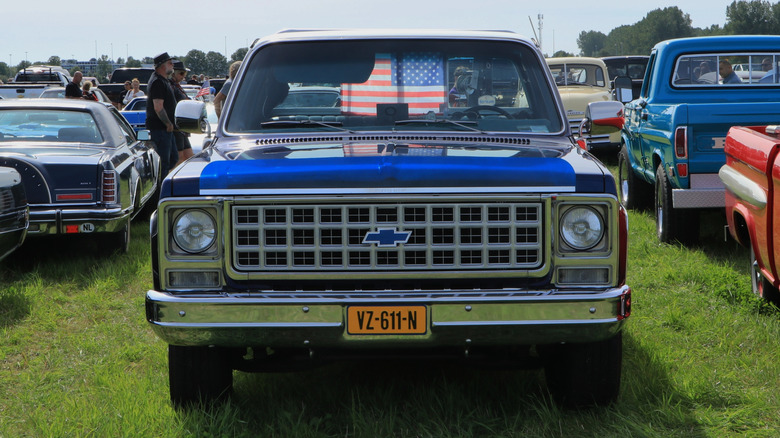
When you start throwing around terms like "push-rod V8" and "diesel" in the same sentence, truck guys start getting excited. However, mention GM's 6.2L motor, which was found in many GM vehicles over the years, and that excitement quickly ebbs. The 6.2L is a case of a truck world "what could have been" moment. You had so many of the right ingredients all together: plenty of displacement, heavy fuel, cool square body for the engine to call home, and no confusing tiers of emissions rules to spoil the fun (or protect the environment).
However, the stars did not align on this one when it came to performance, as GM set this power plant up with one goal in mind: fuel economy. This resulted in the big 6.2 squeezing out a challenged 135 horses. The torque was less underwhelming at 240 lb-ft, but that came on quickly, at 2,000 RPM, and then the power band let off, necessitating quick shifts early, and undermining attempts at steady acceleration. Once you were at highway speeds, building up passing momentum was more about choosing the right downslope than pushing the accelerator.
As the years passed, owners and gearheads took matters into their own hands. Aftermarket upfitters with names like Banks began modifying these engines to wake them up to their full potential, enabling them to produce far more power than GM let them loose with, and finally live up to their promise of performance.
1985-1993 Chevy S10 and GMC S15
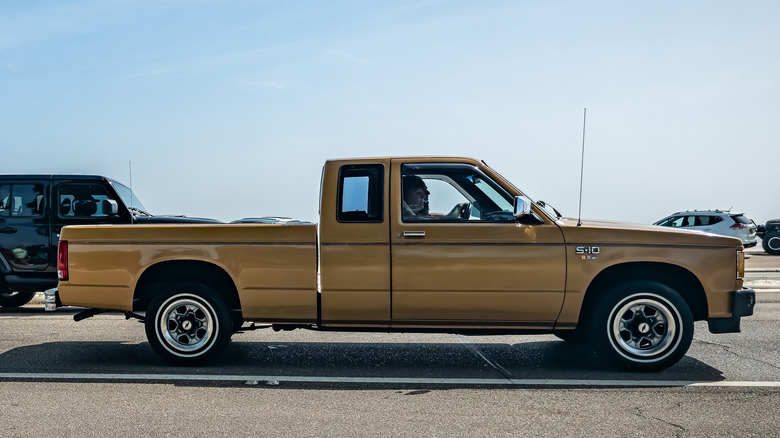
In the early 80s, Pontiac enthusiasts may have looked doubtfully at the 2.5L and thought it seemed a little under powered for their small Sunbirds, or for the Fiero with its lightweight plastic body panels. But GM executives looked at the same engine and thought "lets put it in a truck!" Yes, Pontiac's "mighty" Iron Duke, an engine that felt like an anchor when dropped in a small sports car, managed to find its way under the hood of many Chevy S-10 and GMC S-15 pickup trucks.
There, to the surprise of many, it actually did serious work despite boasting a mere 85 hp. If you did plan on putting one of these trucks to work, you were well advised to select the manual transmission, as getting reasonable performance out of these early Chevys and their GMC brethren was largely a game of gearing. The Iron Duke would go on to have an enviable reputation as being an almost unkillable engine if you stuck to the maintenance. It allowed thousands of truck owners to get the job done on a daily basis.
These trucks earned fame as around-town work vehicles. Construction companies, farms, landscapers and delivery companies all put these trucks to work where speed was not a requirement. In these roles its best characteristics, being reliable and cheap to operate, could shine through.
1986 Jeep Comanche 2.1 Turbo diesel
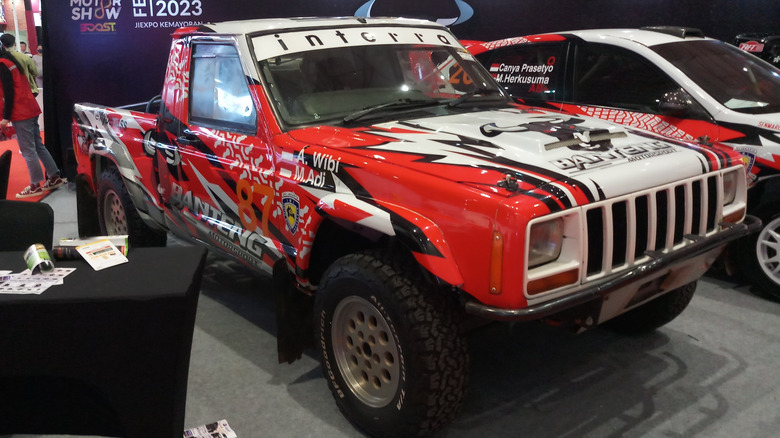
Coming on the heels of the gas crisis, U.S. manufacturers revisited the idea of small diesel engines in the North American market. Jeep, a perennial leader in the then-burgeoning off-road vehicles segment, turned to Renault, with its experience in diesel engines, to source the 2.1L Turbodiesel motor. Jeep dropped this into, among other XJ platform vehicles, the 1986 Jeep Comanche.
There may have been some promise in the idea of a Turbodiesel powered Jeep pickup truck, but reality did not see that promise fulfilled. Although the engine was light, at a mere 330l pounds, and sported a turbocharger, it could only summon up a paltry 85hp, leaving it out of breath doing even light duty truck jobs. Even by the standards of the time, that was scant.
In other markets such as Europe and Africa, powering other vehicles from the Renault line, this small engine would come to be regarded as something of a success. However, the Comanche was never a major sales success in the States, and the world would never know what could have been for this truck. Jeep killed off the diesel powered Comanche after a brief two model year sales run. There were reportedly few mourners.
1988-1992 Tacoma 3.0L V6
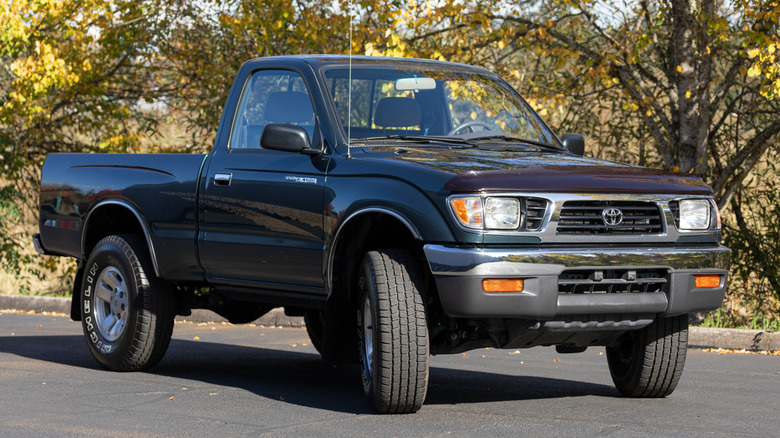
Starting in the late 1980s Toyota began equipping its popular pickup truck with its 3VZ-E engine, a 3.0L power plant that would go on to earn both acclaim and a little shade from Toyota owners and truck fans. While generally well built and reliable, it was subject to head gasket failure and cylinder warping that could result in catastrophic breakdowns, necessitating expensive repairs for some unfortunate owners.
However, the struggle that all owners would contend with was that of dealing with relatively sluggish performance, particularly at highway speeds. This truck's valve train was SOHC with two valves per cylinder, keeping things simple, but keeping power output relatively low, at 150 hp when the revs climbed to 4,800 RPM. This amount of power was doubly disappointing to the Toyota faithful, who had been hoping to see power outputs from the new V6 that would compete with a new generation of more powerful V6 motors coming from its Detroit rivals. Instead, the 3.Slow, as the 3.0L came to be called, drank fuel like a big boy, but did not meaningfully move the needle on the power and performance side of the equation.
Over the years, as fixes and kits became available to address the head gasket shortcomings and dreaded x-pipe exhaust crossover issues, the low-stressed nature of this engine could shine through, with owners eventually achieving the typical Toyota high mileages on these hardworking trucks.
1988-1995 Chevrolet C/K 1500 4.3L V6
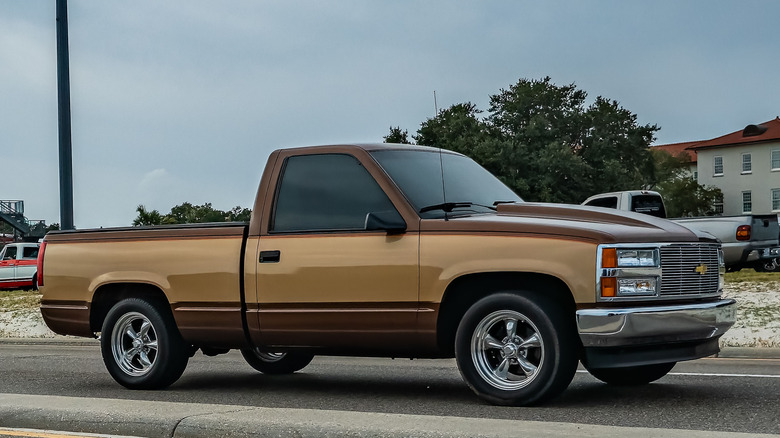
Another engine from the early 90s which has earned a good reputation overall alongside being a little disappointing in the power department is the Chevrolet C/K 1500 when it is rocking a 4.3L Vortec V6 under the hood. It may have been no powerhouse w/hen cranking out a sedate 160 hp, but its almost unkillable nature endeared it to many.
Earning the moniker the ¾ small block, it was essentially a cut down Chevy 350 and, like its big brother, it has earned a fan base. Full size trucks with this motor were never going to be fast, but they were reliable, and that reliability made up for the lack of grunt that relegated these trucks to light duty work. The horsepower was not impressive, but the 4.3L made up for it somewhat with a stronger 235 lb-ft of torque that could help off the line.
Highway work was another matter. There the low horsepower showed itself, making passing into a strategic affair. If there was a trailer in tow, passing could be chancy, and owners needed to choose when to make their move with care.
1996-2000 Dodge Ram 1500 3.9L V6
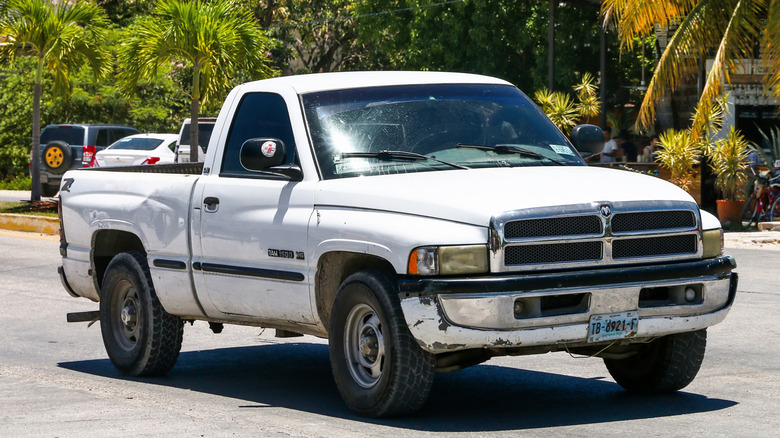
By the end of the 90s, many Dodge Ram drivers were lamenting that they "could've had a V8!" The Ram was available at the time with a strong 5.9L Magnum V8 that was up 70 horses and about 100 lb-ft of torque over the meager 3.9 Magnum engine. Buyers who did not want to pay the 5.9L premium, or who only needed smaller jobs done, contented themselves with the 175 hp made by the V6 to motivate their half-ton truck.
This drop in power added about 3 seconds to the rig's leisurely 0-60 time, crossing the line in about 11.5 seconds. This was a full size truck, and in the minds of many MOPAR faithful it should always have had a V8 as nature itself intended. Burdening it with a mere V6 undermined its potential. This Ram's big, flat, and squarish body, although a styling hit amongst consumers and a classic in the making, was quite heavy and did not help the V6's cause at all.
Furthermore, the Ram is considered by enthusiasts to have the aerodynamic qualities of a handful of bricks. Throw in a bed filled with gravel and a headwind and that 3.9L was going to have its hands full just trying to maintain the speed limit.
1998-2001 Ford Ranger 2.5L I4
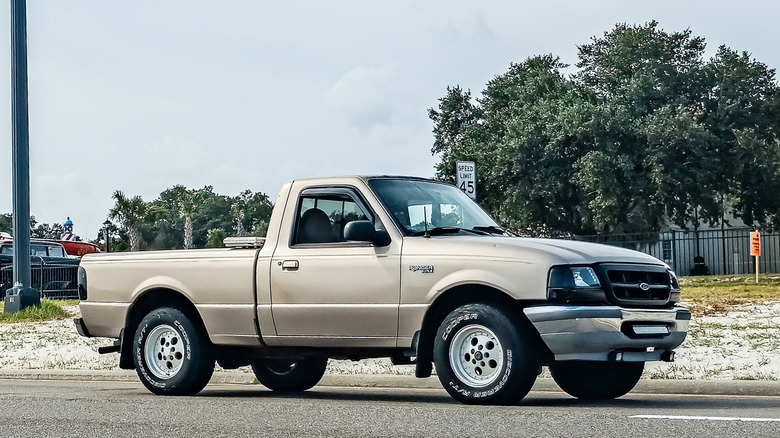
Powered by a re-engineered older "Lima" block inline motor, the 2.5L mill that powered the Ford Ranger into the new millennium was never fated to overwhelm its drivers with high performance. Its venerable four banger, a holdover from an earlier age of the automotive world, was instead all about the virtues of frugality and dependability. There it fared a little better. It was able to hit 24 mpg on the highway, delivering to its owners the thing they actually wanted: economy.
Performance was another matter. With about 146 lb-ft of torque on deck its initial pull was acceptable, but it quickly ran out of steam as the revs climbed. At interstate speeds it was well out of its power band, with peak torque being produced at 3,000 RPM. At higher speeds, the Ranger could run out of breath as it would cruise at 75 mph with around 2,500 RPM showing on the tac.
To deliver better grunt around town, buyers could option the Ranger with a 4.10 axle ratio. This option is often sought after by buyers on the used market to this day. Over the years the Ranger has earned a good reputation as a nimble light duty, around-town truck, even if it was no speed demon.
2005-2010 Dodge Dakota 3.7L V6
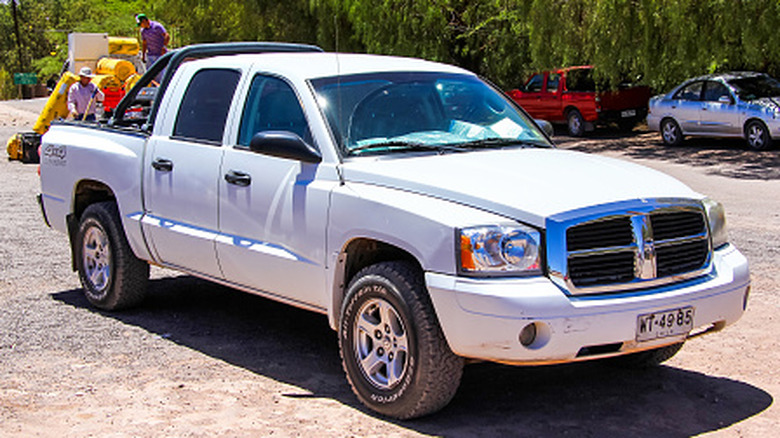
At first blush, it would seem that replacing the older 3.9 Magnum with an updated engine derived from the 4.7L V8 would provide the Dakota with sufficient power. However, despite moderate power improvements in the new 3.7 engine the Dakota platform itself had gained in size significantly by the time the third generation rolled up in 2005. This meant that this was still a truck whose bite didn't match its bark.
This engine had a puzzlingly narrow power band. Power came on late, requiring 5,200 rpm to fully access available horsepower. As a result, despite decent 0-60 times, owners report it felt weak off of the starting line or on an incline in a way that belied the fact that the power was delivered smoothly, thanks to an internal balance shaft in the updated engine. But, whether due to gearing or power band, there was simply still not enough performance to impress despite actually packing over 200 hp under its redesigned hood, and making 235 lb-ft of torque.
Although buyers appreciated the updated styling, and overall larger size of the Dakota, the increased weight these improvements required clawed back any benefit when it came to actual real world performance and fuel economy. This made the trucks equipped with the 3.7L underwhelming, particularly on the highway.
2005-2023 Toyota Tacoma 2.7L I4
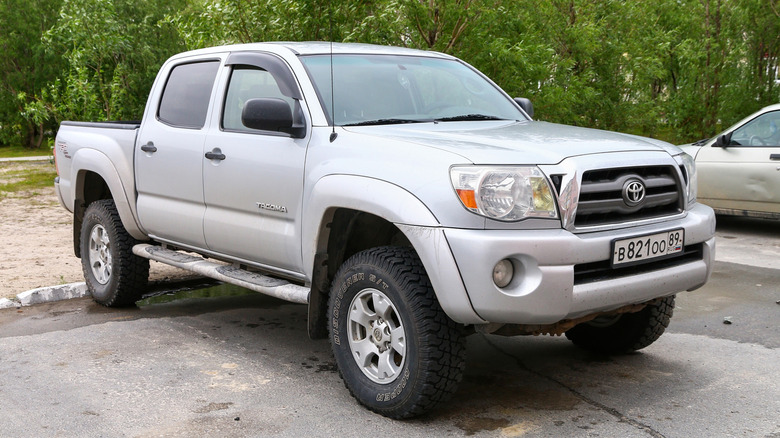
Durability? Check. Simple maintenance? Check. Impressive 0-60 speed? Well, two out of three's not bad. The solid 2TR-FE engine did front line duty for the Tacoma lineup for the better part of two decades, and has earned an enviable reputation as one of the best motors put under the hood of a light duty truck.
However, as many owners will tell you, having to stand on the accelerator to climb a hill or pass a big rig can be frustrating. Buyers felt that making do with 164 hp was worth it to attain the under-stressed reliability that has endeared this truck to its huge fan base. For the "everything you need, nothing you don't crowd" a single cab Tacoma equipped with the 2.7L and a manual transmission was approaching the Platonic ideal of truckness.
It was when owners pushed the truck to pull off feats beyond its original intent that trouble could be found. If your idea of a nice stance involves buying bigger off road tires and a lift, Toyota's 2.7L is not the engine for you. Enthusiasts will tell you that unless you plan on dropping in a new gear set the engine will struggle to turn big off-road tires. So plan on a deeper dive then just throwing on new shoes and calling it a day if you want to lift a four banger Taco and retain its vaunted usability.
2015-2022 Chevy Colorado GMC Canyon
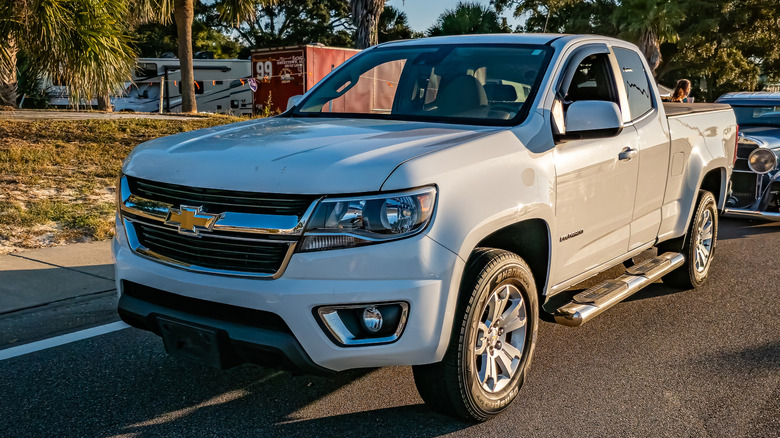
Keeping the tradition of disappointing engine performance alive into the second decade of the 21st century are GM stablemates the Chevy Colorado and GMC Canyon. Up until 2022 GM buyers would puzzle over how 200 hp could feel so weak under the hood of so relatively a small truck.
The reason why this number looked good in a write up but felt insufficient on the street was the fact that to hit that number required winding up the truck's 2.5L inline mill to over 6,000 RPM.Its reputation suggested that if a driver was not willing to ring this truck's neck, it could feel anemic anemic. When considered through the lens of truck development over the preceding decades, that reputation may be unearned. For instance, the Colorado configured with a crew cab is almost two feet longer than a short bed '92 Silverado, and it gets 40 more horsepower out of its 4 cylinder than the base 4.3L V6 produced in the full size Chevy.
Like many of the trucks on this list, the degree to which the performance of these trucks can be considered disappointing is definitely a matter of expectation. The Colorado/Canyon, like other trucks with just enough power to get the job done, takes a utilitarian approach that truck owners still appreciate.