

5 Downsides To Buying A Google Pixel Phone
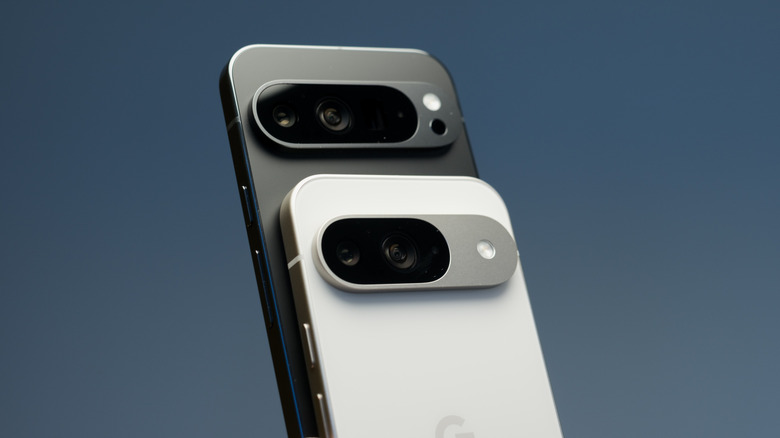
Before you keep reading, let us say this: Overall, Google Pixel phones are pretty great. Once you've used one, it can feel like all the other smartphone brands are just playing catch up. They've been paving the way for years now with excellent AI features, some of which are exclusive to the lineup. We expect the upcoming Google Pixel 11 to continue that trend. Of course, nothing in life is perfect, so there are some aspects of the Google Pixel lineup that may make you consider grabbing a Samsung instead.
Regardless of the downsides we'll mention, this is the phone to get if you want to be on the bleeding edge of smartphone AI. Even for people who aren't particularly interested in AI features, you'll probably be more than content with a Pixel. But there's been a growing contingent of people for years who hate the Google Pixel, sometimes for very valid reasons. The following five may give you some pause before buying the "smartest smartphone" on the market.
Pixel Drops can be inconsistent
"Pixel Drops" is Google's term for the regular release of new features, coming in small bundled "drops." For owners, it's a tech-nerd Christmas morning where you wake up to find a bunch of presents under your proverbial tree; Pixel Drops are a staple of the Pixel experience. They're also famously a little unpredictable.
In fairness, Google has not promised a regular, pre-determined release schedule for Pixel Drops. You get them when you get them, every few months. However, even looking at Pixel Drops historically, they keep only to a rough cadence. This is not like the latest iOS release or the release of the latest Android version on Samsung phones, where you know when to expect them. Pixel Drops being kind of spontaneous might be no biggie, but where this really gets frustrating is that Google doesn't roll out Pixel Drops simultaneously to all users. Instead, there's a staggered rollout that can take weeks. While this may be for good reasons (it would be quite a damper if thousands of phones got bricked by a bugged feature instead of a few beta testers), it's annoying twiddling your thumbs for weeks while everyone except you has the new features — and having no idea when you'll join in on the fun.
To make matters worse, Google can seem more arbitrary than other phone brands about when and how it cuts off older devices. Sometimes a random feature that you'd think should be available on all Pixels going back years (take Google Maps Power Saving Mode) is restricted to the latest model; sometimes older models get cut off way earlier than anyone would have expected — the Pixel 6 and 7 were quite unceremoniously ditched despite being "supported."
The Tensor chip underperforms against the competition
When you buy a flagship phone, you expect flagship performance. Why spend almost $1,000 or more if you're not getting the best? Sadly, Google Pixel owners will have to prepare for some disappointment here.
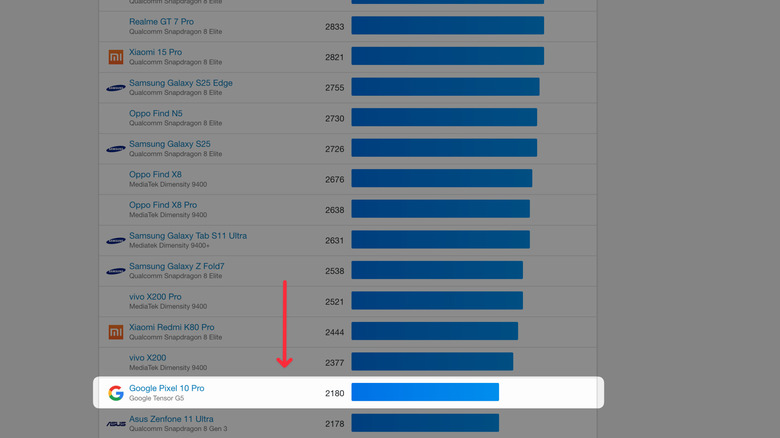
The problem is Google's in-house Tensor chip. Rather than use general-purpose, off-the-shelf chips, Google chose proprietary silicon that's built from the ground up for AI to make Pixels as smart as they are. So they do excel at AI, but they can't seem to match the performance of the big dogs like Qualcomm's Snapdragon chips and Apple's homegrown A-series silicon, despite sitting in the same price ballpark. Looking at cold, hard data, the result is humbling. Geekbench's Android benchmarks show the latest Snapdragon 8 Elite Gen 5 and MediaTek Dimensity 9500 chips leading the pack. And the Tensor? The cream-of-the-crop Tensor G5 (released in 2025), found in the Google Pixel 10 series, falls behind the previous-gen Snapdragon 8 Elite and MediaTek Dimensity 9400 chips (released in 2024). Some people have anecdotally noticed that older models (those released before Tensor chips) can, in some cases, do better than recent Pixel models.
You might be thinking modern silicon is overkill as it is, since watching Instagram Reels and texting friends doesn't require top-tier performance. But consider that Android phones can now moonlight as full desktop PCs and are powerful enough to play PC games. If an Android phone can now be your computer and gaming device, having that extra performance — especially if you're paying the same price as you would for competitors — means something.
Battery life isn't always the greatest
All-day battery life has been a big marketing promise from every smartphone brand, and perhaps the one that means the most to the average person. You'd think that Google Pixels, with their fancy AI, would have hyper-intelligent battery management that squeezes every last drop out of the battery. And you'd be wrong. Evidentially and anecdotally, poor battery life has been a repeated gripe among Pixel users.
Testing has shown that Google Pixel phones have truly bizarre and random battery drain across many everyday usage scenarios. It would seem this poor battery life can be attributed (to some degree) to Tensor chips, since it's clearly a hallmark that we're not seeing on other manufacturers' devices using Snapdragon and MediaTek. Battery life has also been affected by hardware issues; many users of Pixel 4a and 6a phones experienced battery fires, which Google solved by limiting battery capacity to reduce overheating.
What's concerning is not just that a few Pixels here or there — or a few updates here or there — have caused battery drain, but that it seems to be a perennial bugbear Google hasn't fixed over repeat generations and repeat price increases. The latest Pixel 10 lineup has not been spared. In smartphone battery drain tests (like this one from YouTuber Mrwhosetheboss), the Google Pixel 10 Pro XL ranks dead last behind Samsung, iPhone, Xiaomi, OnePlus, and OPPO. More recently, the March 2026 Drop introduced a bug that significantly reduced Google Pixel battery life. If it's battery life you want, the Google Pixel isn't the number-one choice.
You're relying heavily on Google
The beauty of Android is freedom. Don't like Google and its horrendous privacy track record? Then don't use its apps and services. While a Pixel won't force you to use Gmail and Google Messages, it's a Google phone chock-full of Google-made AI features, and it phones home to the mothership. This is more than just us assuming the worst based on Google's history; a Cybernews report suggested that your Google Pixel is doing an exhaustive amount of data collection in the background, with the potential for remote access. Aside from this, your sensitive data could also be sent to the cloud if you use features like Magic Cue, and some features (like the always-on Now Playing feature) raise privacy concerns with the permissions they require — in this case, listening to your mic 24/7.
If that doesn't concern you (every company is collecting data these days, right?), then maybe Google's long history of killing products prematurely might. It's such a big problem that there's an entire website dedicated to it called Killed by Google. Features or services that people loved (which in some cases were around for years) can suddenly, randomly get the axe.
But what about the Pixel, specifically? Pixel Studio is a recent example, a Pixel app which folded in 2026 after only two years. Point is, it would really suck to have a feature you love and rely on daily, only for it to be yanked at Google's discretion.
Repair issues
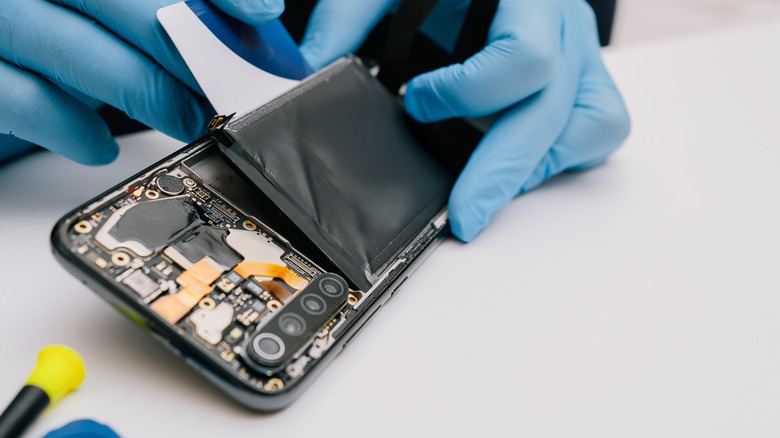
With the RAM crisis on the upswing and basic living already costing luxury prices, you need a phone you can rely on — and one you can repair when it breaks. Frankly, that doesn't describe the Google Pixel lineup. First, Google has a concerningly long history of phones with hardware or software issues that led to class-action lawsuits. The Pixel 3, the Pixel 6, and the Pixel 9 — which Google was forced to give free repairs for and extend warranties on — have all required users to fix their Pixels or buy new phones. Every major manufacturer has a lawsuit or two, but that's not where the problem ends.
A report by Rokform discusses how trying to fix a Pixel 7 Pro took far longer and cost far more than Google claimed it would — even with the insurance plan. This is made all the worse by the fact that Google previously included anti-consumer clauses in its terms of service, like one that said users would not have their devices returned if they used unauthorized parts. Repairability may also be difficult on an older phone, since Google only supports phones for three years after it stops manufacturing them.
None of this might be an issue if you, the user, could easily repair the phone. Unfortunately, that's also not exactly the case. Google's Pixel 10 ranks 6/10 in repairability according to iFixit, making it surprisingly less repairable than the iPhone 17 Pro and iPhone Air. The Pixel 9/9 Pro is even worse, at 5/10. They're not the worst repairability scores, allowing you to usually replace the battery and display without major issue, but it doesn't paint a pretty picture when you combine that with what we've said previously.