

11 '70s Cars That Would Never Be Made Today
It might be a bit tongue-in-cheek to claim that the 1970s was the last decade when engineers made a car and not a committee of lawyers with a crash sled, but there is some degree of truth to the statement. By and large, it was the era of big engines, bigger cars, and extraordinarily low mileage figures. The designs were unique, the prices weren't sky-high (relative to income, that is), and the 1972 film "The Godfather" was doing wonders at the box office. In the 1970s, the U.S. faced not one but two of the worst gas crises in its history, and along with increasingly stricter environmental laws, it heralded the death of the automobile of the time.
However, before these manufacturers found themselves strangled by legislation and the changing market, we got some gems that live on in history. For instance, there was a pickup truck with rear-facing jump seats in the actual bed of the vehicle. There was a 19-foot long family-hauling sedan that featured a raised glass roof that would never survive modern rollover standards but looked cool as hell. There was also a three-wheeled car that could fit in the bed of a 2026 Ford F-450, and a Volkswagen SUV that looked so bizarre that the company didn't even bother giving it a name. That's to say nothing of the plethora of land-yachts with the turning radii of battleships -– all of these were vehicles with soul, but ones that would never come to market today.
Cadillac Eldorado Convertible
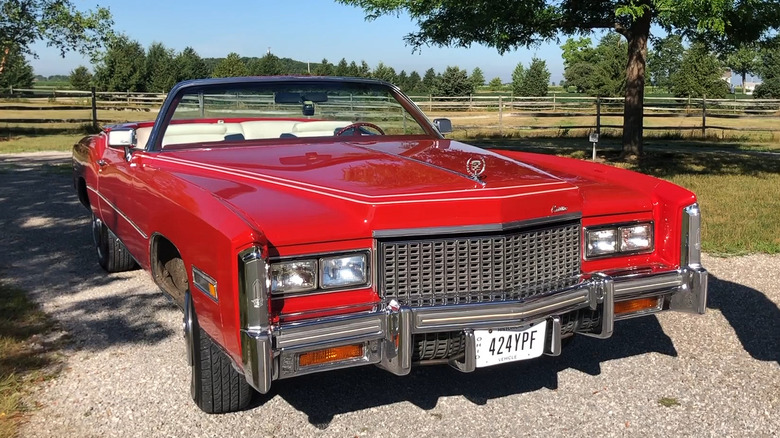
The Cadillac Eldorado makes it to almost every single article that reminisces about vehicles from the last century, and it's easy to see why. Initially released in 1953, the car went through a number of facelifts and redesigns before being killed off in 2002, which gave the American public five decades to fall in love with the vehicle. And many did, including the rich and famous –- among the myriad celebrities who owned an Eldorado were the likes of Marilyn Monroe, Elvis Presley, and Frank Sinatra. However, not many people realize that the legendary Eldorado was offered in the convertible body style too, though it was on offer for far shorter time than the coupe model that everyone is familiar with. The open-top Eldorado first came to market in 1953, and remained in production for two decades, with the Biarritz going off production in 1966.
Later, the convertible Eldorado would be brought back from 1971 to 1976, though coupe production remained uninterrupted until 2002, when the nameplate was discontinued altogether. In the 1970s, we're going to highlight the Eldorado from the first three years of the decade, before the gas crisis hit. The engine –- which would definitely fail emission standards today –- was the 500 ci (8.2 liter) V8 making 365 hp and 535 lb-ft of torque, widely considered to be the biggest engine in a production car at the time. A new 1972 Cadillac Eldorado convertible retailed for $7,681 as MSRP, which would be about $61,600 in 2026.
AMC Matador Coupe
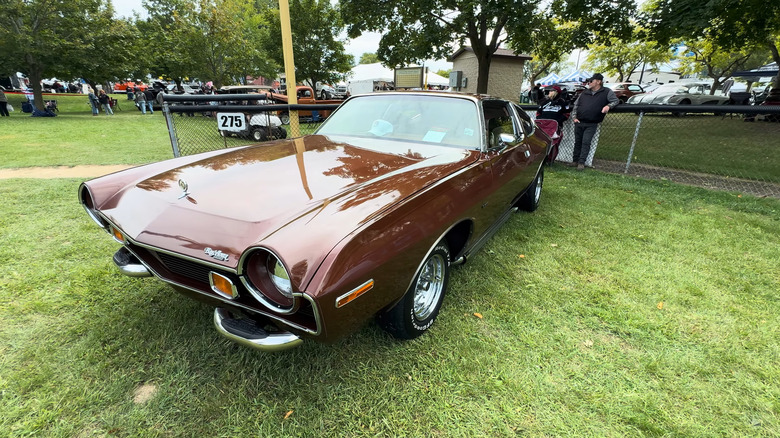
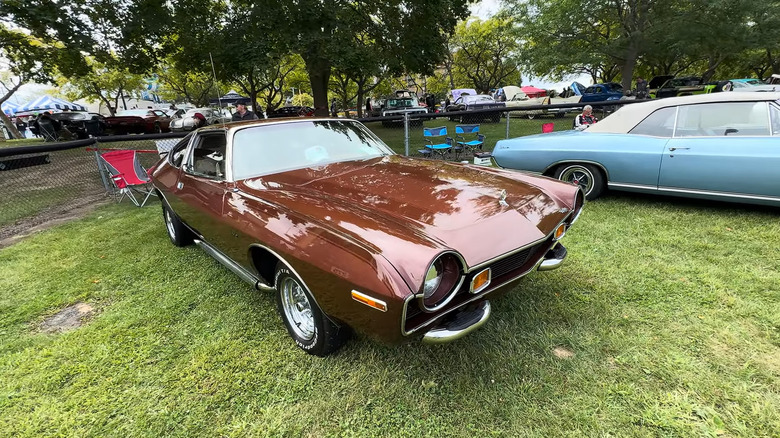
"AMC" is an acronym for American Motors Corporation, perhaps best remembered for being the company that owned Jeep for a few years last century. This is a tragedy, since AMC also made the Matador Coupe, a classic muscle car with poster-car looks. The Matador was built to succeed the AMC Rebel and was built from 1971 to 1978, across two generations; the second gen Matador moved from a full-size build to a mid-size one. Across the shorter-than-a-decade production run that the AMC Matador had, it was produced, the vehicle was offered as a wagon, as a sedan –- popular with police departments –- and as a coupe.
The star engine was a 401 ci (6.6 liter) V8 unit making 330 hp. For 1971, the legendary "Machine" trim was an option on only the coupe body type, and less than 60 are estimated to have been produced. AMC itself was shuttered in 1987 after Renault pulled out of a partnership, and Chrysler purchased the brand. It's worth mentioning that other body styles of the Matador were available before 1974 such as the 1971 AMC Matador Sedan, for example. Just as with many, many other medium-sized muscle cars from this era, we'll more than likely never see V8 engines shoe-horned into this size of cars ever again. Indeed, at the time of writing, the only American V8 cars are the Chevy Corvette, Ford Mustang, and Cadillac CT5-V Blackwing -– not counting the SUVs from the big three.
GMC Sprint SP
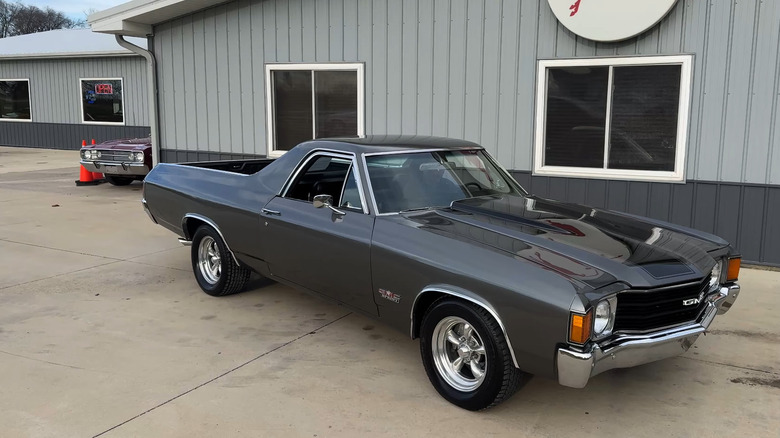
Everyone loves a clean Chevrolet El Camino, but the GMC Sprint SP gets left in a corner like some sort of social outcast. If you want to start a social experiment, start asking self-proclaimed gearheads about the GMC Sprint, and you'll probably be met with "what," "go away," "how did you get in my house," and similar phrases. For those who don't know, the GMC Sprint SP was to the El Camino what the Yukon is to the Suburban.
In other words, it was GMC's slightly up-badged, slightly better looking version of the El Camino. Given that the muscle-car-pickup died a long time ago, the GMC Sprint SP would be a sight to see, with its angular front and sharp, defined lines. When new, a 1971 GMC Sprint SP would run buyers the relatively fair amount of $2,932, which is equivalent to about $24,000 when adjusted for inflation in 2026. That money bought you niceties like the Hydra-Matic transmission, along with a 7.4-liter, eight-cylinder motor that made 270 hp at a relatively modest 4,000 rpm.
The gearbox was a three or four-speed unit, and the powertrain shot the truck from zero to 60 mph in about 6.5 seconds. However, the good news is that since enthusiasts have all but forgotten this particular corner of automotive history, prices are still in the realm of sanity. You can pick up a 1970s GMC Sprint SP (as of July 2026) for about $15,000 on the used market.
Subaru Brat
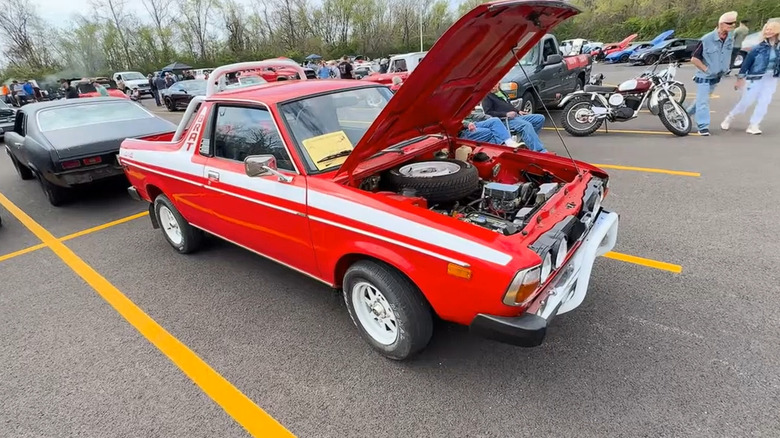
The Subaru Brat was a mishmash between what we call a crossover today and a pickup truck. Launched in 1978, it came with a 1.6-liter, quad-cylinder motor making 67 hp. Among a veritable host of other oddities, the Brat had a seating capacity for four passengers, though two would be accommodated in the pickup bed to avoid the chicken tax that would otherwise apply to imported pickups. Whoever was gutsy enough to accept that seating would get rear-facing bucket seats mounted just behind the driver.
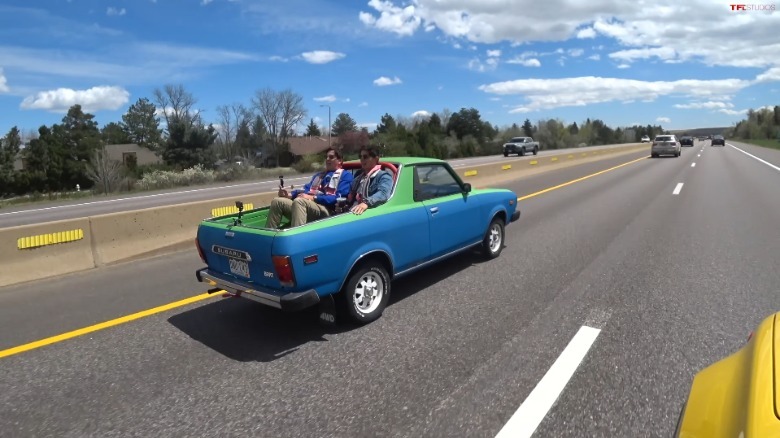
Today, it would probably puzzle quite a few motorists behind the Brat on the interstate, and given the national American sport of tailgating, it likely wouldn't go well for the brave passengers either. That's to say nothing of the myriad safety issues that the Brat would bring for the rear passengers alone, including the notable lack of airbags. However, it was still quite a cool piece of history, and is a shame that it didn't catch on more. And for those who want to use a couple ½-inch bolts to secure an Ikea chair to your F150 bed, we have bad news: At time of writing, more than 30 states have regulations prohibiting (to some degree) passengers riding in a pickup bed.
Volkswagen Thing (Type 181)
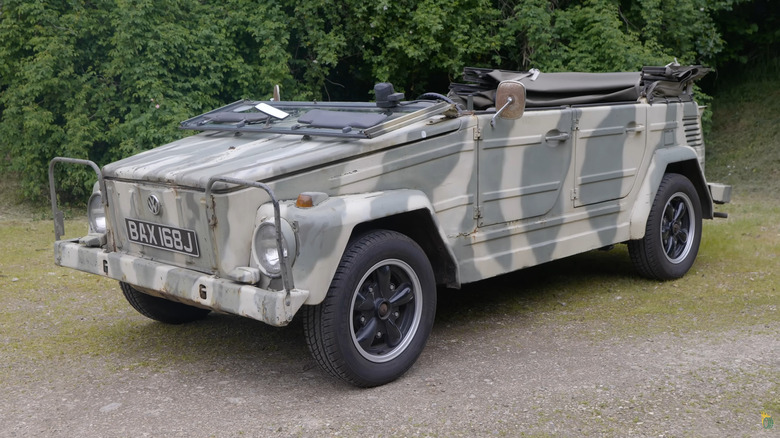
Can you imagine a multinational vehicle company making a car so bizarre that no one could come up with a name for it? That's exactly what happened to Volkswagen in the 1970s. For 1972, it brought to the U.S. its barebones, utilitarian mini-SUV that eventually became known as the "Thing", and everyone seemingly just ran with it. Officially designated the Type 181, the Thing –- as we're absolutely going to call it –- shipped with a four-cylinder motor that displaced 1.6 liters and produced all of 46 hp. The gearbox was a four-speed unit that sent power to the rear wheels, but with independent suspension units on each wheel.
There was a removable roof, and all the windows –- along with the front windscreen –- could be fully removed, with the rear windscreen coming off with the roof. The one pictured above is said to be (but we can't confirm) from a radio unit in the German Army. Given the relative lack of active and even passive safety features of the Thing, in addition to the fact that there is zero rollover protection, we can safely conclude that it will never be sold again as a new model. Plus, when someone or some company wants a small, horribly ugly-yet-lovable and slow mini-utility vehicle today, they'll just buy a Nissan Juke. For those wondering, the Thing went to consumer dealerships around 1971, but didn't arrive Stateside until the following year, when it was also sold in Mexico.
International Harvester Travelall
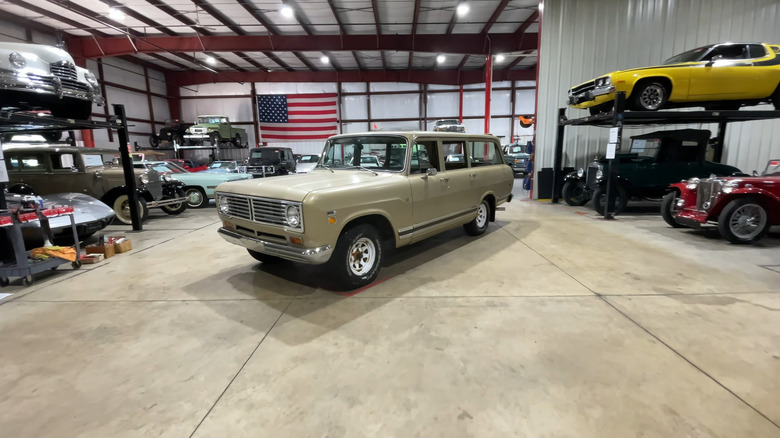
Released in 1953, the Travelall was in production for 22 years, going off the market in 1975. It was a barebones SUV that shared its platform with the Scout II SUV (which was similar to the Chevrolet K5 Blazer) and just as spartan. Today, a vehicle this barebones would never make production because the market demands comfort -– not to mention its lack of safety features. The Travelall model had entered its fourth and final generation as of 1969. There were many engine options on the truck, but the base unit was a 232 ci (3.8 liter) inline-six motor that made 145 hp in the fourth gen.
Interestingly enough, International didn't make the base engine, opting instead to source the motor from AMC, who made the Matador Coupe that we talked about above. The fourth-gen Travelall (which was the one available in the 1970s) had a maximum towing capacity of 10,000 pounds, which was a ridiculous number for an SUV based on a half-ton truck. A few years after the Travelall was discontinued in the mid 1980s, International Harvester sold off the non-truck-making businesses –- among other things, it used to make refrigerators, lawn mowers, agricultural machinery and, for a brief period in the 1950s, the M1 Garand rifle. The trucks division was renamed to Navistar International, and the successor company remains in business today, having been acquired by the Volkswagen group in 2021.
Buick Estate Wagon
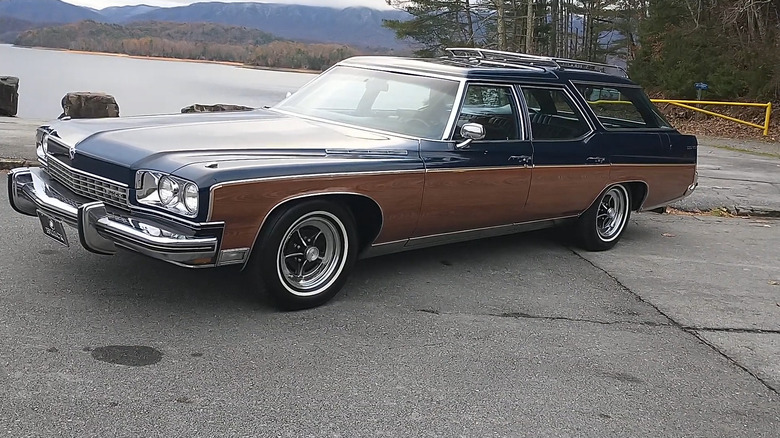
Buick is one of the many car brands that GM still owns, though that number has greatly diminished from its heyday. Today, Buick only makes four models –- the Envista, Encore, Envision, and Enclave (in order of price) – and all four of them are crossover SUVs, sadly. However, from a time when the "B" in "Buick" stood for bold, we have the Buick Estate Wagon, which was quite the talking point if you had it parked in your driveway. Now, "Estate" and "Wagon" on a car means the exact same thing –- so saying both is kind of like saying "chai tea" or "naan bread" –- but that's besides the point.
The heart of the car was the 455 ci (7.5 liter) V8 engine making 205 hp, and had a whopping 106 cubic feet of cargo area. This behemoth of a vehicle was 232 inches (19.3 feet) in length, which is a foot and a half longer than the 2026 Cadillac Escalade's 212 inches -– and the Buick is from the 1970s. It's worth mentioning the Escalade, since the Buick could also seat up to nine passengers.
In fact, the only modern cars that can still seat nine people are the (front bench-seat equipped versions of) the Yukon, Tahoe, and Suburban, which are essentially the same car. Thus, while a nine-seater wagon would be very cool to have today (Volvo, looking at you), the market dynamics ensure that it'll never be a reality again.
Oldsmobile Vista Cruiser
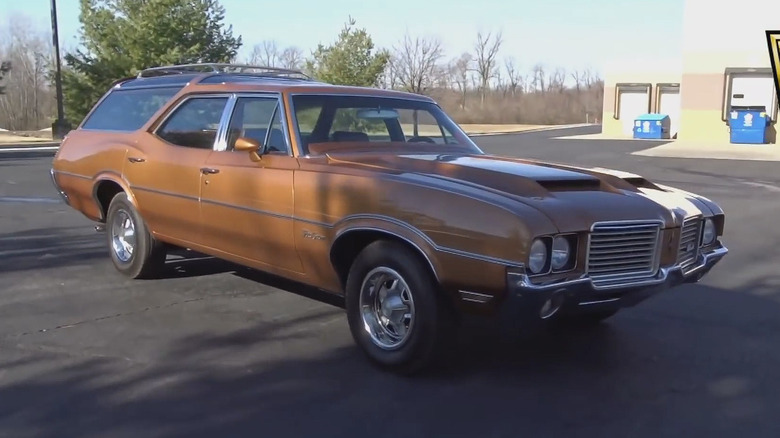
One of the coolest-looking vehicles of all time has to be the Oldsmobile Vista Cruiser –- and for those who don't know, Oldsmobile is one of the many brands that GM killed over the years. Perhaps best remembered for being the company that invented the historic Hydra-Matic automatic transmission in the 1940s, Oldsmobile used to be the epitome of upper-middle class luxury in America. The Vista Cruiser sat near the top of the lineup at the time, and was available as a single body style –- take it or leave it -– across the entire production run, which lasted from 1964 to 1977. The standard engine on the Vista Cruiser would have been the 330 ci (5.4 liter) V8 known as the "Rocket" that made 230 hp mated to a three-speed transmission.
However, a massive 455 ci (7.5 liter) V8 that bumped power was also an optional upgrade down the line. Amongst many other Brougham-esque design choices was the extensive use of woodgrain outside body panels, which really lent the car a look that old money would rock, even at the time. The most notable feature on the Vista Cruiser, though, was the view that rear passengers would be treated to, courtesy of a raised glass roof at the back, which included skylights. With today's strict rollover standards, such a vehicle -– though undoubtedly cool -– would never pass muster with regulatory authorities.
Mercedes-Benz 450 SEL 6.9
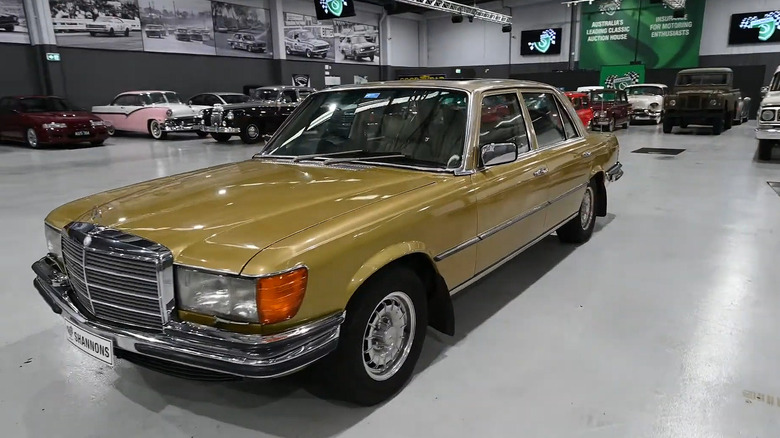
One of just two German cars that makes our list is the Mercedes-Benz 450 SEL 6.9, which would be the definition of a "sleeper car" -– something quite innocuous-looking but could easily smoke you at a stop light. The performance of this vehicle came about largely due to the engine that the name hinted at: a 6.9-liter V8 motor that made 286 hp and 406 lb-ft of torque at a fairly reasonable 3,000 RPM. At the time that Mercedes was trying to shove its then-new 6.9 liter behemoth into its W116-series car, it was actually the biggest engine the brand made at the time.
And, despite the aesthetics of "6.9-liter" looking nice, the actual displacement was closer to 6.8 –- 6,834 cc, brought about by a bore of 107 mm and a stroke of 95 mm. The power was sent to the wheels via a three-speed gearbox, and the 450 SEL made use of all that power quite well, with a top speed of 133 mph. The car also had a standing to 60 mph time of just about 7.1 seconds, and it could run the quarter-mile from zero in 15.7 seconds, at the end of which the speedo would read somewhere in the range of 91 mph –- remember, this is a car that is half a century old at the time of writing. Today, a nearly 7-liter V8 engine would probably result in fleet emissions (as well as individual vehicle) emissions being pushed well over the acceptable mark — that's to say nothing of the ridiculously low mileage one of these would get.
Reliant Robin
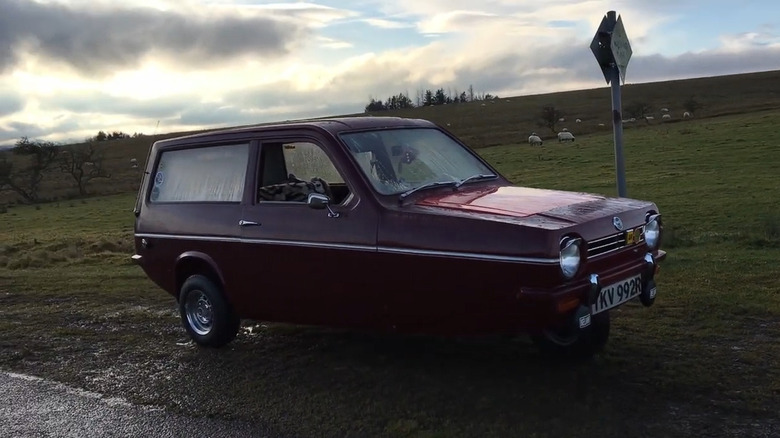
If you're reading this article, you're probably a petrolhead –- and you've probably heard of "Top Gear," the hit BBC television series. One of the most memorable moments from the show came about in Season 15, Episode 1, when Jeremy Clarkson rolled a three-wheeled mini car onto its side (though the stunt was rigged). That three-wheeled oddity was a Reliant Robin, with Reliant being the name of the company that made the car. The engine in this thing was a measly 748 cc four-banger that was mated to a four-speed gearbox, though it felt underpowered even for the car's less-than-1,000 pound weight. The total oomph from the engine stood at 32 hp, and the top speed was somewhere in the ballpark of 73 mph, but you could not realistically expect much else from a car with a motorbike-sized engine.
And we specifically say that the car had an engine akin to a motorcycle because the Robin could be driven if you had a motorbike license. Even for the four passengers that it was designed to carry, the Reliant Robin was quite a cramped vehicle; it's downright surprising that the thing had such a long production run. Initially introduced to the market in 1973, this quirky little three-wheeler stayed on the market until 1981, and was reintroduced from 1989 to 2001. If a Reliant Robin were to come on the market today, it would never meet safety standards –- not least because it had no airbags or side impact protection.
Any of the big land yachts
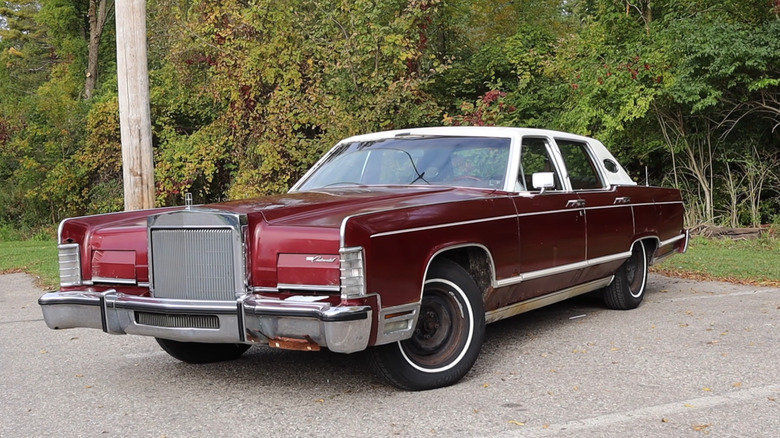
Contrary to popular belief, Cadillac is not the only company that made land yacht cars with the turning circle of a small moon. Examples of the time include the likes of the Chrysler New Yorker Brougham, Lincoln Continental Town Car, Chevrolet Monte Carlo Landau, Dodge Monaco, and other such cars. Most of them shared the same design, coming with acres and acres of hood, seating capacities for your family and the neighbor (and the dog), and huge V8 engines that somehow made the same power as a European six-cylinder with half the displacement.
To illustrate our point, consider the Buick 7.5 liter engine that made it into the Buick Riviera of the 1970s, which made about 205 hp. On the other hand, consider the 1970's Mercedes-Benz 280 SE, powered by a 3.5-liter V8 making about the same horsepower. Yet, the American cars undeniably had more soul, and had that "turn back factor" that made you actively want to look back at the car while walking away. Given the fact that all of these land-yacht cars had an intense lack of safety features – crumple zones weren't really a thing and collapsible steering columns had just become industry standard – we can safely assume that such vehicles wouldn't ever make it past even the design stage today. That's not to say anything of the emissions regulations and abysmally poor fuel economy that such a car would get on modern roads.