

12 Dangerous Tools From Lowe's You Should Never Use Without Reading The Manual First

As with virtually any big box home improvement outlet, Lowe's stocks a wide range of tools and equipment in store and features an online portal to shop whenever the need arises without ever having to drop in for a visit. Lowe's features seasonal sale events, too, so strategically lining up your purchasing with a holiday weekend or the annual changeover in weather from one season to the next can help you save even more if you're shopping on a budget.
Among some of the brand's tool offerings lies a subset of gear that really should come with some major warning stickers plastered all over the box or case. Naturally, when considering tools designed to apply intense force to a screw or cut through dense material like butter, a certain element of danger comes into play. This is more just the risk of a pair of pliers cutting you if you stick your fingers into the bladed segment, or serving as a conduit for an electrical shock if you grab a live wire with them. These tools require more than following the basic safety rules from OSHA to safely operate, and buyers should seriously read the manual thoroughly before trying them out for the first time.
Craftsman V20 RP 4.5-Inch Paddle Switch Angle Grinder
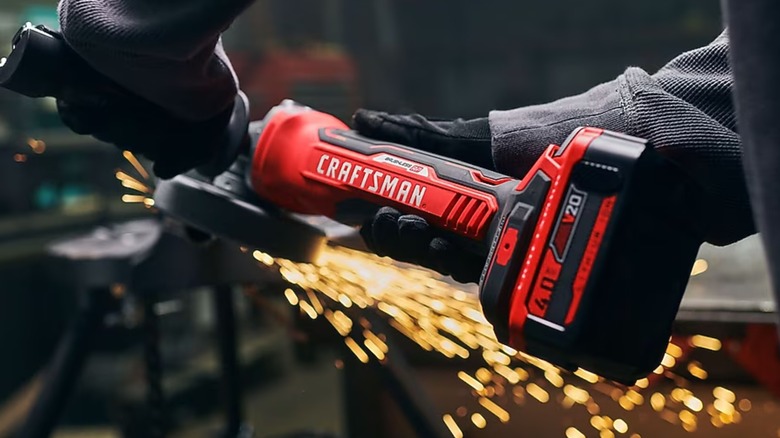
The angle grinder is a cutting implement that can do so much more, but it accomplishes its main function with the help of a violently spinning disc. This tool delivers significantly higher RPM figures than a circular saw, and because it's typically smaller and lighter, it can be difficult to control and produce precise cuts. Fighting with an angle grinder is a great way to hurt yourself. I've never cut myself with one directly, but I've had discs blow up and scatter debris cuts up my arm in the past, and I know a handful of professionals who have given themselves genuine cuts. Angle grinders injure 5,400 people on an annual basis, and this isn't likely to change anytime soon.
The tool is central to a variety of tasks including things like cutting pipes, bricks, and metal stock, and it can play a key role in tasks like sharpening lawnmower blades, among others. The Craftsman V20 RP 4.5-Inch Paddle Switch Angle Grinder offers a three-position handle and delivers 65% more power than a brushed Craftsman alternative. It's a quality tool, but one that demands respect.
Great States 14-Inch Reel Lawn Mower

I recently invested in a reel mower, and enjoy cutting with it quite a bit. From personal experience, the reel mower allows you to cut more frequently, producing a more consistent layer of growth and a pristinely manicured lawn. However, there are some important things to keep straight about the reel mower. Adjusting the height can be tricky, and you'll typically need to do this in stages to get both sides of the cutting drum and its opposite blade element sitting at an even level. This is certainly true for the Great States 14-Inch Reel Mower, featuring four blades and the ability to cut at heights ranging from 0.5 to 1.75 inches.
The tool operates like a pair of scissors to cut your grass, and that means it's entirely possible to cut yourself if you aren't careful. From sharpening the blades by hand and spinning the drum to accomplish this to removing built up grass debris, there are plenty of tasks involved in maintaining a reel mower that your manual will provide some best practices to cover.
Black+Decker 4.5 Amp Variable Speed Jigsaw
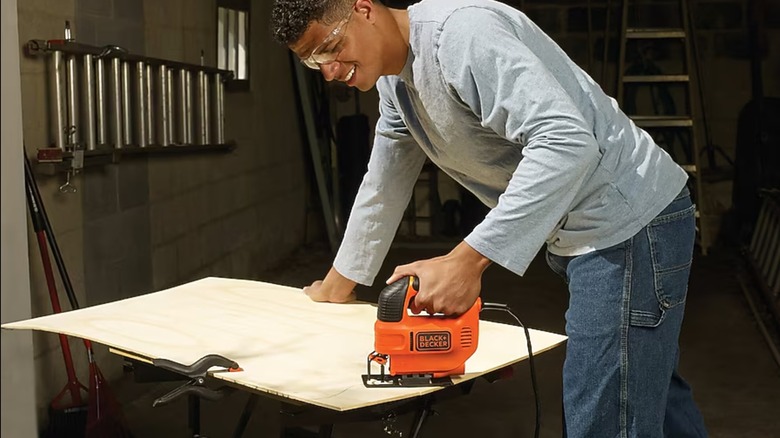
The jigsaw is a versatile tool, and you don't necessarily need an expensive or feature-rich one to get most jobs done. The Black+Decker 4.5 Amp Variable Speed Jigsaw is a tool that offers exactly this experience. It's a low-frills, inexpensive jigsaw featuring corded power and a tidy $42 price tag. However, it includes one specific feature that my own model also offers and has been a point of issue for me on countless occasions.
The jigsaw features a button on the side of the handle right around where your thumb will rest while holding it in your right hand. This button initiates the constant-on mode so that you don't have to keep the trigger pulled as you move along a cut line. It's a valuable feature for tackling longer cuts without interruption, but for left-handed operators (like myself) it can frequently get turned on inadvertently, making the tool perform in unexpected ways. Understanding how this button operates before you plug it in can save you a lot of hassle. I've never cut myself where the jigsaw that continued running when I expected it to shut off, but I have had to start over with a fresh workpiece after making errant cuts unexpectedly.
Bosch 3.25-Inch 6.5 Amp Handheld Planer
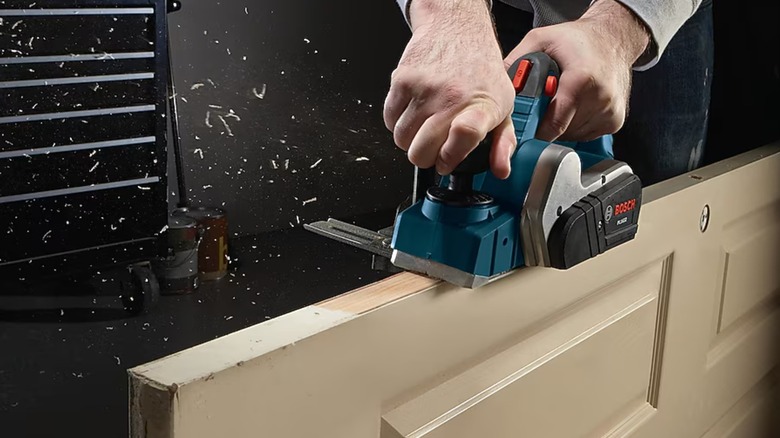
The hand plane is a classic tool, and the iconic Stanley models are hand implements you'll often find at garage sales. But technology has caught up with traditional form in many ways, including as an electric planer. The hand plane is a somewhat dangerous tool on its own because you'll typically want to hone the blade to an aggressive edge, but an electric planer like the Bosch 3.25-Inch 6.5 Amp Handheld Planer features numerous, spinning blades that slice down workpieces under the power of an aggressive motor delivering 16,500 RPM speeds. You can cut yourself with a hand plane, but if you cut yourself with an electrified variant you may be looking at a significantly more serious medical issue.
Your user manual will provide instructions on sharpening or changing blades, speed settings, and the best way to hold the tool for a secure and effective cut. There's a lot to know about using an electric hand planer. This is a prime example of a tool that can be game changing in the right hands and incredibly dangerous in inexperienced or unprepared ones.
Lincoln Electric 120 or 230 Volt 180 Amp Multi-Process Welder
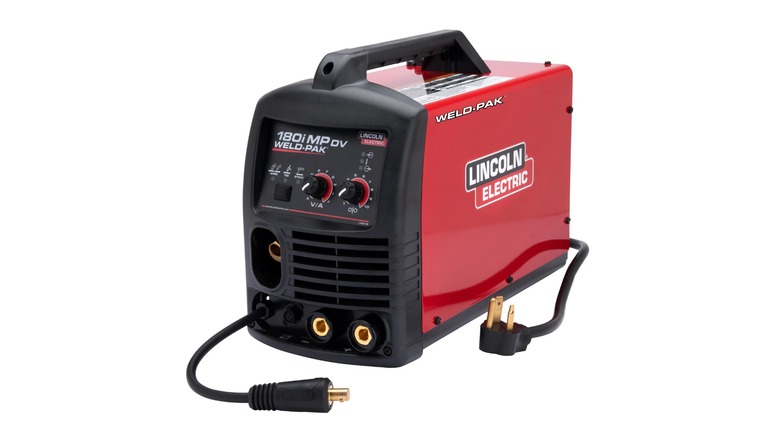
Welding is an area of expertise many DIYers won't engage in unless they absolutely must. I've never worked with a welder before, but I've done plastic welding and soldering on a fairly extensive basis. Welders include all kinds of additional health and safety risks that these other, similar types of tasks don't introduce. You'll need to protect your eyes when you weld, and performing the right type of process for your applications needs goes far beyond the baseline specifics of temperature and material types for other kinds of similar fabrication jobs.
The Lincoln Electric 120 or 230 Volt 180 Amp Multi-Process Welder is a tool that features a wide range of functionality. It's not basic model by any stretch of the imagination and includes a huge subset of options when it comes to capabilities. With additional utility brought into the picture comes the need to fully understand the tool you're operating. This is an expensive welder ($1,328 at Lowe's) that can do a lot of different things and you'll want to ensure that you read the manual before turning it on so that you get the most out of Your newest piece of gear for the shop.
Kings County Tools Ryoba Japanese-Style Pull Saw
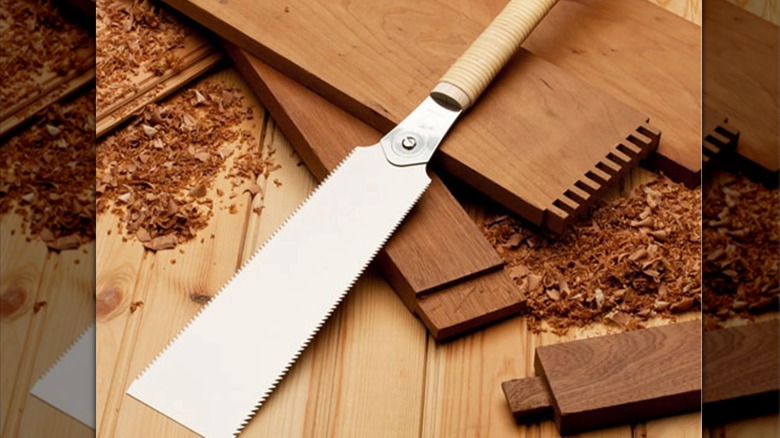
Unlike a western style saw, the Japanese pull saw tends to feature a double-sided construction with blades designed for rip cuts or cross cutting (though that's not necessarily universal). The Kings County Tools Ryoba Japanese-Style Pull Saw follows in the same pattern as the classic models built in this style. As is the case with anyone who frequently watches woodworking YouTube channels, I got my exposure to this tool through the recommendations of YouTubers and much like many other DIY enthusiasts, invested in one. Mine is from a different brand but virtually indistinguishable from this one.
You'll need to know a few important things about using a Japanese style saw before you really get going. For one thing, the blade is significantly thinner than on a western style tool. This allows it to produce a thinner kerf and you'll often find that you can saw with the tool much faster thanks to its reduced weight and overall feeling of agility. However, this thin blade is markedly flimsier, and that can derail cuts or perhaps even injure its operator. You'll also want to ensure that you're read up on which tooth type is designed for what kind of cutting need (the lower TPI side is for rip cuts). This saw features a 9.5-inch replaceable carbon steel blade with 15 TPI cross cut and a 7-10 TPI rip cut blades.
DeWalt XR 20V Brushless Oscillating Multitool
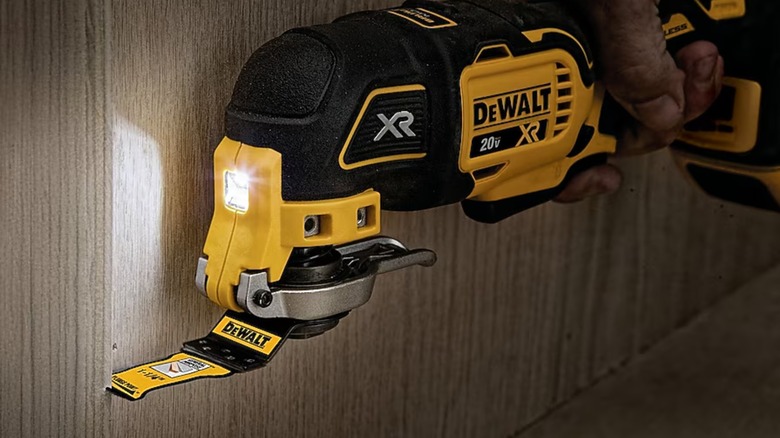
The oscillating multitool is something SlashGear's own Cody Campbell couldn't put down during a ceiling renovation. This is a versatile piece of equipment that can perform a heap of jobs. Much like an angle grinder, this tool functions with accessory blades to perform a barrage of needs. And also like an angle grinder, it features substantial blade speeds, produces a lot of noise in most instances, and has a tendency to attempt to escape your grip. An oscillating multitool can be hard to control and that's important to understand. They also frequently utilize a few important settings and onboard capabilities that are important to explore in the user manual before you engage the tool for the first time.
The DeWalt XR 20V Brushless Oscillating Multitool comes as a kit with accessories, a battery, and charger for $99 from Lowe's. it offers a three-speed selector and delivers up to 20,000 OPM blade speeds. The multitool utilizes a tool-free blade change capability and offers a dual-grip variable speed trigger for enhanced control throughout your cuts. Price, function, and ergonomics come together to make this a solid option in its class, but fully understanding the tool before leaning on it to perform a job remains critical to safety and success.
Evolution 10-Inch Electric Concrete Saw
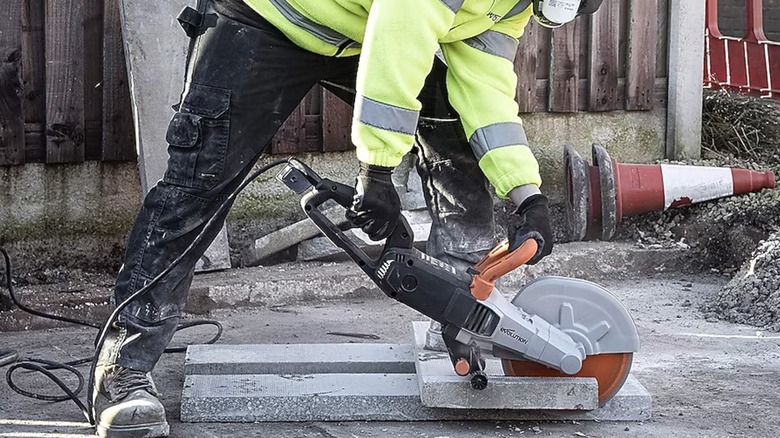
The Evolution 10-Inch Electric Concrete Saw is a heavy duty cutting tool that won't be included in the collections of most DIY operators. Concrete tools tend to exist beyond the scope of most DIY jobs, but that doesn't mean they never come into play. I've never used an electric consaw before but have operated a gas-powered alternative on a select few occasions. The electric power of this tool makes it a slightly more streamlined tool than its traditional alternative, but there are still plenty of features and functional notes that are important to understand before firing up the potent cutting implement for the first time.
The Evolution saw features a large, 4¹⁄₁₆-inch cut capacity that allows it to cut through the full depth of a brick in one pass, limiting the need to line up repeated cuts. It also includes a dust port for use with a shop vac. This and other features warrant a bit of study within the user manual to make the most of the tool.
Bostitch Smart Point 2½-Inch 16 Gauge Pneumatic Straight Finish Nailer
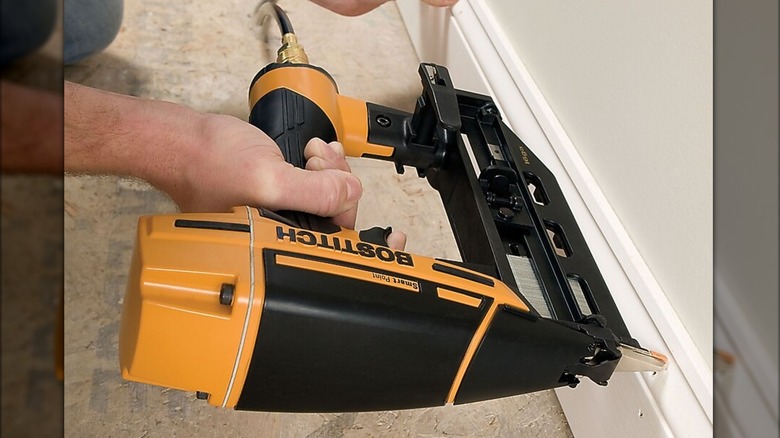
Admittedly the learning curve isn't enormous when making the jump to air tools. However, it's still crucially important to leaf through the user manual when picking up a pneumatic tool, especially if its primary function is firing projectiles, as is the case with a nailer of any sort, such as the Bostitch Smart Point 2½-Inch 16 Gauge Pneumatic Straight Finish Nailer. This model operates oil-free, which is an important change of pace from a typical nailer, and it allows users to reduce the risk of oil staining and other, similar problems. It features a smaller nose than other Bostitch nailers, and the Smart Point technology means you won't need to compress the tip to operate it.
Beyond the tool's unique features, it's important to understand the pressure rating the manufacturer suggests. With this and other options, you'll also want to explore the various controls and settings you'll find on board the unit before trying to operate it. Air tools are lighter and easier to use on the whole, as well, meaning a user may get lulled into a false sense of security as they go about their tasks. It's important to remember that these are still potent power tools that can and will hurt you if you aren't careful or fail to give them the respect they demand.
Grizzly 10-Inch 15 Amp Benchtop Table Saw
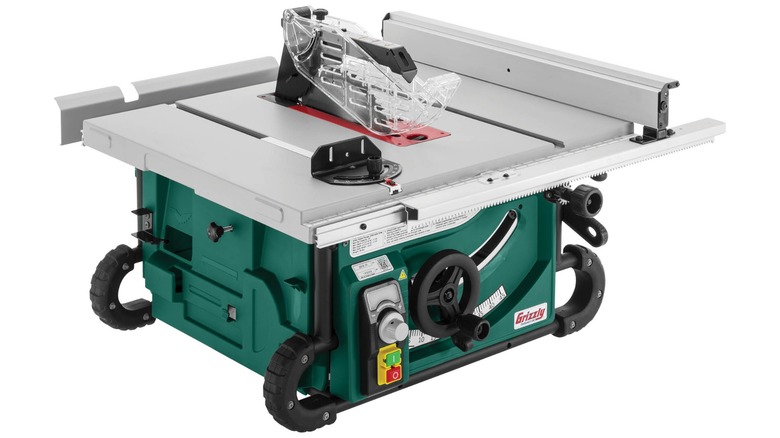
Of course the table saw was going to make an appearance here. Unlike the miter saw, this is a switched tool rather than one you'll pull a trigger to operate. This means you have to actively turn it off after you've finished cutting a board. Many users also take the safety shroud elements off of their tool in order to fully utilize the cutting blade. This makes the tool a little more functionally sound, but significantly more dangerous for those who don't continuously and fully respect the power of an unguarded, constantly spinning saw blade. Table saws introduced kickback concerns, cut potential, and you can even push the saw over if you aren't careful while cutting particularly heavy boards.
At every step of the game when considering a table saw, it's crucially important to understand the full range of your model's capabilities and limitations. The Grizzly 10-Inch 15 Amp Benchtop Table Saw offers a variable speed control, which changes the pace, so to speak. It also features a narrow rip fence that folds down with both macro and micro adjustments to fast and precise movements to lock in the exact cutting dimension you require. These and other features (such as a 2 horsepower motor) make the tool a little different than the typical table saw, warranting a visit with the manual.
Kobalt 6 Amp 7-Inch Wet Tabletop Sliding Table Tile Saw
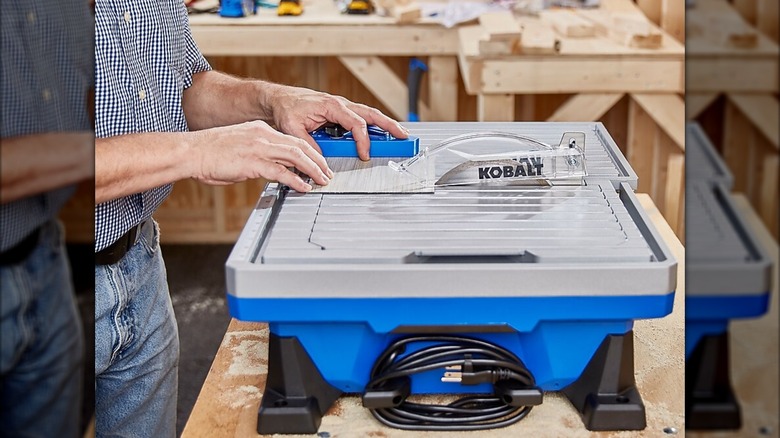
The Kobalt 6 Amp 7-Inch Wet Tabletop Sliding Table Tile Saw is designed to use a water source to add improved precision and blade cooling effects. It's meant for cutting tile, making it a specialty implement, and reading the manual will give you key insight into some best practices for using this model in particular, and wet tile saws in general. Tile saws can easily chip or break tiles as you make a pass. It only takes one nick from a chipped tile to realize how important it is to avoid this outcome as much as possible. This particular unit features a moving table component alongside its status as a specialty tool, combining to make a complex piece of equipment worth taking a moment to read the manual and gain some deeper insight.
The tool can handle cuts in a variety of tiling materials and other similar workpieces. It can be used to cut glass, natural stone, porcelain, and even pavers. The tool can deliver a maximum rip capacity of 18 inches and delivers a blade speed maxing out at 5,200 RPM. It runs with a 1 horsepower motor, providing significant oomph to get the job done quickly and effectively.
Skil 14 Amp, 2.5 Horsepower Combo Fixed/Plunge Router
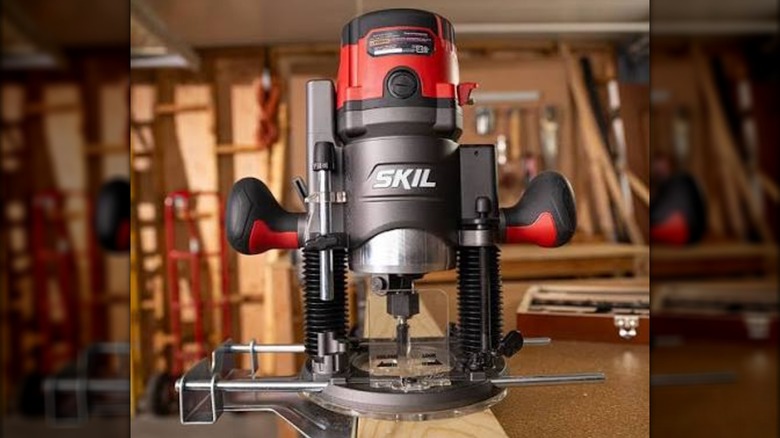
Routers are a fitting place to conclude a list like this. These tools feature rapidly spinning arbors housing specialty blades in their collets that can be formed in all shapes and sizes. Routers feature a few different layout options, including fixed base and plunge routers.
The Skil 14 Amp, 2.5 Horsepower Combo Fixed/Plunge Router is a unique take on this tool that combines both of these options into a single implement. The added versatility can be a great addition to an already overcrowded workshop, but with its functional range comes the need to fully understand what the tool can accomplish and how to best extract that utility while retaining a safe work environment. The Skil router offers a maximum blade speed of 25,000 RPM with a cut depth ranging up to 2.25 inches. The tool can accept bits in is dual, ¼ and ½-inch collet. The tool's significant 2.5 horsepower output may be something of a surprise in a small tool, but this only adds to the importance of learning all you can about the implement before firing it up.
Methodology

Each tool listed has been rated highly by Lowe's buyers, so they are all popular models that people clearly seek out on a regular basis. The types of tools highlighted are all tool types I have experience with personally (aside from the welder). Some have inflicted minor injuries on me in the past while others are notably quirky or a little difficult to operate, leading to the necessity of consulting the manual to fully understand how to best leverage the piece of equipment.