

4 Things Toyota Should Rethink Before The Next Grand Highlander
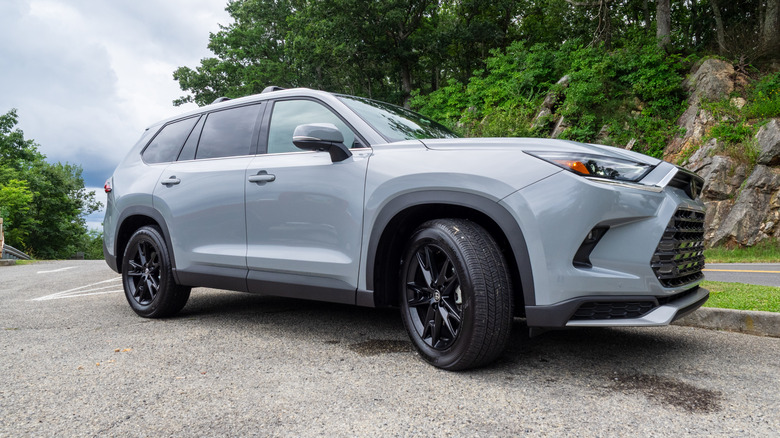
For the 2024 model year, Toyota introduced a new model for consumers seeking a three-row crossover that had more legroom than the Highlander, but without the heft and fuel bill of the biggest three-row model in the Toyota family, the Sequoia.
That new model? The Grand Highlander. And the consumer's response? In 2023, nearly 170,000 Highlanders left the lot compared to just over 48,000 examples of the bigger sibling. In 2025, around 137,000 Grand Highlanders (just over 69,000 of which were hybrids) were sold compared to a measly 56,000 (25,000 being hybrids) examples of the Highlander.
Now that the Highlander's going fully electric for 2027, though, what should Toyota do for the next-generation Grand Highlander (which, by the by, isn't coming anytime soon)? Having reviewed both the 2025 Grand Highlander Hybrid MAX Platinum and the 2026 Grand Highlander Hybrid Nightshade Edition, as well as their upmarket corporate cousin, the 2025 Lexus TX 500h F Sport Performance Luxury, I happen to have a few ideas in mind. Allow me to count the ways for you, in hopes that the Japanese automaker might make some (if not all) of these improvements when the next Grand Highlander lands in showrooms.
MAX-imize the fuel economy
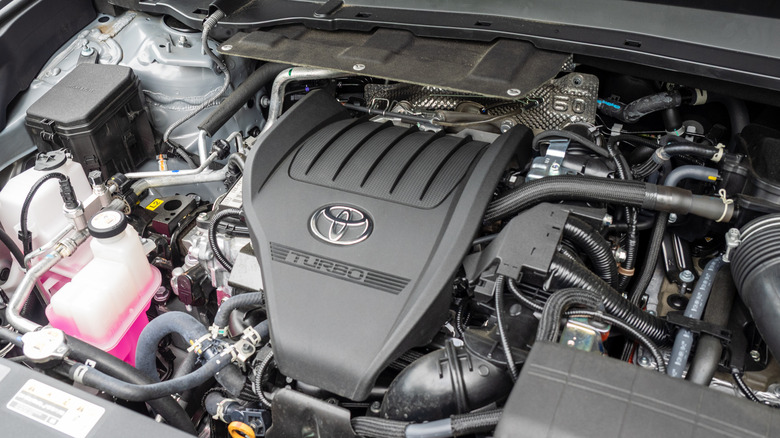
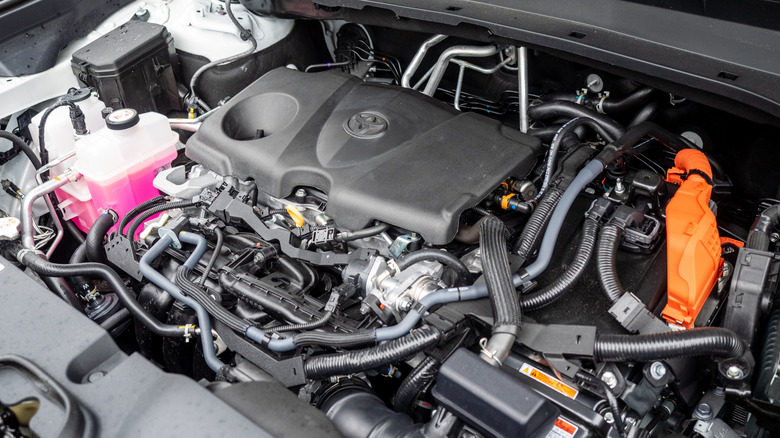
The one thing both the Highlander and Grand Highlander (until the 2027 model year, anyway) have in common is that they can be had as gas-only or hybrid. The comparison stops there, though, as the latter's hybrid options include Toyota's performance-focused Hybrid MAX engines, giving crossovers like the Grand Highlander greater strength on the highway and the ability to tow more than standard hybrid powertrains.
There's just one catch: fuel economy. Alas, I've found these engines don't always reflect what the numbers on the window suggest in reality. The 2025 Grand Highlander Hybrid MAX Platinum managed 23 mpg combined despite the sticker promising 26 mpg, while the similar 2025 Lexus TX 500h F Sport Performance Luxury AWD performed worse at 21.3 mpg combined instead of the 27 mpg combined on the sticker. Meanwhile, the non-MAX hybrid 2026 Grand Highlander Hybrid Nightshade did better at 26 mpg combined, though the EPA estimated that one would get 34 mpg combined.
Along with the i-FORCE MAX's premium-grade fuel requirements and the fluctuating prices at the pump as of mid-2026, Toyota should rethink how these engines use their hybrid power. Perhaps more tuning is in order, both to improve fuel economy and — like all of Mazda's turbocharged offerings such as the CX-90 — use either regular or premium to move about the road. Not to mention the increasing reliance on the electric/battery side of things to reduce fuel use.
Add even more room for the third row/cargo area
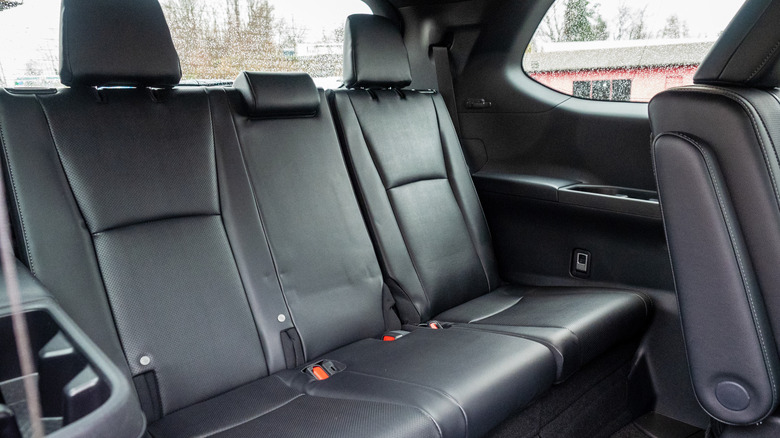
The biggest (pun intended) selling point of the Grand Highlander over the Highlander is the difference in legroom for the third-row occupants. The outgoing generation of the latter offers a cramped 28 inches, which might be punishing even for children, let alone adults. The Grand Highlander, on the other hand, lives up to its name with 33.5 inches of space to stretch out the legs. However, that space could be even grander. After all, the Sequoia offers just a smidge more room at 33.7 inches; it also has a 208.1-inch overall footprint, so it could offer more space.
So, why not increase the overall length and wheelbase of the next-gen Grand Highlander a few inches? Follow that with a bit of interior repackaging to increase overall space, and the third row would be roomier than ever. For comparison, the 2026 Jeep Grand Wagoneer bests both Toyotas (and the Lexus TX) with 36.6 inches of legroom for third-row occupants. And of course, with more room in the back for people comes more room in the back for cargo, too. Right now, that space comes to 20.6 cubic feet with the third row up, 57.9 cubic feet with it put away. The Jeep, meanwhile, offers 27.4 cubic feet and 70.8 cubic feet, respectively. Either way, increasing the space could give the next Grand Highlander a leg up on the all-electric Highlander for those who need the room without the range anxiety.
A small, hybrid-only lineup, please
The 2026 model year includes at least 10 versions of the Toyota Grand Highlander. Four are gas-only, and six are hybrids (two of which are performance-focused hybrids). There are also multiple variants on the Limited trim level: gas-only, Hybrid, and Hybrid MAX. The rest of the trims are either gas-only/hybrid or, in the case of the Platinum, gas-only/Hybrid MAX. To say things can become confusing at the dealership when shopping for this three-row crossover would be an understatement.
So, here's my proposal: for the next-gen Grand Highlander (especially now that the smaller Highlander will be an EV from 2027 onward), simplify the lineup. Start by cutting the gas-only models, which don't have the best fuel economy compared to the hybrids (22-24 combined mpg according to the EPA). That alone could funnel those consumers towards more fuel-saving options. Then, perhaps don't split the trims the way Toyota currently does on its website. Each trim is mostly the same, after all; the difference is what's up front. Consolidating powertrain variants into their respective trim levels will make things easier on the consumer when they shop for the crossover (or any other model in Toyota's lineup, for that matter).
Finally, as an added bonus (and to prepare consumers for the day when the Grand Highlander, too, goes fully electric), add a plug-in hybrid option (just remember to group the PHEV powertrains in with the rest of the powertrain options per trim level).
Improve the interior quality
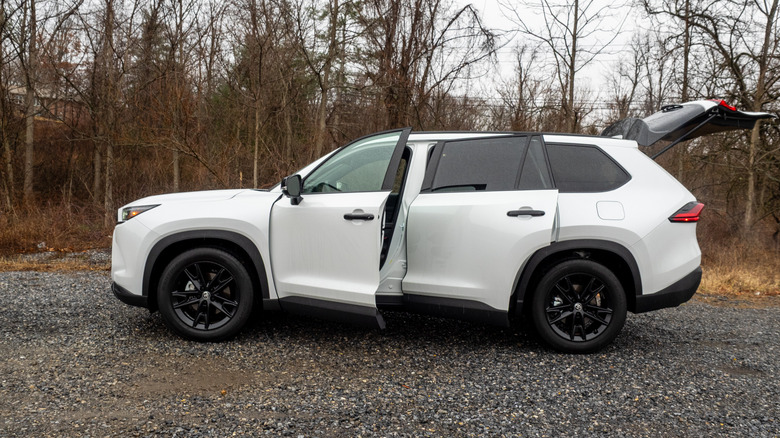
You're dropping anywhere from $45,000 to $60,000 (before options, by the by) on a three-row crossover whose main selling point is that people can actually sit in said third row without feeling like they're being punished. Shouldn't you want a nice interior for the money? Competitors like the Kia Telluride Hybrid and Hyundai Palisade Hybrid offer outstanding interior features for the same money, yet if you want a Grand Highlander with more refinement inside, you'll have to drop more cash at the Lexus dealership next door for a TX 500h.
I understand Toyota tends to be conservative when it comes to styling trends and tech, but I suggest the next-gen Grand Highlander be allowed to step up its game in that regard. Some of the nicest interiors Toyota offers are in the Sequoia, Tundra and Tacoma, full of colorful dashes, wood-grain trim, more color options for leather, etc. Steal from Hyundai/Kia's playbook, too, by going plush on the high end and comfy yet stylish on the low end; technically, the duo steals a bit from their upmarket cousin, Genesis, but it works. Either way, this isn't a Corolla or Corolla Cross here (or a regular Highlander, for that matter). This is the new-age family truckster, and if we're gonna go full 1970s at the gas pump, let's carry that over with the nicest interiors this do-it-all everyday machine deserves.