

5 Highly-Rated Audio Mixers For Every Price Range
We may receive a commission on purchases made from links.
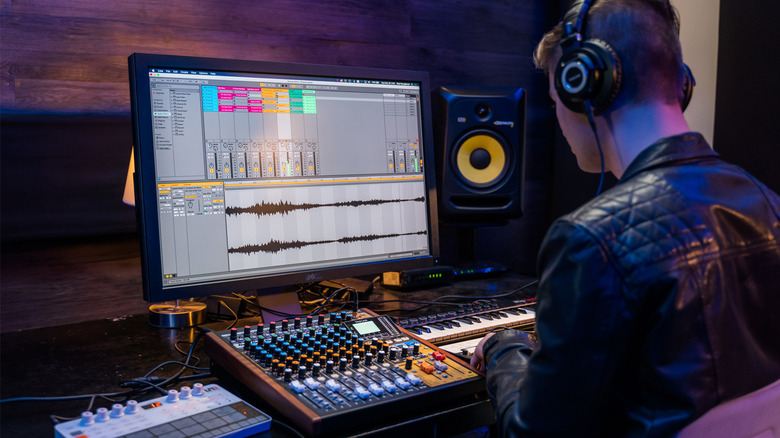
An audio mixer is a must-have for pretty much anyone who owns more than one piece of music gear. Of course, any home studio and portable recording station needs a mixer, but most musicians will find one useful, too. Need to hear a backing track and your guitar through the same headphones? Get a basic two-channel mixer. A pedal has no wet/dry knob? You can get the same effect with a mixer's aux send and return. Looking to record all eight channels of a drum machine individually? A mixer that doubles as a multi-channel audio interface or one with standalone multi-track recording might be the best solution for you.
Of course, what mixer you end up getting depends as much on your needs as on your budget, and it's so easy to overspend on a mixer: You could always use the extra channels, and two aux sends and returns, and the faders, which are so much better than volume knobs. Before you know it, you're looking at a mixer that costs more than the gear it's connecting. This article will highlight the best mixers that money can buy at five different price ranges, to help you navigate this confusing world and find a mixer that fits both your budget and your needs.
We tried to select one or two of the best audio mixers in every price range, but it's important to remember that a mixer is a tool, and the best tool is the one that helps you achieve your goals. You should buy the tool you need, not the one that someone on the internet says is "the best," even if that someone is us.
Under $100 — A used Behringer Xenyx 802 or 802S
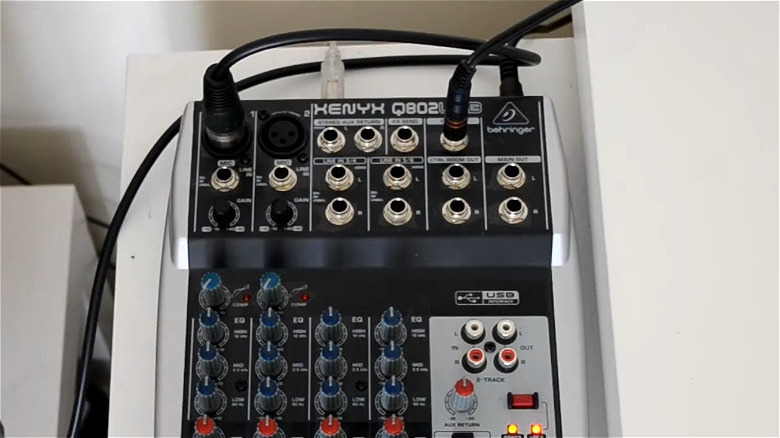
Behringer's entry level Xenyx 802 mixer is generally considered to be totally fine. The reason we're highlighting it, however, is the used market price. It may not look like a quality product, and like all used music gear, you want to check that it actually works before buying one, but it's as good as you'll find for $50. Plus, it's surprisingly feature-rich for such a small, cheap product.
Details change between models and production years, but common features include eight audio-in channels — two mono line/XLR inputs and three stereo pairs of line inputs — all but one equipped with a three-band EQ, panning knob, and one FX send knob. There are also two pairs of stereo outs, one for the monitor and one main out, plus one for headphones. The FX send doesn't have a dedicated return channel, so you'll have to sacrifice one of the others to make space for it.
For $100, the full price of a new Behringer Xenyx 802S, you can find something a little nicer, but it's hard to beat the standard Xenyx 802 on the used market, where some models go for less than $50. If you're not looking for a portable live mixer, rather for something that will let you affect sound and then record it onto a DAW on a computer, the standard 802 is not for you, since it's not an audio interface. The slightly more expensive 802S can be connected to a computer via USB, and in practice, it can be used as an audio interface, but it will only send the stereo out signal, not the individual channels.
$100 to $200 — Behringer Flow 8
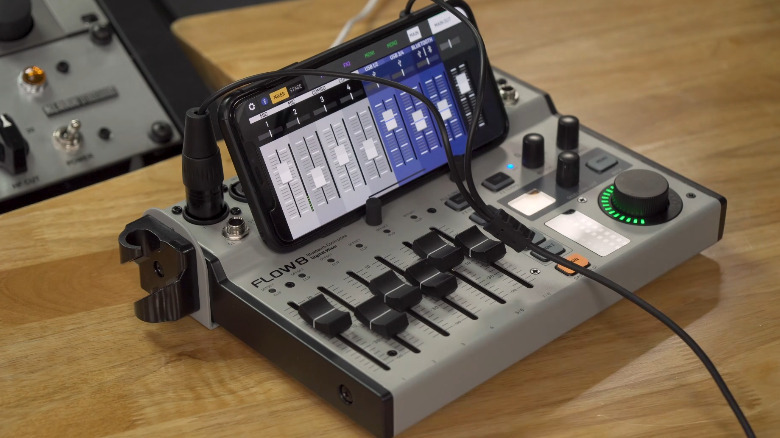
The Behringer Flow 8 gets this spot not because it's an excellent quality mixer, but because, at $200, it's by far the cheapest mixer with multi-track recording on the market. Even a budget audio interface with eight inputs normally costs about $500. You won't find a lot of on-board controls on the Flow, but if you're willing to adapt to its hybrid workflow, you'll find plenty of options in the smartphone companion app.
The Flow 8 is clearly aimed at podcasters more than home studios, seeing as four of its eight channels have XLR connectors, two of which have preamps and 48V phantom power. The lack of on-board controls and the limited sends and audio outs make it a poor choice for mixing live music.
If you're looking for a live sound mixer with more channels at this price range, you could go with either the Behringer Xenyx 1204 or the Mackie Mix Series Mix12 FX. The Mackie is smaller but lacks the mute buttons and alternate routing options of the 12-channel Behringer, as well as the second aux send and faders on the volumes. However, it makes up with four more channels to dedicate to audio in over the Behringer, each with volume, panning, and send controls.
$200 to $500 — Mackie ProFX12v3 Plus
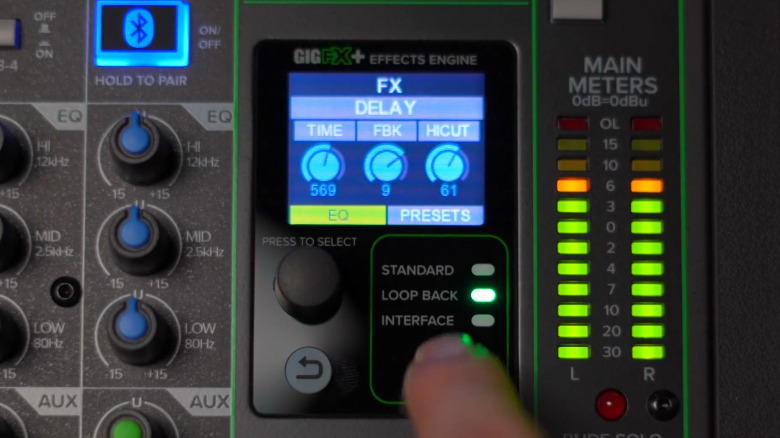
We're getting into the price range where an audio mixer is supposed to run double duty as a great piece of studio gear and a decent emergency live mixer, and the Mackie ProFX12v3 Plus manages both quite well. Mackie isn't exactly a major player in the audio gear market, but it's a reliable microphone brand with some great affordable products, and it makes a variety of mixers for every price range and every occasion.
The ProFX12v3 Plus is one of the brand's highlights, equipped with seven XLR channels with premium Onyx preamps and three-band EQs, two aux send channels and one internal FX unit, and a sub-mix channel. It's also UBS-compliant and offers two-way Bluetooth connectivity.
The Zoom LiveTrak L6 and premium LiveTrak L6 Max also deserve a mention for bringing portable standalone multi-track recording to an affordable price, while keeping many of the features you'd expect to find in a good mixer, like send channels and internal effects. The standout features, however, are the battery power (you can use AA batteries, but we suggest using a power bank from a reliable brand) and 12-track recording to micro-SD card.
$500 to $800 — Tascam Model 12
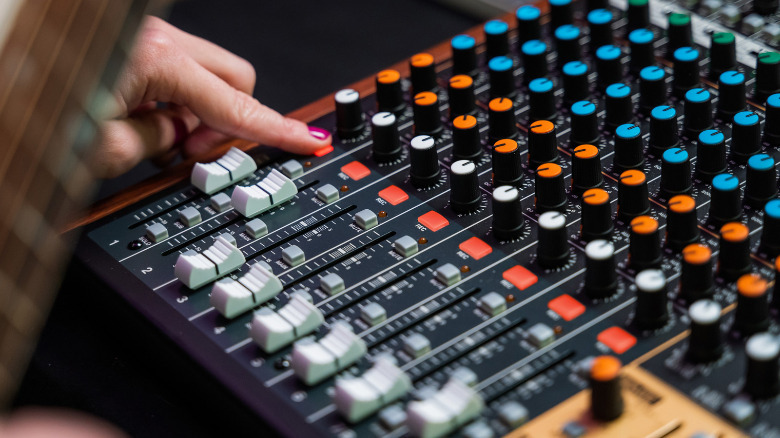
If, like most, you don't often record or mix a lot of stereo instruments all at once, the $600 Tascam Model 12 might be the only mixer — and also audio interface and recording console — you'll ever need. It's a great semi-portable live sound mixer, with 10 audio-in channels, including eight XLR and ¼-inch combo channels with phantom power, a stereo sub-group with dedicated line outs, two aux send channels, and MIDI in and out.
Tascam's $600 mixer also comes with plenty of hands-on controls, like a three-band EQ with sweeping mids on every channel including the master, per-channel compression and low-cut at 100 Hz, solo and mute buttons... the list goes on. It's also a capable standalone multi-track recorder, something that Tascam is known for, with support for SD cards, and can be used as a 12-in/10-out USB audio interface.
At this price point, however, you may want more than 12 channels. You'll have to sacrifice a lot of neat features to achieve that, but for a cool $800, the Mackie ProFX22v3 offers 22 audio-in channels, great preamps, and a lot of hands-on control. And if you're looking for a different kind of hands-on experience, it's hard to beat the RØDECaster Pro 2 for intimate podcast studios. Four XLR inputs and a few more channels for music and sound effects is quite generous, as far as mixers like these go, and the list of features is extensive, especially for such a small unit.
Over $800 — Behringer X32 and X32 Compact
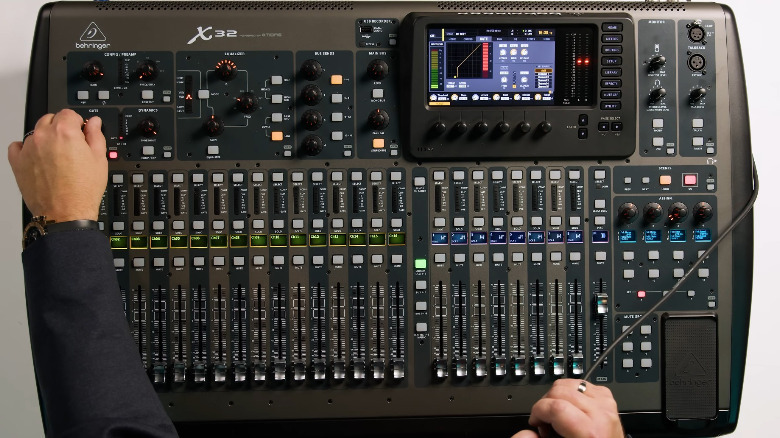
For home studios, it's hard to do better than the Behringer X32. Let's not beat around the bush, though — this mixer is almost 15 years old and looks not a day younger. It may have the looks of a stereo from the early 2000s that you can't bear to throw out, but it's one of these old electronics that are worth much more than they look, as it's currently sold for $2,000, and sometimes even more.
What does the X32 do to still deserve this price? A better question is what doesn't it do. It has 32 XLR inputs (40 inputs total), 18 XLR outputs, eight pairs of aux in and aux out, and 25 motorized faders. This is only a fraction of what's available on the machine's surface, to speak nothing of what's hidden inside. Frankly, that's too much for anything short of a music venue or a recording studio. That's why we would suggest most non-professional users to go with the slightly smaller but still impressive Behringer X32 Compact, which costs 'only' $1,650. It cuts the I/O in half, but it's still a 40-channels digital mixer with the same power.
We're not going to say you couldn't do better than this, and not just because a $9,000 Yamaha QL1 would quickly outshine this family of Behringer mixers. Even the newer Behringer Wing, while comparable to the X32, has a nicer-looking screen and more modern on-board effects. That's a small advantage that could be worth a lot to a professional or a dedicated amateur. Is it worth $3,500? To most, probably not.
Methodology
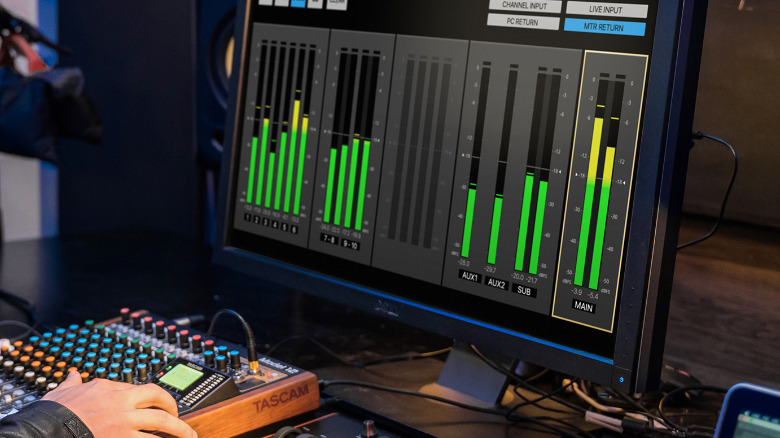
All the audio mixers highlighted on this list have professional reviews, user reviews, and/or an avalanche of user opinions on audio gear online forums, all overwhelmingly positive. We decided to focus on audio mixers meant for personal use and for home studios, and not dedicated recording studios. If we didn't, we would have $100 mixers sitting right next to mixing consoles that range between $20.000 and hundreds of thousands of dollars. During our research, we set a soft limit of $2,000 to the audio mixers we selected.