

Hyundai Vs. Toyota Depreciation: 10 Popular Models Compared
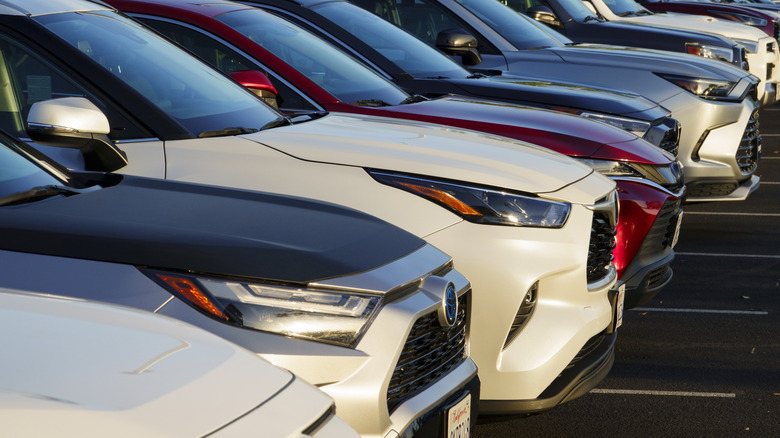
Over the last decade, Hyundai's expanding footprint in the global car industry has been undeniable, and the company's rapid and ongoing growth in the North American market in particular has been impressive to watch. From large three-row SUVs, to small pickup trucks, to EVs and N-branded enthusiast models, Hyundai has very competitive offerings across a number of segments.
It makes sense, then, that these Hyundai models would be directly compared to Toyota, with the Japanese company being an established titan of the industry, both globally and in the American market. From a car shopper's perspective, each brand has a lot to offer, with Toyota riding on its reputation for reliability, and Hyundai offering up-front value and long warranties to back its products.
Depreciation and resale value are also important for car buyers, and with the growing cost of new vehicles, buying one that retains its value can be more desirable than ever. As a direct result of that reputation for reliability, Toyotas have long been known for having low depreciation – but what about Hyundai? Below, we've rounded up five competing models from each brand and compared the expected and average three- and five-year depreciation figures. While Hyundai's vehicles compete very well against Toyotas in many categories, as we're about to see, when it comes to depreciation and resale value, Toyota is still ahead by a fairly big margin.
Toyota Corolla vs Hyundai Elantra
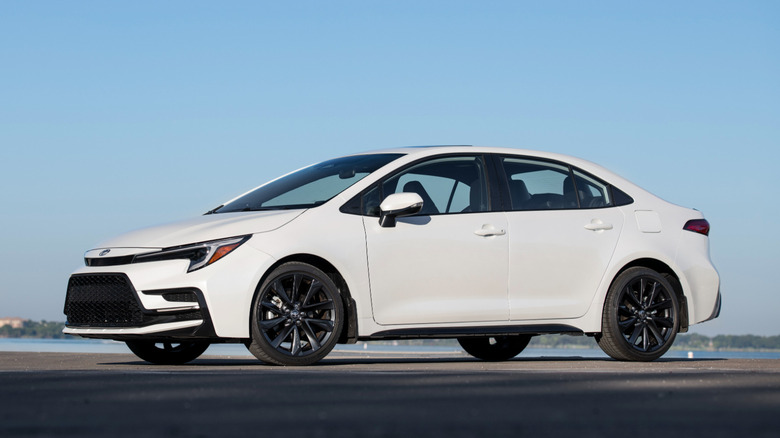
The Toyota Corolla and Hyundai Elantra are both stalwarts in their respective lineups, offering affordable compact sedan options and, for many buyers, an entry point into the brands. Both the Corolla and Elantra are offered with several different powertrains, from the fuel-sipping Corolla Hybrid to the motorsport-bred Hyundai Elantra N.
In many overall comparisons which factor in all aspects of a vehicle, the Elantra has edged out the Corolla — but when it comes to resale value, the Corolla is the winner, and it's not that close. For the Toyota Corolla, CarEdge shows a five-year depreciation of just 33% from its original price, while the Hyundai Elantra shows a 40% depreciation in the same period. Looking at other sources, iSeeCars has the Corolla's resale even better at 27.4% depreciation, while the Elantra lags significantly behind at 37.1%.
On a shorter three-year time frame, the Kelley Blue Book resale data doesn't show such a stark difference, but the Corolla still gets the win, with KBB showing a depreciation of 21% for the Toyota compared to 25% for the Hyundai. Overall, there are still plenty of reasons a buyer might pick an Elantra over a Corolla, but the ability to hold its value isn't likely to be one of them.
Toyota RAV4 vs Hyundai Tucson
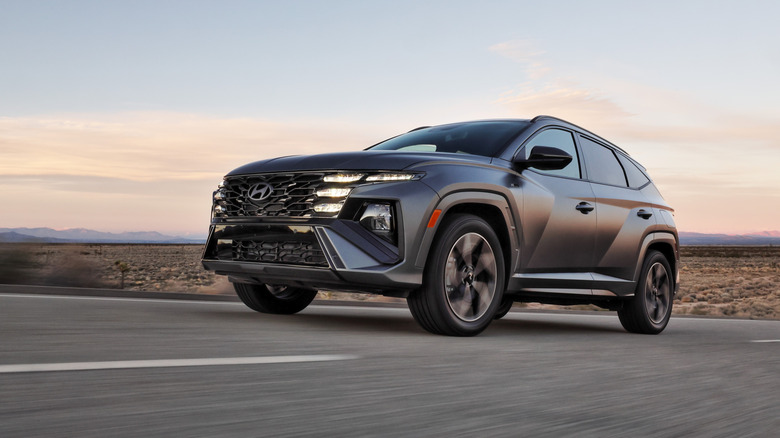
Given how popular the compact SUV class is for today's buyers, there's likely to be a lot of cross-shopping going on between the Toyota RAV4 and Hyundai Tucson. In 2025, both of these SUVs were the best-selling models of their respective brands, with each SUV offering both hybrid and plug-in hybrid variants.
These two SUVs might be very competitive against each other in some categories, but the RAV4 gets a knockout win when it comes to resale value. CarEdge shows a 28% depreciation after five years for the RAV4, compared to 47% for the Tucson. Looking at iSeeCars' data, the RAV4 does even better, with a 25% five-year depreciation figure compared to the Tucson's 42.3%. In an interesting contrast, Kelley Blue Book's three-year figures show a closer result with impressive 19% depreciation numbers for both the RAV4 and the Tucson. However, if you look specifically at the hybrid versions of each, KBB has the RAV4 coming in much higher at 16%, compared to 26% for the Tucson.
For the 2026 model year, the Toyota RAV4 got an extensive redesign that includes a move to a hybrid-only lineup, and given the already insanely high resale value the old RAV4 Hybrid is showing, we don't see anything changing with the new RAV4 model.
Toyota Camry vs Hyundai Sonata
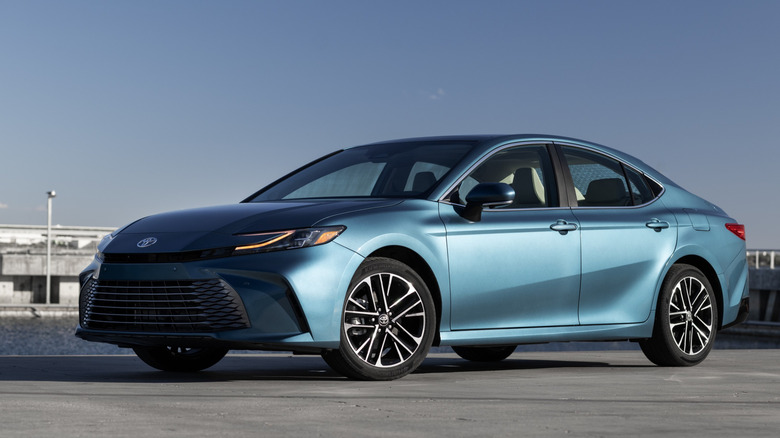
While they may be outsold by SUVs these days, the mid-size sedan is still a very important vehicle for both Toyota and Hyundai. The venerable Camry, of course, is Toyota's perennial entry in this segment, while Hyundai offers the Sonata as a direct competitor.
CarEdge shows a 36% depreciation rate for the Toyota Camry after five years of driving, well ahead of the Hyundai Sonata, which comes in at 45%. The iSeeCars numbers have the Camry coming in slightly better, with a 34.3% depreciation after five years, compared to 42.4% for the Sonata. The KBB three-year depreciation figures paint a similar story, with the Camry coming in at 22% and the Sonata lagging behind significantly at 32%.
The Hyundai Sonata lineup currently offers both hybrid and non-hybrid options, as well as a high-performance N-Line version that makes 290 horsepower. In its previous generation, the Toyota Camry offered the choice between four-cylinder gasoline, four-cylinder hybrid, and six-cylinder gasoline options, but beginning in the 2025 model year, the Camry moved to a hybrid-only powertrain. This is likely to only strengthen its resale value down the line, especially if gas prices stay elevated.
Toyota bZ vs Hyundai IONIQ 5
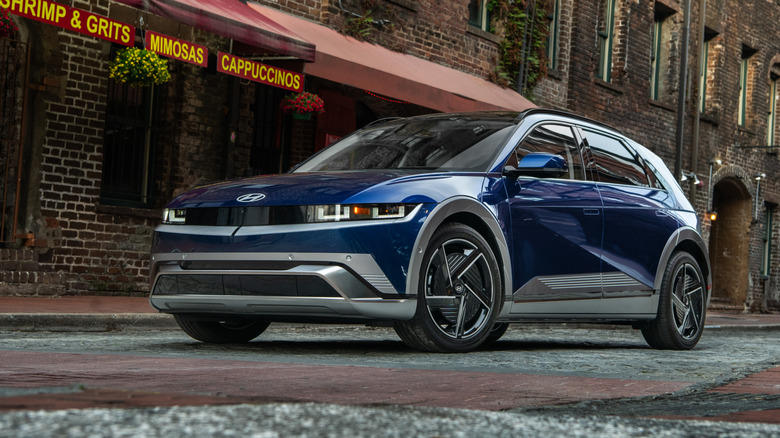
Toyota, up to this point, hasn't been as aggressive with its electric vehicle strategy as Hyundai. Over the last few years, the Hyundai IONIQ 5 electric crossover has been one of Hyundai's most successful (and recognizable) EV products — and its closest Toyota rival was the Toyota bZ4X, now named the Toyota bZ. For 2026, the newly-named bZ got several notable upgrades, including a boost in horsepower and driving range — and an updated look.
Since its debut, the stylish Hyundai IONIQ 5 has been well received by reviewers and is generally considered one of the best EV offerings out there from a legacy automaker. While there's nothing necessarily wrong with it, Toyota's all-electric offering has been seen as a less exciting option in the ever-growing electric SUV segment. But does the excitement over the IONIQ 5 give Hyundai the edge over Toyota in resale value?
It's expected that an EV will depreciate faster than a gasoline vehicle, and CarEdge shows the Toyota bZ having a five-year depreciation of 58%. That just slightly beats out the Hyundai IONIQ 5, which comes in at 60% after five years. Kelley Blue Book, meanwhile, shows a 53% three-year depreciation figure for the 2023 bZ4X, while the 2023 IONIQ 5 comes in right behind it at 54%. While the bZ4X may have a very slight edge in depreciation, this is one of the few vehicle segments where the Toyota doesn't have a major resale advantage over the comparable Hyundai.
Toyota Corolla Cross vs Hyundai Kona
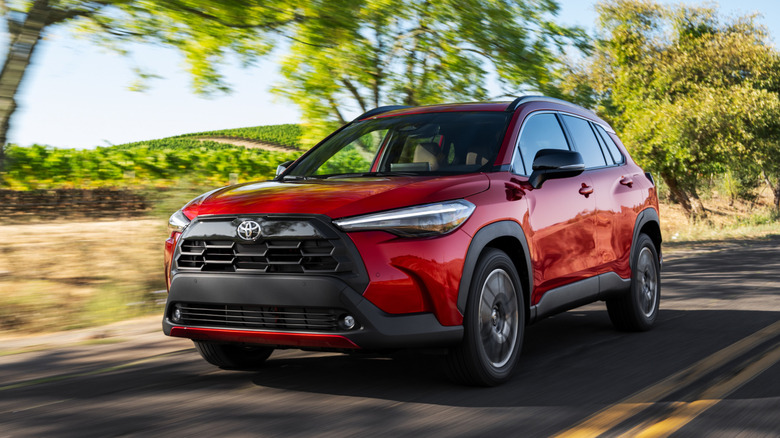
With the booming popularity of SUVs across the board, inexpensive subcompact crossover models have become an increasingly important brand entry point for car buyers. In this segment, Toyota offers its Corolla Cross SUV, which competes against the Hyundai Kona. The Corolla Cross is sold in both gasoline and hybrid variants, while the Hyundai Kona is offered with both gasoline and full electric powertrains.
Our review of the Toyota Corolla Cross showed this small SUV to be one of the best budget offerings on the market, and its strong resale value backs up that sentiment. CarEdge shows the Corolla Cross having a five-year depreciation of just 30%, compared to 42% for the Hyundai Kona. The iSeeCars numbers are even better for the Toyota, at 26.7% after five years, with the Hyundai Kona coming in well behind at 38.7%.
After three years, Kelley Blue Book has the Corolla Cross at 21% deprecation, which is ahead of the Kona's 30% three-year deprecation figure. The affordable starting prices for both of these models are a big draw for shoppers on a budget, but the Toyota's low depreciation rates could be something that pushes value-conscious buyers in the direction of the Corolla Cross.
Methodology
The five-year resale depreciation comparisons in this list were sourced from CarEdge and iSeeCars, while the three-year depreciation rates were sourced from Kelley Blue Book.
While these numbers can serve as a guideline while shopping, real-world depreciation and resale values can vary greatly depending on individual car options, mileage, condition, and the region of the country you live in.