

5 Useful Ways To Use A Backhoe That Have Nothing To Do With Digging
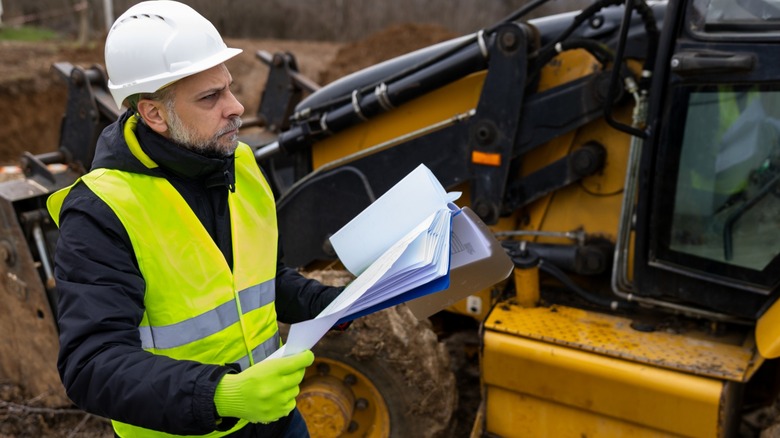
When most people think of a backhoe, the first thing that comes to mind is digging. That's no surprise, since excavation is what these machines are best known for. However, backhoes are quite different from excavators, and zeroing in on that one task means overlooking other ways they can be useful. For one, they have powerful hydraulic systems and can work with a wide range of attachments, which makes them quite versatile.
With a loader bucket on one end and a digging arm on the other, a backhoe is essentially a two-in-one piece of equipment. It can lift and move heavy materials, clear debris, break up concrete, and handle light demolition work. As a result, you can complete projects more quickly and efficiently without necessarily bringing in additional equipment. And the more jobs one machine can handle, the less you may need to spend on renting extra equipment or relying on manual labor to get things done. Sometimes, it's not even a matter of expense; it could be that the space is too limited to bring in multiple machines.
So, whether you already own a backhoe or you're considering renting one, it helps to understand just how capable it is beyond digging. That way, you can get better value from every hour it's on the job. After all, there is a reason this machine is often called the Swiss Army knife of heavy equipment, and by the end of this list, it should be easy to see why that reputation is well earned.
Pull out stumps
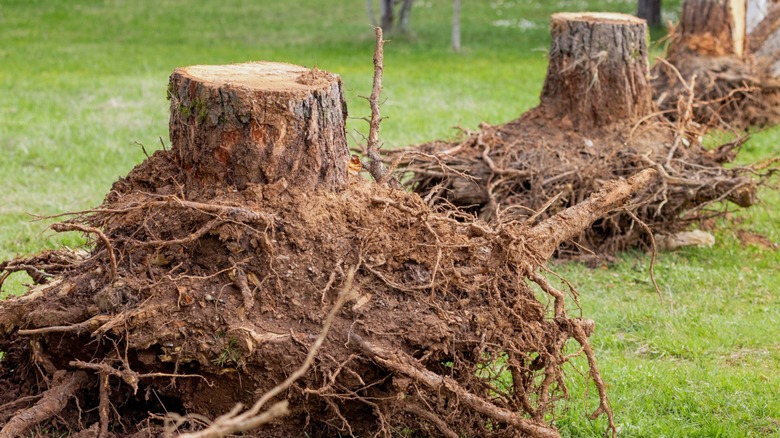
A backhoe can help remove a stump that's too stubborn to get rid of manually, and unlike a grinder, which chews the stump down but leaves the roots behind, a backhoe can help pull out the stump along with the root system. Before getting started, though, prioritize your safety by putting on gloves and safety glasses — some of the debris could come hurtling toward you. You can also walk the area first and look for anything that could get in the way, such as rocks or soft soil that might affect how the backhoe handles.
The rear digging arm can dig around the base, cut into the soil, and break up the roots holding the stump in place. Once the root system is loose enough, you can work the bucket under the stump and use the machine's hydraulic power to pry it upward. A stump bucket attachment can make this easier, since it is designed to slice through roots, concentrate digging force, and scoop under the stump so it can be lifted from the ground.
This is where a backhoe has an advantage over doing the job by hand. Stumps are often heavier and more stubborn than they look, especially when the soil is still packed around the roots. That is why we often advise you not to try to pull a stump out with your truck. While using the backhoe, make sure it is on firm ground, the stabilizers are in place, and any chains, straps, or rigging gear are in good condition. You should also call 811 before digging so you do not accidentally hit underground utility lines.
Haul heavy materials
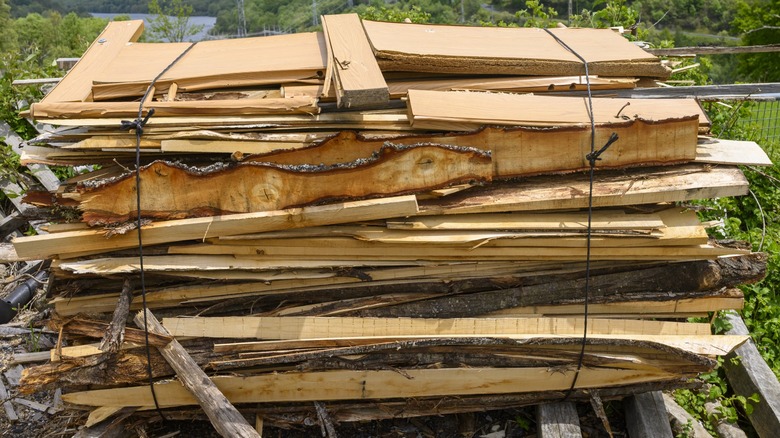
Moving materials from one spot to another can be a huge time sink. With a backhoe's front loader, you can save yourself some time and take some stress out of an already busy day. It can scoop up and carry everything from loose soil, sand, and gravel to heavier debris and construction supplies, getting them where they need to go without requiring a separate machine for the job. Loading trucks, filling containers, stockpiling materials, or simply shuttling supplies across a large site are all jobs the loader bucket can take on without much fuss.
Beyond shifting bulk materials, backhoes can also help with heavier individual items that need to be transported. Think rocks, concrete blocks, steel beams, and similar materials. These often need to land in an exact spot, and a backhoe has enough strength to help make that happen. And where possible, swapping in attachments like forks, grapples, or different bucket sizes gives you even more flexibility in the way you use the machine.
That said, lifting heavy loads still requires care. Before any lift, make sure the machine is positioned correctly and that the load is placed as close to the machine as possible to help maintain stability. Most backhoe loaders also have stabilizing legs, which should be extended before lifting begins. It is just as important to know the machine's weight limit before picking anything up, because exceeding it can put both the equipment and nearby workers at risk. Since it is easy to underestimate how heavy something is just by looking at it, consider using a scale or checking the listed weight of the material to avoid any mishaps. You should also inspect any chains, slings, or rigging gear before lifting gets underway.
Remove snow or storm debris
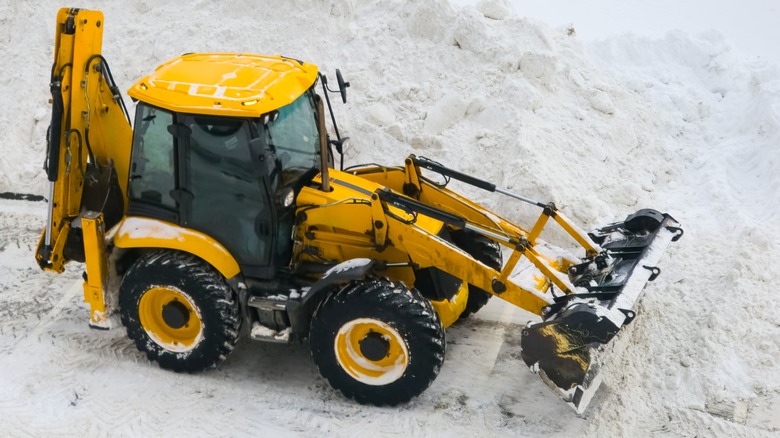
If you don't want to spend another winter shoveling snow by hand, a backhoe can make the job much easier. The front loader bucket alone is large enough to scoop, push, and carry a significant amount of snow in one pass, which makes it useful for long driveways, parking areas, farm roads, and larger properties. Pair it with a compatible snow attachment, such as a snow pusher or a capable snow blower, and it becomes even more capable.
Before putting a backhoe to work in snowy conditions, though, it is worth checking that the machine is ready for the weather. Make sure the tires have enough tread to grip the surface safely, inspect the hydraulics, and confirm that the bucket or attachment is properly secured. If you are using a snow pusher with a rubber cutting edge, it can help clear snow from concrete or asphalt without scraping the surface as harshly as metal. Once everything checks out, the process is fairly straightforward: lower the bucket or attachment, push or scoop the snow, then lift, carry, and dump it in a designated area where it will not block traffic, drainage, or visibility.
A backhoe can also help even when the elements leave more than soft, fresh snow behind. If you are dealing with packed snowbanks, icy piles, or heavy plow berms, the rear backhoe arm can help break them apart before the front loader moves in to clear the loosened material. The same general idea applies to storm debris. After heavy wind or rain, a backhoe can help move fallen branches, broken fencing, washed-out gravel, and other bulky messes that would take much longer to clear by hand.
Grade and level ground
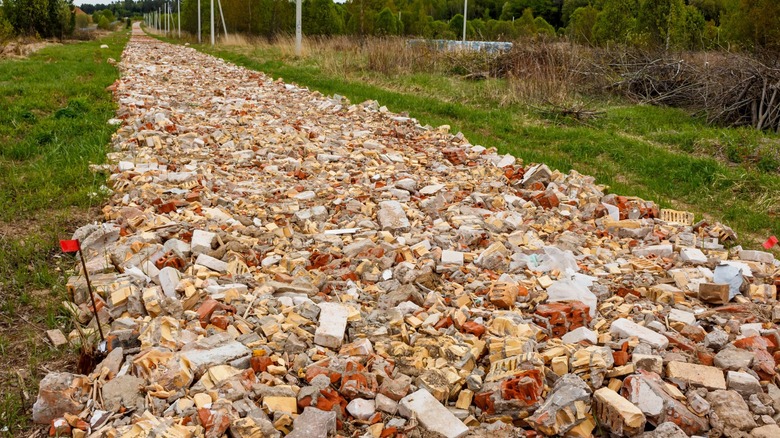
A backhoe can also come in handy when you need to smooth out rough ground. Maybe you are preparing a driveway, cleaning up after a project, spreading gravel, or trying to even out a section of your yard before landscaping. In cases like that, you can use the loader bucket to push or spread loose material, then backdrag over the area to level it out. Backdragging is when you lower the front bucket and drive backward, using the bucket edge to pull material across the surface. If the machine has a float function, that can help the bucket follow the ground more naturally instead of digging in too aggressively.
While a backhoe does come in clutch for rough grading, it still requires some patience. You may need to work in thin layers, make multiple passes, and keep checking the surface as you go. For tougher, compacted ground, the rear digging arm can also break up hard soil first before the front bucket moves in to finish leveling. But then again, you do not always have to make the ground perfectly flat, especially if you are grading a driveway. You actually need a slight slope. Otherwise, you could end up with one of the common problems with concrete driveways, where poor drainage causes water to pool and the surface to crack over time.
Attachments can make the job easier, too. A wider bucket, grading bucket, 4-in-1 bucket, or blade attachment can give you more control depending on the surface you are working on. Just keep in mind that a backhoe is better suited for rough grading than precision finish work.
Handle light demolition
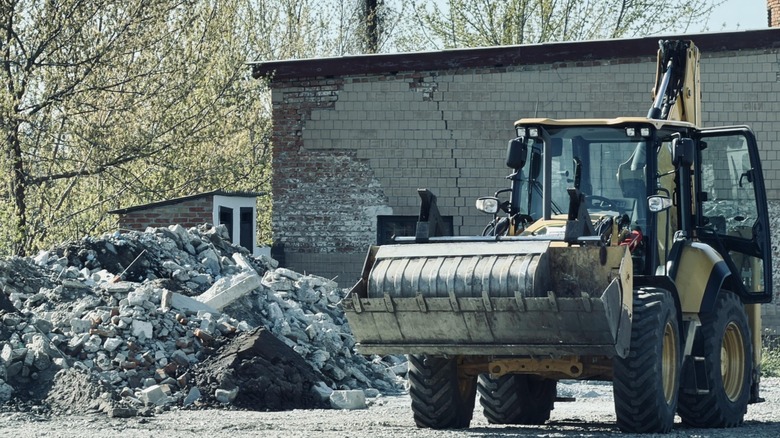
If you need to bring something down on a smaller scale, the kind of job that does not require towering excavators or high-reach demolition equipment, a backhoe can be useful. It can help with tearing down a small shed, an old barn, or simply breaking up old concrete. Before any demolition work begins, however, you should do a thorough assessment of the site.
That would typically include checking the structure's condition, making sure tearing down the structure won't create any safety hazards, shutting off or protecting utilities, and keeping people away from areas where the falling debris could land. From there, the right attachment depends on the job. A standard bucket may be enough for a light teardown of an old wooden structure and to handle the debris afterward, while a hydraulic breaker will be more appropriate for breaking concrete, asphalt, or masonry into smaller, more manageable pieces if that's your goal.
Like any tool, though, a backhoe has its limits. Most standard backhoes do not have the reach needed to safely take on large demolition projects, and they are not designed for tearing down tall structures from a distance. Heavily reinforced concrete can also be more than a standard backhoe should handle, especially if you don't have the right attachment and enough operator experience. For larger buildings or major structural demolition, it would be safer to use specialized demolition equipment or call in a professional crew.