

4 Common Problems With Concrete Driveways
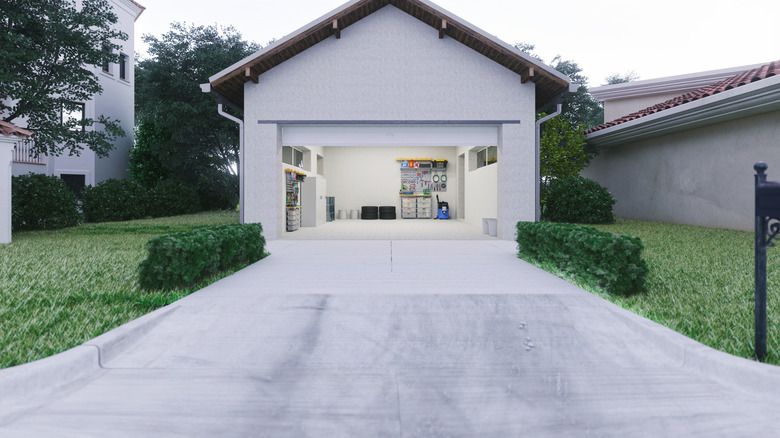
From improving curb appeal to having a convenient place to park, there are a lot of things to like about having a concrete driveway leading up to your home. This simple slab of concrete helps keep residential streets clear and gives visitors a much easier parking option than needing to parallel park. While having a concrete driveway is great, you do need to make sure you're taking care of it. Otherwise, you may end up facing a good deal of issues that can ruin that aesthetically pleasing pathway to your home.
Some of these problems are preventable, putting the onus on the homeowner to take care of them. A few are the fault of the people who installed the driveway in the first place and might require additional professional help to fix. Still others are caused by circumstances that nobody could see coming. While driveways made with asphalt, stone, and other materials exist, concrete driveways have their own unique issues. It's also one of the most common driveway materials out there. Knowing what problems to watch for can help you keep your concrete driveway in pristine condition.
Cracking
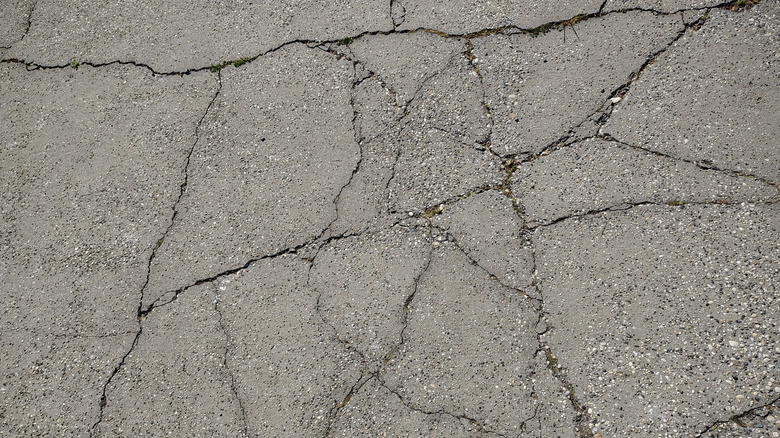
Cracking is probably the most common and most noticeable problem your concrete driveway may face. There's no easy answer to why a driveway cracks. Oftentimes, cracking is caused by typical wear and tear. Whether it's changes in temperature or frequent exposure to torrential rain, the concrete unfortunately becomes a victim of circumstance. Sometimes, the cracking is preventable. A driveway can only handle so much weight, and if you repeatedly subject it to vehicles that exceed that limit, you'll start to see cracks.
Having small, thin cracks here and there is pretty normal. However, there are certain signs to look for that show these cracks have gotten out of hand and compromised the actual integrity of your driveway. For instance, if water gets in the cracks and freezes, this could cause the cracks to expand even more. You might see grass or other plant life coming up through these bigger cracks or sneaking up through smaller ones you hadn't noticed before. That's a true sign of compromised concrete. Then, of course, there's the possibility of potholes. While the obvious issue with cracks is aesthetic, they can also be damaging. If you hit a crack or pothole the wrong way, you could damage your tires or other parts of your vehicle. That's why it's important to keep a close eye on driveway cracking.
Poor installation
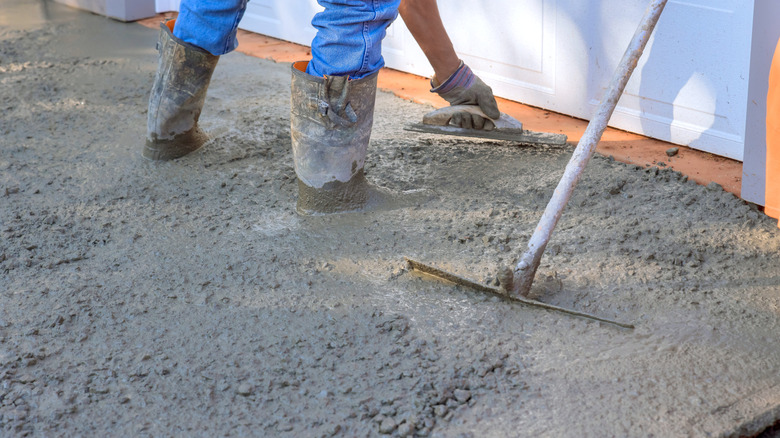
One of the more irritating problems you can have with your concrete driveway is that it's been improperly installed. Unfortunately, even professionals can make mistakes when installing a driveway. Whether it's a lack of time, experience, money, or some other extenuating circumstance, many things can go wrong when pouring concrete that result in a lot of headaches for you. Ultimately, you may have to reinstall the whole thing again.
The consequences of a poor driveway installation can manifest themselves in a number of different ways. Cracking is certainly one of them. If you see cracks in your driveway and none of the other causes are evident, poor installation could be the problem. Another tell is an uneven surface. A concrete driveway should be properly finished and relatively even. If your driveway is unusually bumpy or coarse, that's a sign of a bad install. Not only does this just look and feel bad, but its uneven nature could also make it far easier for the concrete to get damaged than if it's smooth and evenly distributed.
This unevenness can also be bad for your car to drive on. A smooth surface is better for your tires, shocks, axle, and your vehicle as a whole. Why would you want to bump and shake those things unnecessarily? The only true cure for a poorly installed concrete driveway is to have it reinstalled the right way. This can be costly, but there's really no way of getting around it.
Staining and flaking
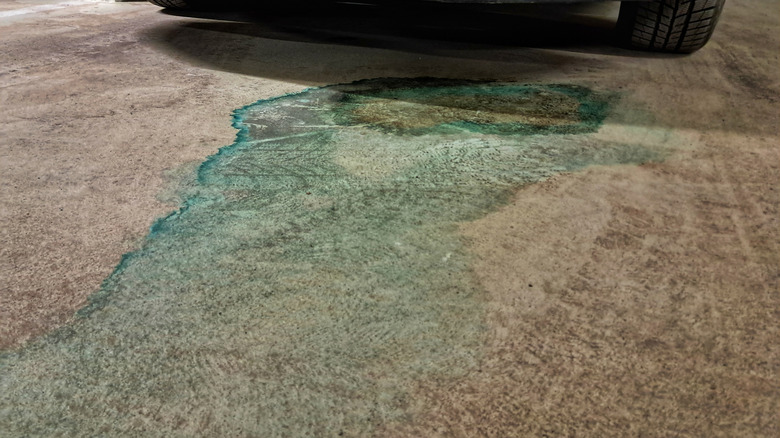
You could have a perfectly pristine driveway. It's been properly installed with no issues. You don't subject it to a ton of vehicle weight, and you live in a pretty environmentally temperate zone. Well, even here, you could end up with a driveway that looks less than ideal by pure happenstance, and that's thanks to either staining or flaking.
Staining is the more obvious of the two scenarios. This is when you see a large black, brown, green, or other color stain embedded in the concrete. Typically, it's the result of a leak from your vehicle, be it oil, coolant, or some other liquid substance. It sits there and stains the concrete. If you leave it there long enough, you may have quite a bit of trouble returning your driveway to its initial state, but if you start to notice it early, you might be able to use a pressure washer to get the stains out.
Flaking isn't as easy to deal with. It happens when the surface of the concrete has patches that look as though they're being shaved off. In some cases, it's due to poor installation, but in others, it's the result of inclement weather. Most frequently, this is during the winter. Because concrete is permeable, it can soak up water and expand when freezing. Unfortunately, when it thaws, the concrete can't handle the expansion and starts flaking. The chemicals found in the deicing products you use to salt your driveway in the winter can also cause flaking.
Poor drainage
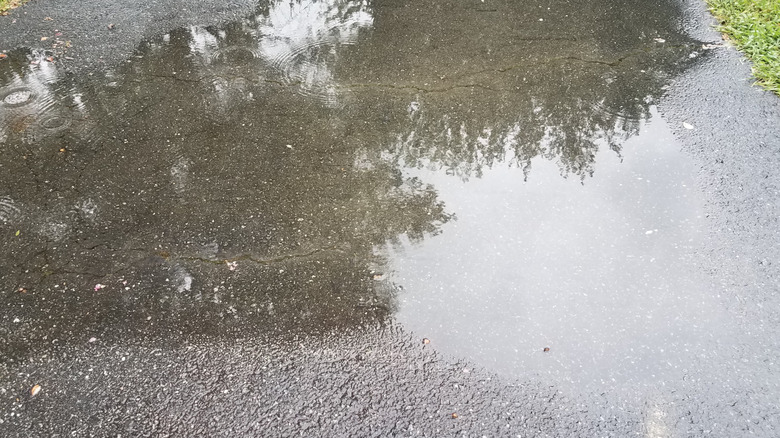
The last problem on our list might not be obvious until it's too late. That would be poor drainage for your driveway. When installed, your driveway is going to have some kind of slope to it. Depending on how your home is situated on the land, the driveway may slope up or down toward the garage, but this slope is important for another reason. It helps transport water when it rains. If you see puddles in your driveway after a big storm, it could be a sign that it wasn't designed well for drainage.
Standing water may not seem that bad, but if it sits on concrete long enough, there's going to be some degrading of the material, particularly if you live in an area that gets frequent rain. This can result in cracking or flaking, as discussed earlier, but the problems could even go beyond those. Just as it would inside your home, standing water can result in mold or mildew as well. Not only could this create health concerns, but these issues can further degrade the quality of your concrete. Mold and mildew can also spread beyond the driveway if not handled in a timely manner.
Everything else about how your concrete driveway was designed and installed could be perfect, but if it doesn't have proper water drainage, you could be in for a world of trouble. Sometimes a puddle of water is more than just a puddle.