

5 Common Mistakes People Make When Pouring Concrete
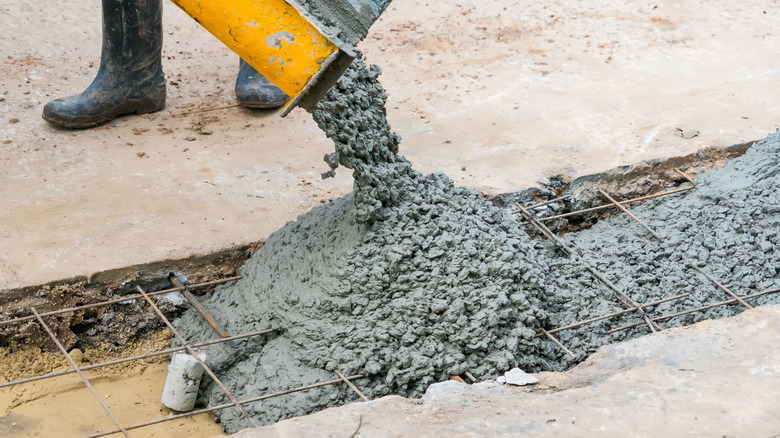
Concrete may seem a simple mixture. It's typically created using cement, water, sand, gravel, and air. It's important to note, however, that the so-called 4-2-1 rule for concrete is a very broad concept of how to make it, and it can be stronger or weaker depending on the building project.
To watch concrete being mixed, it isn't immediately clear how much expertise goes into the whole process, even if you've already perfectly gauged the job and the ratio of each component. There's an art to the process, as there is to pouring the concrete, and many potential pitfalls that those working with this tricky substance are eager to avoid. We're going to take a look at some of the most common mistakes made while pouring concrete and why they can be so harmful to your project.
Not preparing the ground for the concrete first
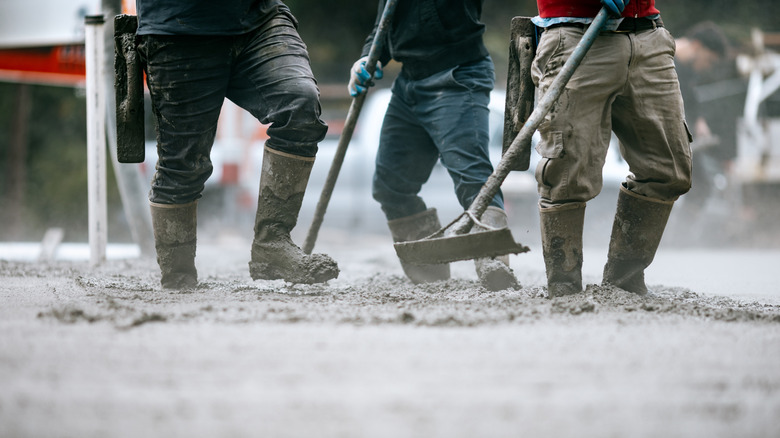
Whether you're planning a backyard shed or a towering skyscraper, construction projects always begin in the same place: at the bottom. Concrete is a critical element of the supportive structure of a building, both in the footing and the wider foundations (along with steel supports to provide the tensile strength that concrete alone cannot). This crucial concrete can only be poured once the correct environment has been established. The 90-minute rule for mixing concrete must be kept in mind, too.
Concrete is very vulnerable to things like temperature changes and excess moisture while it's still fresh. Any water should be drained away, and a flat, stable surface is far easier to work with than a sloped one. In the biggest projects, like home building, the condition of the plot or the area of land determines how the building begins. The foundations may be deep or shallow, depending on the project size, groundwater presence, and soil condition.
A surface intended to be perfectly smooth can be compromised if you lay your concrete without adequately preparing the ground first. Soil can be loose and likely to crumble when dry, and if this happens beneath fresh concrete, it will completely disrupt your project. Depending on the project's specifics, then, tackling this will often involve installing a barrier against any potential moisture, as well as creating a more stable surface (often from gravel) for the concrete to be laid onto.
Continuing to pour in the rain without taking precautions
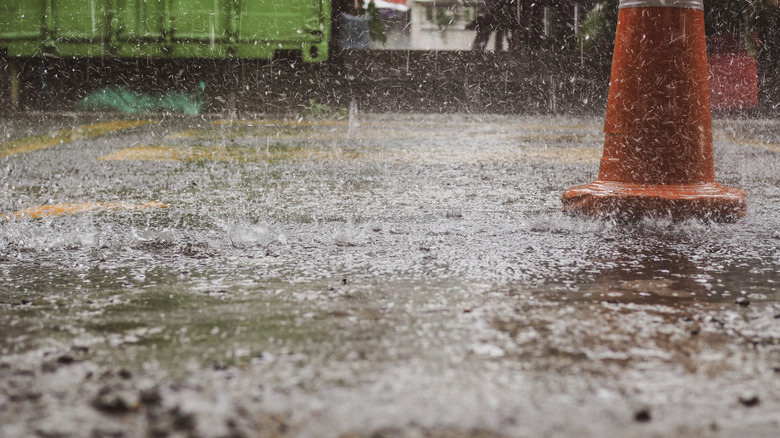
The quantities of each concrete component are carefully measured for the job at hand. Even a small amount of extra water, such as from rain, can be devastating when it's been freshly poured. This doesn't mean that the faintest drizzle will force you to stop immediately, because light rain can be managed with tarpaulin and other covers if you act quickly, but you should always watch the weather forecast. A weakening of the mixture must be avoided at all costs.
Other aspects of the pour can be affected by the rain, too. For instance, pouring speed has a significant impact because concrete is all about consistency. This is impossible if you pour it too slowly, because the concrete that's just been laid will start to react with the ground while the rest is still on its way. If there's a delay between pours, perhaps while waiting for a break in the weather, a cold joint can result. The Concrete Society notes that these are seams that could compromise the look or strength of the finished concrete.
Not curing it correctly after pouring
Once your concrete is carefully poured, it's time for curing. This is the process of keeping it hydrated and at the optimal temperature, so that it doesn't simply dry out but 'sets' correctly. Depending on factors like the temperature, the reaction between the components can be managed by specialized tools like curing blankets for the best effect.
Curing concrete takes longer than you may think. According to cement and concrete manufacturer CEMEX, it takes about a week for cement to reach about three-quarters of its strength, with a recommended 28 days or so to fully cure. Should one step on it or impose any weight, particularly earlier in the process, it can harm the concrete's structural integrity. Broadly, you don't want anybody to step on freshly laid concrete for the first one to two days.
The payoff of a beautifully-laid stretch of concrete is worth it, but you must be sure to plan the project so it can be left to cure optimally without being disturbed any more than necessary.
Having a layer that isn't thick enough for your specific use case
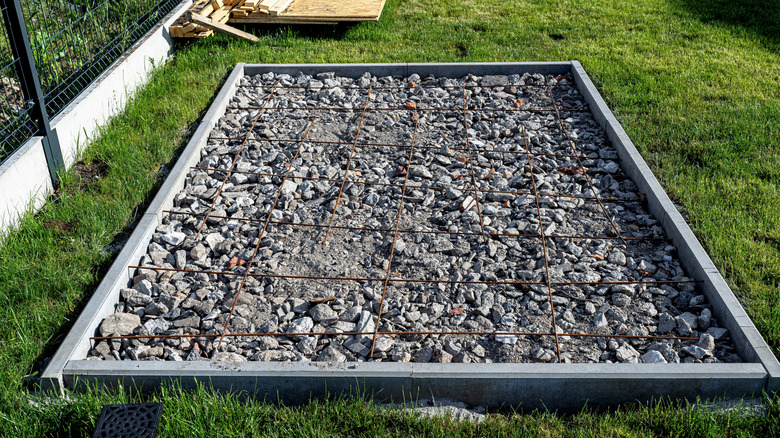
You might be an expert at laying patios, mixing, pouring, and allowing the cement to cure for a perfect row of slabs, but the next project may call for a very different sort of cement underlayer. You will typically want about a 4-inch layer of cement for this sort of application, but you have to take into account the weight the cement will bear.
Is it intended for a garage floor, for instance? In that case, you need to consider vehicle weight. To be on the safe side, no less than 6 inches of concrete should be used, where larger vehicles must be considered. A sturdy concrete base will help keep out groundwater and prevent the base from sinking into the ground over time.
If a structure is difficult to access, concrete pumping could be very helpful. Whether this concrete slab should be the same size as the structure will change on a case-by-case basis. These bases don't need to be concrete, with gravel another option. However, gravel will increase the risk of groundwater, so a gravel underlayer may be wider than the site. This is not necessary for concrete, and so it makes the most sense to make that base about the same size as the structure.
Not smoothing it at the right time
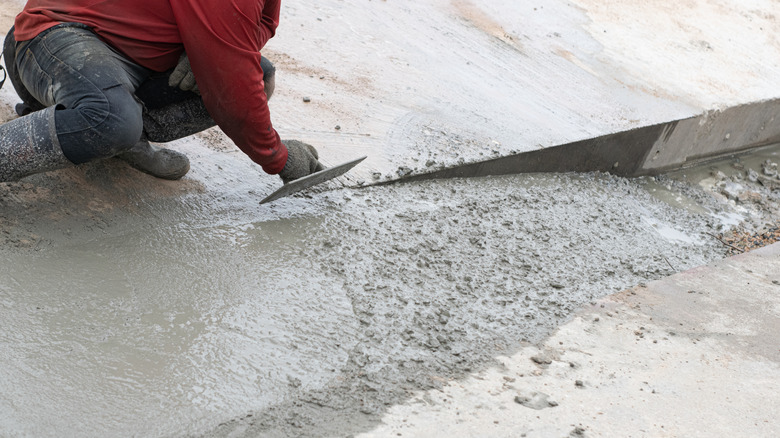
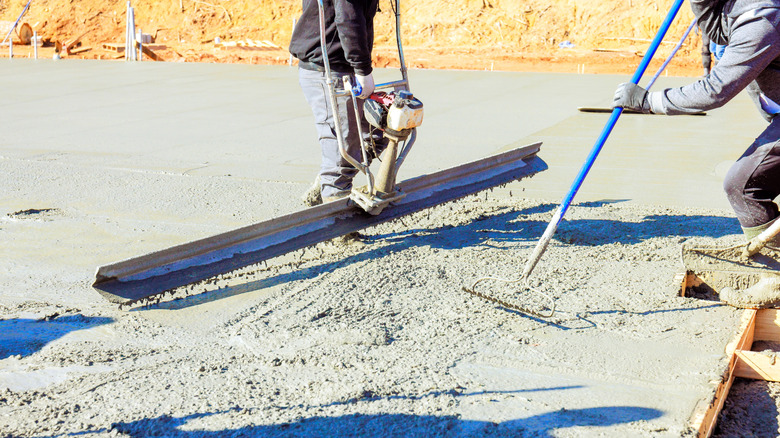
Smoothing concrete is yet another part of the process that has to be carefully managed. After laying it, water can rise to its surface. This is natural, but it's a sign that the concrete is not yet ready to be smoothed or finished. Attempting to do so with water sitting on the surface will negatively affect the result, possibly leaving thin areas. The last thing you want on an otherwise-perfect layer of concrete is a patch that lacks the integrity of the rest.
There are various tools that can be used for smoothing and finishing, such as power floats. The type will depend on various factors, such as the amount of concrete you've used and the size of the area it covers. Sometimes, if it's smaller, a simple trowel will allow you to cover the area by hand quite quickly, but powered and even ride-on versions are also available for bigger jobs.
You also need to know when it's the right time to begin smoothing. Tomahawk Power suggests a simple but effective way to test your freshly laid concrete: simply stepping on it. "Once the footprint you leave is about 1/8 inch to 1/4 inch, your concrete should be ready to support the weight of a power trowel," the outlet states. Don't forget that you should never touch wet concrete with your bare hands, though.