

What Is The 4-2-1 Rule For Concrete?
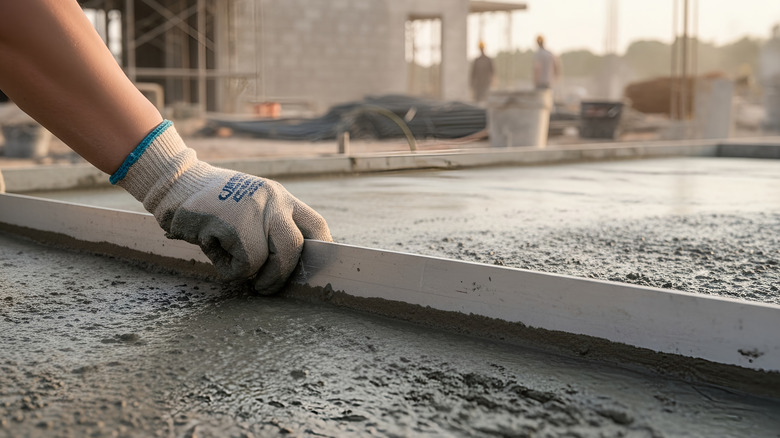
Concrete is essential to construction projects all over the world because it's so versatile and hardy. Unfortunately, it can also be very difficult to work with, as mistiming just one of the steps it takes to lay it can ruin the final result. In order to prevent the concrete from hardening, for example, you must empty it from the truck within 90 minutes after the mixing begins. You could also unknowingly doom the project right from the beginning by mixing it incorrectly. However, the 4-2-1 rule exists to help you avoid that.
When mixing concrete, this simple rule tells you the ratio of each of the three main components to mix together: four parts gravel, two parts sand, and one part cement. It's sometimes referred to as the 1-2-4 rule instead, but this is simply the same ratio of each substance listed in reverse order. The end result is a strong, broadly useful concrete.
While the 4-2-1 rule is a good starting place for many construction jobs, the ratios of these materials can be altered in more specialized cases. Nevertheless, the key components will always be cement and the aggregates used, as these elements bind together with water to make concrete.
Other concrete mixing ratios and why they're used
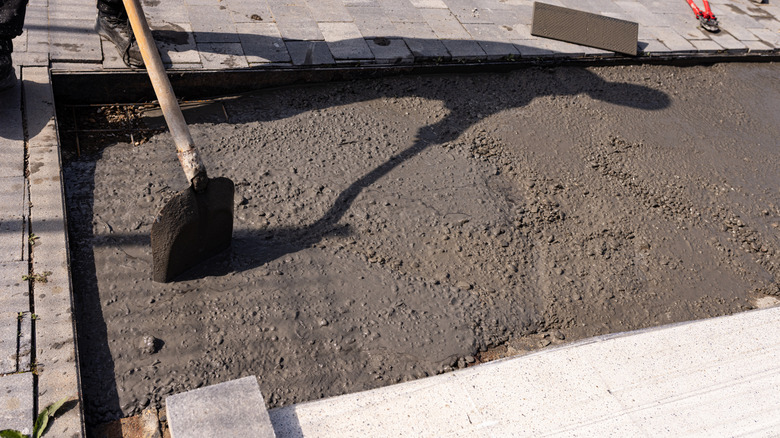
There are two different types of aggregates that help make concrete: coarse aggregates, such as gravel and crushed stone, and fine aggregates like sand. They both bring something different to the mixture, with coarser concrete typically being stronger after finishing and finer concrete being easier to smooth and adapt to the demands of a job.
The ratio of different aggregates is in part determined from how the concrete is intended to be used. A mix with less sand and more coarse aggregate will be better suited to support load-bearing features in buildings. U.K. industry supplier Total Concrete Limited suggests a 1:1.5:3 ratio mix (1 part cement, 1.5 parts sand, and 3 parts coarse aggregate) for this purpose.
There are also different combinations of materials to use for porous concrete, which lets water pass through it rather than collecting. This concrete, which can be invaluable in areas that are prone to flooding, doesn't use any fine aggregate at all. Concrete is one of the most commonly used substances in the world, and new variations on these mixtures are still being developed. For example, scientists recently reported a revolutionary new concrete that can store clean energy, although it is still in the prototype phase.