

5 Old-School Car Mods That Were All The Rage In The '80s
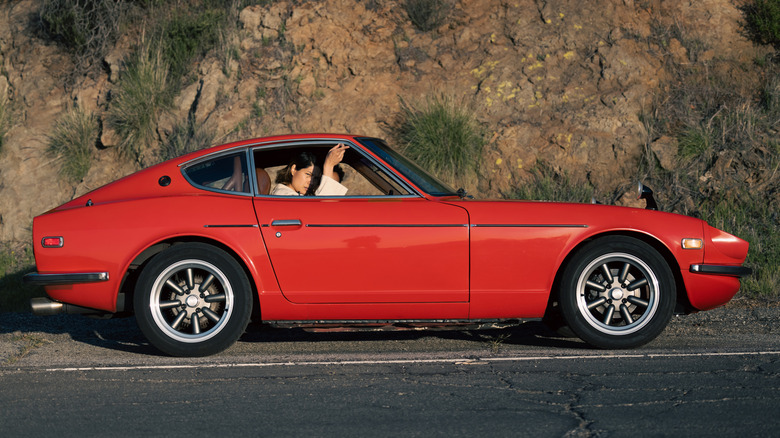
The 1980s was a decade of excess, and nowhere was that more visible than on the road. After the fuel crisis of the 1970s had choked horsepower figures and reduced car design to an afterthought, the industry bounced back hard. Performance was back on the menu, designers were swinging for the fences, and the cars that defined the era reflected everything the decade stood for — big, bold, and unapologetic.
Wedge-shaped supercars dominated bedroom walls worldwide. The Lamborghini Countach, the Ferrari Testarossa, the DeLorean DMC-12. They are characterized by sharp angles, low noses, pop-up headlights, and side strakes that were the visual language of the era. European hot hatches like the Golf GTI and Peugeot 205 GTI brought that same energy to everyday drivers.
Meanwhile, Japanese manufacturers were arriving on the world stage in a serious way, with the 1980s offering some of the most iconic JDM cars of all time. It was a perfect storm for the modification scene. Enthusiasts had exciting new platforms to work with, a booming aftermarket industry to shop from, and a cultural backdrop that celebrated going bigger and louder in every possible way. Here are five old-school mods that were all the rage in the '80s.
Body kits and spoilers
If you take a look at cars such as the Lamborghini Countach, the DeLorean DMC-12, or the Ferrari Testarossa — cars every 80s kid remembers — you can see that each of these is bold, angled, and aggressive. These visual cues affected the rest of the car industry, and automakers were making cars that had real road presence.
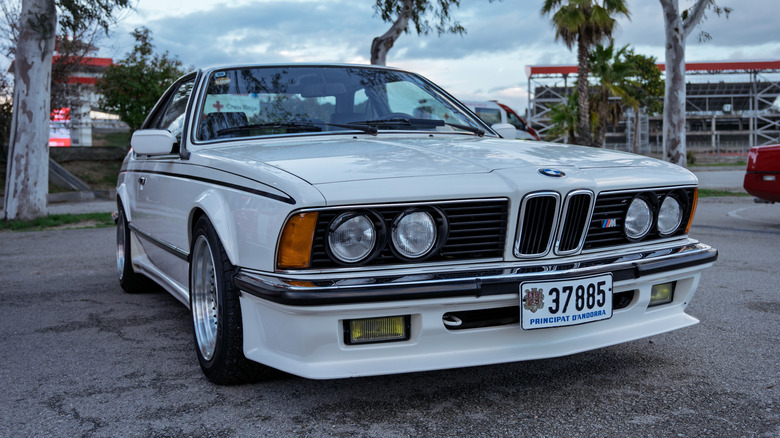
If you wanted to make your somewhat vanilla-looking 1980s family sedan into a head turner, the first thing you went for was a body kit and a good old rear wing. If you owned a BMW, you'd take it to AC Schnitzer for a stylistic overhaul with better-looking bumpers. If you owned an Mk2 Golf, you'd want the period-correct Orciari body kit with retractable headlight covers.
If you owned a Honda Civic or a Nissan 300ZX, chances are that you knew who Kaminari was since, at one point in the '80s, it was one of the biggest body kit companies in the U.S. Companies like RGM made spoilers, skirts, louvres, bumper extensions for everything, and a ton of other mods. Color-coding was also important. Some rear wings grew so large that their weight, angle, and size actually reduced the car's performance — but nobody cared. Looking fast mattered more than being fast.
Besides yourself, companies were modifying cars with excessive body kits straight from the factory. Koenig body kitted the R107 SL and the Testarossa, Strosek body kitted the Porsche 928, and AMG slapped a body kit on the original Hammer. These weren't backyard operations — they were proper coachbuilders and tuners producing low-volume, high-price machines that made the standard cars look timid.
Turbocharging
If you take a look at the highest horsepower cars of the 1980s, there is one thing almost all of them have in common – turbocharging. FastCar even called turbocharging "one of the most exciting cultural concepts of the 1980s" because you could find these everywhere. The reason why has to do with what the 1970s did to the industry. Emissions, regulations, fuel efficiency, all of these became important, and with a turbocharger, automakers were able to deliver without sacrificing on power.
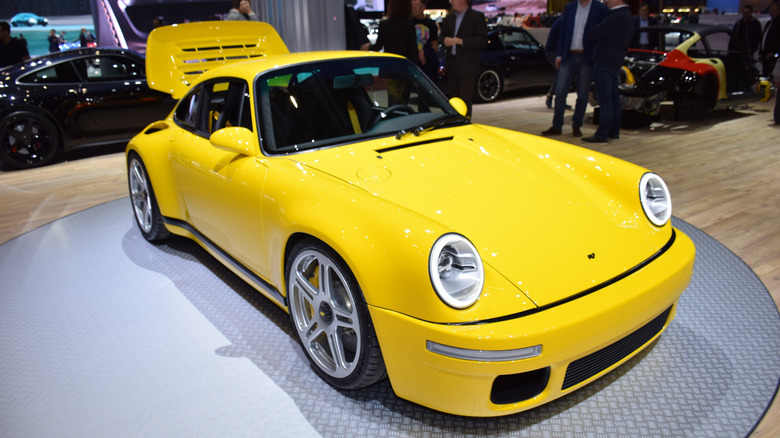
Naturally, if you owned a naturally-aspirated engine car in the 1980s, you wanted a turbocharger. Tuners like Koenig built a 1,000bhp Ferrari Testarossa because the stock Testarossa was slower than a Turbocharged BMW sedan. This was the BMW Alpina B10 BiTurbo. RUF's turbocharged CTR Yellowbird reached a top speed of 223 mph. In the 1980s, turbocharging also became a thing in Group B rallying, and not long after, turbochargers became the performance key of the 1980s.
If your car didn't come with a turbo from the factory, the aftermarket was happy to oblige. Companies like Garrett, IHI, and KKK were selling turbo kits for everything, and fitting one became one of the most desirable weekend garage projects. A boost gauge on the dashboard and a blow-off valve under the hood were the calling cards of anyone who had made the upgrade — and if you couldn't afford the full kit, you could at least slap a "Turbo" badge on the back and fake it.
The visual identity of the 1980s
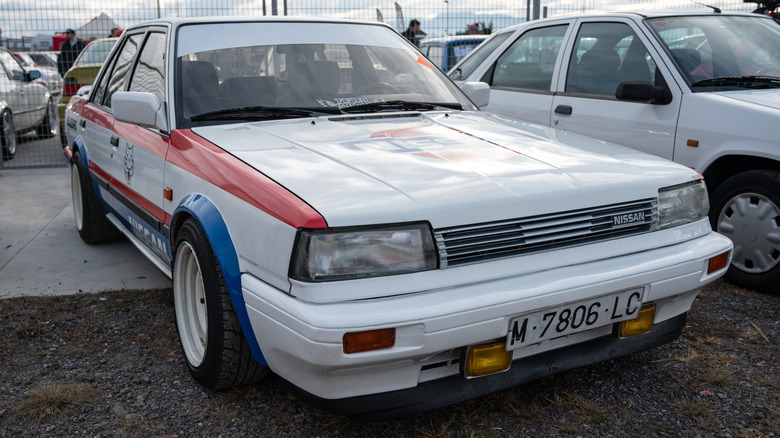
If the 1980s had a dress code, it was loud, bright, and unapologetic. With the advent of vinyl graphics in the 1980s, the art of customization took on a new life. Adhesive pinstripe tape and pre-cut vinyl kits became popular, offering a DIY solution to drivers who wanted a custom look without having to spend a ton of money to paint the car. Beyond vinyl, custom paint was everywhere. Neon stickers, contrast tiger stripes, and color-coded everything were the order of the day — the brighter the shade, the better.
Airbrushing was becoming popular as well. The idea of paint excess transferred directly into the car industry, and with German tuners such as Koenig, Gemballa, Strosek, Mattig, and Irmscher, crazy and colorful car paints and racing stripes became a thing. In the 1980s, a few dollars of masking tape and a rattle can was all it took to make your grocery-getter look like it had just come off a race track. Two-tone paint schemes were equally popular, with contrasting colors applied to the lower body, roof, or hood.
It was an era where standing out visually was just as important as any mechanical modification under the hood. Underglow lights also originated sometime in the late 1980s, and not long after, they became a mainstay on car meets. Although the legality of underglow lights is tricky to pinpoint precisely now, in the 1980s, the trend was much younger and not as heavily regulated as it is today.
1980s wheel choices were special
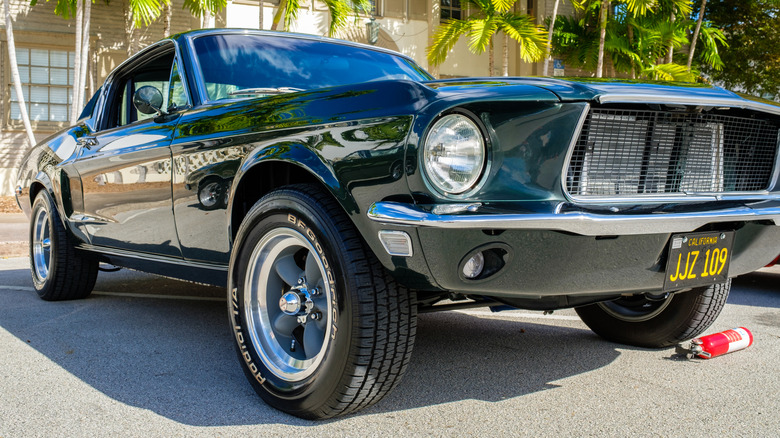
In the 1980s, alloy wheels weren't as common as they are today as most cars left the factory with heavy steel wheels. So, when it came time to replace the wheels, it helped both in terms of looks and performance by lowering the unsprung mass. At this very time, race-bred BBS launched the iconic RS wheel which took the aftermarket world by storm. Regardless if it's a BMW, a Ferrari, an F1 car, or Volkswagen GTI, the RS defined the 1980s and has since become one of the most iconic wheel designs of all time.
On the American side, the 1980s Torq Thrust from American Racing — one of the most iconic Ford Mustang wheels of all time — became increasingly more popular and has since remained one of the most recognized muscle car aftermarket wheels. In Japan, companies like Enkei and Rays Engineering were beginning to make their mark, with Rays even manufacturing forged aluminum racing wheels at the time.
Swapping your factory steelies for a set of alloys was one of the fastest and most visible ways to transform a car's appearance — and in the '80s, appearance was everything. The 1980s were also fairly big on painted wheels, with cars such as the legendary Porsche 930 Turbo offering factory color-matched "Fuchs" wheel centers as an option. After the 930 Turbo, Fuchs wheels remained largely unchanged to this day.
In-car audio revolution
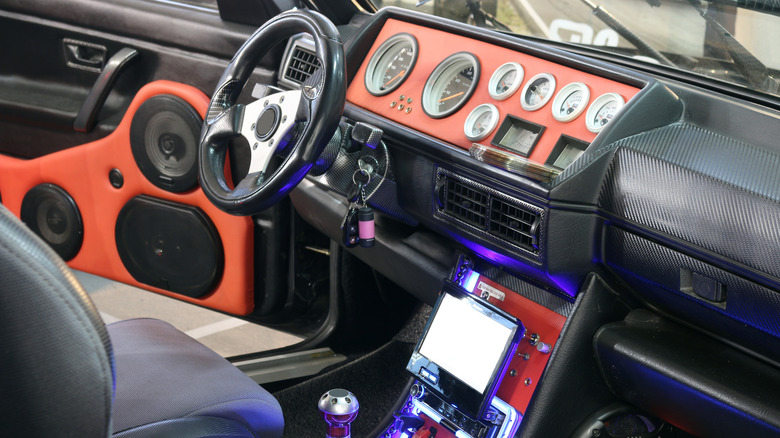
If there was one mod that every 1980s car owner could relate to, it was the audio upgrade. After all, the 1980s had a plethora of gadgets that shaped technology as we know it today. Factory stereos of the era were underwhelming, and the aftermarket was ready. According to Hagerty, aftermarket companies like Craig and Alpine sold cassette decks with internal amplifiers. These could deliver a few dozen watts of power, while external power amplifiers could increase that number by a few times.
Brands like Pioneer, Alpine, Orion, Sony, Clarion, JBL, Rockford Fosgate, and Kenwood became household names in car audio, and cutting holes in door panels and rear decks for speakers was something people did without a second thought — even to cars that would be worth a fortune today. Graphic equalizers were almost standard equipment on Japanese cars of the decade. Then came the CD player.
In 1984, Pioneer debuted the first ever car CD player, the CDX-1. Per Goodwood, the very first upgrades used players located in the boot of the car. Only in 1987 did the CD Player actually become something you could buy included with the Lincoln Town Car. By the end of the decade, having one was the ultimate status symbol. All of this helped fuel the 1980s audio upgrade craze — and by the time the 1990s arrived, it had become its own culture.