

5 Must-Try Samsung Galaxy Watch Features That Don't Come Enabled By Default

Want a great alternative to the Apple Watch in the Android world? A Samsung Galaxy Watch is it, and the best choice hands down if you own a Samsung device. Galaxy watches rank highly on our list of the best watches you can buy, with solid battery life and a laundry list of the expected bells and whistles. It's a great experience out of the box, but some of the best features are not turned on unless you go into the settings yourself and flip some switches.
Bear in mind that some of the features on this list will depend on which Galaxy Watch model you have and your Wear OS or Tizen OS version. Samsung does a great job of backporting new features to older models, though there's a widening gap between the now-default Wear OS and Tizen OS. Your mileage may vary. So without further ado, these are features that we think should have probably been on from day one for a lot of people, and you're missing out if you don't enable at least a couple.
Universal gestures
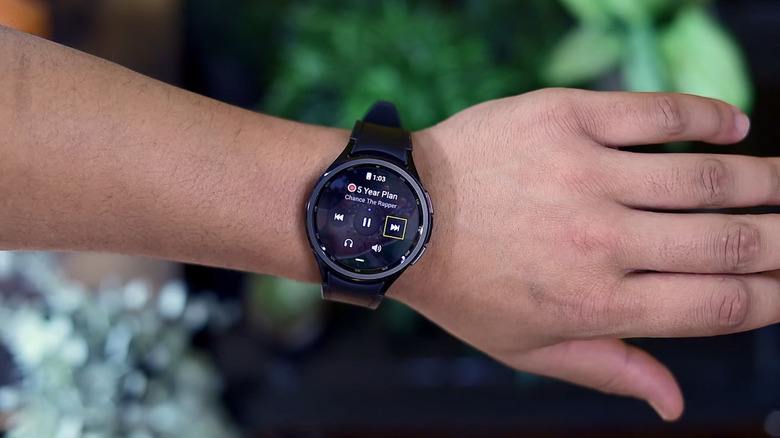
Whether you're cooking or working in the yard, plenty of moments arise when you have dirty and/or wet fingers that you don't want smearing your Galaxy Watch's screen. The Apple Watch combats this with a secret feature known as hand gestures. The Galaxy Watch has the exact same thing, albeit under the moniker Universal Gestures. Almost identical to the Apple Watch, Samsung's Universal Gestures uses pinches and fist squeezes to control the watch. It's marketed as an accessibility feature, but once you use it, it becomes clear that it's something all users should have access to.
Samsung gives you four distinct gestures — a pinch, double pinch, fist squeeze, and double fist squeeze — to control your watch virtually finger-free. In a nutshell, making a fist selects things, and pinching navigates forward and backward through available options. This is distinct from the confusingly named Gestures (sans Universal), introduced for the Galaxy Watch8 and available on older models as well, which adds other gestures to the mix like shaking your watch or making a "knocking" motion for certain contextual actions. If you prefer gestures that only make themselves available at the moment of action (say, acting on a ringing call), Gestures will be enough. Universal Gestures may be more useful for some since, as the name suggests, it should work anywhere, for anything.
Universal Gestures are available for users of One UI 5 Watch. At a minimum, you'll need the Watch 4 or Watch 5. Go to Settings > Accessibility > Interaction and Dexterity > Universal Gestures to enable them. You should get a quick user tutorial, which will tell you that you can turn Universal Gestures on with a double fist squeeze.
Automatic workout detection
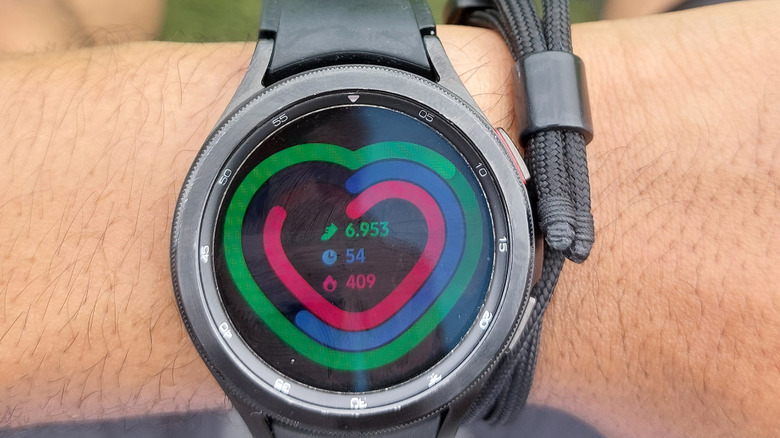
You're at the gym, ten minutes into a good, hard workout. You lift up your watch to check your heart rate and ... crap. You forgot to start a workout. Happens to the best of us. Apple Watches alert users by default shortly after they believe they've started pumping iron. Samsung Watches can too. Just make sure you switch it on first.
Go to Samsung Health > Settings and toggle on Workout detection. Samsung gives you the option to choose which activities it will recognize; if you don't care to track what should be a distraction-free outdoor walk, for example, this will be a helpful setting. Note, this only seems to include high-movement activities where it presumably detects a lot of arm swinging, like walking, running, swimming, rowing, etc. There doesn't appear to be an automatic workout setting for, say, weightlifting, where a high heart rate coupled with movement would trigger a workout.
Unless you're using a very old Galaxy Watch, this feature should be supported. It's been available since the Gear Fit2 in 2016. Also be prepared for potential misfires. Samsung warns that other non-workout activities could give false positives, even something as simple as driving a car. Regardless, this is a killer feature that's a must if you bought a smartwatch for your fitness journey; the more of your health data your Galaxy Watch is able to gather, the better the long-term statistics.
Hard fall detection
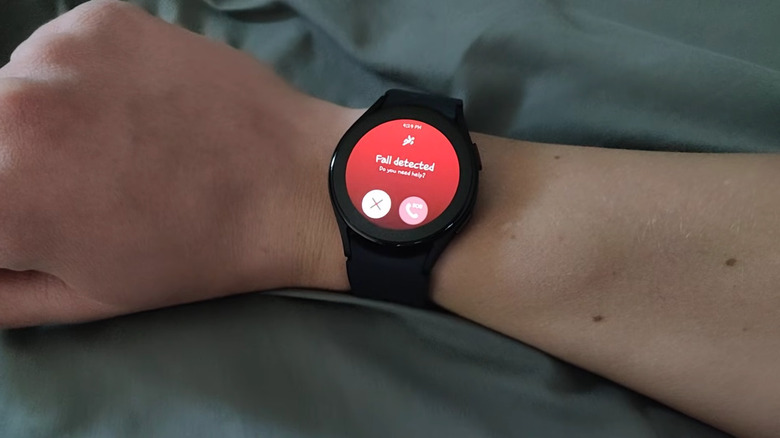
People get hurt by falls on a much bigger scale than most may realize. The WHO estimated in 2021 that falls were the second-leading cause of death by unintentional injuries. Your Samsung Watch can detect falls, but understandably, the feature is not on by default.
You'll need the Galaxy Wearable app to enable this one. Navigate to Safety and emergency under the Watch (or Band) settings. Toggle on Hard fall detection. Similar to other smartwatches, you have the option to automatically alert emergency contacts and/or contact 911. Further, you can adjust it to run at all times or only during physical activity and workouts. There's no option to disable it during workouts. However, it's unlikely you would accidentally trigger it while doing extreme up-and-down workouts (like burpees) since it requires you to be lying motionless and unresponsive after a fall before it kicks in.
With few exceptions, we'd recommend turning Hard fall detection on. Even if you're not someone at high risk of falls (seniors are most prone), this feature could possibly save your life if you're hurt badly enough that you can't get back up and call for help. Rest assured, your watch will give you the option to cancel the automatic emergency response if you took a spill that doesn't merit a 911 call. You'll need at least a Galaxy Watch Active2 or Galaxy Watch3 or newer; any Wear OS watches have Hard fall detection, too.
ECG
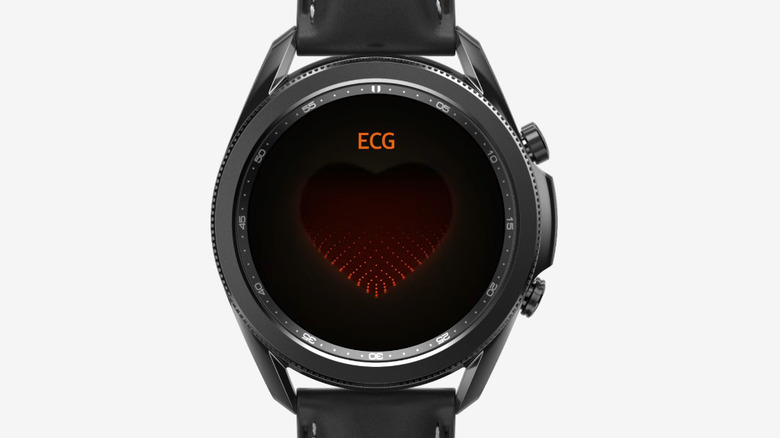
It's kind of crazy to think that a smartwatch can do an ECG, a test that otherwise requires a patient to be laid out on an examination table covered in electrode pads. It's not just Apple Watches that can do ECGs. Your Samsung Galaxy Watch very likely can, too. Samsung requires you to be at least 22 years old and not have implants like pacemakers to use the feature.
Provided you have the Samsung Health Monitor app, you can start an ECG at any time. Samsung encourages you to get comfortable and not move around or take your finger off the button for the duration of the test. Once it's finished, you'll see a very rough diagnosis (Sinus Rhythm is the ideal result; a high heart rate or AFib means you may need to consult your doctor) and can keep taking tests over time to gather historic results that can be exported in PDF format for your own records or shared with your medical practitioner.
The feature is available on all Wear OS Galaxy Watches and any Galaxy Watch running at least Tizen OS 4.0.0.8. It goes without saying, but this ECG feature cannot and will not replace the one at your local doctor's office. Treat any negative results as a gentle nudge to see an actual medical professional for thorough testing and analysis, not a definitive diagnosis.
Continuous heart rate and blood pressure
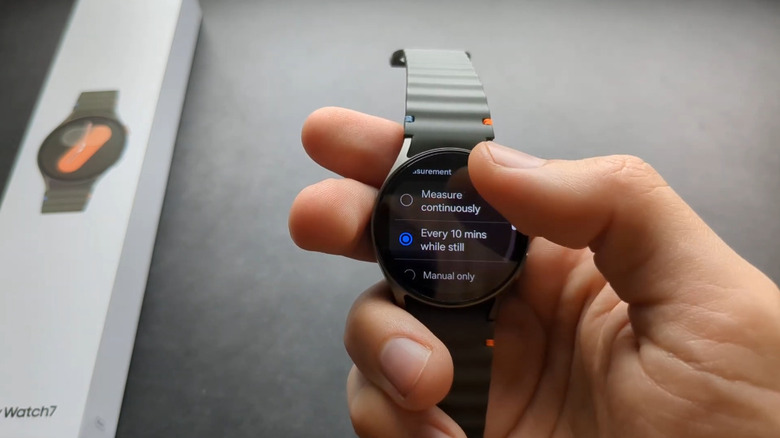
It's very common for smartwatches (like the Apple Watch) to measure your heart rate from time to time throughout the day rather than nonstop 24/7. Makes sense, as it provides a better bird's-eye view of your health across various activities and helps maintain battery efficiency. Of course, some people may need a reading that's available at any time. Go to Samsung Health > Settings > Heart rate to enable Continuous heart rate. You should see the option to measure "continuously;" some models will say "always." If you'd really like to save on battery life and you don't necessarily need regular heart rate measurements, you could go the complete opposite direction and enable "Manual only." It goes without saying that this is not a medical-grade heart monitor and enabling the former option will drain your battery life much faster — but it's great that Samsung offers this option to those who need it.
High blood pressure is a major influence on heart disease, and an alarming number of people have it. Smartwatches can now do blood pressure monitoring, as luck would have it. The Samsung Galaxy Watch is no exception.
Fair warning, this is not a one-tap option since there's a somewhat tedious initial setup. You will need to abstain from tobacco, exercise, caffeine, etc. for half an hour prior and then take three readings using a blood pressure cuff in a quiet, comfortable indoor place. The full guide can be found here. However, once you've done the calibration, you're all set. Your Galaxy Watch can take manual readings hereafter without the cuff.