

The Sharper, Quicker 2026 BMW M2 CS Is An (Expensive) Gift To Driving Enthusiasts
More than most automakers, BMW knows that having a loyal fanbase is as much a curse as it is a blessing. With cars like the 2002 and 3 Series, Bavaria's automaker generated enormous goodwill among enthusiasts by putting drivers first. BMW cemented that loyalty with a line of motorsports-inspired M models, until, that is, it felt the need to change things up.
Instead of the nimble sedans and coupes that built its reputation, BMW now mostly sells SUVs. That's a reality of a new-car market where every driving enthusiast is vastly outnumbered by people who barely know what kind of car they've bought. So is the creeping complexity of tech features that make the average modern BMW far from a pure, distraction-free driver's car. Purists howl, and BMW goes on making the cars most people actually buy. But once in a while, it throws in a bit of fan service.
The 2026 BMW M2 CS is the latest in a series of special-edition M cars that prove BMW is still listening to its fans. Like the M4 CSL, M5 CS, and the previous-generation M2 CS, it gets back to basics with more power and less weight. That comes with an elevated price and enough ergonomic compromises to sow doubts in the minds of fair-weather dans. Because true fandom requires true commitment.
What makes it a CS?
"CS" stands for "Competition Sport" and it's been used on more hardcore special editions of BMW M models since the F82-generation M4 CS of 2017. It fits nicely between the Competition moniker BMW uses for more-powerful versions of the standard M cars, and the more rarely used CSL (Competition Sport Light) designation that harkens back to the iconic 3.0 CSL coupe and is applied to the occasional road car as a nostalgia hit.
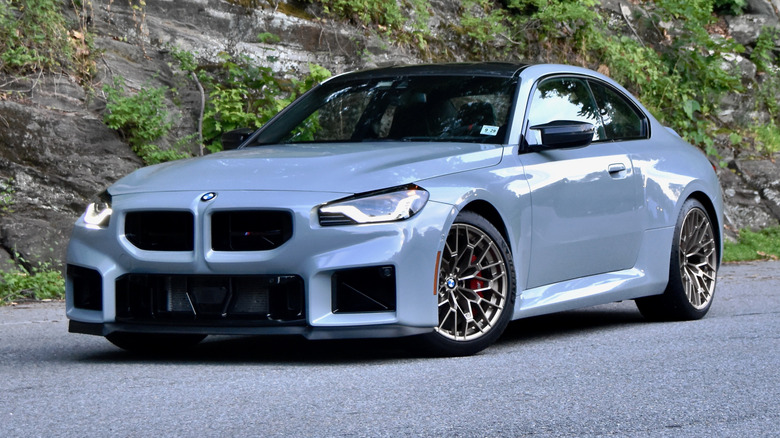
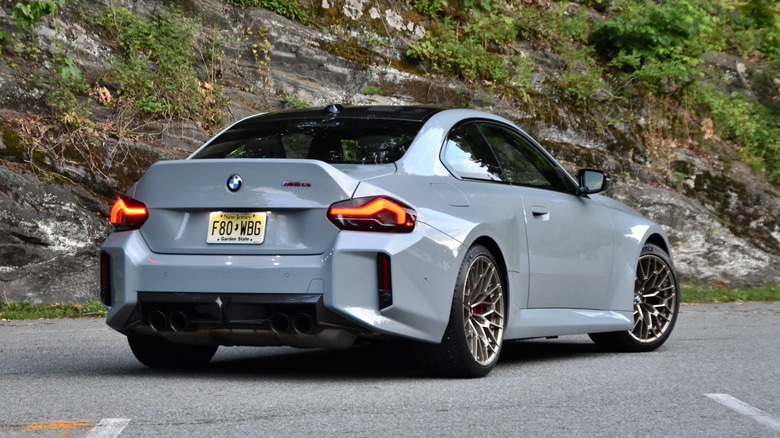
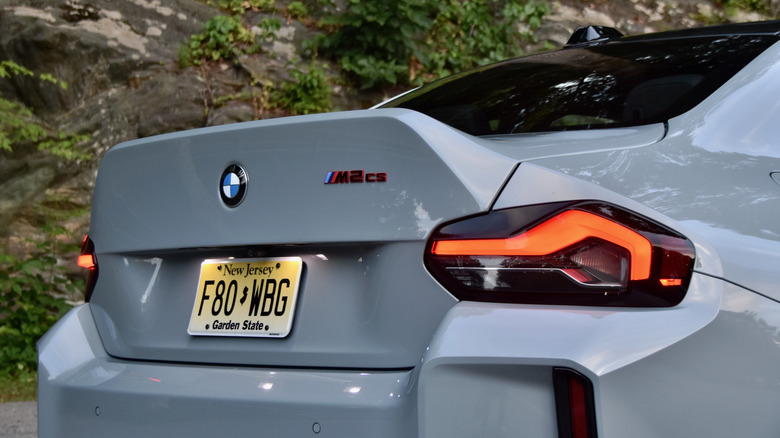
This G87-generation M2 CS follows a similar template to the previous F87 version that debuted as a 2020 model. It's got the same engine under the hood, but with more power, and with less weight to push. A carbon fiber roof is standard, along with a CS-specific trunk lid made from carbon fiber-reinforced plastic and incorporating a ducktail spoiler. The big rear diffuser sitting between perfectly menacing quad exhaust tips is specific to the CS as well, and is also made of carbon fiber. Staggered (19-inch front, 20-inch rear) forged wheels and throwing some interior accoutrements in the dumpster complete the weight-saving measures, which cut 97 pounds compared to a standard M2, according to BMW.
However, being lighter doesn't improve the G87 M2's looks. It's got the classic proportions of a 2002 or E30 M3, with a tall cabin and stubby front and rear ends, plus boxy fender flares that make the E30 connection even stronger. But the flared-nostril grille and excessive detailing are hard to love.
More power unlocked
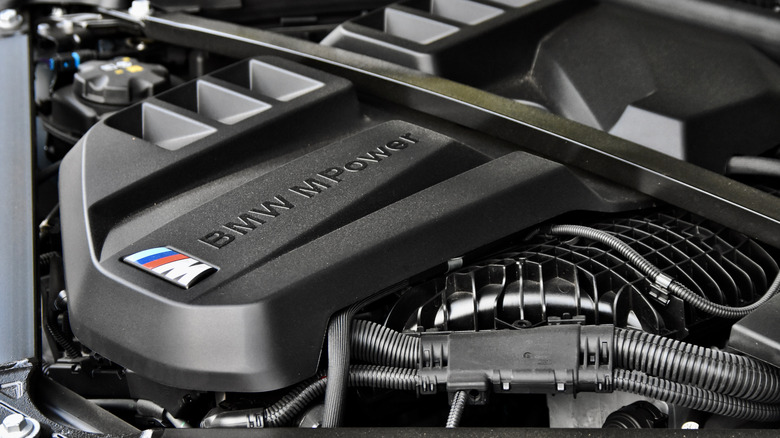
The M2 is the sawed-off shotgun of the BMW M lineup, repackaging the powertrain and running gear from the M4 in something better suited to close quarters. Both cars are powered by the same S58 twin-turbocharged 3.0-liter inline-six, but the CS has the engine-management tuning previously reserved for the M4 Competition xDrive all-wheel drive model. So its engine produces 523 horsepower and 479 pound-feet of torque—50 hp and 36 lb-ft more than the standard M2—with rear-wheel drive and less weight than the M4 Competition xDrive.
The only available transmission is an eight-speed automatic, which is a shame because the CS seems like an especially good application for a manual. It's built for people who want to enjoy the experience of driving, and there's actually a benefit to shifting yourself. Peak torque arrives at 2,700 rpm, but peak power doesn't come on until 6,250 rpm. From there, you're just a flex of your big toe from the 7,200 rpm redline. The M2 CS hits those high notes with gusto, sounding like it's auditioning to be a racecar. Even at lower rpm in conservative drive modes, there's an energetic thrum that's very endearing.
BMW says the M2 CS will do zero to 60 mph in 3.7 seconds. That's 0.2 second quicker than the standard M2 but still 0.3 second slower than the all-wheel drive M4 Competition xDrive. The twin-turbo motor also pulls strongly throughout its rev range, perfect for launching out of corner exits.
Pure fun
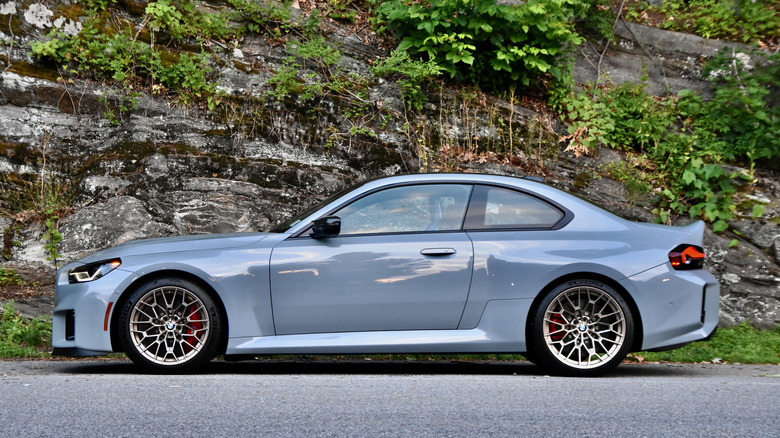
Setting up for those corner exits is easy, thanks to the precise steering typical of BMW and a surplus of grip and stopping power. This test car had optional ($8,500) carbon ceramic brakes that likely save a few more pounds, and Michelin Pilot Sport 4S tires (stickier Cup 2 tires are also available). Like the standard M2, the CS has the Active M rear differential and adaptive damping suspension, but the latter has unique tuning that also lowers the ride height by 0.2 inch.
That these ingredients are cooked to perfection is, frankly, not surprising. BMW M engineers have been doing this for so long that it's easy to imagine they developed the controversial M5 plug-in hybrid not out of necessity but because they were bored. Like so many great M cars before it, the M2 CS is unbothered by any combination of camber and curve radius, but doesn't let its astounding competence get in the way of fun. It's entertaining at moderate speeds and thrilling when you really push it.
I didn't have the opportunity to get to a track during my week with the CS, but given how unbothered it felt at public-road speeds, it's hard to imagine it being unfit for that environment. And its Nürburgring Nordschleife lap time of 7:25.5 is a record for compact cars. BMW M engineer Jörg Weidinger got the M2 CS around the 12.9-mile track eight seconds quicker than the previous record, set by the Audi RS 3.
It makes boring driving tolerable
Real life unfortunately doesn't include many racetracks, or even fun roads that aren't populated with less-sporty drivers. The pair of M buttons on the steering wheel help deal with that, allowing you to save presets for each so you can quickly call up the spicier settings when there's a gap in traffic or that delivery truck finally makes a turn and leaves you with a clear road ahead.
Like other modern M cars, the M2 CS has plenty of settings to mix and match, starting with a mild "Efficient" mode for the engine and "Comfort" for the suspension, steering, and brakes. A "Sport" setting is available for all four, as well as "Sport Plus" for the engine and suspension, along with multiple levels of traction control. Owners will definitely want to program the M buttons, because the only other way to change these settings is via the touchscreen, which isn't easy to do on the fly.
The suspension's Comfort mode is decently compliant for what is supposed to be a hardcore track toy, but still too harsh for the scarred pavement likely to be found in any locale that experiences real winters. With everything dialed down, the CS was actually more than tolerable on highways. It was surprisingly quiet and—on the Pilot Sport 4S tires, at least—didn't feel nervous. However, the M2's 13.7-gallon tank and observed 17.7 mpg (against a 19 mpg EPA combined rating) aren't road-trip material.
Performance erodes practicality
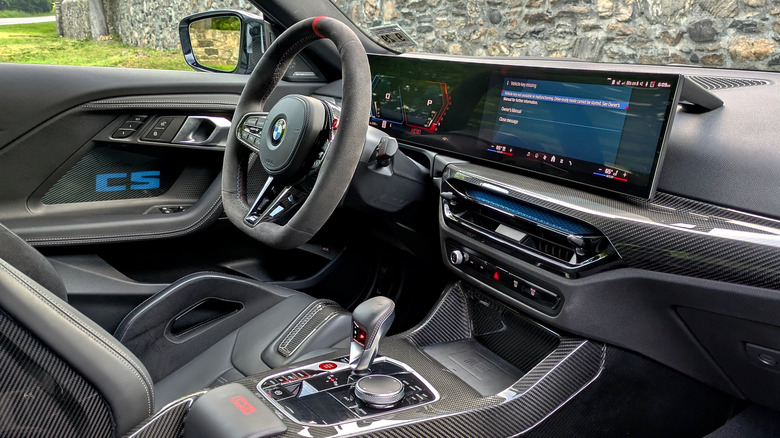
Whether you're blasting down a backroad or stuck in traffic, you won't forget that the CS is no ordinary M2. Heaps of carbon fiber are layered onto the more pedestrian plastics of the standard M2 interior, which can't hide the lineage of the base 2 Series from which it's derived. The oversized, Alcantara-wrapped M steering wheel is a nice distraction, though, as are door panels with light-up "CS" logos.
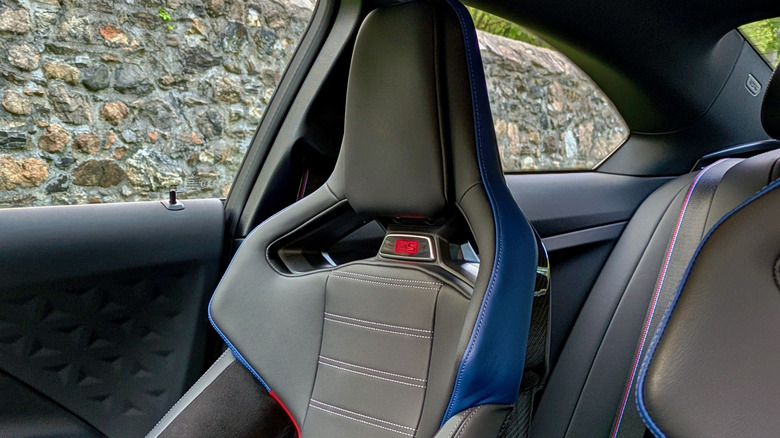
The weight-reduction scheme also takes a draconian turn with a simplified center console that lacks an armrest and cupholders (the doors still have bottle holders, though) and carbon-fiber seats. They still have power adjustment and a separate backrest, but the tall, rigid side bolsters make getting in and out an undignified affair. In my preferred driving position, I kept getting stuck between the seat and wheel. That begs the question of why BMW didn't go all the way and fit a quick-release wheel, race-car style. But that would probably be hard to make work with an airbag.
The M2 is a good-size car, feeling compact but not cramped. Its 13.8 cubic feet of trunk space is also pretty good for a coupe: it's more than you get in a Ford Mustang or Chevrolet Corvette, and nearly three times that of a Porsche 911. It's also a lot more than the CS' Nürburgring rival, the Audi RS 3. But that sedan has usable back seats.
Tech isn't the main attraction
Because there's no such thing as a lightweight infotainment system, the M2 CS keeps the setup from the standard car. A 12.3-inch digital instrument cluster and 14.9-inch touchscreen are grouped together in one housing that's easily taken in at a glance from the driver's seat, but isn't tilted away the front-seat passenger. The instrument cluster's angular readouts are a nice alternative to the traditional round speedometer and tachometer that take full advantage of the possibilities of a digital cluster. And wireless Apple CarPlay and Android Auto are still standard, along with a head-up display.
Version 8.5 of BMW's operating system—added as part of the M2's 2025-model-year refresh—incorporates climate controls into the touchscreen, joining the drive modes and many other settings. Such reliance on the screen isn't ideal in a performance car, although BMW includes an audio volume knob, voice assistant, and its traditional rotary control knob that mitigate this somewhat.
M-specific features include a lap timer and the M Drift Analyzer, which shows the angle and duration of drifts (on a closed course, naturally). Driver-assist features are fairly limited for this price point, but basics like adaptive cruise control and lane keep assist are included, and they're not really the point of this car anyway.
2026 BMW M2 CS verdict
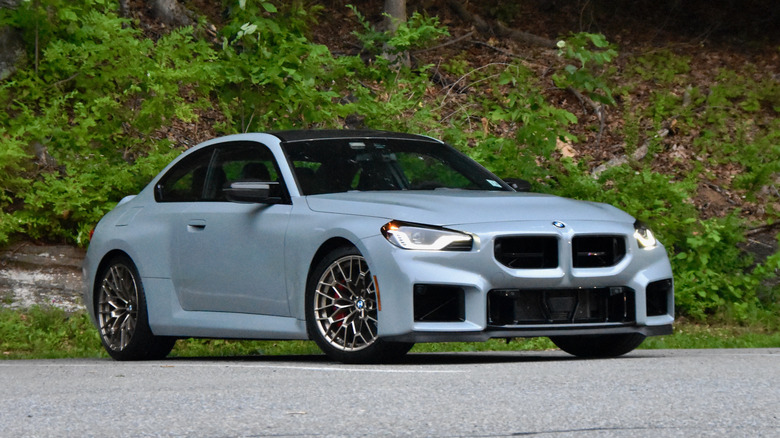
The 2026 BMW M2 CS starts at $99,775; carbon-ceramic brakes brought the as-tested price of the car you see here to $108,275. Even that is almost $30,000 less than a base Porsche 911 Carrera, which is down 135 hp on the M2 CS. That only translates to a slim 0.2-second advantage in factory-estimated zero to 60 mph times, however.
Thinking laterally, you could have a four-door Audi RS 3 that's also very engaging to drive (albeit with a completely different character) for a lot less than the M2 CS. Or a Chevrolet Corvette Stingray that's quicker from zero to 60 mph, but nowhere near as sharp as the BMW in the corners. The CS is also nearly $10,000 more than an M4 Competition xDrive, which has the same output but is slightly quicker, more spacious, and is probably a better daily driver. But it's not as special as the CS, and can't match the smaller car's purer driving experience.
Whether that driving experience is worth $29,600 is the real question, because that's how much more the CS costs than the standard M2. The CS is great, but it's not a complete reinvention like a 911 GT3. Its high price and uncomfortable seats should help sell a few standard M2s, and many of the buyers that do take home a CS will likely be motivated by future resale values. That's the cynical truth of what is nonetheless one of the best driver's cars of the moment.