

12 Motorcycle Redesigns That Totally Missed The Mark
From the loyal fanbase to the hardened critic, it's impossible to please everyone. Motorcycles are ever-evolving, and clusters of riders swear by their model or brand — right up until it changes. Then the pitchforks come out. Great bikes fail because the market is hyper-competitive and ultra-competent. Motorcycles get better every single year, and there are multitudes of flavors and colors to choose from. The consumer is the victor here, but generational refreshes and introductions to new markets necessitate examining old friends with a fresh set of eyes.
The elusive and mysterious "mark" is difficult to define. Some of these motorcycles flopped at launch only to hit the stratosphere at auction decades later. Others were DOA due to market trends. Yet others offended fans by executing a charm-delete on a beloved feature. One dared to take on a titan and was smothered by economies of scale. At the very least, these bikes sparked controversy, eliciting discussion at best, dooming legacy brands at worst, but always igniting opinion-slinging between critics and fanatics.
BMW K100/K1
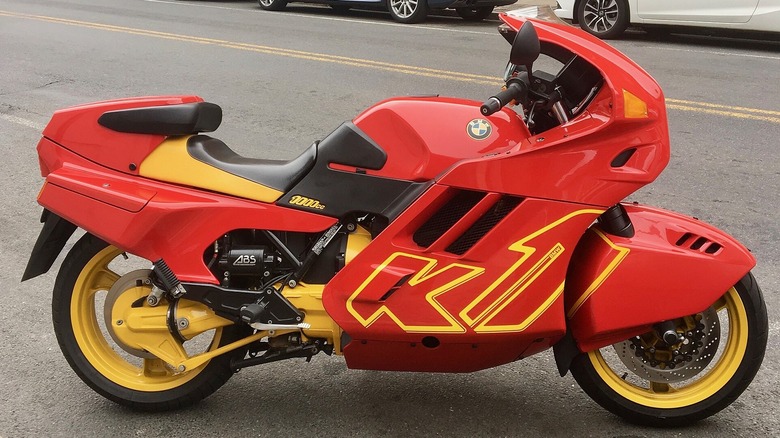
Fans of BMW's classic K100 were unenthused when the K100 graduated into the K1. BMW essentially created adventure riding with the 1980 R80 G/S, but now it needed a bona fide contender for sportier adventure riding. The K100 arrived in 1982 equipped with a 90-horsepower inline-four and a top speed of 132 mph. It was neither air-cooled nor boxer-configured, two BMW mainstays. Nonetheless, it won the hearts of a certain group of riders, who affectionately nicknamed it the "Flying Brick."
BMW advanced the K100 over the next few years. Improved ergonomic equipment, such as taller windscreens, cockpit fairings, headlight and braking upgrades, luggage, and first-responder models, evolved the base K100 into a sport-touring, law-enforcing, weekend-Alps-joyriding corner carver. The engine was so capable that BMW decided to use it in the next iteration of the K100: the K1. That's where the trouble started.
The first-gen K1 earned a stellar reputation with BMW diehards, a community noted for open-minded acceptance of changes to beloved models. Yet the versatile tourer turned into a racing motorcycle when the second generation debuted in 1989. Maybe fans were expecting more incremental improvements from past years. At any rate, the controversial change certainly missed the mark for anyone expecting less than a radical shift in the bike's mission and appearance.
Kawasaki Eliminator
We speak plenty about sport, adventure-sport, sport-adventure, dual-sport, super-sports, cruisers, tourers, and couches-on-wheels with silky parallel engines, but one genre is criminally overlooked: the muscle bike. Drag-strip kings and Dairy Queen parking lot bullies. Sleeved riders need not apply. Muscle bikes are heavy and loud, a particular type of motorcycle for a particular bunch — think the Yamaha V-Max and Harley-Davidson V-Rod. There aren't many of them.
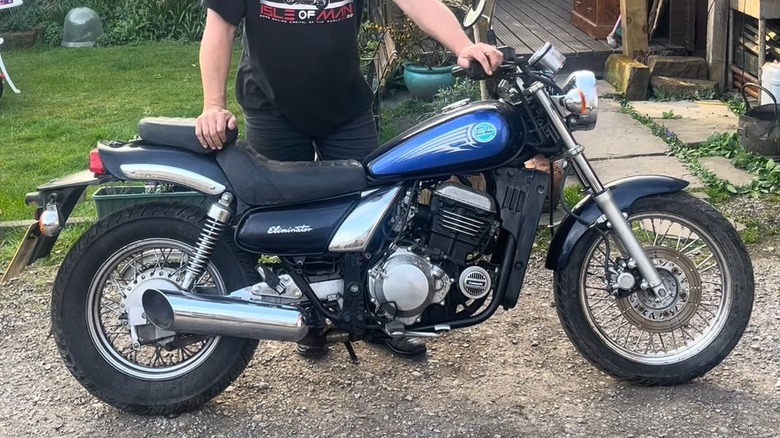
By the mid-'80s, Kawasaki's ZL1000 Eliminator was a 900- and 1000cc muscle bike with roots in the '70s and a Ninja motor tweaked for bottom-end performance. What it was eliminating, we'll never know. It certainly eliminated some local racetrack records, and likely more than a few young riders' licenses. Probably thousands of rear tires melted into bubbling rubber and steel cord. Whatever else, it ultimately eliminated itself when Kawasaki cut it down to size.
In 1988, Kawa castrated the mighty bull by cutting off a pair of cylinders, paring things down to a 249 cc parallel twin while preposterously pinning the Eliminator name to it. The new "Eliminator" made all of 33 horsepower and 12 lb-ft of torque as an entry-level JDM that satisfied domestic demand for small motorcycles in Japan, but we think high-revving knee-draggers were the superior solution. At least give it its own identity. Call it the Sprout or something. The ZL1000 muscle bike carried on until 1990, when it presumably died of shame. Though Kawasaki builds a full range of modern Z-models today, the bikes bear little resemblance to their namesake.
Excelsior-Henderson Super X
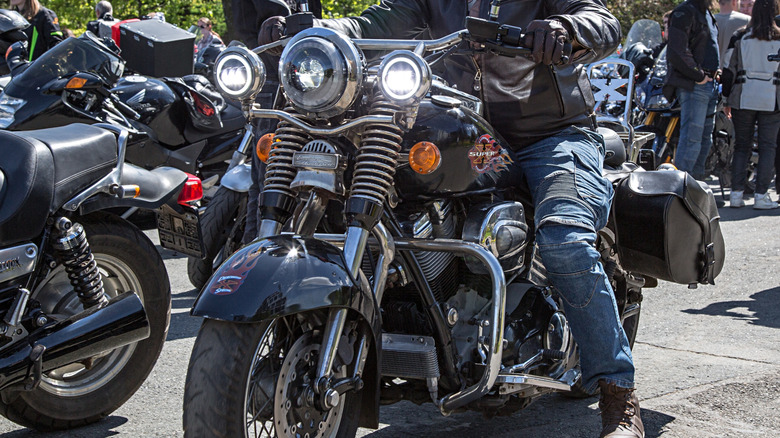
During the 1990s, surging post-AMF Harley-Davidson had a six-month wait for motorcycles. Brothers Dan and Dave Hanlon of Belle Plaine, Minnesota, decided to take a swipe at that backlog by resurrecting the American brand Excelsior-Henderson, which had last made motorcycles in 1931. The vision was to build a technically updated V-twin that took square aim at the overheated Harley-Davidson market. The double-barreled naming similarities and American pedigree were a direct nudge into Harley's market space.
The Hanlons raised $100 million and put their plan into action. Buzz rose around the new American V-twin. The 1999 Super X took its name directly from the last Excelsior-Henderson built between 1929 and 1931. Westlake Engineering developed the engine, a 1386 cc 50-degree V-twin (the original Super X had the same 45-degree bank angle as Harley). It was handsome, too, appealing to those who fancied Harley's styling. Reviews praise it to this day.
The problem with the Super X was not that it missed the mark; it's that the mark was wildly missable. Doing nothing less than engaging in a grudge match with behemoth Harley-Davidson was a noble but doomed endeavor. While the Hanlons made a pretty cool bike that collectors dream about today (only about 2,000 were produced), Excelsior-Henderson went bankrupt almost immediately, thus missing the chance to take a bite out of Harley and living to tell about it.
Vincent Black Prince
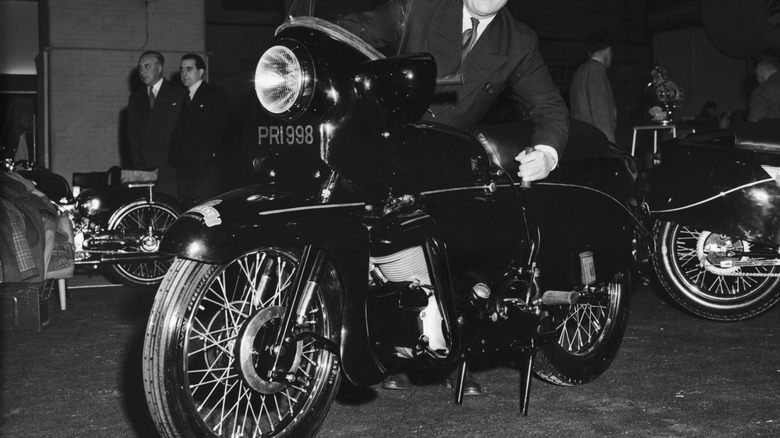
The Vincent Black Prince was as anticipated as its historical namesake. Both were British by birth, each sire of a king and heir to a kingdom. Monarchically, we're speaking of the son of Edward III; in motorcycling, the Vincent Black Prince. Tragically, both were gone too soon. The Black Prince's older sibling, the Black Shadow, was revered as the fastest production motorcycle between 1948 and 1973 — an astonishing span. With a bloodline like that, the Vincent Black Prince was bound to disappoint some fans. It entered production in 1954 and was unveiled as a 1955 model year with a controversial look. Still in Vincent's black paint, the glorious workings of the motorcycle had been covered up with an enclosed fiberglass fairing. It looked more like the superbikes of the '80s (minus the candy colors) and nothing like any motorcycles that had come before, including the Black Shadow.
Company founder Philip Vincent famously referred to the Black Prince as a "two-wheeled Bentley," and you can see what he meant. The bike is buttoned up, a somehow sensible step down from the world-beating superbike it derived from. While the redesign missed the mark with the speed-crazed at the time, the Black Prince carries serious weight today. Vincent closed its doors on motorcycle manufacturing in 1955, immediately after its release; hardly a gangbusters legacy. The result was fewer than 200 Princes produced, making this failed redesign one of the world's most collectible motorcycles.
Harley-Davidson Sportster S
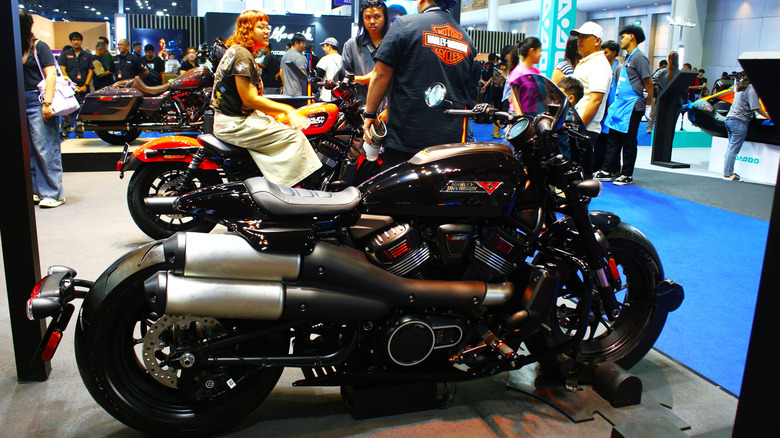
You'll seldom find a less cantankerous fandom this side of "Harry Potter" fanfic. When it comes to the beloved bar-and-shield, Harley diehards who have kept the company alive for 120 years brook no nonsense. That's precisely why the redesigned Sportster –- only the longest-running single nameplate in company history — garnered disapprobation upon its debut in 2021.
Harley is in the unenviable position of needing to keep everything exactly the same while updating, modernizing, and seeking new markets. It's a tight knot, and HD leadership has certainly explored ways to loosen it. Neither Sportster model -– the Nightster and Sportster S –- looks particularly like any previous iterations, which followed a linear and gentle design evolution dating to 1957. Up until 2021, you could see still see the '57 model's design in the new Sportster if you squinted just so.
The Sportster was the oldest and most conservative nameplate in a company famous for them, and the effrontery of the Sportster S was not taken lightly by all. Near the heart of the controversy was the inevitable disappointment that the Sportster had finally abandoned air cooling (you know, like Porsche belatedly did 30 years ago). It was as drastic a redesign as the Sportster ever saw. This wasn't blacked-out engine pieces and fatter tires — looking at you, Sportster 48 -– this was some art deco Rocketeer experiment that looked as likely to burn the inside of your thigh as win your heart. Of course, saying a motorcycle truly missed the mark requires more than a few years to determine; the muscle bike carries on in the new Sportster and it's not without its adherents.
Honda DN-01
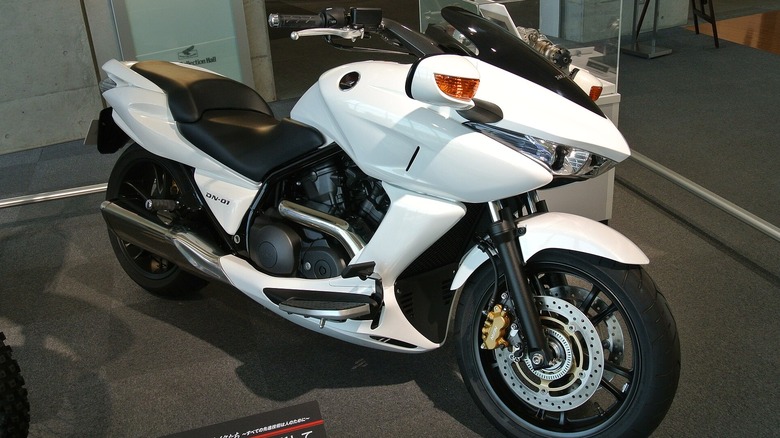
Honda's master-of-none DN-01 was less a redesign than a rethinking of the entire motorcycle concept. It was meant to meld the unlikely trio of commuter scooter, sportbike, and cruiser into a smooth Neapolitan blend. We love the many flavors of motorcycles, but not even Baskin-Robbins could pull this one off.
With an accessible 27-inch seat height, big wheels, comfortable riding position, and braking power to spare, the 680cc V-twin delivered 45 horsepower in Cycle World's dyno test. The publication assured the public the Dn-01 "is not a scooter." The market was left to determine what precisely it was, which was a flop. It almost immediately departed, leaving a headstone that read 2008 to 2010.
The truest tragedy of the DN-01 was not that it failed, but that it succeeded. Honda hit the center of the triple-Venn diagram –- a tiny target, a bullseye, perhaps even the mark –- in a laid-back cruising, twistie carving, comfortable commuter. But adding chocolate and strawberry to vanilla isn't always enough — sometimes you just want cookie dough.
Ducati Multistrada
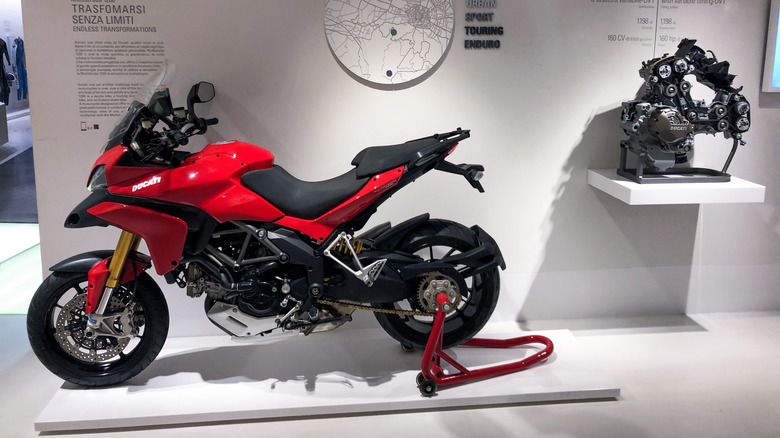
If the loss of the trellis frame from the Monster unsettled Ducati's tried-and-true, then an engine swap that engendered the deletion of its trademarked Desmodronic valves sent them into a real tizzy. The Multistrada had been getting along just fine (not withstanding the nickname "Uglystrada") on two cylinders since 2003. Then Ducati arranged a heart transplant from the Panigale V4 superbike in the form of a 167-horsepower 1158cc, 90-degree V4 engine.
Ducati's flagship adventure bike now had the asphalt-melting, MotoGP-winning heart of a lion – and it wasn't precisely as if it lacked power before. Ducati purists and historians were dismayed by the lack of a Desmodronic valve train, even though it gave Ducati absurdly long intervals between regular services. Not to mention faulty valve guides that stumbled at launch, though that's expected with a major generational redesign. With or without Ducati's spectacular vision for this bike, MotoGP power on a tall and high-sprung adventure motorcycle is daunting. Maybe that's why Ducati kept a two-cylinder version of the Multistrada around when it made this controversial change in its lineup.
Suzuki GR650 Tempter
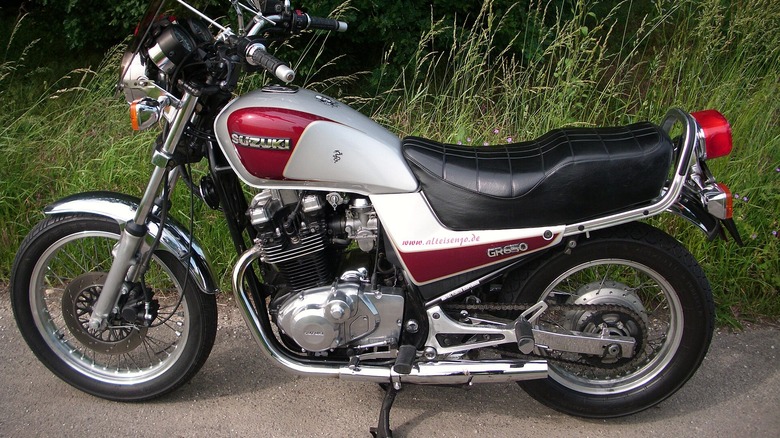
The '80s were a strange time on the international motorcycle scene. The seeds of technology planted on race tracks and roads in the '60s and '70s crashed into '80s culture in a maelstrom. Within the buzzing hives of R&D departments, engineers, factory riders, and mechanics all mixed and matched power plants, seating positions, and exterior aesthetics with precision and dedication.
Suzuki's GR650 did an admirable job competing with the big-twin bikes of Europe and North America. It featured a centrifugal clutch mated to a 650cc parallel twin that was about as thumpy as the American bikes and as big as the British. All seemed well until Suzuki held it out to North America as the "Tempter." The nickname was pure marketing kerfuffle; the bike was the same. But its wide seat and not-quite-cruiser-yet-not-a-sportbike vibe were not so tempting to the American market after all.
While the international edition -– known simply as the GR650 -– was on the roads of Europe and Asia until 1989, the untempting Tempter found itself banished from the shores of North America in 1984, a mere year after its branched redesign attempted a landing.
Ducati Monster
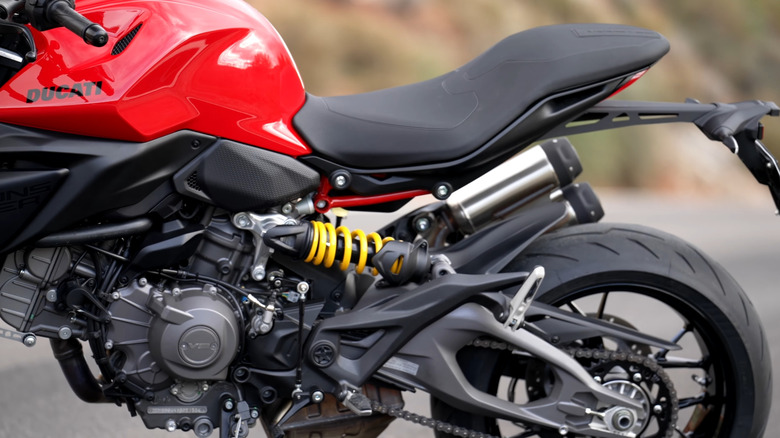
The most distinctive thing about the Ducati Monster was undoubtedly its exposed trellis frame. It not only gave the 1993 Monster 900 its distinct Ducati look, but it was also excellent at its job. The frame addressed the oft-lamented tendency for racing motorcycles to weave in corners. With lightweight steel tubes connecting the steering head to the engine, the trellis stabilized the bike. Ducati, on the verge of bankruptcy at the time, saved money by keeping the Monster naked. Accentuated by neat paint schemes, it became the centerpiece of the motorcycle that saved the company.
So when Ducati removed the trellis frame, the redesign was controversial to say the least. Updated aluminum casting processes dated the trellis (or perhaps cheapened the process). Once needed, now no more. Such is the fate of state-of-the-art tech over time. Resting on your laurels doesn't keep you in the game. Ducati has forged onward in the name of success, making it a piece of motorcycling history.
Suzuki Hayabusa
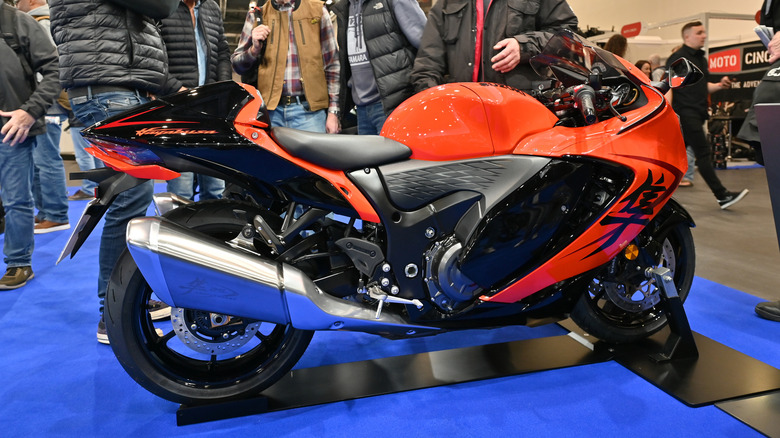
The Hayabusa looked bulbous, alien, and bizarre. But it was the fastest production motorcycle king for a good long time; you bit back aesthetic criticism and watched it until you loved it because it was the fastest.
The 1298cc GSX-R 1300 Hayabusa debuted alongside the Yamaha R1 in 1999. The two were the latest phase in a performance war raging since the '60s. They would spawn and inspire an entire generation of superbikes in the 2000s and 2010s. But aside from the bubble two-up seat cover lifted from '90s GSX-Rs, the Hayabusa shattered the gentlemen's detente that performance bikes to 186 mph by taking the fastest production bike crown from the Honda Super Blackbird 1100XX. The aerodynamics must have worked.
Suzuki gave the legendary formula a ground-up redesign for the third-gen 2022 Hayabusa. It remained an absurd, heavy superbike buzz-saw with 194 horsepower. But it looked different. It was discernibly Hayabusa-esque but sharpened, with planes and angles where curves once abounded. It seemed a nod to modernity, an acknowledgment of the Ninja H2R lined up alongside it in the paddock wearing the number 1 plate that once belonged to the 'Busa. It felt less like a redesign and more like the end of an era for millennial Hayabusa maniacs and people inspired by things that look like inflated alien eggs.
Yamaha MT-09
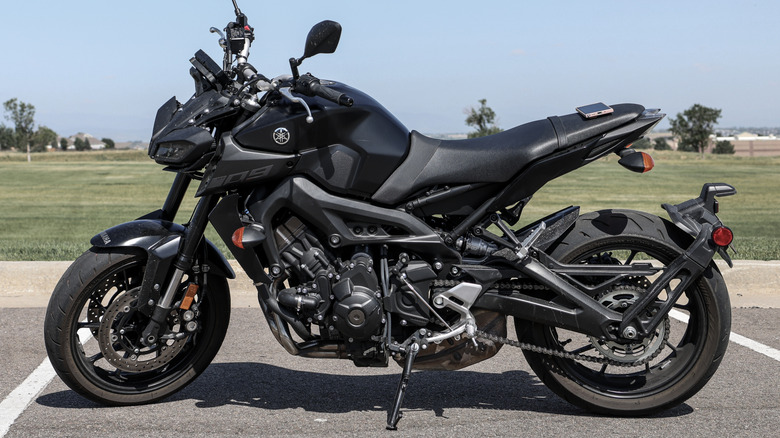
The MT-series was one of those rare, unusual concept motorcycles that actually made it into production when Yamaha introduced it to select markets in 2005. The MT lives up to its moniker as a "Master of Torque." It must be a dark master, for the introduction of the MT-09 boasted the advertising slogan "The Dark Side of Japan."
One look at any of the MTs evokes the pixelated malevolence of an RPG villain cruising a neon city on a nihilistic mission of vengeance. Perhaps unsurprising from the company that built the motorcycle that inspired Final Fantasy VII's signature bike. If its torquey power delivery and sophisticated futurism is the dark side, call us Sith. By the 2020s, the MTs were a pillar of Yamaha's street motorcycle market. That's when the trouble came. People found the looks of the long-standing MT-09 growing "repulsive" when it underwent a facelift in 2021.
Yamaha replaced the twin "Decepticon" headlights with a single, centrally-mounted LED. It was blasphemy, plain and simple, according to some. Never mind that the bike improved in virtually every other category and had a mere $400 increase in price over the previous model. Just don't fiddle with the headlights again, Yamaha. Unless, of course, it's to make them brighter, another thing some riders have complained about.
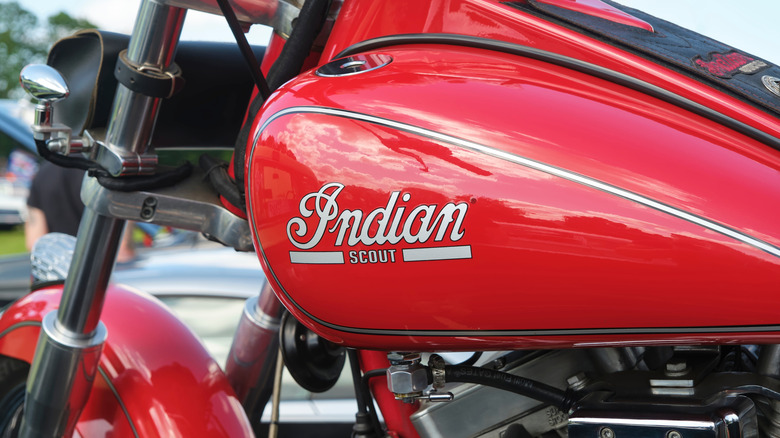
Indian Scout
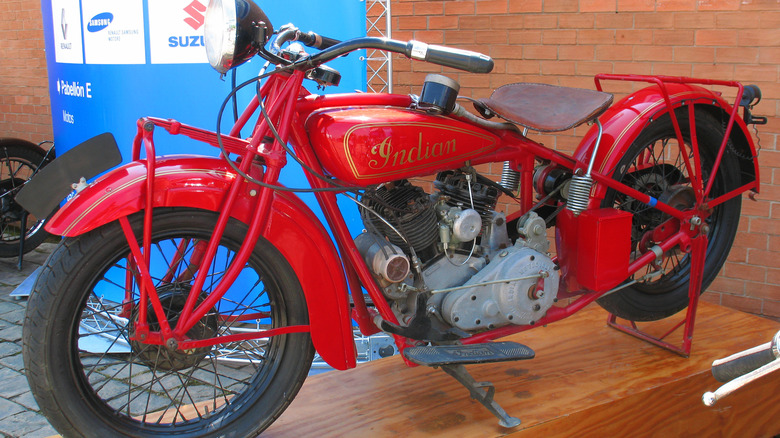
We're not talking about the new Indian Scout lineup, though you'd be forgiven for being confused. Harley's ancient and implacable enemy has gotten the Lazarus treatment more times than fellow bike manufacturer Norton has gone bankrupt.
During the 1920s, the Scout 101 was adored for its handling and power-to-weight ratio. However, as the Great Depression settled in for the long haul, Indian shifted to a one-size-fits-all philosophy, hanging its big-twin Chief and smaller Scout on the same frame in 1932. The redesign missed the mark for those who loved the Scout's nimble power.
The Scout redesign wasn't responsible for the failure of Indian in 1953, but it didn't save the beleaguered company, either. The new Standard Scout (New Coke, anyone?) of the '30s onward was just that: standard. An unremarkable economic downgrade from the Scout 101 of yore. Indian shouldered on for several more years, but the brand eventually closed down before embarking on a 21st-century revival nearly half a century later.