

12 Classic Cars That Turned Out To Be Problematic
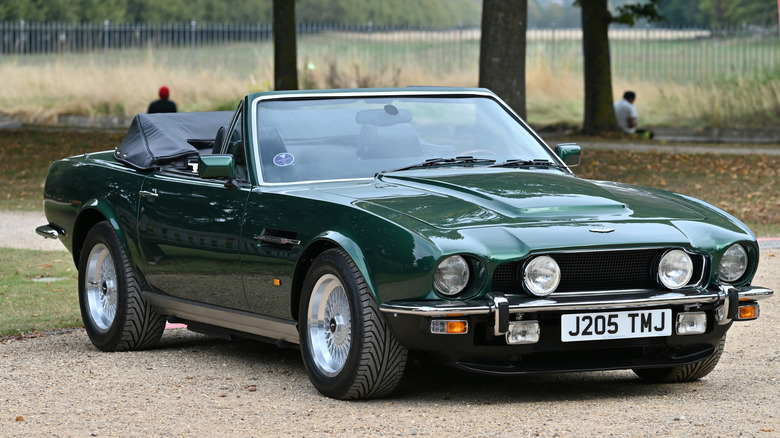
Quite often, we car enthusiasts are guilty of looking at the past through rose-colored glasses. Go to a car meet, an autoshow, a racetrack, or anywhere else gearheads gather, and within a few conversations, you're almost guaranteed to hear a handful of sentiments that recall the old car world as a benevolent paradise draped in a dream-like shimmer. People will spew impromptu love poems about the golden era of manuals, the simplicity and communicative nature of old sports cars, the featherweight grace we've lost to batteries, the heart-pumping styling we've lost to safety regulations, and many more perceived characteristics of this supposedly perfect era.
Like the time itself, classic cars are often placed on a pedestal and praised. They're seen as the stalwart and honorable poster boys of an industry that's lost its way. They are the grandparents who understood the world better than their own grandchildren, relics whose age alone grants them some form of consecration. A great number of these old cars have earned this reverence to be sure, but survivorship bias has sneakily tricked some of us into believing things were better than they really were. In reality, many old cars, even those still desirable today, are plagued by issues of their time that originate in engine bays, wiring webs, or the darkest corners of the bodywork. Here are 12 Classic cars that turned out to be problematic.
Triumph Stag
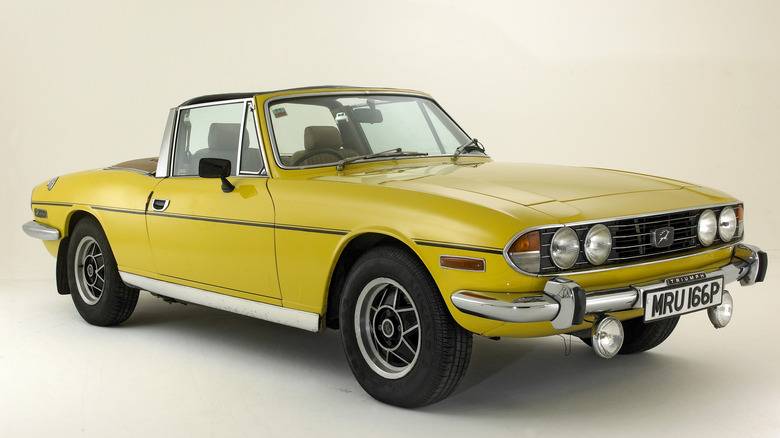
Perhaps it should come as no surprise that an English car begins our list. The picture the mind makes for the English car is often a pretty one. Elegant Aston Martins and stately Rolls-Royces. However, reliability issues and other problems often accompany those thoughts. There are many examples of this conundrum throughout British carmaking history, including the Triumph Stag.
The Stag meant to take aim at the likes of Bentley and Jaguar, presenting as a classic English luxury grand tourer. On the outside, Triumph certainly delivered. The Stag was lovely to look at, as it was penned by Italian design mastermind Giovanni Michelotti. However, the problems began under the hood.
The three-liter naturally aspirated V8 was a Frankensteinian conglomeration of two pre-existing four-cylinder engines pulled from the Triumph Dolomite. The cooling system was simply not up to the task, and the engine commonly overheated. The high heat warped the aluminum cylinder heads, which could lead to head gasket failures. The timing chain setup was also overly complex and needy—anything but perfect maintenance, and the system could fail, causing catastrophic engine failure. This led many owners to fully swap the problematic stock V8 for a more stable 3.5-liter Rover V8.
Jaguar XJ-S
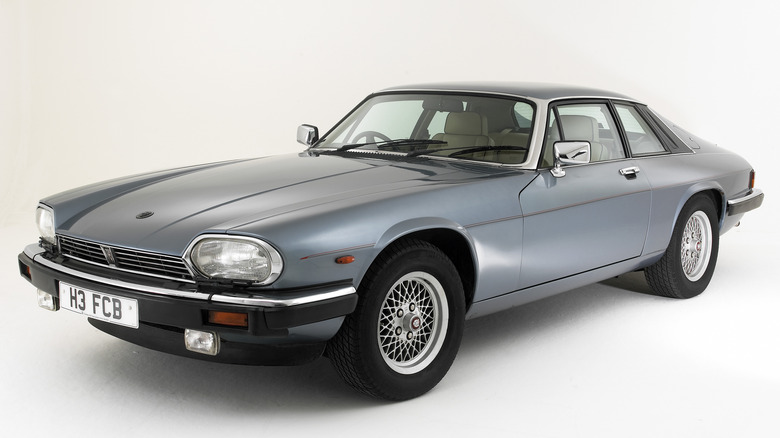
The Triumph Stag's engine issues may have demoted it from Jaguar-level competition, but Jaguar was not short on headaches either. Perhaps the Jaguar equivalent of the Stag, then, is the Jaguar XJ-S. Hitting the market five years after the Stag, the XJ-S was the replacement for the legendary E-Type. In line with the English stereotype, the XJ-S was a wonderfully pretty car with confident, robust proportions, but its main attractions were its powerplant and price. The XJ-S launched with a price tag starting at just $19,200, a price that included not only a Jaguar badge but also an enormous 5.3-liter, 285-horsepower V12.
However, that engine and much of the car surrounding it dulled some of the shine of that seeming bargain. A Road & Track owners' survey reported bugs across the board with air conditioning, instrument readings, power steering, and more. The engine proved to be the biggest issue of all. Later XJ-S models employed a computerized ignition setup called the Marelli System.
The problem was that the Marelli System functioned as two, separate six-cylinder ignition systems instead of a united 12-cylinder unit. This meant that half of the system could fail, leaving one half of the engine bank filling with unburned fuel. Should the igniters suddenly start working again, or should the fuel buildup reach the hot catalytic converters, you're in for a sudden and large engine fire.
Aston Martin Lagonda
For every old technology rendered obsolete, there are still some areas where old-school is better. The tech-ification of cars is one example where simpler is better. Capacitive touch buttons, disobedient voice assistants and finicky touch screens are surprisingly ineffective for how much progress we've made; one can only imagine how awful these systems would have been in their formative versions.
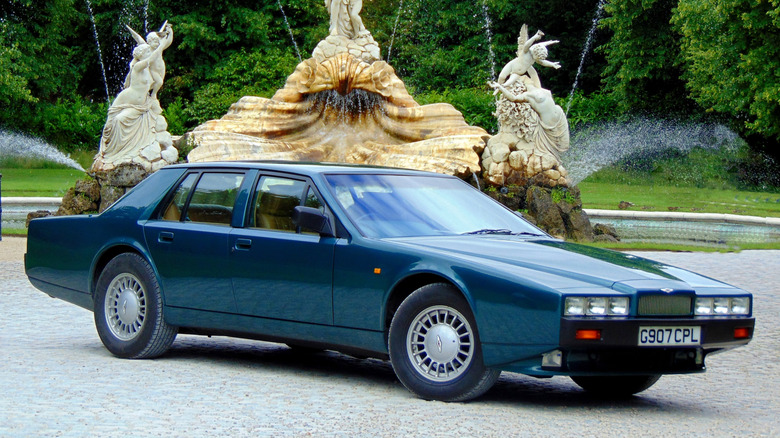
With the Aston Martin Lagonda, however, one need not imagine it. The Lagonda was Aston's luxury limo from the future, stunning with its looks and concept when it debuted in 1979. Aston Martin wanted the Lagonda to impress, and during development, they contracted the American military tech company Javelina Corporation to build the car an onboard computer system. The system replaced an analog dash with three black and green matrix-style screens, removed all mechanical switches in favor of touch-sensitive buttons, and even featured a robotized voice warning system to update drivers on the car's diagnostics.
The result failed miserably. The components were sourced from the English producer Lucas Electronics, which was notorious for poor quality, so almost all the computerized features rarely worked. On top of this, the development for the system cost four times the original budget of the entire project, making it an expensive failure, raising the car's price to obscene levels and placing it in a higher class than it was meant to compete in.
Ferrari F355
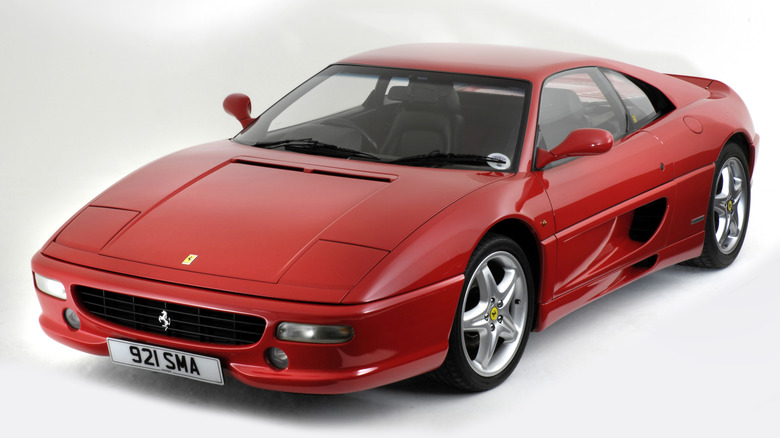
For our first departure from the United Kingdom on this list, we travel to Maranello, Italy, to examine the Ferrari F355. Like most Ferraris, the F355 was a beautiful machine. It replaced the 348 and brought with it a naturally aspirated V8 producing 375 horsepower, making it quite powerful for a '90s sports car. The F355 was produced from 1995 until 1999, and was offered with either a gated 6-speed manual or one of Ferrari's first semi-automatic, paddle-controlled transmissions.
For as wonderful as this engine was, though, it also had some very serious problems. The theatre of issues was in the valve guides. As the name suggests, valve guides help keep the intake and exhaust valves perfectly aligned and sealed during operation. Ferrari used bronze valve guides in the F355's engine, which owners later found were quite ill-suited to the task. The guides could fail, leading to low cylinder compression and high exhaust temperatures that could crack exhaust manifolds. The low-compression issue can seriously damage an engine and require a full rebuild if not treated properly.
Even without a rebuild, working on the F355's engine usually means removing it from the car entirely, which significantly hikes maintenance costs. Even if you dodged these problems, early models had a timing belt that had to be replaced every three years—a service that also required engine extraction.
De Tomaso Pantera
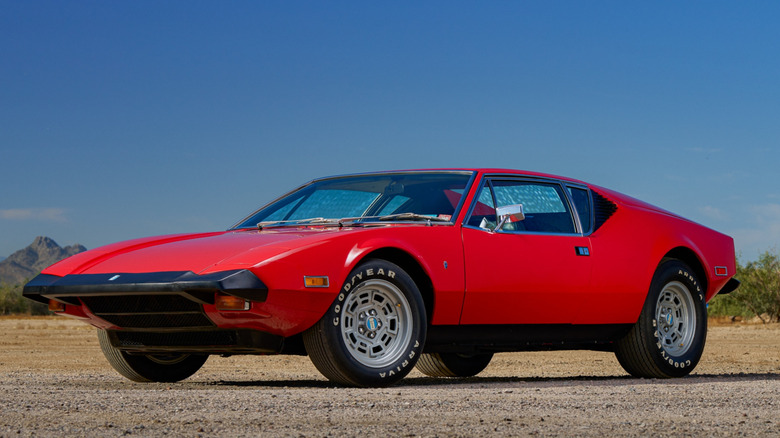
Argentina is not usually the first country that comes to mind when you think of exotic car capitals, but De Tomaso presents a convincing case for it. Founded in 1959 by Alessandro De Tomaso, the brand didn't fully take off until 1969, when Ford purchased an 80% stake of the company. Ford's purchase was driven by its desire to build a competitive exotic sports car, and it saw De Tomaso as the perfect partner. The pros list for the Pantera starts and ends with its good looks, but the car was cursed from the start to fall short.
For starters, the development process was rushed. The Pantera went from concept sketches to first drives in just 9 months and hit showrooms shortly after. Powered by a Ford-supplied 351 Cleveland V8 and fitted with independent suspension, it seemed like a good recipe for a sports car. However, its rushed gestation was evident in a range of issues.
The bodywork was hastily placed and sealed, allowing water to enter without resistance. This internal soaking led to rapid, severe rust and corrosion on the body panels. Water seepage also fried internal wiring and became the source of tons of electrical gremlins that were hard to diagnose and harder to fix if diagnosed successfully. Elvis Presley famously owned a Pantera and famously shot it with his pistol after it would not start. Perhaps not all publicity is good publicity.
Jensen Interceptor
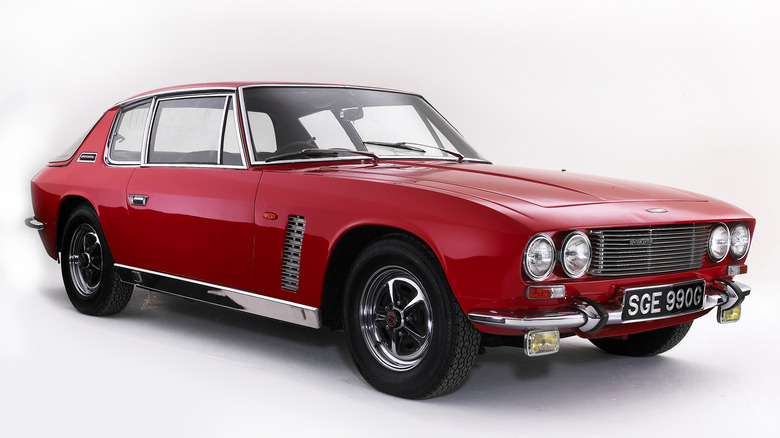
We return to what is becoming the holy land for this list in the United Kingdom with the famous Jensen Interceptor. Similar to the Triumph Stag, the Interceptor was meant to be a stylish and speedy grand tourer for the gentleman of England. Also similar to the Stag, it was penned by Italians from the famous coachbuilding company Touring of Milan, resulting in a supremely attractive car. A Chrysler 6.8-liter V8 powered the earlier models, while later versions received a bigger 7.2-liter V8, and all were fitted with a Chrysler TorqueFlite 727 transmission.
Although the wonderful looks and big V8s were a tempting combination, the Interceptor soon proved to be the host of issues ranging from inconvenient to catastrophic. On the less serious end of the spectrum, the electronics suffered from poor wiring, which could cause problems with the Lucas Rocker switches, air conditioning, and power windows. General poor build quality meant that leaky steering racks were common, as was rust on body panels.
Inconvenience could quickly become a big issue, though, as the engines had serious overheating problems that could ignite fuel lines and wiring, both of which led to fires, so much so that some models came with factory-installed extinguishers. Being hand-built, the problems were seemingly never correlated to specific model years or other metrics, making the Interceptor a true gamble with the lemon curse.
Chevrolet Vega
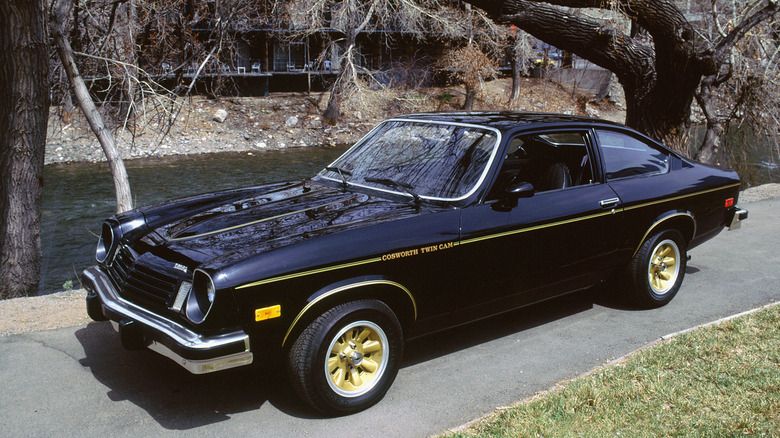
The Chevrolet Vega is a classic cautionary tale of biting off more than you can chew. General Motors mastermind Ed Cole wanted the Vega to be a compact economy car that could successfully compete with Asian alternatives, have streamlined production, and, most challenging of all, be in showrooms in just two years. The Vega concept was demanding and nuanced, and the final production car showed this.
The Vega looked like a baby muscle car, matched by its baby 2.3-liter four-cylinder engine. At first glance, Cole's criteria seemed met, as the Vega was economical, getting 25 mpg in initial testing. However, it was quickly apparent that the engine was full of problems. GM had been testing sleeveless engine blocks for years by the time the Vega project began, and the Vega became patient zero for the new tech.
The sleeveless concept ultimately failed because the cylinder bores suffered from poor lubrication, leading to high oil consumption, piston scuffing and piston seizure. It was also cursed with an underpowered cooling system, which allowed temperatures high enough to distort internal components and cause antifreeze to leak into the head gaskets, making it one of the worst Chevrolet engines ever made.
Lotus Esprit
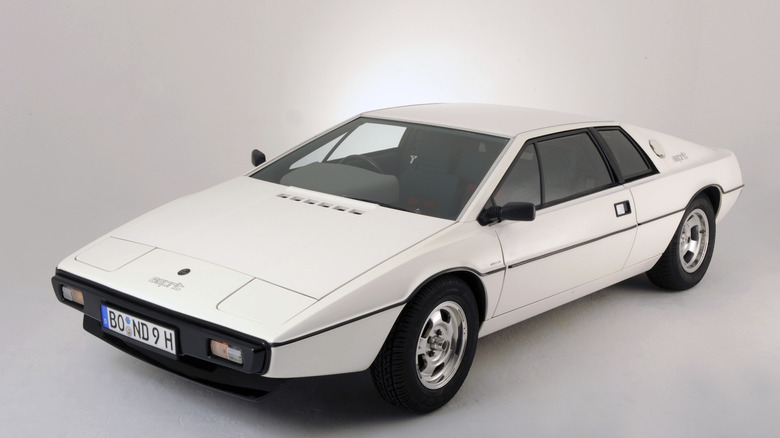
Introduced in 1972 at the Turin auto show, the Lotus Esprit would later be recognized as the half-submarine car James Bond drove in "The Spy Who Loved Me," and also as one of Lotus's most problematic models. There's a saying among car enthusiasts that Lotus stands for "lots of trouble, usually serious," and unfortunately for the English automaker, the Esprit does nothing to combat this stereotype. The Esprit was produced well into the 90s, and though its generational evolutions improved each time, the family tree was always problematic, with the introductory generation especially so.
The Esprit borrowed many parts, including a Citroën transaxle, GM pop-up headlights, and a Jensen-Healey 2-liter inline-four engine. Problems began in the engine bay but were present throughout the car. Mounted at a 45-degree tilt, the engine became unbalanced during spirited driving, accompanied by overheating and valve cover leaks that caused the interior to fill with oil fumes.
The body panels were brittle fiberglass, prone to cracking and rust, as was the fragile, unstable chassis. The GM headlights were poorly sealed, allowing water to pool inside and leak into the wiring, causing problems with the power windows, among other issues. All in all, the reliability and maintenance cost were deal-breakers. If the Esprit could actually turn into a submarine like the Bond movie suggests, perhaps these faults could be forgiven, but alas.
996 Porsche 911
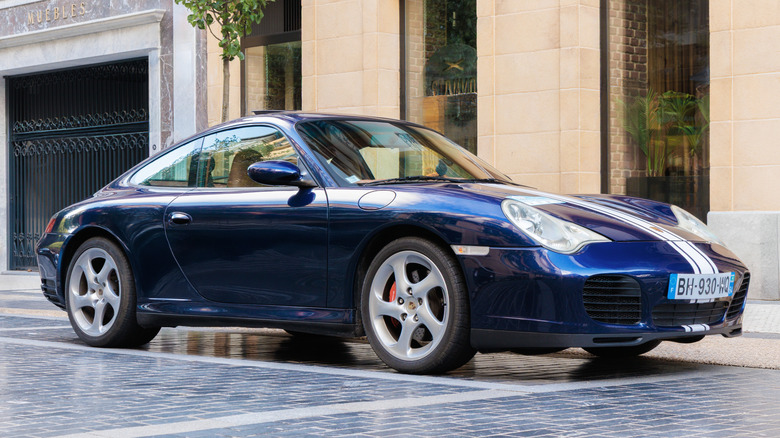
The Porsche 911 is the ultimate mascot of the sports car. Fast and fun, this family of cars carries one of the best reputations in the automotive world, and while much of that comes from its performance chops, their reliability is lauded, too. However, the 911 lineage is now 63 years old, and it seems impossible that 911 could have been perfect for such a long stretch.
While Porsche gets it right almost 100% of the time, they are still subject to Murphy's law. The victim in question is the 996-generation Porsche 911. Produced from 1998 to 2004, the 996 generation brought the legendary sports car into the 2000s, though not without problems. 996 models, particularly from 2000 to 2004, suffer from the dreaded intermediate shaft bearing (IMS) problem.
The IMS is the shaft that transmits rotational force from the crankshaft to the camshafts and is held in place and sealed by a bearing lubricated to ensure smooth rotation. With the 996, Porsche decided to lubricate the bearing with an unreplenishable grease meant to last the car's lifetime rather than use a circulating oil system. Long story short, the grease often dried up, leading to grinding rotation, which released fine metallic dust into the internals. The buildup was often unnoticeable until it had already irreversibly and catastrophically damaged the engine, making it a silent but vicious killer.
Lotus Elan
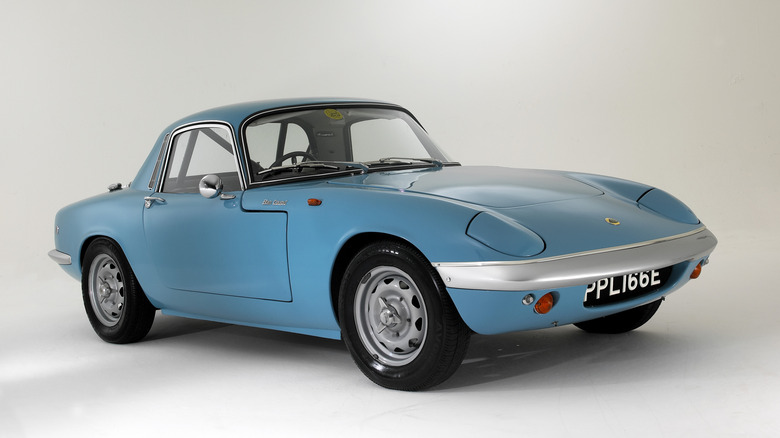
Introduced in 1962, the Lotus Elan was something like the Miata before the Miata. Replacing the Lotus Elite, the Elan was meant to be a featherweight sports car with futuristic features such as independent suspension, disc brakes all around, and a twin-cam engine. This package was very appealing and quickly became a popular choice for track days. However, the sustained demands of track driving soon uncovered an array of problems.
The Elan was powered by a tinkered-with four-cylinder originally from the Ford Cortina, but owners soon found that anything but perfect maintenance would reveal the engine's fragile and expensive nature. Fiberglass body parts cracked, water pumps leaked, and later Elans were prone to overheating due to an underpowered Triumph-sourced radiator.
Also, the Ford Anglia rear shocks were poorly adapted to the Elan's frame and could tear the rear couplings and damage the hub shafts, occasionally causing the rear wheels to become unattached. The Elan was promising in theory, but disappointing in practice.
Aston Martin V8 Vantage
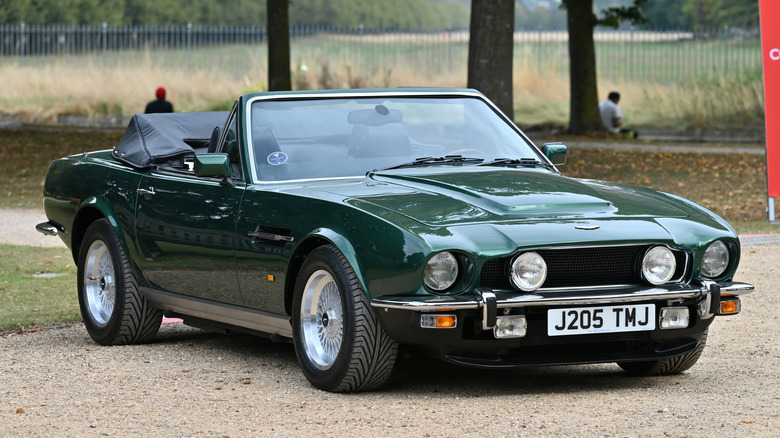
The Aston Martin V8 Vantage is still made today, but its introductory generation proved problematic for the British Marque. Its genesis begins in turmoil as well: during its development, the brand was under the new ownership of Company Holdings and would soon file for receivership bankruptcy in 1974. Despite its chaotic home life, the V8 Vantage was still impressive on paper when it came out. Its enormous 5.3-liter V8 produced a whopping 380 horsepower, which could launch it to 60 mph in just 5.3 seconds, and would top out at 170 mph, making it one of England's fastest cars.
However, the car turned out to be very fragile under the skin and on the skin itself. The hollow steel box chassis rusted and corroded easily, and the rest of the car did as well. It was particularly bad in the sills, which spelled eye-watering repair costs as sill replacement required extensive deconstruction and surgery to reach the problem area. The engine block was also prone to corrosion and could allow all sorts of liquids to coagulate into a malevolent poison. Its front wishbone bushings were also fragile, and the weight transfer during hard braking could easily damage them. The car was wonderful but weak, making it something of a glass cannon.
Citroën SM
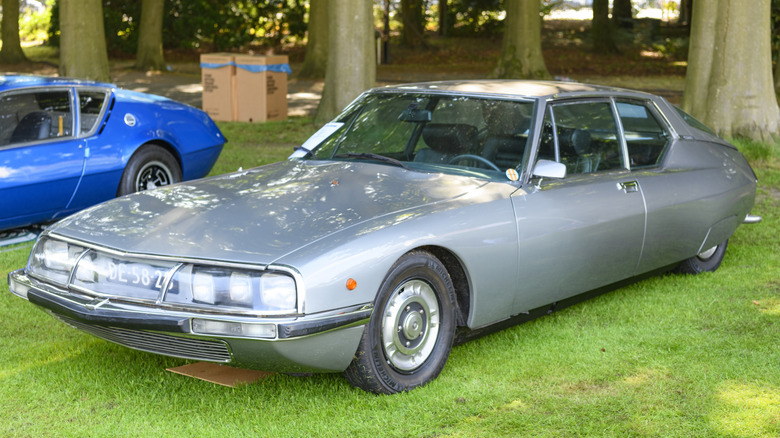
In the golden age of Citroën, the French brand was known for its advanced technologies and striking designs. The Citroën DS was one of the most iconic cars they ever made, but a lesser-known car that preceded it was the SM.
Citroën wanted to take a step up and develop a luxury cruiser to put the brand on the map in the grand tourer market. In 1968, Citroën bought Maserati and immediately had them work on the SM's engine, which would eventually become a 2.7-liter V6 producing 170 horsepower. The SM debuted at the 1970 Geneva Motor Show to much praise for its looks and engineering.
Once the car spent some time in the owner's hands, though, it was a different story. The 90-degree cylinder bank angle had a detrimental effect on the engine's firing intervals and overall balance, and caused a range of unpleasant noises. The timing chain systems were weak and overcomplicated, often needing repairs or full replacements, both of which would be costly. The oil pumps and ignition systems were finicky, too, and on American models, the EPA-regulated air-injection pumps caused extreme exhaust manifold overheating and often led to engine fires.