

Every Porsche With The 7 Speed Manual Gearbox
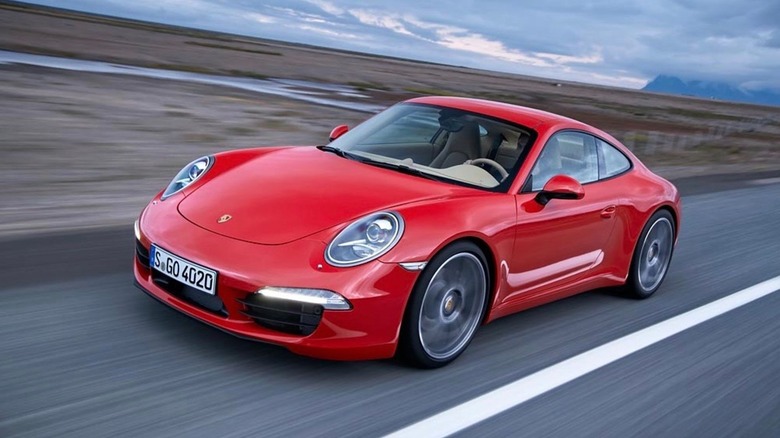
German performance automaker Porsche was the first company in the world to make a seven-speed manual gearbox, which it released in 2012. The story of how this transmission came to be is pivotal to understanding how stubborn the company can be when it comes to driver involvement. Around the late 2000s, Porsche probably understood that its seven-speed automatic box was leaving manual drivers behind, since the company previously offered a six-speed manual along with a seven-speed automatic. That meant that manual drivers were being left wanting for the extra gear that automatic drivers had, so Porsche decided to make a seven-speed manual.
While there's no evidence to support the claim that this was the reasoning, the fact is that within a few short years, Porsche created a seven-speed manual, seemingly out of thin air. The automaker already had a seven-speed automatic, a dual-clutch unit that Porsche called the "Doppelkupplungsgetriebe," and it was pretty unique. The biggest change versus regular automatic transmissions was the fact that there were two gear shafts, with one for handling odd-numbered gears, and the other for handling the even-numbered ones. The manual gearbox would be based directly upon this seven-speed dual clutch unit, though that would come with its own set of problems. Given the complexity of the build, with the various design and engineering challenges that were to follow, Porsche collaborated with fellow German company ZF –- an industry leader in transmissions –- for the build.
How the 7-speed manual came to be
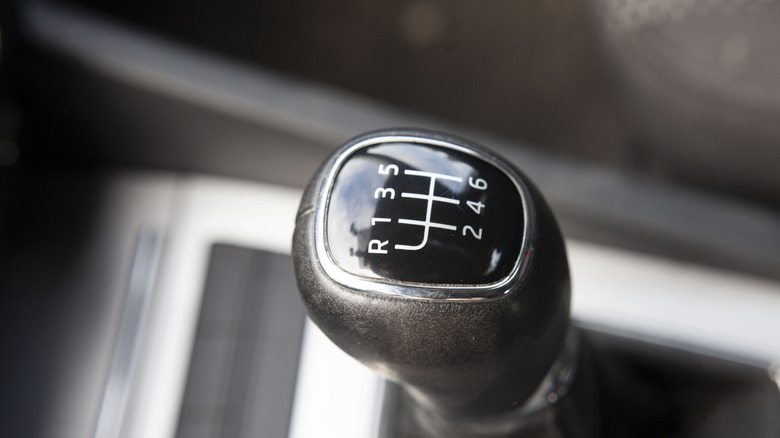
Most manual transmissions have what is known as an "H-pattern" gate wherein adjacent gears are "paired" to each other. For example, first and second would share one synchro position, three and four another, and so on. Thus, for a six-speed transmission –- where the middle bit would be neutral -– the gear gate forms a natural "H" shape, as shown in the image above. Adding a seventh gear would disrupt the H-pattern entirely, since now one gearshaft would be longer than the other, making even pairing impossible. Furthermore, as Porsche's seven-speed auto was a dual-clutch system, with its odd gears on one shaft and even on another. Mapping that gear system onto an H-pattern mechanically would simply have not worked, which is where the engineers came up with a clever system of hydraulic actuators.
When the driver made a shift, the complicated actuator system would actually engage the relevant gear in an imitation of a shift-by-wire system. While a detailed description of how those actuators work is beyond the scope of this article, this Car & Driver article about the Porsche MECOSA actuator system is a great place to start. The company still had an engineering problem to solve, though — it became easy to "money shift", from seventh to fourth, for example, which could wreck the car. To avoid that, Porsche added a mechanical lockout, making it impossible to engage seventh unless you were already in sixth. Thus, drivers got their H-pattern gate, and Porsche got its seven-speed manual.
991.1 Carrera and Carrera 4
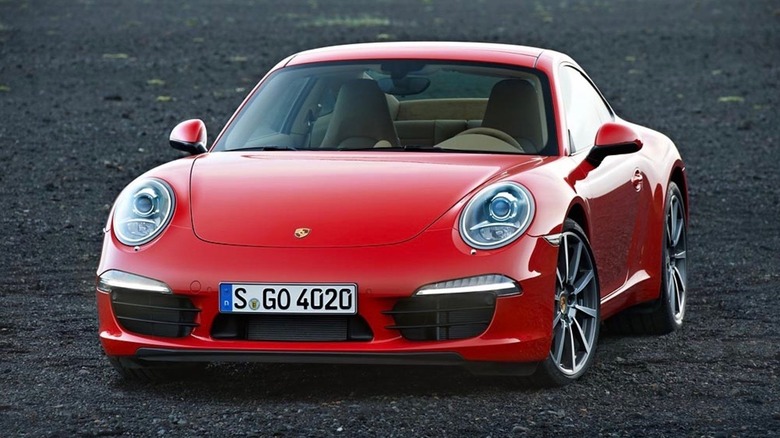
The Porsche model naming system (at least the numbers bit of it) is pretty confusing, but we'll try and make it as clear as possible. The seven-speed manual –- which got the internal designation of MT11 or 7MT, depending on who you ask –- was first made available on the 991.1 generation. And, for clarity's sake, we should mention that all the different cars on this list are from the Porsche 911 lineup.
The 991.1 generation Porsche 911 ran from 2012 until 2016, which is when the generation got a major update. Virtually every single submodel within this 911 range was offered with the seven-speed manual box. Starting with the base model, which was simply called the "Carrera", it shipped with a 3.4-liter, six-cylinder engine that made 350 hp and 287 lb-ft of torque at 5,600 RPM.
The manual box in this generation was the standard choice, though buyers could upgrade to the seven-speed PDK (dual clutch automatic) gearbox as an option. Meanwhile, the Carrera 4 had exactly the same specifications as the base Carrera, with the only major difference being that the "4" suffix indicated all-wheel drive. Performance on this generation was surprising for a manual, given that standing to 60 mph could be achieved in about 4.6 seconds and top speed could be about 179 mph in the hands of a skilled driver. God knows what wizardry Porsche and ZF engineers did to make the manual transmission as lightning quick as it was.
991.1 Carrera S and 4S
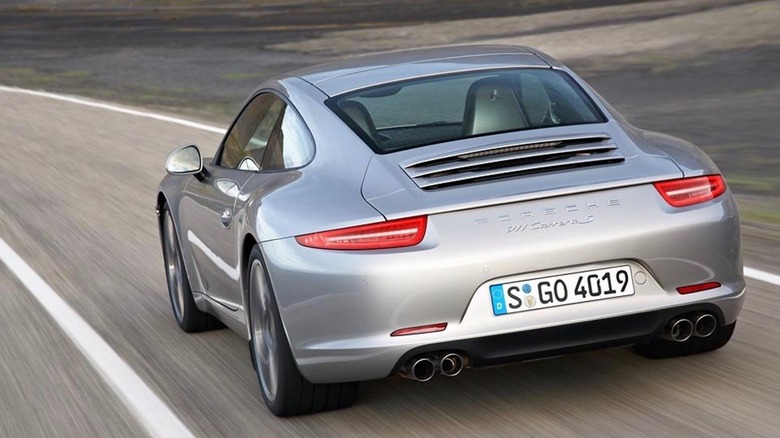
The addition of the "S" at Porsche usually denotes more power, and in the case of the first-gen 991 cars, this came about via a higher displacement engine. Specifically, the engine displacement was increased by approximately 11 percent, now coming in at 3.8 liters across the same six cylinders, once again with the option of upgrading to the PDK from the seven-speed manual. Power now stood at 400 hp at 7,400 RPM, along with 325 lb-ft of torque at 5,600 RPM,though the engine redline stayed the same on both S and non-S models at 7,400 RPM. As before, a "4" suffix indicated all-wheel drive, so "Carrera 4S" meant the bigger engine with all-wheel drive on the base coupe Carrera.
It's also worth mentioning that the brakes on the S models were also upgraded in the front. Base Carreras came with 330mm four-piston calipers at the front and rear, while S models got six-piston calipers in the front measuring 340mm. Rear brakes on the Carrera S and 4S remained unchanged at 330mm, four-piston units made out of aluminum. The tires on S models were also larger by 10mm both at the front and the back, being 245mm and 305mm wide with an aspect ratio of 35 and 30 at the front and rear respectively. As far as driving dynamics go, since the transmission was left unchanged with the exact same gearing ratios between the two models, the S models would have likely been more fun.
991.1 Targa 4 and Targa 4S
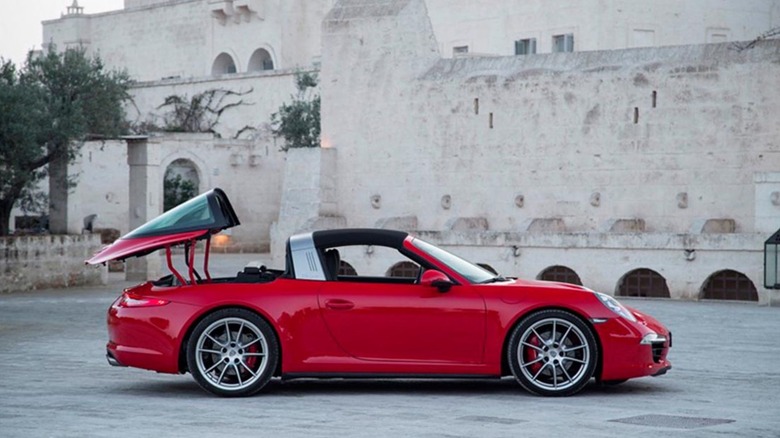
For the uninitiated, "targa" on a Porsche simply means that it is a special type of convertible. It's a well-known fact that removing a roof to make a car convertible reduces the rigidity in the frame (known as torsion), which can result in a slight damping of performance when compared to conventional coupe cars. The targa top, invented by Porsche in 1965, solved that problem by taking the best of both worlds and making what amounted to a much stiffer convertible. Now, the term "targa" has become ubiquitous with any convertible car that uses this design, though original design credits do need to go to Porsche.
A key differentiator between targa cars and standard convertibles is that the process of removing the roof is manual on older cars, though modern generations have added an electronic targa roof actuation system. Also, there was no "base" 991.1 Targa, as all units either were a "4" or "4S" – the meaning of which you know by now to be all-wheel drive, and all-wheel drive with more power, respectively. The Targa 4 shared the same 350 hp engine as the base Carrera, while the Targa 4S got the larger, 400 hp 3.8-liter six-cylinder unit that was common to all S cars. In terms of transmission, the seven-speed manual was standard, while the seven-speed PDK was an available option. The Targa 4S got Porsche Active Suspension Management (PASM) as standard, and as a result it sat 10mm lower than the regular Targa 4.
Every 991.1 Carrera GTS
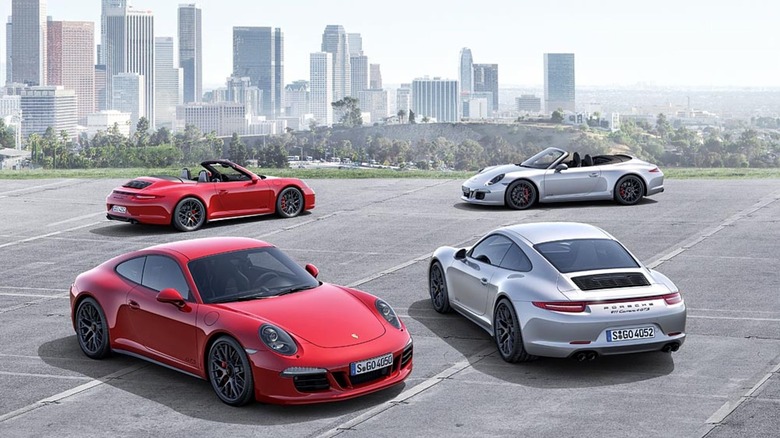
The Porsche 911 Carrera GTS actually released before the seven-speed manual was a thing, as it debuted in 2010. However, at this time, the generation of 911s that preceded the 991.1 –- known as the 997, specifically the 997.2 generation –- was on its way out. So, between 2012 and 2015 there were no Carrera GTS units being made. However, in 2014, Porsche released the 991.1 Carrera GTS, which once again shipped with the seven-speed manual transmission as standard. As with the other models we've covered so far, the dual-clutch seven-speed automatic box was an optional upgrade. Power came from the 3.8-liter six-cylinder boxer engine shared with the 991.1 Carrera S lines that we looked at above, and figures stood at an increased 400 hp along with 325 lb-ft of torque.
Eagle-eyed readers and Porsche aficionados will have taken note that models with the "Turbo" designation are absent from our list, and that's with good reason. You see, when you take the 3.8-liter six-cylinder from the Carrera S and slap two turbos on it, there is a lot more heat and torque produced. The seven-speed manual box couldn't handle that reliably, so all Turbo and Turbo S 911 units from this generation got the dual-clutch seven-speed automatic box from the factory. On the previous generation (which was the 997), the non-S Turbo model could be equipped with a six-speed manual box, but the only choice would end up being the automatic for the 991.1 generation.
All 991.2-gen 911s except the Turbos and GT3 RS
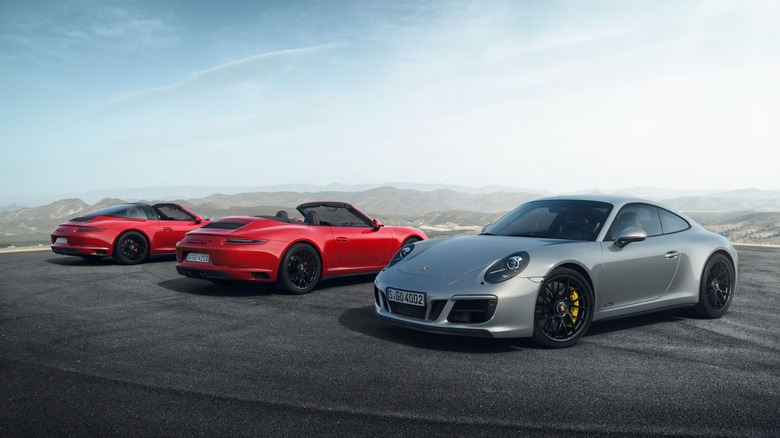
The 991-generation got its first and only major facelift in 2016. This generation would run until 2019, which is when the 992 generation would debut. Now that you know the major differences between the Carrera, Turbo, GTS, and Targa models –- and also what the suffixes "4" and "S" mean –- we won't be splitting the year by model. For this generation of 911, every single Porsche 911 model and submodel was offered with the seven-speed manual, with two notable exceptions. The first of these was the extremely race-focused Porsche 911 GT3 RS, a car that has become a cult icon since it released.
The GT3 RS had two major 991-generation lines, with these being the 991.1 generation released in 2013, and the 991.2 GT3 RS released in 2017. Why would Porsche release the 991.1 GT3 RS just as it was about to facelift the model? We don't know; Porsche does what it wants and offers no explanation. The second exception, as you've probably become used to by now, was the Turbo line, which hasn't had a manual gearbox since the 997 generation bowed out in 2012.
However, there is an exception to that exception, since Porsche also made one highly limited-edition turbo model that came with the seven-speed manual box, which we'll cover below. Engine choices were the same, though by 2017, S models were making up to 450 hp and 405 lb-ft of torque from the 3.0 liter six-cylinder.
992.1 Carrera S, 4S, GTS, and Targa 4S
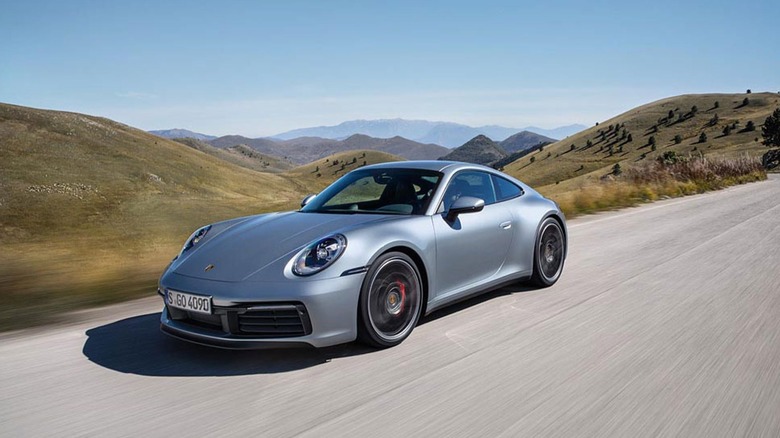
Here, Porsche pulled what a bit of a dirty move, since the company removed the option to get the "base" model cars with the seven-speed manual transmission. What this meant in practice was that the base model Carrera, Carrera 4, and base model Targa 4 were left with only the seven-speed PDK dual-clutch automatic, with no option to get the stick shift at all. If you wanted a stick shift from the 992.2 generation 911, you would have to spring for a model with "S" in the name. Cars from this gen that were offered with the 7-speed manual included the Carrera S, Carrera 4S, every car from the GTS line of cars, and also the Targa 4S.
Another key differentiation point between the 992.1 and the 991 gen that preceded it was that the seven-speed manual gearbox was no longer standard, as this now defaulted to the seven-speed PDK across the board. The exception to this rule was the 992.1 Carrera T –- where T stands for "touring" and not "turbo" (though it was indeed turbocharged) –- but we'll cover below. However, the good news for the 992.1-gen buyers was that the seven-speed automatic was a $0 upgrade, meaning that you simply ticked a checkbox and you were good to go. Horsepower figures varied too widely to individually name; a ballpark figure would be high-300s to mid-400s.
2023 911 Sport Classic and T-models
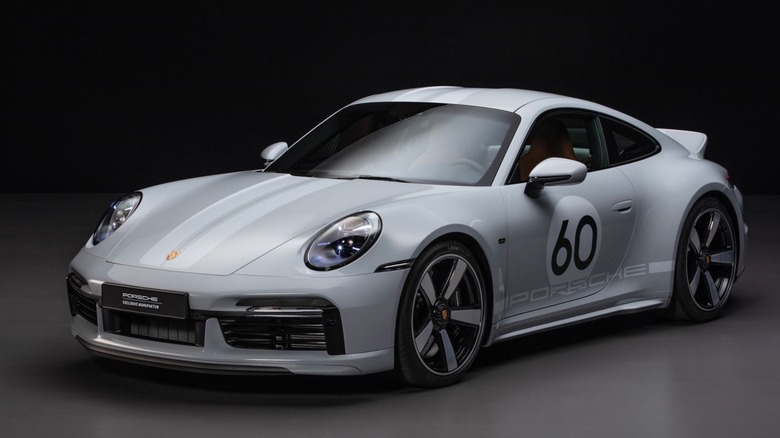
Remember those two exceptions that we mentioned earlier to the claim that no Turbo 911 was offered with the seven-speed manual transmission? As we mentioned, there was a special edition that did come with a stick shift. Known as the 911 Sport Classic, it was released in 2023 and came equipped with a dual-turbocharged 3.7-liter, six-cylinder unit that that ended up making 543 hp along with 442 lb-ft of torque. Additionally, the Sport Classic (which, at this point was still considered to be part of the 992.1 generation cars) was rear-wheel drive, while the standard Turbo models from this generation were AWD.
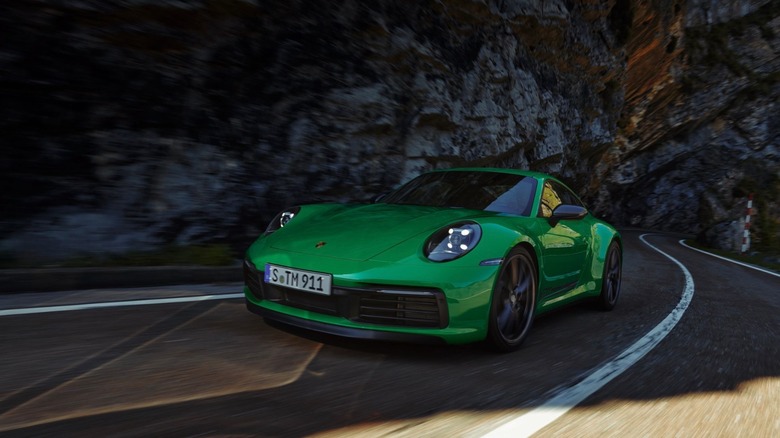
The other exception to the claim we made was the Touring line of cars from the 992.1 generation that initially debuted in 2019. To clarify, these were designated with the "T" suffix, which could confuse some people into thinking that the "T" stood for "turbo", even though it didn't. This is immaterial though, since the touring models did indeed feature forced induction via turbochargers. Both the sport classic and the T-models from the 992.1 generation Porsche 911s came with the seven-speed manual gearbox. It's also important to note that in 2024, Porsche released the 911 S/T, which stood for Sport/Touring. While this car did come with a manual, it wasn't the seven-speed. Instead, Porsche opted to give the S/T a six-speed manual gearbox.
Things to note
There were a lot of numbers in this article, aw we wanted to make the most comprehensive guide on Porsche and its 7MT transmission. Resultantly, we think it's helpful to lay out some important distinctions in black and white that may have otherwise been missed. The seven-speed manual gearbox was only ever offered on the flagship Porsche 911 models, and specifically on the 991.1, 991.2, and 992.1 generations of the 911. In terms of years, the seven-speed continued to be available until about 2023; the following year, the 992.2 generation Porsche 911 was launched, and that generation went back to the six-speed manual box.
If you wanted a turbocharged Porsche 911 with the seven-speed gearbox, you were limited to the 991.1 generation Carrera T and the 911 Sport Classic. Both those were introduced in 2023, but the Sport Classic was a limited-run model of which only 1,250 models were produced. Furthermore, Porsche is sometimes incorrectly said to be the only brand to have offered a seven-speed manual gearbox. Other companies that have included a seven-speed stick shift on their cars include Pagani on the Utopia, Aston Martin with the Vantage AMR, and Chevrolet with its C7 Corvette. For the 992.2 generation 911s that were introduced in 2024, Porsche did continue to offer manual variants, but these were now the six-speed manual and not the seven-speed. Lastly, the gearing ratios between the automatic and manual seven-speed boxes were identical, so the choice literally came down to preference.
Methodology
When we set out to make this guide, we already knew the broad generations that shipped with the seven-speed manual box. However, we did go through a process to make sure we didn't miss any submodels since the lineup can get confusing, especially as it has changed over the years. At time of writing, Porsche has published the technical specifications for more than 150 submodels within its lineups, which included those for the Porsche Cayenne, Macan, Panamera, and 718, and the 911. Of these, 56 (from 2010 to 2023) were for the 911 –- and we went through every single one with a fine tooth comb. We matched the seven-speed manual transmission to all the submodels that had it between 2012 to 2023 (note the years), and we checked to make sure the gearing ratios were the same.
These model years are important because the 2012 to 2023 time period overlaps exactly with the 991.1, 991.2, and 992.1 generation cars. This provides 100 percent coverage of the relevant time frame. Next, we also made a note of which generations and submodels got which gearbox as standard, differentiating between which would have been an upgrade. Where a gearbox was an upgrade, we used reliable editorial sources like Car & Driver and JD Power to determine whether that was a zero-dollar option or a paid one, and we've mentioned as much. Finally, we deliberately excluded pricing data, as it varied too widely across the models listed.