

Concrete Vs. Wood Drill Bits: What's The Difference?
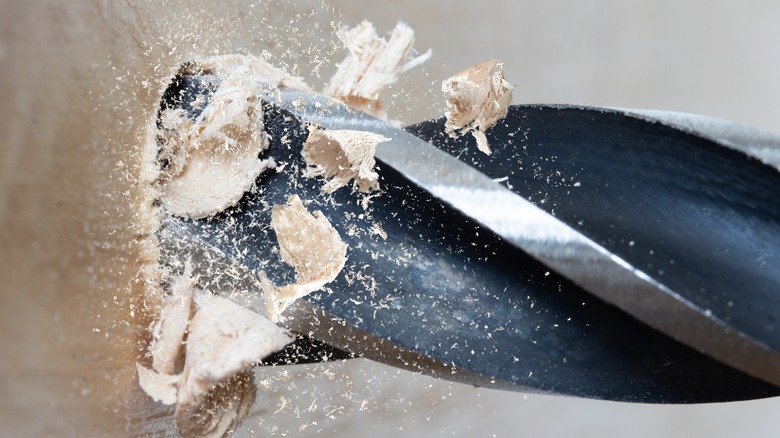
Drill bits are a common tool used for creating holes in a variety of materials, They're made with specialized styles and construction, specifically designed for different tasks. For example, drill bits made of cobalt alloys and carbide are good for drilling hard metals.
Meanwhile, at first glance, drill bits designed for use in wood and concrete appear similar. Both types are long cylindrical shapes, often with two grooves, known as flutes, running from the tip to just short of the shank where they're inserted into the drill chuck. These types of drill bits are commonly known as twist drills, although, there are some specialized forms of both types that do not meet this description; we'll discuss some of those later.
The key differences between concrete and wood drill bits derive from design features developed to meet their intended use. Wood drill bits are typically made from a hardened metal called high speed steel, or HSS, with the cutting edges of the drill ground directly into the HSS at the tip.
Concrete drill bits can also feature HSS throughout their shank and flute sections, but they'll have a cutting tip made of a harder material, such as an insert made of tungsten carbide or diamond impregnated material, placed at the business end. They're designed to withstand the dense, abrasive materials encountered while drilling into concrete.
Specialized types of wood drill bits
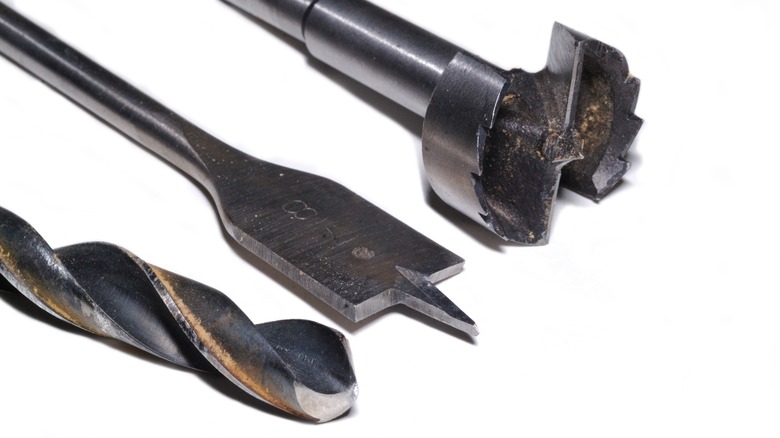
Wood drill bits come in a wide variety of styles ranging from the common twist drill to specialized types with unique cutting tips and designs. Multi-purpose twist drill bits are commonly supplied in most DIY drill bit sets. They are suitable for drilling some soft metals, plastic, and wood. However, they don't provide the highest chances for success when a clean, round, accurate hole is required for precision woodworking.
While you might encounter titanium drill bits intended for use in woodworking, you should know that the only titanium present is in the titanium-nitride (TiN) coating applied to the HSS drill bit. The same applies to other coated examples, like DeWalt's Black and Gold drill bits. These coatings can improve the cutting action and lifespan of the drill bits; cheap HSS bits often contain lower grade materials than higher quality drill bits.
In addition to the common twist drill, more precise drill bit designs for cutting into wood include Bradpoint and Forstner bits. Bradpoint bits feature a sharp point that makes positioning and starting the hole more precise while its cutting surface is designed to break through the wood at the outer edges of the hole for less material break out. Forstner bits often also include a sharp center point, but are ultimately designed to create holes with flat bottoms. These flat-bottomed holes are often desired when adding hardware such as hinges and handles to woodworking projects where a through-hole would be unsightly.
Spade bits are another common type of wood drilling bit. While the holes they create are not always precise or pretty, they offer an inexpensive solution to creating holes larger than the capabilities of most common twist drill bit sets.
Concrete drill bits

Concrete drill bits are part of a group of drill bits designed to drill holes in masonry. For example, you can use a concrete drill bit for drilling any masonry, but not all drill bits capable of drilling masonry will survive drilling a hole in concrete. The reason is that there are differences in the composition of concrete vs cement and other types of masonry.
The terms "concrete" and "cement" are often used interchangeably. This occurs most likely because concrete contains cement, in addition to other aggregates, like sand and gravel. The ratio of the materials in concrete depends on its intended purpose.
When selecting a masonry drill bit for drilling concrete the best options have sturdy open flute designs that carry the abrasive dust created by the drilling process out of the hole. The tungsten carbide tip should be heavy duty and ground at a relatively flat cutting angle compared to a wood drill bit.
In addition to the specialized concrete drill bit, the tool used to drive them into the material isn't the same as a standard drill used for wood. Masonry drill bits work best when paired with a hammer drill. If you are already invested in a battery system for your cordless tools, you'll be happy to know that several popular brands are among the best hammer drills you can buy.