

Concrete Vs Cement: What's The Difference And Which Lasts Longer?
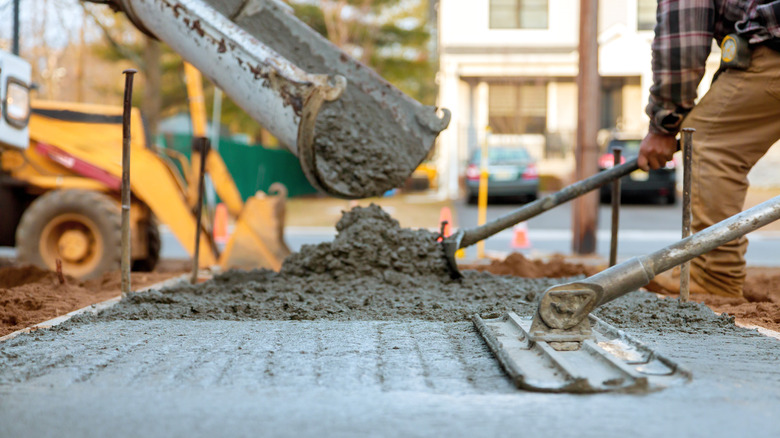
Concrete, cement, same difference. Or so you might think. Though some of us definitely use the terms interchangeably, the two materials have very different uses in construction. It's kind of like a square vs rectangle situation: Cement is actually one ingredient inside concrete. It's the binding agent that holds the larger mixture together. Concrete is cement combined with water, sand, and aggregates like gravel or crushed stone. The result is that concrete becomes a far stronger and more durable material than cement alone. Knowing which material to use for what project could mean the difference between a sturdy build that lasts for years and a weak project that can't stand the test of time.
Concrete is most commonly used for things such as driveways, patios, retaining walls, foundations, and roads. It can handle thousands of pounds and decades of wear better than cement used on its own. A typical concrete mixture might be about 75% sand and aggregates and 25% cement and water. You might also see people mix using the 4-2-1 Rule. When the cement chemically reacts with the water, it creates calcium silicate hydrate. This helps bond the mixture together and gives concrete the durability it's known for. It can also be molded into different shapes and reinforced to be even stronger and more crack-resistant under pressure.
When to use cement instead of concrete
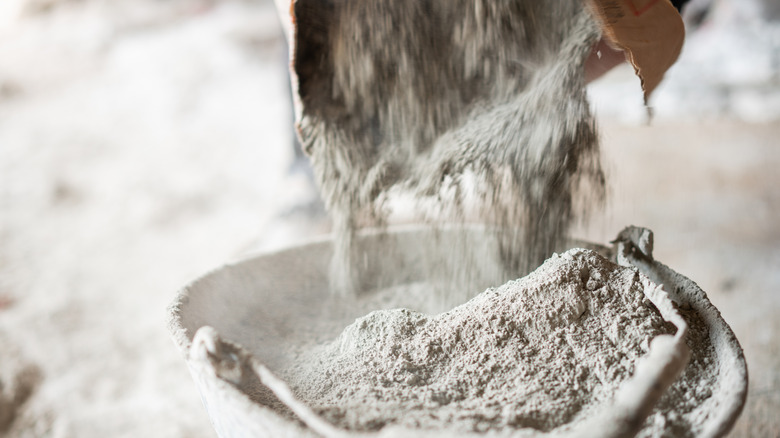
Cement is more specialized than concrete and typically much less durable when used on its own. It's created by heating limestone, clay, iron ore, and other minerals in kilns at roughly 2,700 degrees Fahrenheit. From there, it's ground down into a fine powder. When mixed with water, that powder forms a strong adhesive paste that gradually hardens. It's best used for repairs, stepping stones, planters, tiles, and mortar.
It's easier to work with than concrete, not to mention more budget-friendly. However, it lacks the long-term durability needed for high-stress construction projects. It can't really stay intact for decades under heavy weight and constant exposure to the elements like concrete can. Basically, cement is best reserved for quick, smaller-scale repairs while concrete is the better long-term option for structures or surfaces that need to last years.