

6 Awesome Apple Features Android Still Doesn't Have
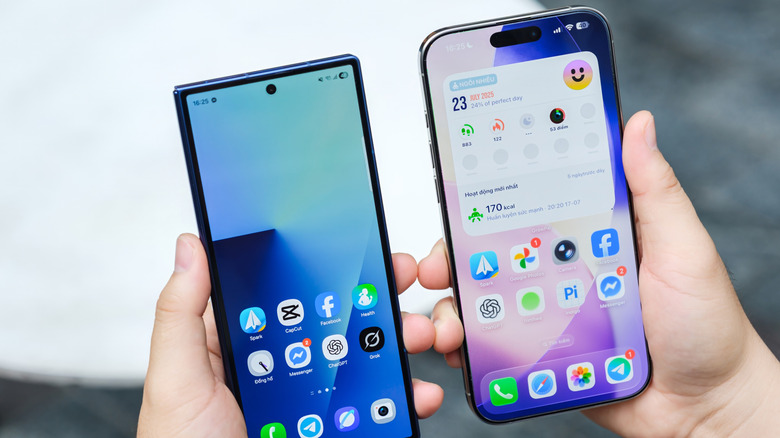
When it comes to features, Android generally wins the race. iPhones cannot use split-screen mode, plug into an external monitor and run a desktop PC mode, or even change the default launcher interface, among many, many other things. It is, after all, one of the big selling points of Android. Tired of a sometimes oppressively locked-down OS with limited customization? Get an Android phone. Even so, Apple does have a few tricks up its sleeve that keep the platform ahead of the competition.
Despite how far ahead development seems for Android and how comprehensive it can be, there are still areas where Apple leads. Features that are so intuitive, so useful, so well-implemented that they're almost proof that the constraints of the Apple ecosystem can be worth the deficiencies. This list could be longer, but these six Apple features specifically are ones that Google needs to get on ASAP — if it can. For the record, we're talking about features that are baked into the OS and its default apps that work out of the box, without requiring you to install a third-party app. Anything that doesn't meet those criteria is, technically, not an Android feature. Some of these iOS features do include other devices in the Apple ecosystem.
Seamless, native PC mirroring
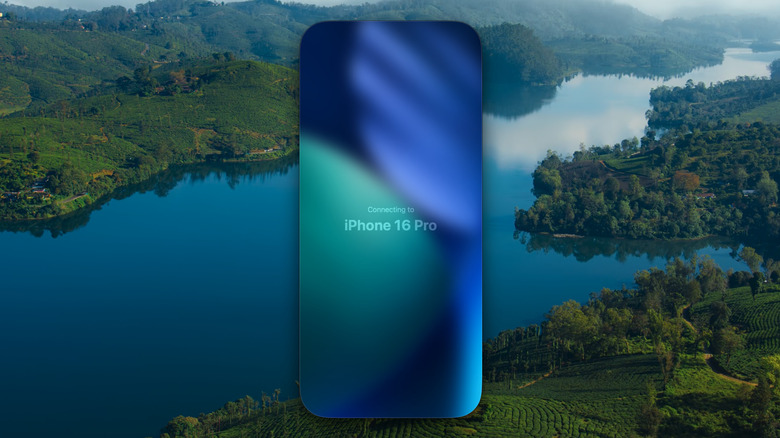
Don't grab your torches and pitchforks just yet. Yes, Android has had notifications on Windows for years before Apple dragged its feet and added the functionality. Windows users are well familiar with Phone Link. Amazing app and implementation, I do have to say. I've used it extensively. But it's not native or default in the sense we outlined for this discussion. It requires a third-party app, quite a bit of setup, and a nauseating amount of permissions to get working — permissions given to an operating system that requires immediately walking back privacy settings with a fresh install. iPhone Mirroring, on the other hand, works on any iPhone with iOS 18 and any Mac with Sequoia and only takes your passcode to set up.
To be fair to Android, Windows is an entirely different operating system, necessitating a third-party solution. It probably will remain that way unless Chrome OS (effectively Android Laptop Edition) suddenly overtakes Windows in user device share and implements a native mirroring feature. Linux PC users have to take an entirely different route. On iPhone, it's a core part of iOS and macOS.
iPhone Mirroring is not a direct, one-for-one alternative to Phone Link. It's much more focused on the "mirroring" part, allowing you to have full control of your iPhone from your Mac device in a single click. Integrated iPhone notifications are the bigger selling point. Having said that, it doesn't need to be a Phone Link competitor because many of Phone Link's features are baked deep into macOS via iCloud. Macs can seamlessly take calls, for example, outside of iPhone Mirroring with the Phone app, whereas on Android any of that functionality needs a third-party app.
iPhone microphone on Mac (via Continuity Camera)
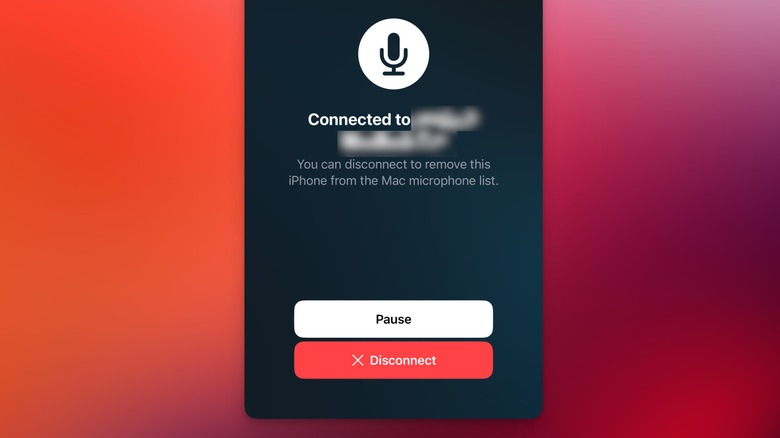
The camera on your smartphone is almost always better than the one on your laptop computer. iPhones have been able to let Macs use their superior cameras wirelessly for years, and Android naturally copied the feature. What Android didn't copy was iPhone's microphone-only sharing ability baked into Continuity Camera. If you want to use your iPhone's microphone exclusively for any purpose on a MacBook — a call, email dictation, voice notes — you can select it on demand and use it wirelessly as long as it's near your Mac.
Apple states this feature is primarily meant for Macs (like the Mac Mini) that don't have their own built-in microphones, but it works on any Mac. We'd argue it's helpful in other situations, like when you're running a MacBook in clamshell mode and the microphones are covered up. It works pretty well when testing the feature myself, with minimal latency. And considering how good the microphones sound on recent iPhones, especially with newer voice isolation features, you might prefer that audio source.
This feature is not completely absent on Android, but it does require a third-party app and setup on your Windows/macOS/Linux PC. Microsoft Windows' Phone Link app would be the perfect candidate for a seamless, "native" Android microphone-sharing feature. For now, it only supports the camera. A high-quality microphone array with beamforming capabilities is common on Macs but may be absent on your Windows laptop, so having your Android's mic could make this a game-changing feature.
More comprehensive accessibility features
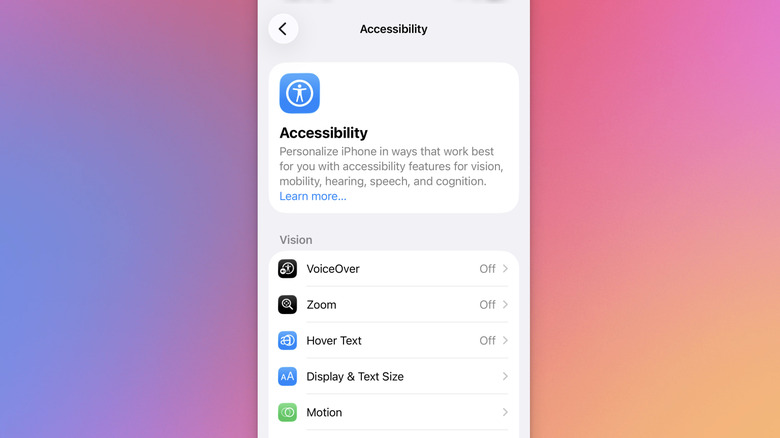
Disabilities are far more common than most people may be aware. According to the CDC, 28.7%, or roughly 1 in 4 adults in the U.S., have a disability. To the chagrin of many with disabilities, those disabilities may appear "invisible" to others. Unsurprisingly, it's been an uphill battle to get meaningful software features that accommodate these individuals. Don't get us wrong, Android has a long list of accessibility features, but this is one area where (we think) Apple is ahead of the curve.
Take Personal Voice, for example. This feature recreates a person's voice that they can then use for other accessibility features (like Live Speech) in the event they may lose their voice. Android doesn't appear to have anything like it. Or features such as Eye Tracking, Sound & Name Recognition, and Vocal Shortcuts. Android is closing the gap, but sometimes years behind; its Motion Assist feature (to alleviate car sickness) is finally coming to Android 17, even though it's been on iPhone for years. In some cases, accessibility features appear to stall in development (like Google's Project Relate), leaving users who need those features unsure if or when they'll be integrated.
Of course, just listing a bunch of random features that Android doesn't have isn't the strongest argument. So instead, let's look at a survey. WebAIM found that about 56% of people without disabilities use iPhones, but 72% of people with disabilities do — a phenomenon that repeats itself in countries outside the U.S. Older studies have also suggested that people with certain disabilities, like blind people, prefer iOS. Even some manufacturers of accessibility gear seem to agree that Apple wins for native accessibility that requires no further apps. We rest our case.
Improved browsing privacy via Private Relay
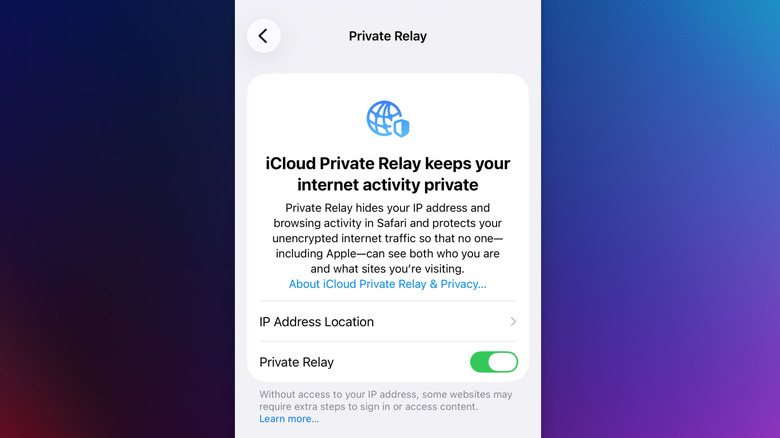
Private Relay is a privacy feature exclusive to Apple devices that we haven't seen on Android, or anywhere else. In a nutshell, it works almost like a VPN, relaying your network traffic through two servers before reaching the destination site, rather than using an encrypted tunnel through one VPN server. It's somewhat reminiscent of the Tor network used by Tor Browser, where a series of relays limits third-party knowledge of your browsing habits. Private Relay is not a VPN, to be clear, but it gets some of a VPN's benefits without its drawbacks.
For one, Private Relay is a clever means of concealing your internet browsing traffic from your ISP, Apple, and the destination website, one of the main draws of using a VPN. Private Relay focuses on usability, exiting at a relay near where you live so you can get regional content, like search results from San Diego instead of New York. Lastly, Private Relay should (in theory) impact internet speeds and latency less than a VPN. It's all meant to be very seamless, too. Just toggle it on in settings and forget about it, unlike a VPN where you have to manually go in and adjust VPN settings from time to time.
Private Relay is not free to use, but good VPNs aren't either. It requires, at minimum, the cheapest iCloud+ 50GB storage plan for $1 a month. Even the cheapest major VPNs offering multi-year subscription discounts can't beat those prices. Full disclosure, a VPN can't keep you anonymous, and neither can Private Relay. But it is a less annoying way to upgrade your privacy than connecting to a VPN. The closest thing Android has to this is proxies, or perhaps DNS-over-HTTPS.
All-in-one family management via Family Sharing
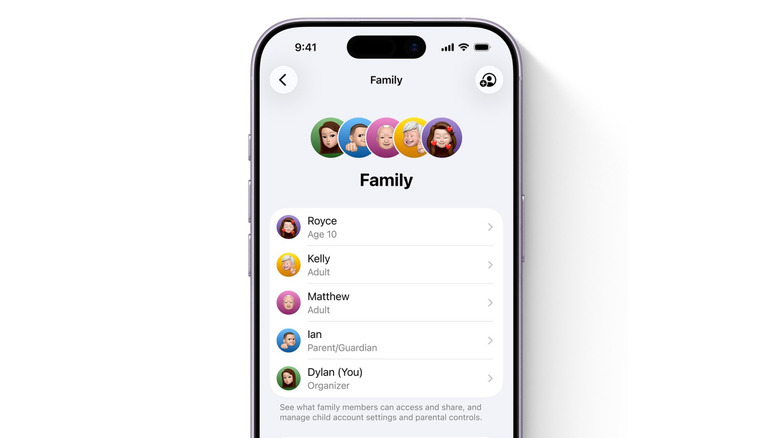
Digital family groups that allow users to keep track of each other and share things are now commonplace. Android has this. You can create a six-member family group that allows you to share payment methods, subscriptions, and manage children's online activity. Family Link goes deeper, allowing parents comprehensive controls and analytics over their child's online behavior. And that's mostly it. In our view, Apple's Family Sharing is more comprehensive.
Similar to Google's family group functionality, you can allow multiple family members to use the same payment method and share eligible subscriptions. You can use screen time to gauge how much time a child is spending online — with further parental controls to come in iOS 27. That's only the tip of the iceberg. Family Sharing also bakes in automatic location tracking (if you choose to enable it) via Find My, which also integrates with family devices and AirTags. You can even set up custom notifications that tell you when, say, your child is coming home from school. You can set up emergency contacts, recovery contacts (if you get locked out of your account), legacy contacts (people who can access your account if you pass away), shared family calendars, shared family lists in the Reminders app, and you can securely share passwords.
We're not trying to say here that you can't do any of these things on Android. But you can't do all of them so seamlessly in one place, directly from the settings. Having used Family Sharing for years, I can attest that it's an incredibly good implementation. The only major downside is that it requires everyone to have an iPhone.
Seamless cross-device copy-paste via Universal Clipboard
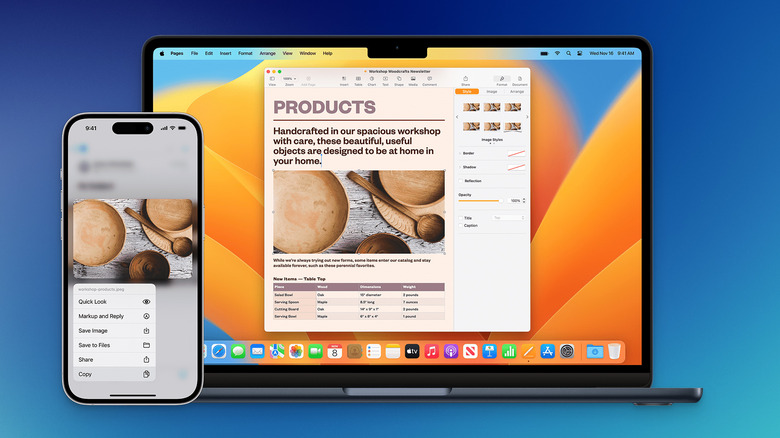
Universal Clipboard exemplifies why sometimes ecosystems can be freaking awesome. Copy something on an Apple device — iPhone, iPad, or Mac — and then paste it virtually instantly on another device logged into the same account. It works by default as long as your devices are nearby and don't have Wi-Fi/Bluetooth turned off. I use this feature almost on a daily basis, and it's one of those things that would be excruciatingly painful to go without.
This feature exists to an extent on Android, but not by default, and not on every device you own. Samsung supports it for Galaxy devices, though it requires setup on your intended devices and only works for PCs via Phone Link. Google appears to be developing a similar feature in Android 17 that passes copied text over Google Play Services, though it appears to be limited to Pixel phones and PCs initially. It's likely this will require some sort of setup or third-party app on Windows, if it gets widespread support at all. There are ways to do this with third-party apps, true, but the point is (again) that Apple puts these features on your device by default and has them work seamlessly across your Apple account. That's not the case on Android.
Similar cross-device features work great on Apple but are patchy on Android. Take the automatic device switching for AirPods, which also requires no setup as long as you're using the same account and updated devices. It's now a feature on Google and Samsung devices. However, these features don't run by default and require using the correct devices. Google's Audio Switch only works on Android devices, and Samsung's Auto Switch is similarly limited.