

5 New Android Phones In 2026 To Keep On Your Radar
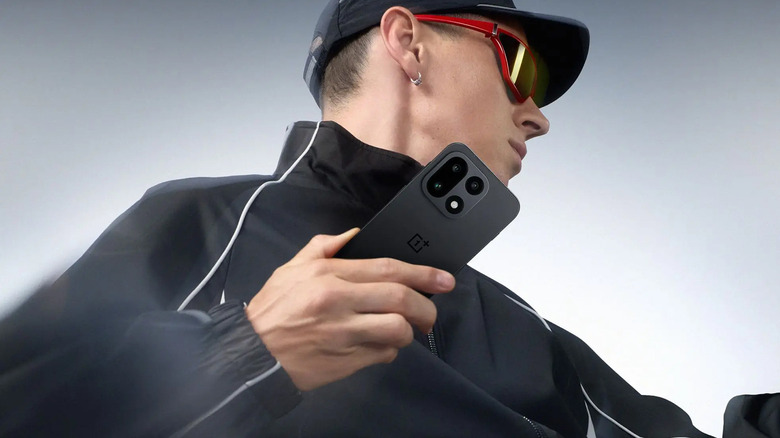
With a market share of over 60% in the U.S., iPhones are many people's default smartphones. They offer premium build quality, excellent camera performance, and a familiar software experience — not to mention all the perks of Apple's unified ecosystem. However, Android lets buyers explore a wider variety of smartphones at all price points. Google's OS has also matured over the years and feels more cohesive than ever — and can even boast AirDrop support on Pixel phones now.
Samsung is the largest Android smartphone vendor globally, but it's not the only brand you can shop from. Google's Pixel lineup, for instance, offers a clean Android experience with day-one software updates and hardware features like Pixelsnap, Google's take on MagSafe. OnePlus smartphones continue to provide great bang for your buck, while Oppo keeps pushing the envelope with camera hardware and battery technology.
Given that most modern smartphones come with powerful internals and a great set of cameras, it's hard to end up with one that doesn't deliver a good experience. That said, there are a handful of picks that manage to stand out by getting a few things just right — and these usually are no-brainers to get. If you're shopping for a new Android smartphone in 2026, here are five options you might want to consider.
Samsung Galaxy S26 Ultra
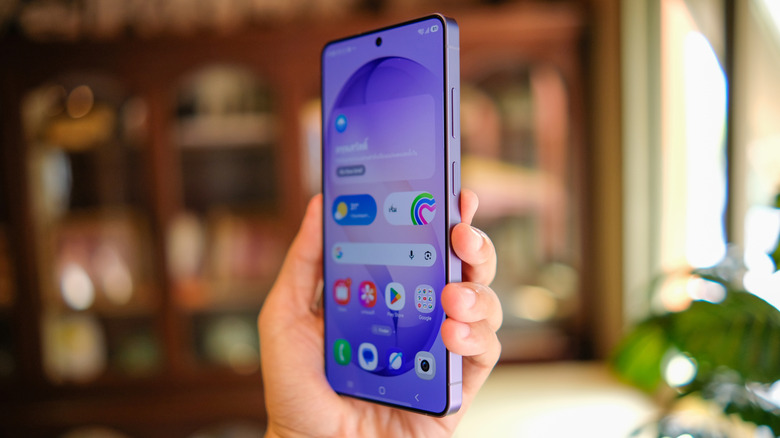
Samsung has been playing it rather safe with its flagship series for many years now, and does most of the exciting experimentation with its Z Fold and Flip smartphones. 2026 is no different, but that doesn't make the Galaxy S26 a poor purchase by any means. The top-of-the-line Galaxy S26 Ultra features refinements to its build quality, internal specifications, and software experience. It's powered by the latest Snapdragon 8 Elite Gen 5 SoC, making it one of the most powerful smartphones you can buy.
You also get 12GB of RAM and 256GB of storage space with the base variant. At 5,000 mAh, the battery capacity in Samsung's premium flagship hasn't increased in over five years, but it's decent enough to last a full day and does come with improved charging speeds of up to 60W. Privacy Display is a new hardware addition and is a one-of-a-kind feature. When enabled, it blocks off-axis viewing angles so people around you can't glance at your screen.
Though there are certain camera upgrades that the Galaxy S26 Ultra needs, including a larger main sensor, it still captures some of the best-looking photos and videos you can get on a smartphone today. You also get a handful of useful Galaxy AI features, like Now Nudge and Photo Assist. At $1,299, though, the Galaxy S26 Ultra is one of the costliest slab-style phones on the market.
Google Pixel 10a
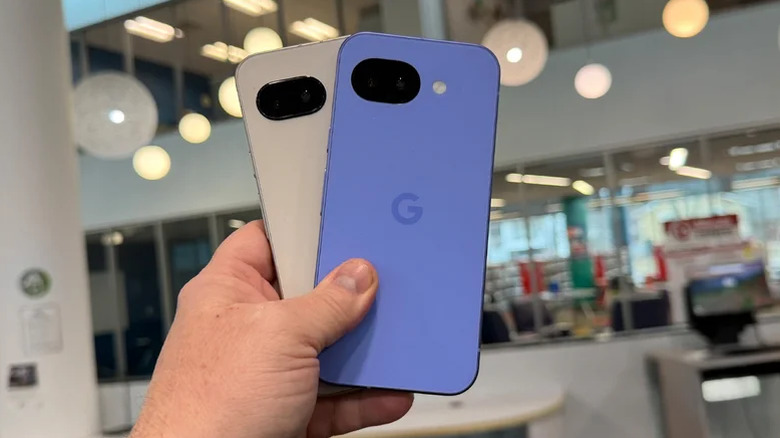
Pivoting from the ultra high-end of the spectrum to something a bit more budget-friendly, the Pixel 10a offers good value. At $499, it does cut a few corners, but the phone is well-balanced and checks all the essential boxes for a solid smartphone in 2026. In our review of the Pixel 10a, we found that it delivers on the performance and battery fronts while continuing to excel in the camera department.
The phone is powered by Google's in-house Tensor G4 SoC, which powered 2024's Pixel 9 phones. On paper, it lags noticeably behind the latest and greatest from Snapdragon, but it's still powerful enough to handle some modern gaming. What makes the Pixel 10a an easy recommendation, though, is its software experience. It runs the purest form of Android 16 and comes with seven years of software support. Pixel users are first in line to receive new Android features, too.
In our testing, the phone's battery lasted a day and a half with regular use. For all these reasons, it should be on your priority list if you value clean software, solid endurance, and reliable cameras. That said, if you're looking for the most economical pick, you might want to consider the Pixel 9a instead. With the same SoC, display, and camera performance, it's identical to the Pixel 10a but can be picked up for less if you're willing to live with one fewer year of software updates.
OnePlus 15
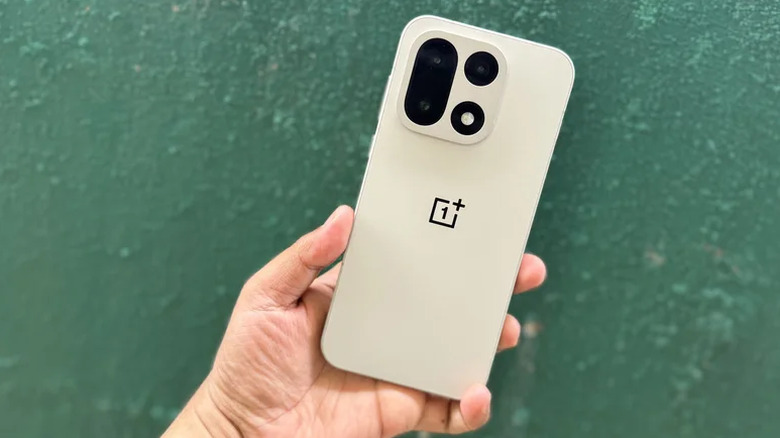
OnePlus doesn't enjoy nearly the same popularity as the Samsungs or the Apples of the world, but it has crafted a reputation for offering some of the best-performing Android phones you can buy. The OnePlus 15 is no different, with its Snapdragon 8 Elite Gen 5 SoC, 12GB or 16GB of RAM, and 256GB or 512GB of storage. It features a 1.5K AMOLED display capable of running at 165Hz in supported games. The OnePlus 15 features a triple-camera setup, comprising a wide, an ultrawide, and a 3.5x telephoto lens. Though its results are a notch below the latest iPhones or Pixels, the overall camera experience is quite solid.
However, the highlight of the OnePlus 15 has to be its silicon-carbon battery. At 7,300 mAh, it offers nearly 50% more battery capacity compared to mainstream flagships like the Pixel 10 Pro XL or the Samsung Galaxy S26 Ultra. It's reflected in real-world use, too, with the battery endurance impressing us when we reviewed the OnePlus 15. When it's time to charge, the included 80W SuperVOOC charger tops it up in 45 minutes. The phone starts at $899, undercutting many of its competitors.
It's worth noting that, although the OnePlus 15 is still available for purchase in the U.S. as of early April 2026, rumors have suggested that the company will wind down operations outside its home market. You'll probably still be able to import the OnePlus 15, but the fact that global variants of OnePlus devices use OxygenOS instead of ColorOS does lead to some uncertainty about long-term software support for users outside China.
Nothing Phone (4a) Pro
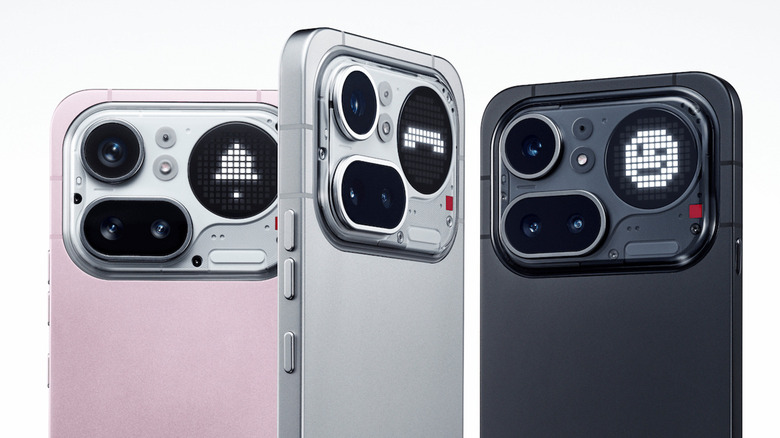
Nothing has had an interesting trajectory ever since it entered the smartphone market in 2022. Every Nothing product released to date has carried a distinct design language in this sea of boring-looking smartphones. The Nothing Phone (4a) Pro is the brand's newest mid-range offering that ticks many of the right boxes.
For starters, it's priced at $499, which makes it a direct competitor to the Pixel 10a. While it doesn't run pure Android, Nothing OS will still appeal if you're a fan of clean-looking software with good customization options. The phone is powered by the Snapdragon 7 Gen 4 chip, 8GB of RAM, and 128GB of storage. It features a 6.83-inch AMOLED display that refreshes at 144Hz and can hit 5,000 nits of peak brightness. You get a 5,080 mAh battery with support for 50W of wired charging.
Unlike most modern smartphones, the Nothing Phone (4a) Pro sports a unibody aluminum build that's a great middle ground between plastic and glass. Another standout hardware inclusion is the Glyph Matrix, which adds some functionality when your phone is face down. The triple-camera system includes wide, ultrawide, and telephoto lenses. There's even a community-driven Playground app where you can find add-ons like Glyph Toys or camera presets.
RedMagic 11 Pro
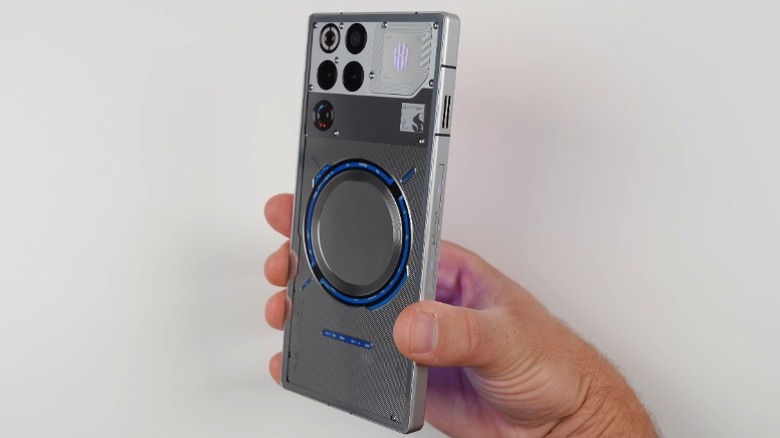
Most new smartphones, especially those powered by flagship SoCs, should be able to game without issue. However, there is a niche of devices built specifically to handle these tasks. Nubia's RedMagic 11 Pro is the latest entry in the gaming smartphone segment, featuring powerful internals and specialized hardware that's designed to maximize sustained performance. It's the world's first liquid-cooled smartphone, which it complements with an internal fan and vents for better heat dissipation. This helps keep temperatures in check, allowing the phone to make the most out of the Snapdragon 8 Elite Gen 5 chip that powers it.
Pricing starts at $699 for the 12GB RAM and 256GB storage variant, but you can bump it up to 24GB of RAM and a terabyte of UFS 4.1 Pro storage for $999. What sets the RedMagic 11 Pro apart is its notch-less display. It's a 6.5-inch 144Hz AMOLED panel with a touch sampling rate of nearly 2,600Hz. The front-facing camera is hidden behind the display; while this comes at the cost of slightly worse image quality, users who prefer an uninterrupted gaming experience will likely be happy with the trade-off.
Like other modern Chinese smartphones, the RedMagic 11 Pro also features a high-density silicon-carbon battery. Its 7,500 mAh capacity means it easily lasts a full day of heavy use, as highlighted in Tech Advisor's review. You also get 80W of wired and wireless charging to keep it topped up.