

Your Android Phone Just Got 5 New Features In June 2026
Android 17 is upon us, and it looks to be one of the biggest updates the platform has ever seen. If your device is eligible for the upgrade, then get ready for an absolutely massive list of new features. Better Gemini, next-gen Quick Share, mental well-being features, and a whole lot more. Google has already unveiled a number of features ahead of the complete Android 17 release. While none of them are the showstopper function we're looking forward to the most, we all have that one niche feature that we can't live without — maybe you'll feel the same with one of these.
We're focusing in on the June Android drop, specifically. It was a small one — only seven features in total — but we have to admit that some of them are really cool. If your phone is eligible for the June 2026 Android drop, then we'd recommend trying these out ASAP.
Fake call detection
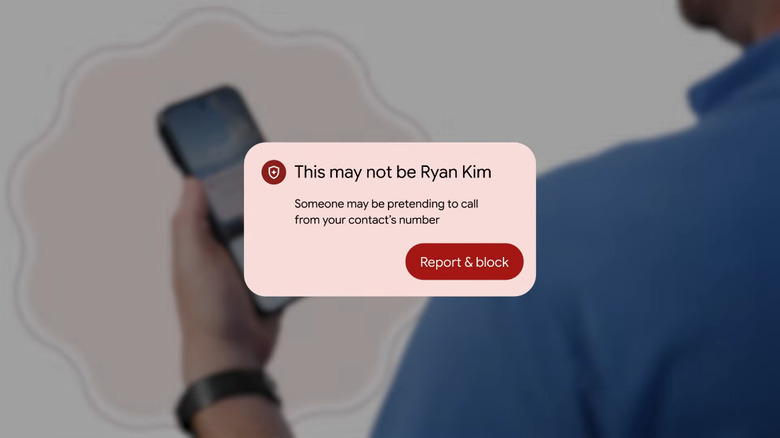
Regardless of what cool things AI can do, it opens the floodgates for phone scammers. Those scary voice cloning scams are only increasing in frequency, and it's not just grandparents falling for a fake customer service rep telling them to buy a bunch of Walmart gift cards to secure their accounts. Google looks to be fighting fire with fire. The company's fake call detection feature can detect when a scammer is pretending to be someone in your contacts that you trust.
Fake Call Detection targets calls using caller ID spoofing (when your phone is tricked into displaying a scammer's call as one of your contact), including those that deploy voice cloning. For it to work, your trusted contacts need to also be using Google's phone app. Google says all it's doing is checking whether the real contact is making the call, and if they're not, it displays a big warning, saying "This may not be XYZ person." Simple, but (if it works) brilliant and effective.
This is just one more brick on top of the already incredible foundation Google has built for call protection features. Supported Android phones can already screen calls, effectively stopping robocallers in their tracks. If you do pick up the phone, then the scam detection feature still warns you during the call if it suspects the person you're talking to can't be trusted. Text messages also get alerts if you're talking to a suspected scammer. Be aware that these features all work exclusively through Google's Phone, Contacts, and Messages apps.
Circle to Search an entire outfit
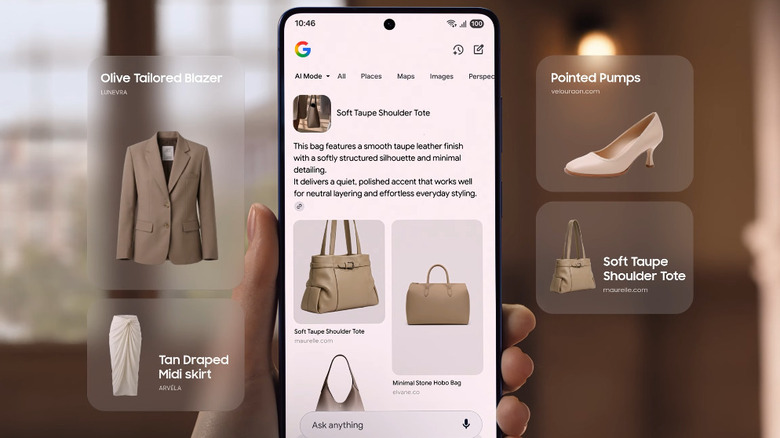
Circle to Search has been a mainstay on Android for a while now, and has even made it to iPhones. One of the most popular uses for it is circling an item you can see on screen to look it up, rather than Googling it yourself and scrolling through a long list of false positives. Now, the June drop allows circling an entire outfit and getting a detailed breakdown from the hat to the boots.
It's doubtful that you're going to get the exact items that a person is wearing based on a single picture, especially with how common fast-fashion lookalikes are for luxury items. Nonetheless, it could be very useful for someone who's trying to emulate a look in spirit, not in brand.
On top of that, Google is building a so-called "digital wardrobe" that scans your photo library for outfits and helps you assemble them in any combination to decide what you're going to wear for the day. Outfits you've settled on go to their own moodboards. The coolest part is the "Try it on" preview, that helps you assemble an outfit in minutes, removing the need to try on each item one-by-one.
Kid-focused Personal Safety app
Google's Personal Safety app is Android's platform for emergencies. It's an all-in-one place for emergency information, SOS features, location sharing, and regional alerts. The June drop expands its capabilities with kid-oriented safety features.
The Personal Safety app already allows you to display vital information on the lock screen (sort of like iPhone's Medical ID) so a stranger can see it without unlocking the phone. It also supports car crash detection and location sharing with emergency contacts. Now, young children under 13 can get these same features. While many experts say you shouldn't give a phone to children under 13, parents are doing so anyway. Enabling this app seems like a sensible choice, under these circumstances.
The Personal Safety app already supports some pretty top-notch safety features. Take for example Emergency recording, which lets you share your camera feed with emergency services and auto-share it with emergency contacts, and Emergency Location Service, that lets you send your location to emergency contacts and first responders. Finally, Crisis Alerts (such as earthquakes) can be sent straight to your phone. There don't appear to be any further kid-focused safety improvements in Android 17.
Book insights
If you read a lot — especially long series with ensemble casts and convoluted plots — you know it can be challenging to stay abreast of what's going on. Amazon's Kindle introduced brilliant "Recaps," "Story so far," and "Ask this book" features that could be invaluable for refreshing your memory when trying to figure out who's who and what's what in those doorstopper Brandon Sanderson fantasy novels. The June drop copies the spirit of those features over, albeit for Google Play Books users. Google calls it Book insights.
The "Catch me up" feature appears to be similar to "Recaps" and "Story so far," reminding you of what's been going on up to that point. While reading, you can also highlight the text and remind yourself who that character is, or have the AI explain what's happening if something's not making sense. It seems to be a bit more open-ended than Kindle's implementation, functioning more like a chatbot that will field any questions. Google assures that it aims not to spoil the story beyond your current reading point.
Many readers have reservations about these tools. For one, the whole point of reading is to exercise your critical thinking skills and memory muscles. We worry that people who rely too much on this feature may weaken their reading comprehension skills and get less out of the experience. Further, Google admits that since this is using generative AI, you can't fully trust the answer; We wouldn't be surprised if it hallucinated a character or plot point out of thin air. That said, we can't deny this could be a gamechanger for some readers, if it works.
Quick Share to AirDrop
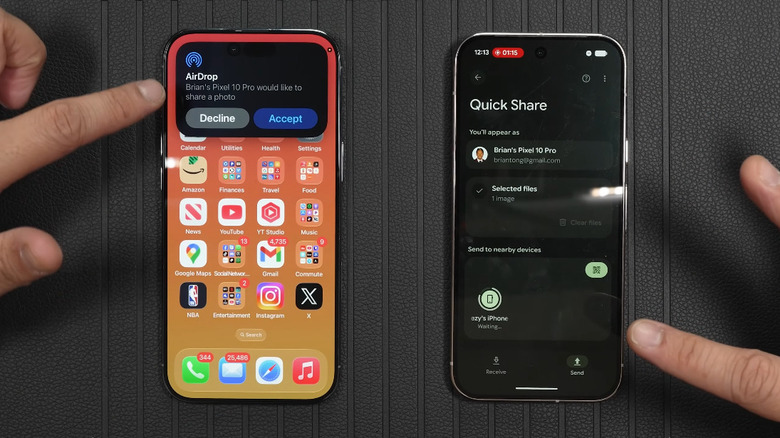
Quick Share is effectively "AirDrop Android Edition," one that's quietly reaching the same level of convenience and reliability as AirDrop. Now, you can AirDrop seamlessly to iPhones without third-party apps or workarounds. This has been teased and whispered about for months now, but it appears that the June drop is when it officially rolls out.
Quick Share can send common files like photos to iPhone users. All they have to do is enable the "Everyone for 10 minutes" Control Center setting. It appears to work in reverse, too, from an iPhone to an Android phone, though in that case the Android user needs to make sure Quick Share's Receive mode is enabled. If neither of those work, then there is a scan-to-share option that uses a QR code.
Be aware that this is not available on all Android phones yet. Only a short list of Samsung Galaxy and Pixel models support it, as well as a handful of Xiaomi, OnePlus, Oppo, Vivo, and Honor models. There's also the open question of how long this feature will continue to work. Apple has been known to intentionally break features in the past rather than let competitors use them. Since AirDrop is a big selling point for iPhones, it would not surprise us in the slightest if, one day, Quick Share-to-AirDrop simply stopped working.