

5 Pickup Trucks That Have Notoriously Bad Transmission Problems

The value proposition of a pickup truck is straightforward: Utility, practicality, and performance in a single package. Whether that means hauling materials to a job site, towing a trailer up a mountain pass, or ferrying a family across the country in leather-trimmed comfort, the modern pickup has evolved to cover all of it.
Today's trucks can be bare-bones workhorses or rolling luxury suites, and the market keeps buying them both. For any of those use cases to hold up over time, the truck needs to function safely, comfortably, and consistently — and no component bears more responsibility for that than the transmission. It is the link between the engine and the wheels, and when it fails, it takes everything else down with it.
A truck that lunges unexpectedly in a parking lot, locks up its rear wheels at highway speed, or refuses to shift cleanly while towing a loaded trailer is not just an inconvenience. It is a liability, and in some instances, problems such as these even led them to become some of the least reliable trucks on the market right now. Here are five pickup trucks that have earned a notorious reputation in exactly that department.
Ford F-150 (2015–2020)
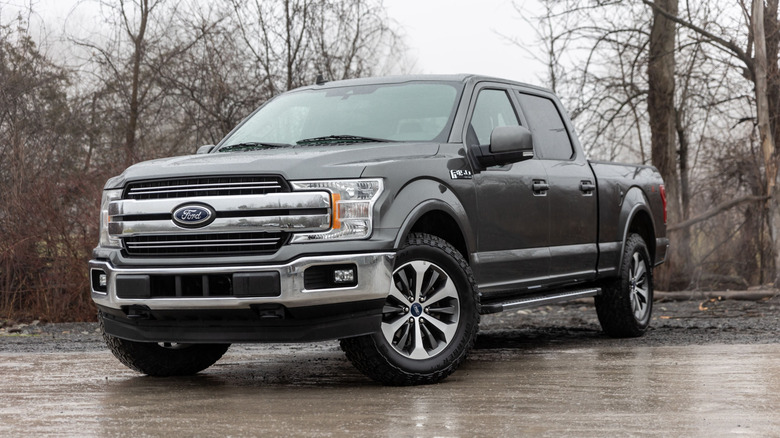
Until recently, the Ford F-150 has been the best-selling vehicle in America, and that makes its transmission problems that much more worrying. Ford introduced its 10R80 10-speed automatic — co-developed with GM — in the 2017 F-150. Owner complaints about harsh shifting, unintended lunging from park to drive, hesitation, clunking, and sudden power loss followed almost immediately.
The class action proceedings tell part of the story. The consolidated lead case, O'Connor v. Ford Motor Company, focuses on 2017–2020 F-150s with 10R80 transmissions. As of February 2026, a federal judge denied Ford's motion to dismiss, and the case is proceeding toward class certification. Ford has repeatedly claimed harsh shifting behavior is "normal" — a position that has not held up in court.
Ford's own TSBs document the issue from the first model year. TSB 18-2079 (March 2018) addressed "harsh or delayed shifts" in 2017 F-150s with 10R80 transmissions built before August 2017. TSB 18-2274 (September 2018) covered 2018 F-150s with 2.7-liter, 3.5-liter, and 5.0-liter engines exhibiting "harsh/bumpy upshift, downshift and/or engagement concerns." Both offered PCM reprograms as remedies.
The 10R80 also produced a separate 23V-070 safety recall. This one covered 2022–2023 F-150s after a loose bolt inside the 10R80 was preventing the driver from engaging Park, creating a rollaway risk. Dealers replaced the transmissions outright. All in all, multiple TSBs targeting the valve body and clutch engagement suggest the transmission's core hydraulic architecture was never well-suited to the demands placed on it.
Chevrolet Silverado / GMC Sierra (2015–2019)
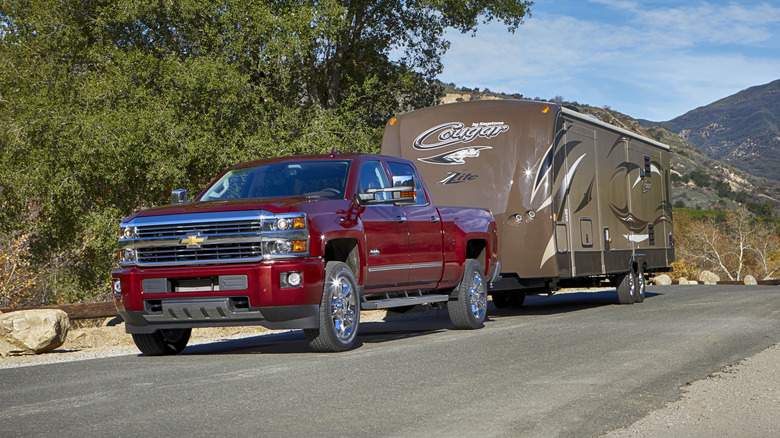
Chevy Shake has come to describe two separate problems in GM trucks — a driveshaft vibration issue, and a distinct shudder on vehicles with the eight-speed automatic. The transmission issue is arguably the more serious of the two. The 8L90 and 8L45 eight-speed automatics fitted to 2015–2019 Silverados, Sierras, Camaros, Corvettes, Colorados, and multiple Cadillac models experienced deficiencies allegedly caused by excessive friction and fluid starvation.
GM confirmed the issue in TSB 16-NA-175, covering many 2015–2019 models. The fix, per TSB 18-NA-355, was a full fluid flush using Mobil 1 Synthetic LV ATF HP; if metallic debris was found, TSB 20-NA-142 directed replacement of the torque converter. Plaintiffs in the associated class action lawsuit allege that GM knew about the problem from 2014. The lawsuit also alleges GM instructed dealers to tell customers the harsh shifts were normal and nothing out of the ordinary.
Reuters reported that the class action covering roughly 800,000 vehicles was split into smaller claims on June 27, 2025. According to CarComplaints, GM's own internal documents associated with fixing these problems surfaced in the litigation. Specifically, a valve body replacement would cost $1,550 per vehicle, and a full transmission replacement came in at $4,450. GM allegedly declined to pursue either.
RAM 2500/3500 HD (2019–2023)
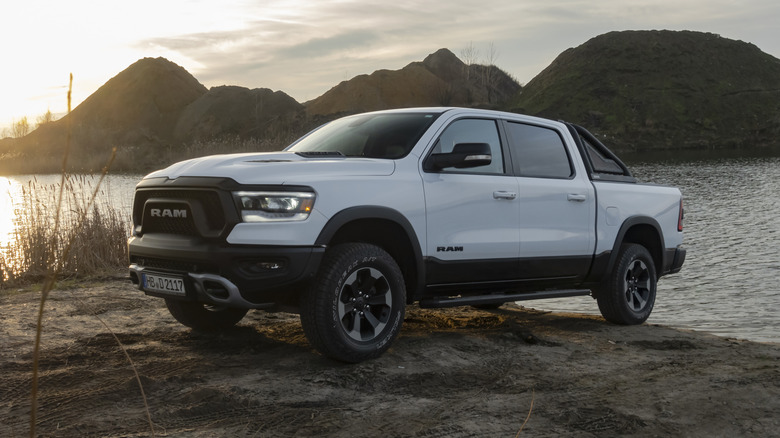
The 68RFE transmission is a six-speed automatic that Chrysler launched in 2007, and it was often paired with the Cummins diesel in RAM trucks. A MotorTrend diesel technician once called it "a well-designed and strong transmission with gear splits suited to the normal load-moving tasks faced by heavy-duty RAM diesel pickups." The reality, for a growing number of owners, has been harder to reconcile with that assessment.
The most common 68RFE problems include overheating under towing load, torque converter breakdown, and solenoid valve failure that can cause the transmission to suddenly engage and propel the vehicle forward. For the 2019–2023 model years, some of those underlying issues escalated into an active fire risk.
In January 2020, NHTSA issued the 20V-043 recall for 84,978 trucks, after determining the system "may experience a buildup of pressure and heat inside the transmission which may result in transmission fluid being expelled from the dipstick tube." This presented a serious fire risk because the fluid could find its way to hot turbocharger surfaces.
In November 2022, Autoblog reported that, because of too much heat and pressure in the transmission that could cause a fire, Stellantis recalled 280,000 RAM trucks. Moreover, they advised owners to park their trucks outside and away while awaiting a repair. In December 2022, per NHTSA recall service instructions, dealers were instructed to replace the transmission dipstick and vent hose.
Toyota Tundra (2022–2024)
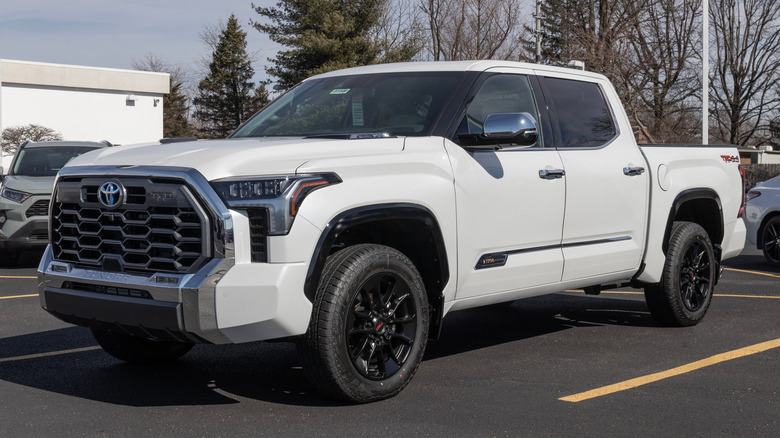
The 2022 third generation Toyota Tundra has experienced a number of reliability issues, and its transmission is a large part why. The new 10-speed automatic produced a dangerous failure; the truck would roll even after being placed in neutral, not because the driver didn't engage the brakes, but because the transmission was not actually in neutral.
In February, 2024, an NHTSA 24V-125 safety recall reported Toyota would recall 280,663 pickup trucks and SUVs because of this problem. The fix is a transmission control ECU software update at no charge. Beyond this, Toyota also issued TSB T-SB-0111-22 in December 2022, acknowledging that 2022–2023 Tundras may exhibit hesitation or surging.
The fix was a TCM logic update — the same type of software remedy used in the 24V-125 recall. This represents a much wider problem with the third-generation Tundra. Аs TheAutopian reported in May 2026, Toyota has now issued three separate engine recalls for the V35A 3.4L twin-turbo V6 because of metal shards and debris within the engine.
One TorqueNews report documented a 2025 Tundra Hybrid TRD Pro with a complete transmission failure at 3,125 miles, with the dealer citing large metal debris in the oil, a pattern that mirrors the engine debris problems plaguing the same generation. This has led to Consumer Reports noting that the third generation of the Toyota Tundra is "much less reliable than other cars from the same model year."
Nissan Titan / Frontier (2020–2022)
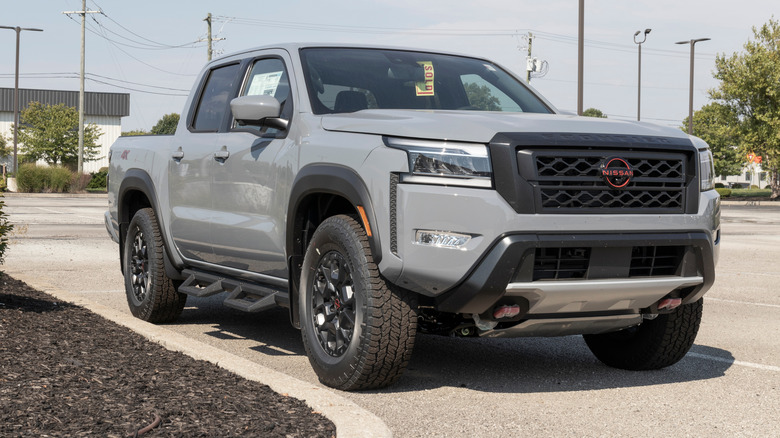
For the 2020 model year, the Nissan Titan received a new Jatco nine-speed automatic transmission. Not long after that, the transmission generated a large recall associated with the parking pawl — the component inside the transmission that physically locks the drivetrain when the driver selects Park. Or at least, that's what it was designed to do.
In June 2022, NHTSA issued the 22V-457 safety recall report which included more than 180,000 Nissan Titan and Frontier vehicles with the aforementioned nine-speed automatic. According to the report, clearance issues caused "non-engagement of the parking pawl." In other words, even after selecting Park, the truck would move, and issues such as these could increase the risk of injury or crash.
As Car and Driver reported, Nissan had no fix ready at launch — owners received an interim letter advising them to use the parking brake every time they parked. NHTSA recall 22V-671, filed September 7, 2022, expanded coverage to 203,223 vehicles after further investigation revealed an additional failure.
The Drive reported the fix could require pulling the entire transmission to replace the parking rod and wedge — components buried deep in the gearbox — or replacing the transmission outright. When we reviewed the 2025 Nissan Frontier Pro-4X, we noted that its nine-speed didn't do the truck any favors in the acceleration department, and given these recalls, it also didn't do it any favors in the reliability department.
How we made the list
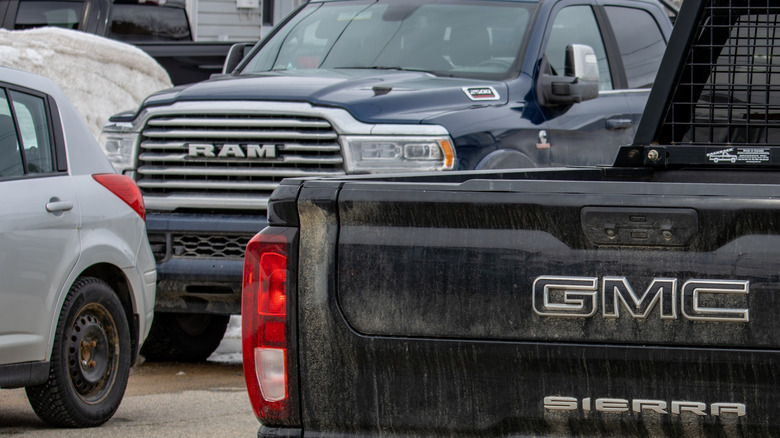
No transmission is perfect, and these are not the only trucks on the market that have experienced problems. Components break, tolerances wear, and software introduces new failure modes that engineers did not anticipate. That is the reality of owning any modern vehicle, and it applies across every brand and price point. What separates the trucks on this list is not simply that their transmissions failed.
It is the scale of the problem, the nature of the defect, the manufacturer's response — or lack thereof — and in some cases the severity of the consequences for owners who had no warning and no immediate remedy available to them. These five were selected because the issues behind them are well-documented and backed by credible, verifiable data.
To build this list, we cross-referenced NHTSA recall reports, technical service bulletins, and federal investigation and engineering analysis documents with coverage from major automotive outlets including The Drive, Motor Trend, Car and Driver, Consumer Reports, Autoblog, CarComplaints, GM Authority, The Autopian, TorqueNews, and Reuters. Where legal proceedings were relevant, we reviewed class action filings and court rulings via Justia and Reuters.