

5 Reasons Why You Might Need A Minimalist Phone
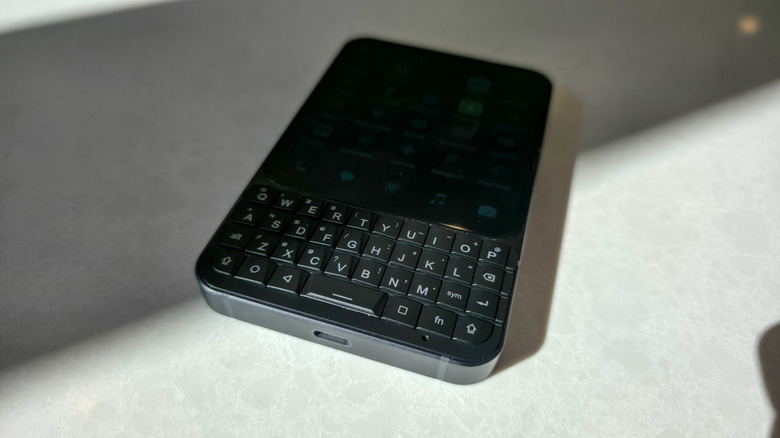
The smartphone is one of the single most important consumer technologies of the 21st century, and it has changed the way we do everything from banking and shopping to communicating and working. But however much it has improved the world, it is far from a panacea. Smartphones have grown unwieldy over time in both form factor and capability. They spy on us, keep us distracted with engagement-based algorithms, overload us with barrages of notifications, and can even affect our mental health. Their operating systems have grown complex and overbearing, even as their hardware grows less innovative year-over-year.
It's no wonder the most minimalist phones are having a moment. Lately, a range of new phones that trade some of their smarts for simplicity have hit the market. Some aim to curb smartphone dependence, some offer specialized use cases, and some have specialized hardware features that have scarcely been seen since the iPhone was first unveiled. Based on the increasing number of smaller outfits shipping simple smartphones, it's clear that there's a modest but growing demand for such devices.
There are a number of reasons to consider a minimalist phone. Aside from the obvious — a desire for tech asceticism in a noisy digital world — there are a few other reasons you may not have considered. Enticing form factors, kid-friendly tech, and a simple desire for change round out our list of five reasons why you might need a minimalist phone.
You want to cut down on social media use
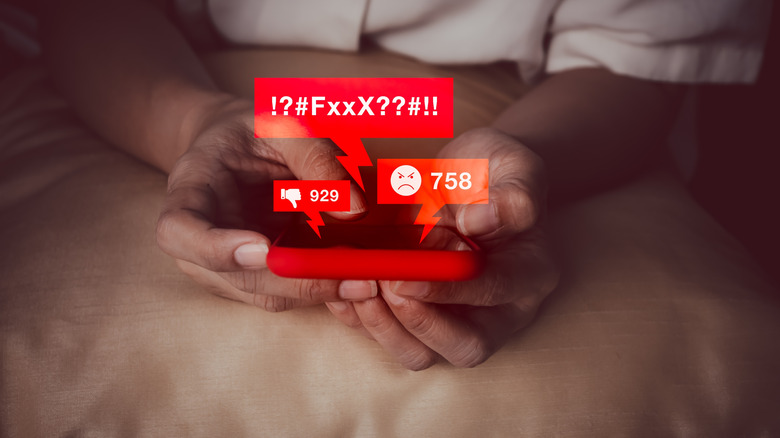
Everyone seems to agree by now that social media has had some deleterious effects on society, despite having also done plenty of good. One of the most ubiquitous harms is what occurs when you go to check up on your friends' social media updates, only to find yourself drawn into an hours-long scrolling session. It's a phenomenon fittingly dubbed "doomscrolling," and it is linked to worse mental health and general well-being, particularly among women, according to Harvard Medical School. You're unlikely to end a doomscrolling session feeling more informed about the world. Instead, you probably just feel tired, vaguely anxious, and ashamed of the wasted time.
For many users, a forced detox from the always beckoning vortex of online chaos that is the modern smartphone can be a primary reason to get a minimalist phone. It is no wonder that so many of the companies behind them advertise their products based not on what they can do, but on what they cannot. Take the Minimal Phone, which uses an e-ink display like an e-reader to avoid the seductively saturated colors of a smartphone display; it comes with essentials like a phone dialer, messages, and a calendar. However, Minimal knows you might need a few more apps than that, so it comes with access to the Google Play Store, allowing you to download the apps you need the most. Then, there's the Light Phone III, a more premium option from Brooklyn-based firm Light Phone. It features a pared-back set of apps and a black-and-white interface, but with a more premium OLED screen, a fingerprint reader, NFC, and other creature comforts offered by most full-fat smartphones.
You want niche productivity features like a keyboard
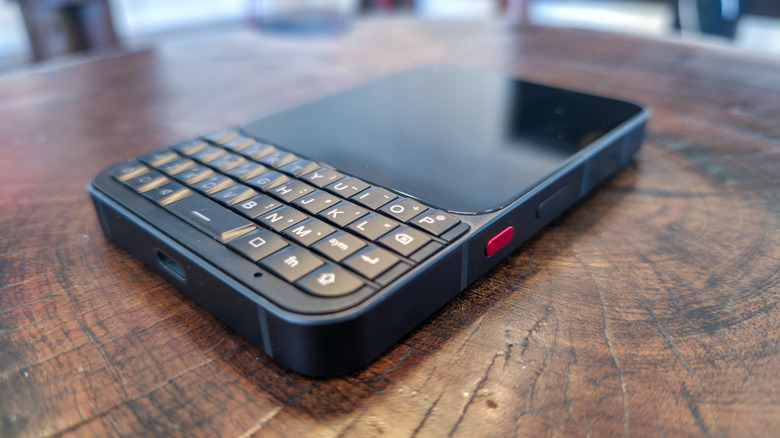
If you're a gadget nerd whose heyday was the late 2000s, you're probably prone to waxing nostalgic for the era of businesspeople poking away on the most iconic BlackBerry phones, Palm PDA-poking productivity powerhouses, and other handhelds in a world where gadget design hadn't yet given way to the homogeneous flat slab the iPhone ushered in. While our modern-day slab phones are orders of magnitude more powerful than those devices were, they trade specific functionality like physical keyboards and flip-top designs for a jack-of-all-trades, one-size-fits-all philosophy.
Minimalist phones now offer a path back to the more focused functionality of that Neoproterozoic, pre-iPhone era. Phones like the Unihertz Titan 2 Elite and upcoming Clicks Communicator are bold BlackBerry throwbacks, featuring physical QWERTY keyboards whose satisfying tactility is a welcome change after years of dashing your fingers against the cold, hard glass of an on-screen keyboard. These devices are still fully featured Android smartphones capable of running modern apps, but they're more suited to productive tasks in apps like Slack and Gmail. Although you can technically run less productive apps on them, their form factor makes them ill-suited to social media. You'll find the top and bottom of a TikTok video or Instagram Reel cut off by their square displays, which could make them awkward to use.
Then there's the Minimal Phone described earlier, which features a QWERTY keyboard beneath an e-ink display. That makes it well-suited to reading documents, writing messages, and other text-based tasks, all with the extremely long battery life e-ink is known for. Whether you're drawn in by nostalgia or practicality, these minimal phones may be the right choice for a certain type of task-oriented user.
You want a smaller phone
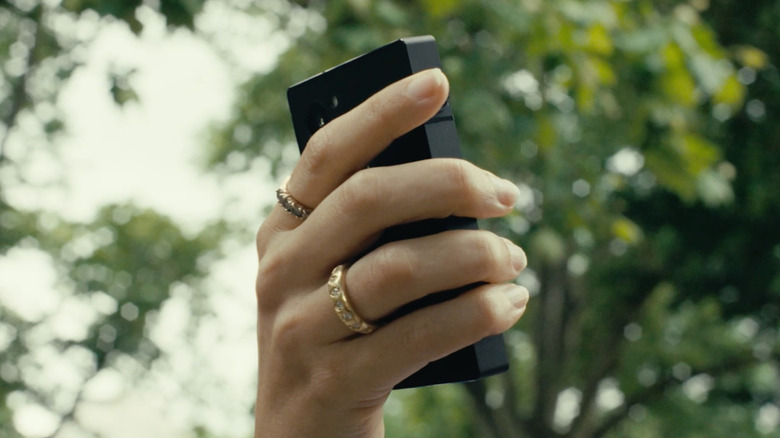
Let's face it, most mainstream smartphones have become unwieldy. They're excellent media consumption and productivity devices thanks to their expansive displays, but they weigh in the hand like a brick and fill out a pocket or bag. Woe betide those who carry a flagship smartphone in their back jeans pocket, where it rises above the waist like a butt-mounted antenna. Given how often you'll hear people yearning for more petite phones, you'd think companies like Apple and Samsung would offer them. But when Apple launched the iPhone 13 Mini, which was small enough to use one-handed and had nearly all the same features as the larger iPhone 13, it sold so poorly that Apple discontinued the Mini despite rave reviews from those who'd used one.
Most of the smallest phones you can buy today are either foldables like the Samsung Galaxy Z Flip 7, which open into much bigger devices, or come from nearly unknown brands making budget Android phones. Minimalist phones aren't beholden to the maximalist philosophy of the modern smartphone. They aren't meant to be all things to all people, so they don't need giant displays that can accommodate everything from movie watching to spreadsheet editing. You can find plenty of very tiny phones in this space. Whether you choose a smartphone like the Unihertz Titan 2 Elite, which retains most of the flagship software experience but in a palm-sized package, or the Light Phone III, which gives you only the bare essential phone functionality and disappears into the hand, it's much easier to find a small, minimalist phone than ever before. You'll just have to deal with the limitations that come alongside them.
You're bored with mainstream smartphones
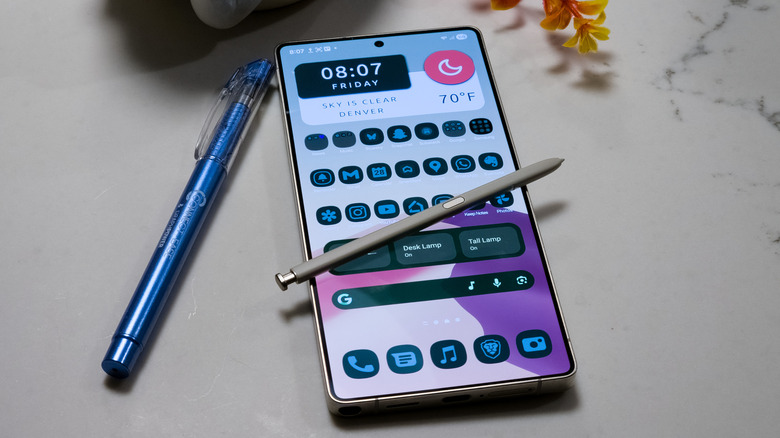
If you're the sort of person who follows smartphone releases, you've likely watched with disappointment as the largest companies in the industry seem increasingly content to rest on their laurels. The iPhone may get a new color each year — sometimes even a whole new hardware button — but there's no denying that the updates are increasingly incremental. The same is true of phones from Google and Samsung. Even foldables, which seemed exciting several years ago, have coalesced around a handful of form factors that are becoming more refined year-over-year. Where's the bold experimentation we once saw in the market? Well, it moved to the fringes.
All of the phones we've discussed until now are, at the very least, something different than the bland glass sandwich we've come to expect from major smartphone brands. E-ink displays, QWERTY keyboards, and unique software are now the purview of minimalist brands hoping to give users a different take on the phone than the one most people are now accustomed to. They might not have the raw power of the latest iPhone or Samsung Galaxy phone, but they offer a more opinionated and curated experience that those mainstream brands must eschew in order to corner the largest possible market share.
Even if you only use a minimalist phone as a secondary device, perhaps as a dedicated "weekend phone," these devices are perfectly positioned to help jaded tech enthusiasts — and even mainstream consumers who are tired of each upgrade feeling like the same old thing — to break free of those doldrums. Better yet, they tend to be relatively cheap compared to flagship smartphones, making them a relatively low-risk investment for curious consumers.
You want your child to stay safe online with their first phone
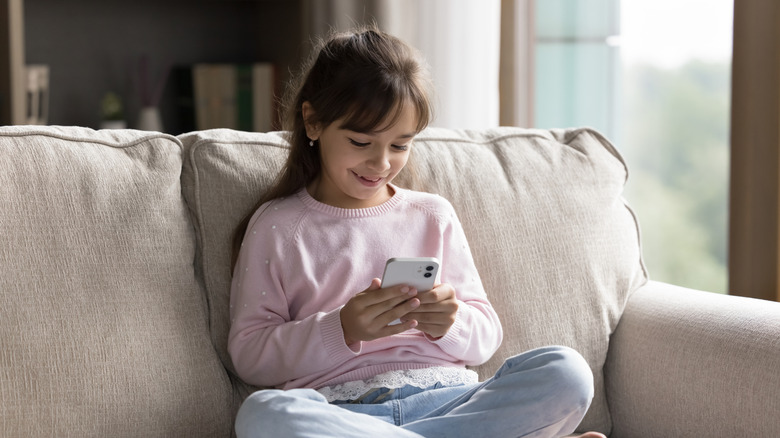
According to a 2022 study published in Child Development by researchers at Stanford Medicine, the vast majority of children get their first mobile phone between the ages of 11 and 13, with the average child getting one at just about 11 and a half years old. But it's a double-edged sword. Parents increasingly want to stay in contact with their children at all times, a desire born of the natural protective instinct. However, smartphones also pose plenty of danger to children, providing unlimited access to the Internet and social media.
As of this writing, the primary remedy being pursued to keep kids safe online is age verification, an invasive process that creates privacy concerns for children and adults alike, and which can easily be bypassed. But what if the solution wasn't to restrict the Internet, but to restrict the phone you give your child? Due to their limited functionality, minimalist phones can be an excellent first phone for a child. With a phone like the Light Phone III, they'll be able to make phone calls, send messages, and even navigate with maps, but they won't be able to download new apps, browse social media, or use a web browser.
A minimalist phone is feature-rich enough to teach children the basics of smartphone use without compromising safety. It may not be their first choice of phone, especially if their friends are all using iMessage and FaceTime, but it's certainly an option to consider if you're not the sort of person who has time to set up in-depth parental tools on your child's full-fat smartphone.