

5 DIY Car Maintenance Projects You Can Get Done Even In A Small Garage
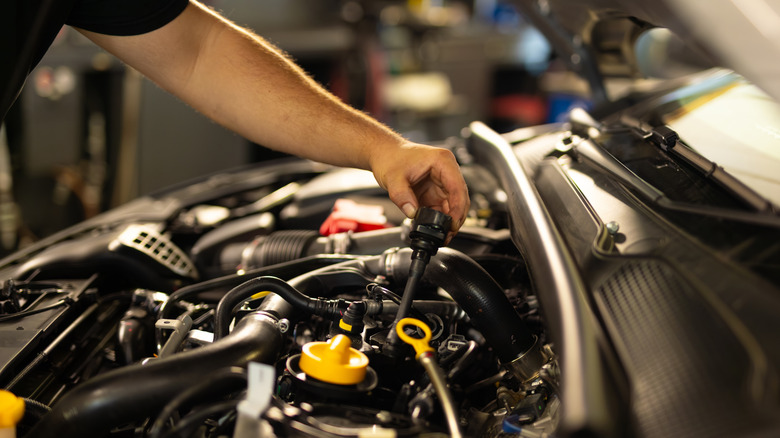
Whether you're an experienced wrencher or are just learning the ropes, there are a lot of car maintenance tasks that you can perform in the comfort of your garage. But what if you have a limited space — less than two cars' worth, for example, or maybe even just a single-car garage with barely enough room to lie down? Well, you can still perform the majority of basic maintenance tasks, so long as you're willing to get under the car.
In this article, we'll list some DIY projects you can do even with limited space. How limited, exactly? Well, that depends on a couple of factors, but let's say that you have enough room to fit the car in the garage, open the garage door, and have some driveway outside the door to lie down on if necessary. In other words, all of these jobs can be done without getting under your car's sides, just the end that's pointing outward.
We'll also arrange these tasks by complexity, starting from easy to challenging. Of course, your mileage may vary here depending on your experience and the car itself; DIY maintenance on a classic car you're daily driving will probably be much simpler than a modern European luxury saloon. Likewise, getting underneath an SUV might not require a jack at all. Let's dive in and talk about what needs doing, why these tasks are important, and what tools you'll need to get them done in confined spaces.
Changing engine oil

We're starting with one of the most crucial maintenance projects that almost anyone can do without much mechanical skill — changing your own oil. We have a step-by-step guide to changing oil if you want a more detailed explanation, but the two-sentence answer is that this involves draining your car's oil pan via the drain plug, removing the old oil filter, replacing it with a new filter, and refilling the oil. The drain plug is located on the bottom of the car, meaning you'll have to get underneath it.
Most cars don't require specialized tools to change the oil. At most, you may need an oil filter wrench if the filter is particularly stubborn or hard to access. The filter itself looks like a fat soda can stuck somewhere around the bottom of the engine block, by the oil pickup. All you have to do is line up an adequate drain pan, then unscrew the oil pan's drain plug. Next, unscrew the filter, which will also be full of oil. Lining up the pan is the biggest pain when working in confined spaces, since you'll only have the width of the car to work under. It can help to align the sides first, before getting the front and back position right. Once the oil is drained and the filter is off, reverse the process and pour in fresh oil.
Maintenance intervals for oil changes vary significantly between cars, and are also influenced by how many miles your car has on the odometer. The owner's manual will have the info, but if you're not sure, you may want to change every 5,000 miles to be safe, especially if you're using traditional oil.
Cleaning or changing the air filter
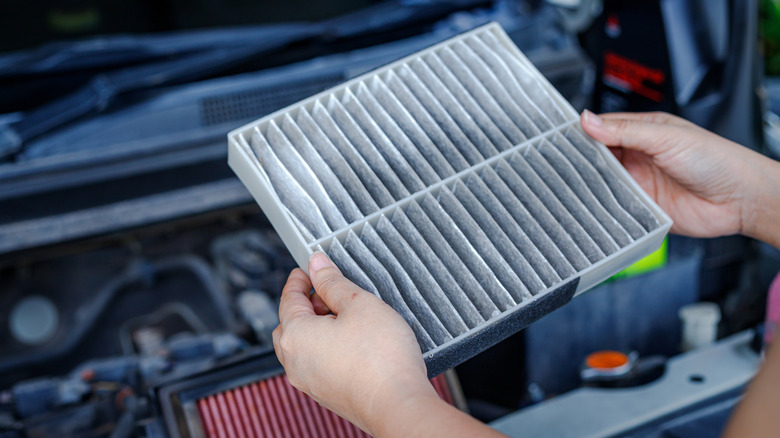
Like your oil, your car's intake air filter is also a perishable component, though there are reusable air filters that you can clean. In modern stock vehicles, the air filter is often a block-shaped element inside a sealed plastic housing. The engine draws air in through the front and passes it through the filter before it enters the intake; this keeps dust particles and debris out of your engine. Air filters are generally made from paper or cotton, with performance-oriented filters sometimes coated with a special oil to help capture more particulates.
Like the oil change, you won't need specialized tools here, outside of a basic wrench and some good prying fingers. You'll want to look for a plastic box toward the front of the engine bay with a large pipe or hose sticking out of it; that box houses the filter. The box itself has several clips holding it closed, although some cars may have screws. Unclip those and lift the box, being careful not to damage any hoses or the intake piping. You may need to unscrew the hose clamp holding the box to the intake. At any rate, the filter will be inside; simply remove it and swap it out for the new one, then clip the box back together.
Air filter changes are both easy and often overlooked. These elements can get clogged up and restrict airflow to the engine, especially in dusty environments. Depending on where you live, you'll want to inspect your filter about once a year or every 12,000 miles, and change it if necessary.
Interior detailing and cabin air filter service

Anything that needs doing with the interior is almost guaranteed to be a freebie, granted, but major surgery such as removing trim panels or working with air tools is out the window. So what can you do with the interior that doesn't require dismantling bodywork? Quite a lot, actually. For one, you can certainly clean it. Complete interior detailing kits generally come with various bottles and cloths for specific surfaces, but everything can be done safely within a one-car garage fairly easily.
Changing the cabin air filter is slightly more involved, but still doable from within the interior. The first task is to locate the filter. It's generally around the glovebox area, and will likely be noted in the owner's manual. If the glovebox is in the way, remove the catch holding it in place (with a screwdriver if necessary), then take it out. Once that's out, you should have access to the cabin air filter. Remove it, clean the housing with a vacuum, install the new filter, and reverse the disassembly process. Make sure the filter is facing right side up.
Cabin air filters and interior detailing alike are both crucial maintenance steps, especially for people who live in particularly dusty or dirty environments. It's the cabin air filter's job to make sure none of that gets into the cabin with you, and you'd be surprised at how much dirt can come off an older carpet.
Replacing the fuel filter
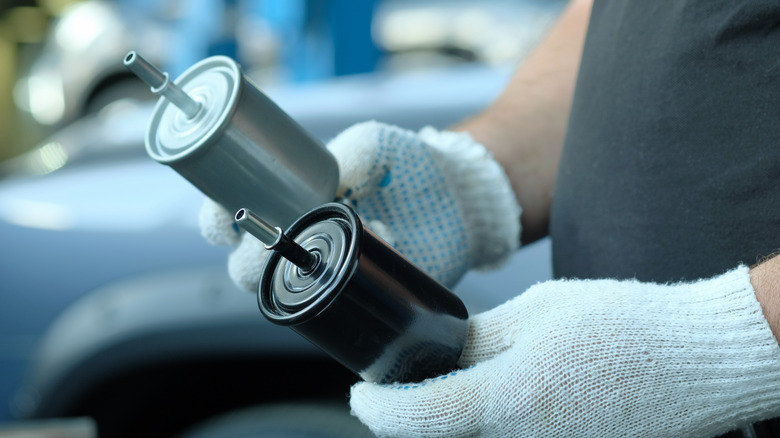
This one can get a bit messy (and smelly), but it is also relatively easy to do in a one-car garage and doesn't require any specialized tools. In fact, the hardest part of this job may well be finding the filter in the first place, since there isn't a standard location for it. At any rate, you'll want the same equipment as you would use for an oil change: a jack (if the filter is underneath the car), a drain pan, and basic hand tools.
Changing the filter is a multi-step process. First, remove the fuel pump relay in the fuse box to disable the fuel pump. Turn the car on and let it use up the fuel in the lines, which depressurizes the system. Turn off the ignition and disconnect the battery negative, and we're ready to go.
Place the drain pan below the fuel filter, disconnect the release buttons, and unscrew the fuel hoses. Next, try to catch all the fuel in the pan, then replace the filter with the new one and clamp the hoses back into place. Secure the filter into its cradle, plug the battery back in, and repressurize the system by priming the fuel pump. You do this by turning the ignition on (but not starting the car), waiting a few seconds, turning it off, then turning it on again. This will fill the lines with fuel. Be sure to visually check for leaks, too — the whole place is liable to smell like fuel during the procedure, so going by smell alone isn't ideal.
Installing new spark plugs
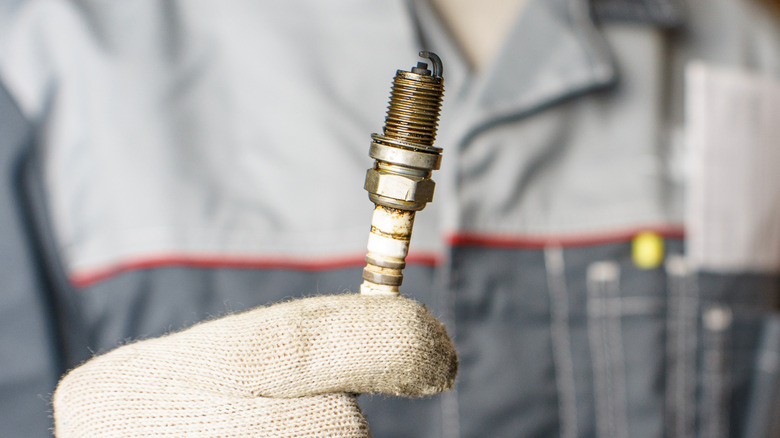
This procedure is either extremely simple or incredibly complicated, depending on the car. Some cars are particularly hard to maintain, including basic tasks like changing spark plugs, such as the AMC Pacer. Others aren't quite as hard, but may still need you to remove the intake plenum to access certain plugs — which, thankfully, is possible within the confines of the engine bay without any specialized equipment. Even replacing notoriously tricky Subaru spark plugs won't require much room, needing only ratchets, a jack, and some wood to lift the engine for better access.
Spark plugs are situated below your car's ignition coils or spark plug wires, depending on the age of your car. Thus, you'll want to remove those first. You should then clean your spark plug holes with a vacuum before removing the plug; this reduces the chances of debris falling into it. That hole leads directly into your engine block, so any errant metal or plastic can seriously damage your vehicle. Unscrew your old spark plugs with a spark plug socket, double-check the new plugs' gap and fitment, then install the new plugs and tighten them to the manufacturer's recommended torque specs. You'll then reattach the ignition coils or plug wires.
Changing your spark plugs is a vital part of maintenance and offers you a unique glimpse into the engine itself. You could, for example, check the top of your pistons with a borescope. Spark plugs can also be a useful indicator of engine condition, with excessively fouled plugs potentially indicating issues such as the failure of one of the three piston rings in a cylinder.