

Pistons Have Three Rings For A Reason - Here's Why
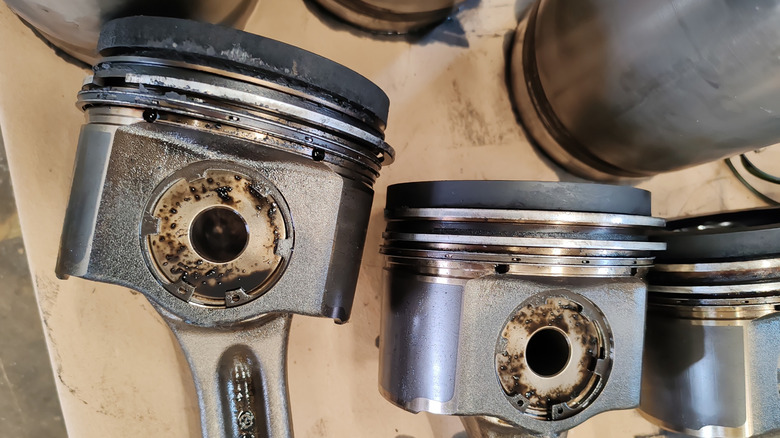
Your car's engine is truly a marvel of engineering, relying on a combination of extreme tolerances and pressures to produce power. Think about it — you're effectively creating hundreds of explosions per minute across multiple cylinders, and those explosions drive the crankshaft, which in turn transmits power to the running gear. The area which contains these explosions is called the combustion chamber, which relies on being a sealed environment to keep all the violence on the correct side. After all, what's stopping the explosion from simply blowing past the piston, or the oil from shooting up into the combustion chamber? That's where your car's piston rings come in.
Unless you have a Wankel rotary – in which case you have apex seals – your car will likely contain somewhere between three and twelve pistons (unless you have a Veyron). Each of these pistons is collared with three rings, known as piston rings. Fairly obvious and intuitive so far, but why do they exist in the first place?
There's a short and long answer to that question; the basic gist is that the piston rings act to seal the explosive half of the cylinder from the oily half, and they lubricate the cylinder walls. More specifically, the top two rings, known as the compression and wiper ring, respectively; maintain the compression in the cylinder. The bottom ring, also known as the oil ring, scrapes off excess oil on the cylinder wall and distributes what remains, keeping everything properly lubricated. Each of these three rings are designed in different ways and have different roles, so they're not interchangeable. Let's break it down further, going from the top down.
What each of the rings' roles are
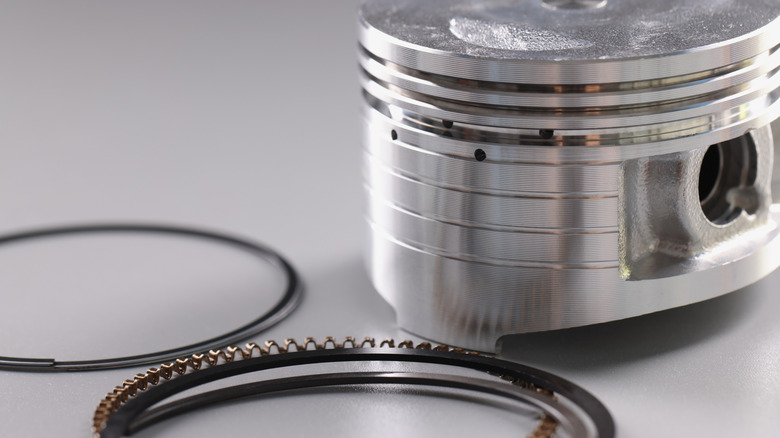
The first two rings — the top and middle — are both responsible for maintaining adequate compression. In short, the piston acts like the plunger of a syringe — when it pulls back, it sucks the air/fuel mixture in. Now imagine that you cover the end of the syringe so the air can't escape, then push the plunger down as hard as you can. That's basically what the piston does before the spark plug ignites the mixture. It shrinks the air to within a fraction of its original volume, then the explosion expands that air and pushes the piston back down, creating work.
Much like the syringe, any leakage of air past the seals means you lose that compression. That's the top ring's job; it seals the sides of the piston against the cylinder. The second ring further maintains that fitment, keeping oil out of the combustion chamber, as the oil ring doesn't provide an airtight seal on its own. The second ring, then, acts to divide the top and bottom halves, while the top ring is primarily responsible for maintaining compression.
Lastly, we have the oil ring. As the name implies, this piston ring primarily interacts with the engine oil. It's designed to maintain a constant, thin film of oil on the cylinder wall, preventing the other piston rings from scraping against it. Moreover, it wipes away all the excess oil thrown up by the conrod bearings. That film is then further reduced by the first two rings, ideally leaving only trace levels by the time you reach the combustion chamber. It must be predictable, hence why oil weights are so important to keep track of.
What happens when the rings fail
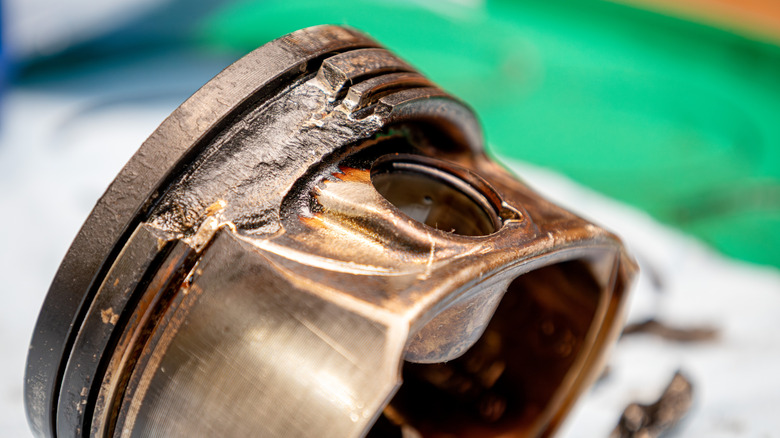
First and foremost, the most major signs of failing piston rings are performance loss and burning oil. This is because a gap has formed between the cylinder wall and piston ring, allowing the compression to seep through one side and oil through the other, and it's typically punctuated by an odd-smelling blue smoke and the engine running rough. This is just one way your car can lose horsepower over time.
The top two rings also serve two other vital roles as well: Keeping the angle of the piston correct, and heat control. The former is fairly intuitive; you don't want the piston at an angle, otherwise the top or bottom might grind against the cylinder. As for the latter, the materials the rings are made from conduct heat and transfer it to the cylinder walls. Knowing where the heat will go allows things to be predictable and materials placed accordingly, meaning a lighter, higher-performing engine, but that heat could build up from burnt oil forming excessive carbon deposits, further exacerbating the gap. No heat transfer means burning oil, hard starts, and high engine temperatures.
Getting to the piston rings is typically a highly labor-intensive job, requiring the engine's bottom-end to be completely dismantled to access. Luckily, piston rings are typically made from hardened, heat-resistant materials, so unless your engine's been abused or contaminants have snuck their way into the combustion chamber, they're likely to last for around 100,000 to 150,000 miles, depending on your driving habits.