

5 Lexus Engines You Should Steer Clear Of
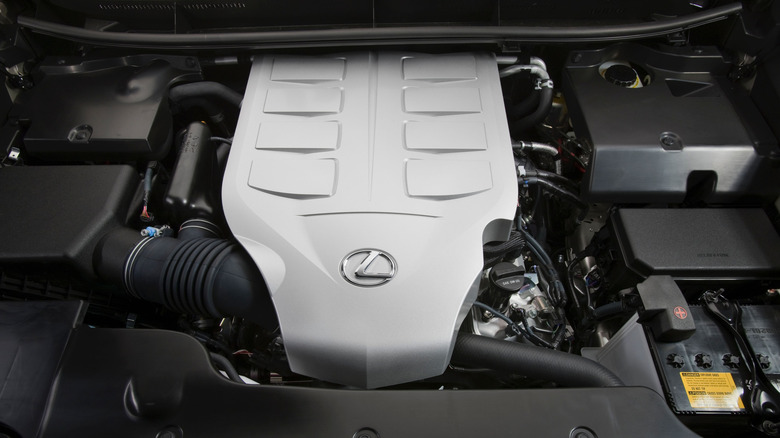
Lexus has spent more than three decades earning the reliability that most luxury brands would love to borrow. From the original LS 400 that humbled German sedans, to early RX and ES models, the brand has conditioned buyers to trust any Lexus engine almost by default, and most of the time that trust is warranted.
But no automaker bats a thousand. Hidden in Lexus' 35-year engine catalog are a few designs that don't quite live up to the badge. The five engines ahead span nearly every era of the brand and together power hundreds of thousands of vehicles still on the road. These include a twin-turbo V6 that can stall when stray machining debris wipes out its bearings, another V6 that became known for turning its oil into sludge, the hybrid four-cylinder that powered the company's first hybrid car and burned oil faster than fuel, a compact direct injection V6 that misfires when carbon clogs its intake valves, and an otherwise reliable Lexus V8 engine with a fire-risk related recall.
Have all of them been fixed by recalls, updated parts, or warranty programs? In most cases, yes. Does that mean every example you'll find on a used car lot will be bad? Not really. But if you're shopping for a used LX 600, IS 250, ES 300, RX 300, HS 250h, GX 460, or LS 460, the engine under the hood deserves more attention than the badge on the grille.
1. 1MZ-FE 3.0L V6
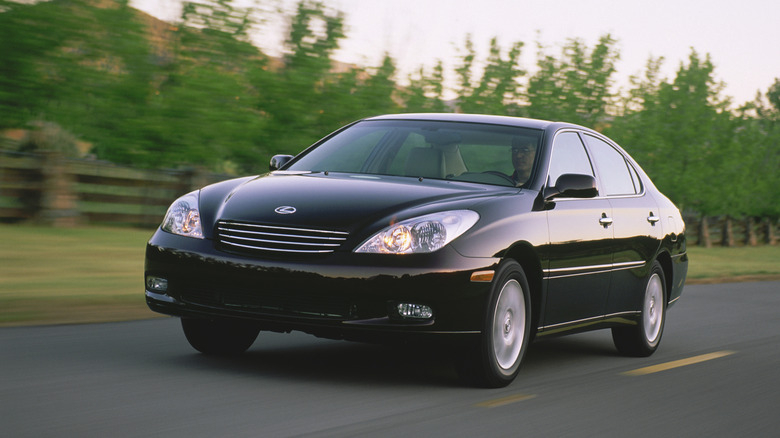
When Toyota introduced the all-aluminum 1MZ-FE in the mid-1990s, it looked like the perfect luxury V6. Aluminum saved weight over the iron 3VZ it replaced, twin overhead cams kept it smooth to 5,800 rpm, and its broad torque curve gave the ES 300 and first-gen RX 300 the effortless feel buyers expected from a Lexus. Later updates even added variable valve timing, helping the engine meet low-emissions targets without giving up power. The problem is that the 1MZ-FE also became one of the main engines tied to Toyota and Lexus's oil-sludge controversy.
It started with reports of thick, oily sludge building up under the valve covers, and it quickly became one of Toyota's most notorious reliability issues. Engine oil is supposed to stay thin enough to move quickly through narrow passages, carry heat away from hot spots, and keep bearings and cam surfaces from grinding against each other.
In the 1MZ-FE, however, degraded oil could thicken into sticky deposits instead of flowing cleanly through the engine, and it showed up as warning lights, blue smoke at startup, burning oil, valve knock, sudden stalling, and no-start conditions. In the worst cases, the engine sludge problem led to complete engine failure, with quotes for thousands of dollars in major internal work involving the short block, heads, valve covers, and cams.
The problem was widespread enough to pull in the 1MZ-FE-powered Lexus ES 300 and RX 300, and Toyota addressed it through a Special Policy adjustment rather than a formal recall; a later class-action settlement ultimately covered about 3.5 million 1997-2002 Toyota and Lexus vehicles.
2. 4GR-FSE 2.5L direct-injection V6
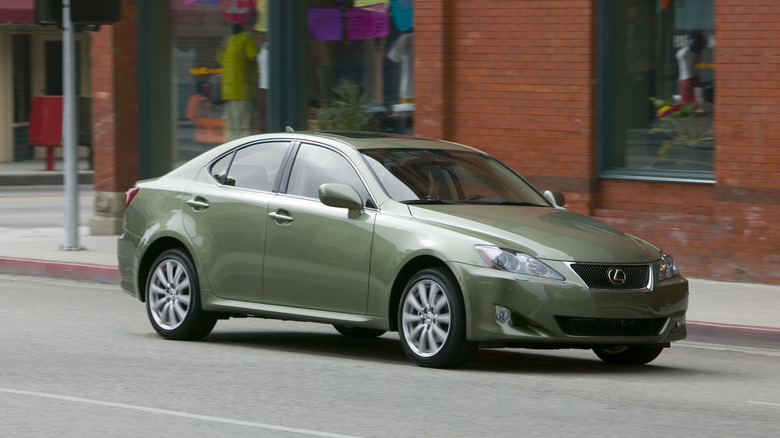
Toyota's GR family makes some of the most respected V6s in modern motoring, but the 4GR-FSE is the odd child. Lexus dropped it into the second-generation IS 250 (2006-2010 sedan, 2010 IS 250C) as a downsized alternative to the 3.5-liter IS 350. Technically, it looked smart: a modern, high-compression GR-family V6 with dual VVT-i and, critically, D-4 direct fuel injection. Lexus claims the direct-injection system helped cool the cylinders, allowing the 4GR-FSE to run at higher compression and extract more efficiency from a small luxury-sedan V6.
The problem is that gasoline direct injection engines also remove one useful side effect of port injection. In a port-injected engine, fuel is sprayed upstream of the intake valve, which helps "wash" the backs of the valves as the engine runs and makes it harder for oily vapors and deposits to stick. In the 4GR-FSE, fuel is injected directly into the cylinder, so the intake valves don't get that natural cleaning effect. Without it, carbon deposits are more likely to build up on the intake side over time. Once carbon deposits built up, the 4GR-FSE could show check-engine and VSC lights, rough cold starts, shaky idle, random cylinder misfires, sputtering at stops, sudden loss of power, and occasional stalling when rpm dropped. Some cases involved repeat top-engine cleanings, piston/ring work, or complete engine replacement.
Because Lexus treated it as a drivability/emissions issue — not a safety defect — it was handled with service bulletins and a Customer Support Program instead of a recall. That coverage ran for nine years, but it's expired now, which means today's used-IS buyers pay out of pocket for cleanings and related repairs or sidestep the 4GR altogether and buy the port-and-direct-injected IS 350 instead.
3. 1UR-FE/1UR-FSE 4.6L V8
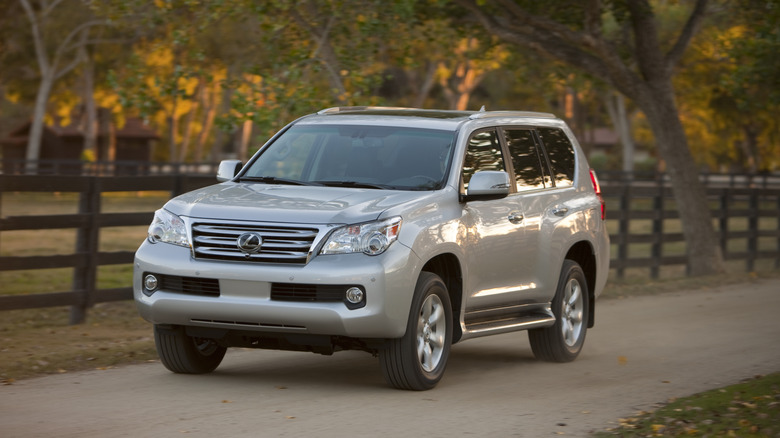
When Lexus replaced its long-running 4.3L LS V8 and 4.7L GX V8 engines, the 4.6L 1UR looked like the perfect upgrade. The 1UR-FSE arrived in the LS 460 as a newly developed 4.6-liter V8, while the 1UR-FE followed in the 2010 GX 460 as a stronger, more efficient replacement for the old 4.7-liter V8. Early 1UR-era cars, however, had a number of problems, and the one that drew the most attention was a valve-spring defect.
Toyota found that some valve springs in certain 2007-2008 LS 460/LS 460L and 2008 GS 460 V8 engines could create small cracks and eventually break. Once a valve spring fails, the engine can act like it's starving for fuel; sluggish throttle response, sudden power loss, heavy shaking/misfires, and in the worst cases, it stalls and won't restart.
Another issue involved the fuel system. On some 1UR-powered Lexus models, the gasket sealing the fuel-pressure sensor to the fuel delivery pipe could lose its seal over time, causing the fuel to leak into the engine bay, sometimes with little warning beyond a fuel smell, and that obviously raises the risk of a fire. On the SUV side, some GX 460s had a secondary-air injection fault that could trigger the check-engine light and put the truck into reduced-power/limp mode until the pump or valves were replaced.
Toyota addressed the broken springs with a safety recall, replaced the fuel-sensor gasket under a different recall, and later issued a GX 460 Warranty Enhancement for air-injection pump failures and switching valves for 10 years.
4. 2AZ-FXE 2.4L hybrid four-cylinder
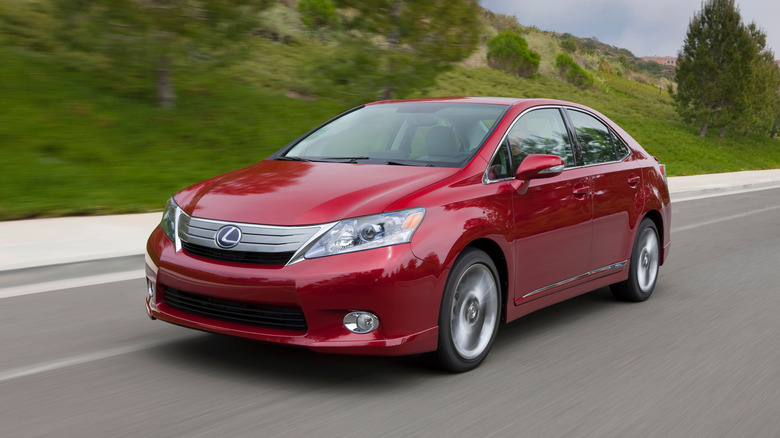
The 2AZ-FXE was the mechanical heart of the Lexus HS 250h, which arrived for 2010 as the world's first hybrid-only luxury vehicle and Lexus's first four-cylinder gas engine paired with Lexus Hybrid Drive. It came from Toyota's ubiquitous 2AZ engine family, including the conventional 2AZ-FE and the hybrid 2AZ-FXE, which powered countless Camrys, RAV4s, and Scion tCs before doing duty in the HS 250h's 2010-2012 run. It was a very different kind of Lexus engine from the brand's well-known V6s; a 2.4-liter tuned to prioritize fuel economy above everything else. Unfortunately, fuel economy wasn't the only thing it became known for; oil consumption became the real problem.
In a healthy engine, piston rings are supposed to do two jobs at once: keep combustion pressure above the piston where it belongs and scrape excess oil off the cylinder walls so it doesn't get pulled into the combustion chamber. When the oil control side of that job starts failing, the engine can begin consuming oil so gradually that a driver may not notice until the level has fallen much farther than it should. Once oil levels drop too far, bearings, cylinder walls, and the valvetrain are all working with less protection than they were designed to have.
There was no recall for the HS 250h; Lexus addressed excessive oil consumption with a Warranty Enhancement Program for certain 2010-2012 HS 250h vehicles, which called for updated piston assemblies. The HS 250h itself was a short-lived Lexus experiment, effectively discontinued in North America after 2012 and credited with only about 67,000 sales globally by 2016. Even Toyota moved on with the 2012 Camry, switching to a new 2.5-liter hybrid engine in place of the 2.4.
5. V35A-FTS 3.4 twin-turbo V6
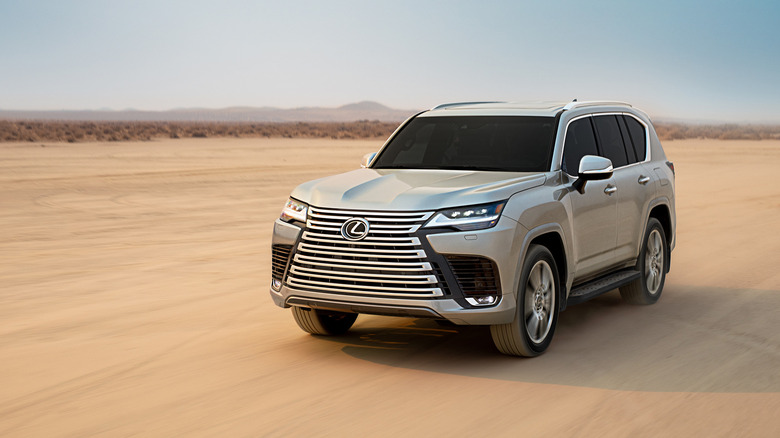
The V35A-FTS was Lexus's and Toyota's clean break from the V8s that powered their old-school trucks and body-on-frame flagship SUVs. Instead of relying on displacement, the 3.4-liter twin turbo V6 uses boost to do the heavy lifting, which is why the LX 600 can make 409 horsepower and 479 lb-ft of torque from two fewer cylinders than the LX 570 before it. The tradeoff is that such boosted engines deliver their strongest shoves early, right in the low-mid rpm range where heavy SUVs and pickups spend most of their time. That also puts repeated stress through the crankshaft, which makes the bottom end especially important.
That starts with the crankshaft main bearings, which are not glamorous parts but keep the rotating assembly alive. Every time combustion pushes a piston down, that force travels through the connecting rod into the crankshaft. And the crank only survives because it rides on main bearings with a thin, pressurized oil layer acting as a lubricant between the metal surfaces.
In the V35A-FTS's case, machining debris was left inside some engines during manufacturing. Those tiny metal particles can circulate with the oil, reach the crankshaft main bearings, and get trapped right where the crank is supposed to be riding on a clean, pressurized film. If the debris sticks and the engine keeps seeing higher loads over time, the bearings can fail – showing up as knocking, rough running, a no-start, or even a stall. Once it gets far, the result is complete engine failure.
That V35A-FTS engine is used in the 2022-present Toyota Tundra, 2022-present Lexus LX 600, and 2024-present Lexus GX 550. The machining debris was covered by a recall for certain 2022-2024 Tundra/LX and 2024 GX vehicles (126,691 in the US)
How we chose these engines
Lexus is one of the most reliable luxury brands in the world, which is why this list needed a careful filter, as reliability should not be treated like a free pass. We didn't choose engines just because they had a few angry owner complaints, high repair bills, or one-off horror stories. A Lexus engine only made the cut if the problem had a larger paper trail behind it, such as a recall, service bulletin, warranty extension, or other official action.
That doesn't mean every vehicle with one of these engines is doomed. In fact, the opposite is true. Plenty of owners continue to report long, uneventful runs with some of the powertrains on this list, and many affected examples have run perfectly fine for years after being repaired.