

5 Cars From The 1980s That Define Racing History
Four decades after the Second World War, motorsport had grown at an unprecedented rate, with many various series and championships offering wildly different yet innovative machinery. Each decade has its own lineup of massively influential race cars that helped shape the current motorsport scene, but the cars from the 1980s were the result of manufacturers pushing development to the absolute limit before regulatory bodies began applying restrictions where necessary. Power remained a crucial factor, but aerodynamics and rapid technological enhancements allowed performance to be found everywhere.
As expected, some cars introduced cutting-edge designs across the world of motorsport, leading to periods of dominance, either brief stints or lasting into the 1990s. Championships such as Group B in rally and Group C in sports car racing are still looked back on with an incredibly strong sense of nostalgia thanks to the blistering, relatively unrestricted pace the cars had, with the F1 cars from the '80s arguably still being the most stunning to look at sitting still, let alone see and hear racing. Here's a look at five cars from the 1980s that have become defining figures in motorsport.
Peugeot 205 T16
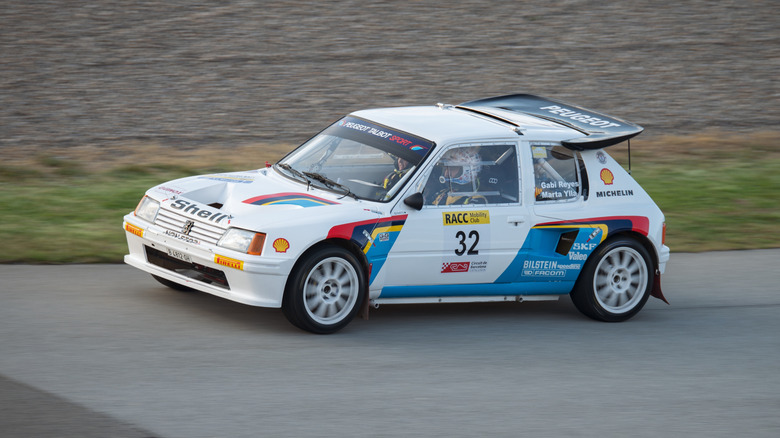
The regulatory reset for the WRC will hopefully return the championship to what it once was, but over the past few years, the sport has struggled to remain as relevant as it was in its previous golden age. That would always be an incredibly tough task, though, considering how monumental the Group B category was in the 1980s. Minimal restrictions allowed manufacturers to build ridiculously powerful cars that are now automotive icons. There are quite a few to choose from, but when it comes to success, none top the Peugeot 205 T16.
With legendary names such as Jean Todt overseeing the 205 T16 project, it was essentially destined for greatness. While the also incredibly successful Audi Quattro was much larger, the Peugeot's hatchback design was more agile, which, combined with the all-wheel drive layout, changed the game in terms of grip and balance. Having the engine in the middle of the car was another key factor in achieving the championship-leading balance, with the turbocharged 1.8L inline-four producing more than 450 horsepower. Even on raw power, the 205 T16 had the edge over much of its competition, making its 16 victories and two manufacturers' titles no surprise. After its win in 1986, Group B was banned, but rally stages still became full of mid-engine hatchbacks.
Porsche 962
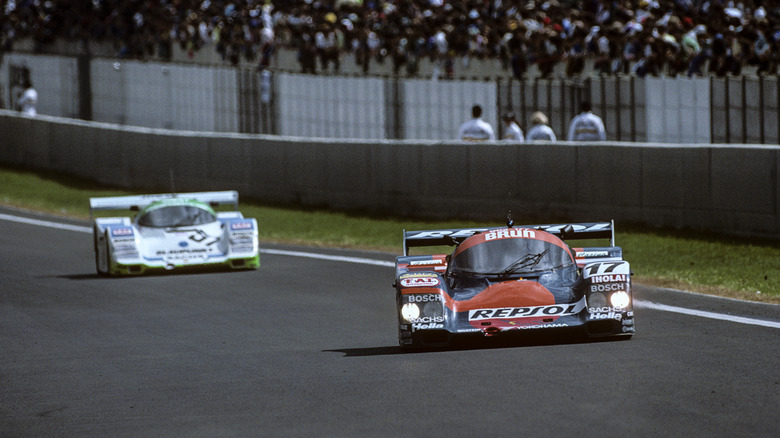
Moving over to a very different discipline, endurance racing has long been one of the most demanding in motorsport, mainly due to the types of races hosted by the top championships. In Europe, with WEC, these included the likes of the 24 Hours of Le Mans, and Stateside, the 24 Hours of Daytona, to name a couple. Over the years, these endurance tests have seen their fair share of dominance by a single car, but very few have reached the iconic level of Porsche. Competing in the top-spec prototype class (Group C in Europe and GTP in America), the Porsche 962 had everything needed for success: A powerful engine, brutal ground-effect aerodynamics, and the strength and reliability to regularly finish races.
Porsche introduced the 962 in 1984 to meet the new safety regulations that IMSA mandated, but it was essentially a slightly longer version of the 956. The power output varied for the prototype depending on what engine it had and which regulations it was meeting, but later iterations, such as the 962 C, produced 800 horsepower from its 3.0L engine. It even championed technology that is still used today, including the PDK dual-clutch transmission found in most modern Porsches. By the end of its run, the 962 won a total of 54 IMSA races, including five at the 24 Hours of Daytona. Over in Europe, it picked up three victories at Le Mans in its 962 guise, but counting the 956, the number climbs to seven.
Ford Thunderbird 'Aero-Bird'
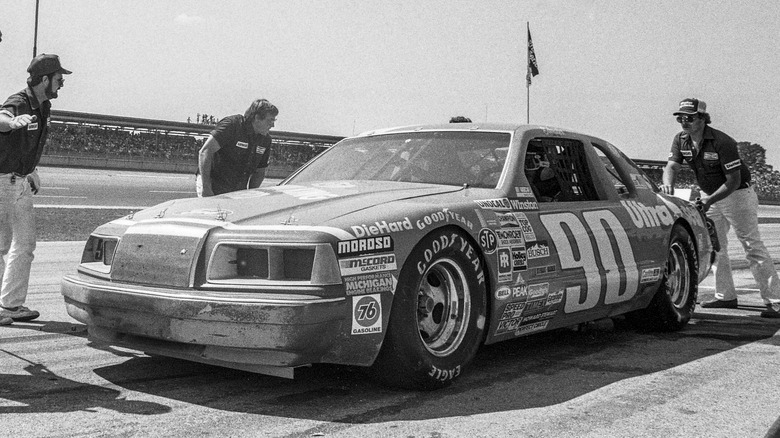
The 1980s weren't the first period to see manufacturers exploit aerodynamics in NASCAR. Perhaps the most recognizable car in the series' history is the Plymouth Superbird, which, while it had a mighty powerplant under the hood, was defined by its massive rear wing and pointed nose cone that helped it reach over 200 MPH. It was so fast that NASCAR effectively banned the philosophy in 1971, returning the cars to a more traditional appearance. More than a decade later, though, Ford's entry, the all-new Thunderbird, changed the game in a very similar way to Plymouth.
Quickly gaining the nickname 'Aero-Bird', the '83 Thunderbird didn't try to include any radical aero pieces, preferring to implement a smooth, sculpted body shape instead of the boxy design that was so common at the time. It still looked very much like a stock NASCAR racer, just having a bit more finesse on the edges. The switch proved so successful that the Thunderbird still holds the record for the fastest qualifying lap in NASCAR history, with Bill Elliot reaching 212.809 MPH at Talladega. Ford had every other brand scrambling to match the Thunderbird's pace through similar aero packages, fundamentally changing the sport and laying the blueprints for what NASCAR still looks like today.
McLaren MP4/4
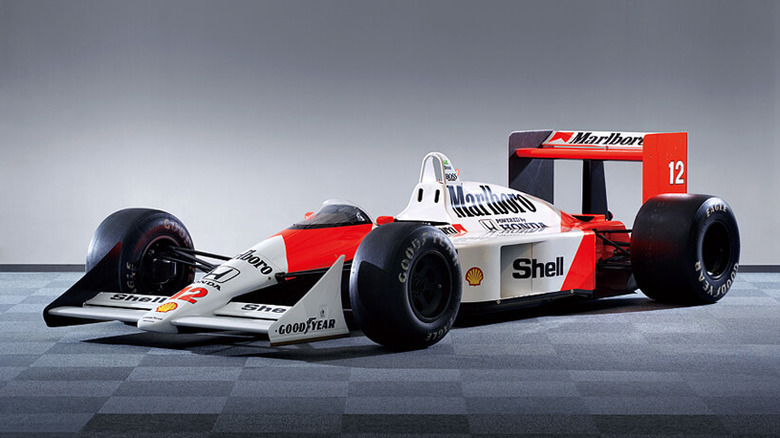
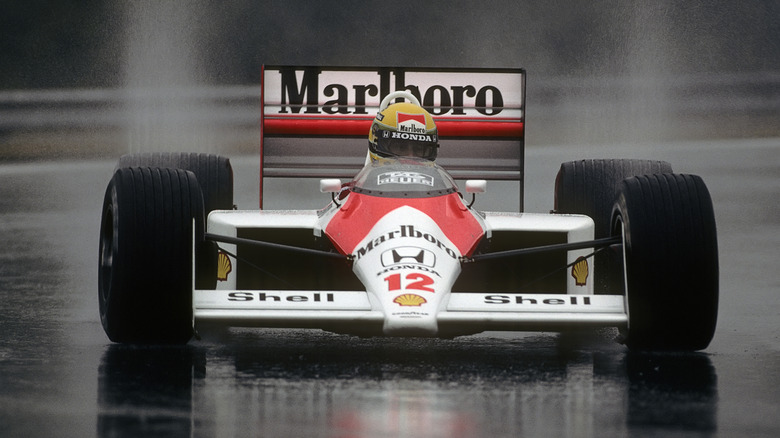
Ever since its inaugural season in 1950, Formula 1 has attracted the greatest drivers in the world, being widely considered the pinnacle of motorsport for over 75 years now. While open-wheel racing is quite different from any other discipline on this list, the relentless speed and razor-sharp precision needed to excel are, unsurprisingly, the ideal destination for any driver looking to be the best. But to unlock the speed that the drivers need to reach, the greatest technical minds are just as valuable in creating cars like the McLaren MP4/4, which was one of the most dominant F1 cars of all time.
The early stages of the '80s were relatively open in terms of regulations, but things started to tighten towards the end of the decade. The final year for turbochargers before their 2014 return was 1988, which the MP4/4 got bang on before the ban. The 1.5L V6 Honda engine produced 685 horsepower with a 12,300 RPM redline. What made the car so distinct and subsequently so dominant, though, was the Brabham-esque design courtesy of Gordon Murray and Steve Nichols, which made it very low-slung and kept the center of gravity as low as possible. The aerodynamics could work wonders, and having two of the best drivers of all time, Ayrton Senna and Alain Prost, behind the wheel certainly helps. Senna won his first championship with the MP4/4, winning eight races, and Prost won another seven.
BMW M3 E30
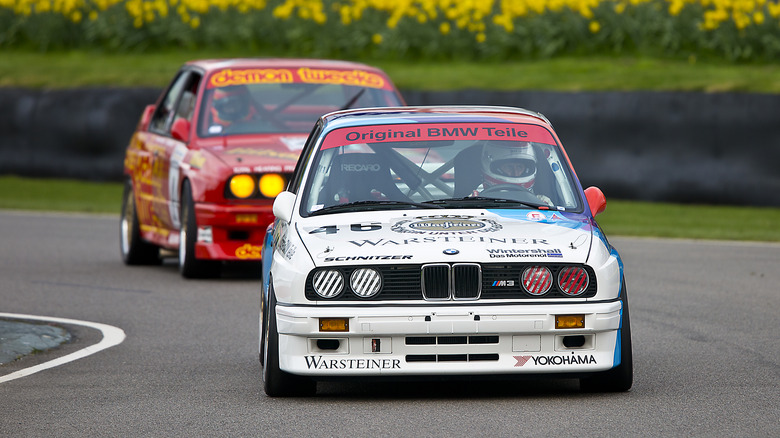
Looking across all these categories, a common theme among the most successful race cars of the 1980s is how they maximized their aerodynamic potential, rather than just having the biggest engine. An example of this that was much closer than most to what you could actually go and buy at the dealership was the BMW M3 E30, which is, without a doubt, one of the most iconic sports cars of the decade. Introduced in 1986, it was the first to carry the M3 badge, kickstarting one of the most iconic runs in German automotive history.
The majority of the M3 E30's success wasn't in America, though it did compete in premier championships such as IMSA. Across the pond, though, it dominated series such as DTM and WTCC. Powered by a punchy 2.3L inline-four producing 300 horsepower, the road-going version decreased that to 200 horsepower, but carried over the race-tuned suspension and standard ABS. As a Group A car, BMW had to make 5,000 examples for the road, and due to being a homologation car, they were incredibly close to what you were watching on the race track. The M3 E30 is yet another example of agility and handling, outlasting the sheer power that so many previous winning cars relied on.