

5 Inline-6 Engines You Should Steer Clear Of
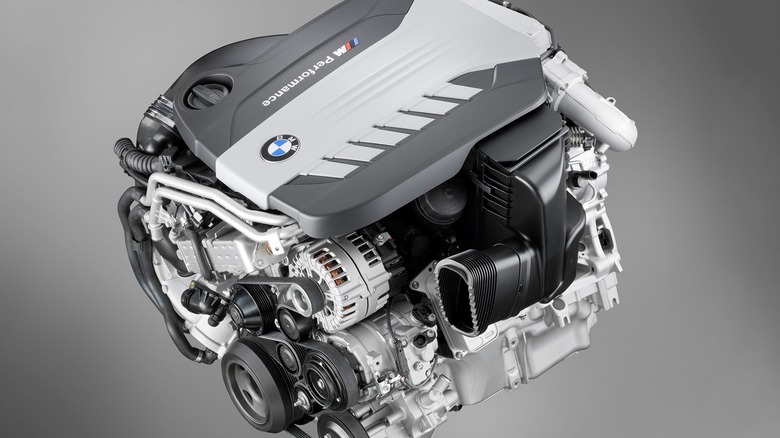
The inline-six engine has been around for quite a long time, with the first ones reportedly appearing around 1903. The architecture gave the inline-six layout a number of benefits of the then-industry-standard V configurations, which is a big reason why it caught on so quickly. For starters, the balance of the engine was better, since all cylinders were in a straight line. I6 engines also have one cylinder head (as opposed to two), and that means fewer camshafts; resultant, there are fewer things that can break. So, fewer moving parts, easier maintenance, and smoother power delivery mean that the engine quickly became popular in the car world.
Set cars aside, even today, many of the big semi truck engines -– machines that need to be reliable 100 percent of the time –- are inline six units, like Cummins' famous Turbodiesel or Detroit Diesel's legendary DD16. So, to cut a very long story short, I6 engines are often reliable, easy-to-maintain, fuel-efficient units that don't cause much fuss.
However, even the best automotive companies with centuries of experience aren't infallible, so we have indeed gotten some duds along the way. One of these inline-6 engines was the most unreliable thing produced by an already unreliable brand, another cut through timing chains far more often than it should have, and yet another had biodegradable components that would cause problems down the line. With all that said, here are five inline-6 engines that are known to cause problems, and should be avoided.
Land Rover Ingenium
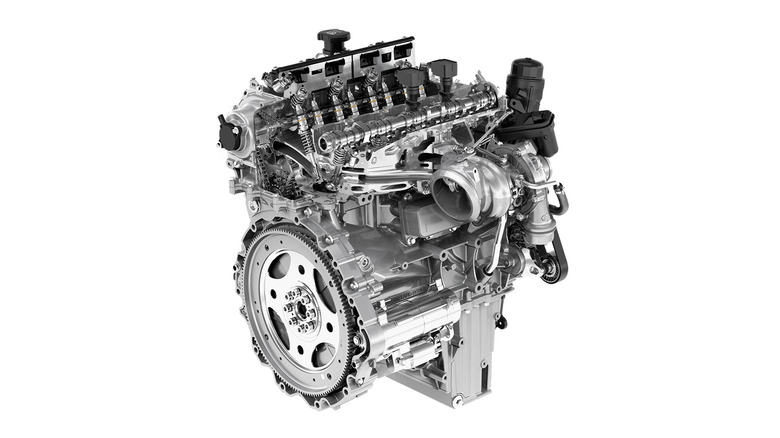
The Land Rover Ingenium ended up being one of the most problematic power units that the company ever came out with, as you'll see shortly. For those who don't know, Jaguar-Land Rover (JLR) was one of the many car companies that Ford used to own until it got bought out by a major Indian group. After the buyout, JLR needed something to replace the Ford engines that had thus far been powering its models, so it resorted to making the new power unit in-house.
The result was a family of two-liter engines launched in 2015 that had four cylinders, available in both gasoline and diesel variants. A powerful 3.0-liter gas version was in the 2019 Range Rover and made 394 hp, while hybrid options designated with the MHEV suffix were introduced down the line. Later on, in 2019, a three-liter inline-six cylinder version would also be added to the lineup, starting with the Land Rover Range Rover Sport model that year.
Among a laundry list of issues that can warrant its own in-depth article, Ingenium family engines most prominently suffer from premature failure of the turbochargers (and impellers), higher-than-normal oil consumption, and relatively poor economy on some models. The big one, though, has got to be the well-documented and common timing chain failures, which is a very expensive repair when it goes wrong. All of this has given the Ingenium family the title of being the worst Land Rover engine ever made.
BMW N57
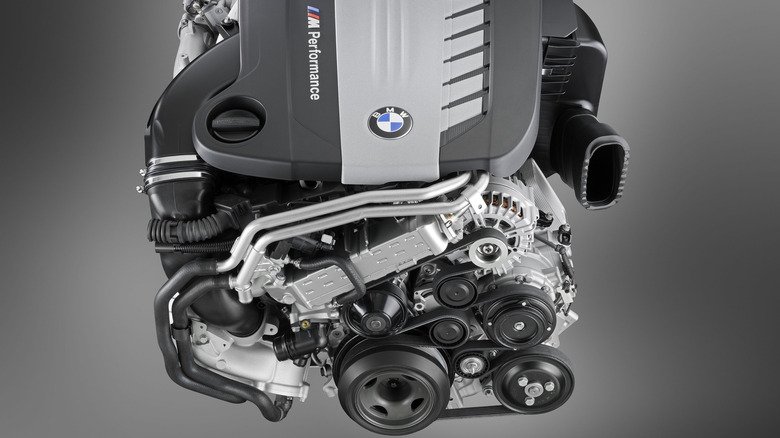
Not to be confused with the legendary BMW M57 diesel engine that it replaced in 2008, the BMW N57 was quite problematic for a number of reasons, as you'll see soon. For starters, the engine displaced three liters across its six cylinders, and certain versions could make north of 400 lb-ft of torque. It was used across a lot of the BMW range, including submodels from the 3-Series, 5-Series, various different SUVs, and even in some 7-Series limousines.
Given that the range of models powered by the N57 was so vast, the turbocharger layouts could vary greatly, with different versions of the engine coming with one, two, or three turbocharger units. Additionally, a version with three turbos was the world's first; found most notably in the BMW M550d, it was quite a good power plant on paper.
However, the entire engine family was plagued by issues that would require labor-intensive repairs that got expensive quick. To start with, there are quite frequent timing chain failures, it was common to encounter oil leaks, the turbocharger setup is unreliable, and the exhaust system plays up too. Furthermore, the UK police had a range of issues with their BMW fleets that had the N57, and many end users also complained of premature engine failure for a variety of causes. There was also a minor issue where BMW used the wrong software on about 12,000 units with the N57 engine, resulting in them not being up to emissions code.
BMW N54
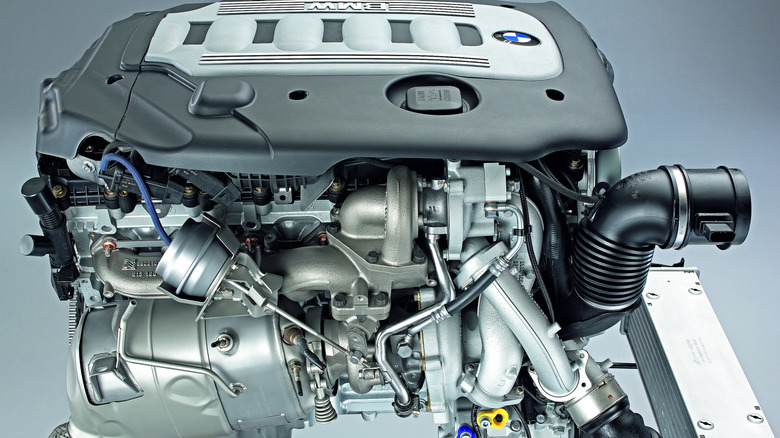
Perhaps unsurprisingly, the BMW N57 is not the only engine on our list from the German company, as the BMW N54 also features. It was introduced shortly before the BMW N57 from above, where it could make up to 335 hp, along with 398 lb-ft of torque. Displacing three liters, with dual overhead cams and four valves per cylinder for a total of 24, the N54 would be used in many BMW models. However, it proved to be unreliable from the start, suffering from a wide range of durability issues.
For starters, the N54 suffers from chronic oil leaks — a problem that has become a running joke in the community. The wastegate (a part associated with the turbocharger) also fails, and the engine also suffers from a buildup of carbon in certain valves. Furthermore, the HPFP, or high pressure fuel pump on the N54 engine was also prone to extremely frequent cracking or failure, meaning the engine could -– and would –- suddenly experience a reduction in power.
And, as with the other engines we've listed, the timing chain was not the most reliable, to say the least. Also, the timing chain in the N54 was located all the way at the rear of the engine bay (passenger side, towards the bottom), which complicated any repairs or replacements significantly. So, despite the BMW N54 being among the most powerful diesel engines ever fitted to cars, it is an unreliable mess of issues that should be avoided at all costs.
Triumph TR6
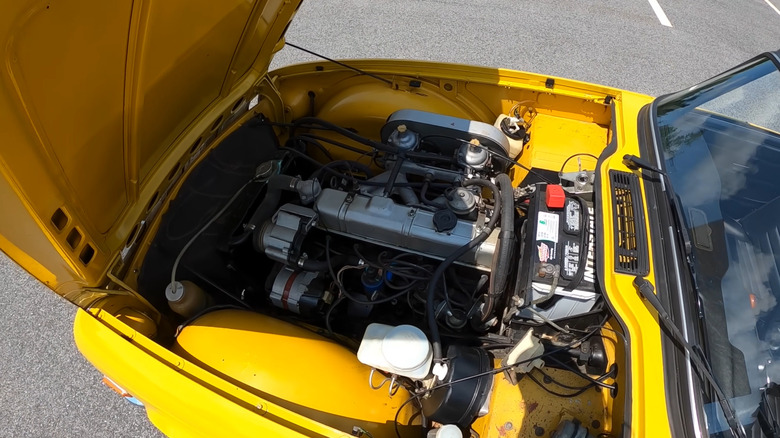
Triumph is perhaps best known as that one odd British company that used to make really fast cars. With all that said, there are still plenty of Triumph vehicles out and about on the roads, and many still swap hands on the secondary market for varying sums of money. One of the most popular examples has to be the Triumph TR6; if you're considering getting one as a project or weekend car, beware the inline-six engine it comes with. First off, any Triumph engine will be at minimum 50 years old, as the production only lasted until 1976. Aside from all age-related quirks, the U.S. versions of the TR6 came with carbs instead of fuel injection, producing 50% less power than the domestic UK variants.
While there is a huge community of Triumph enthusiasts in Britain, the same can't be said of the U.S., though this is not necessarily a major problem. Getting parts for the engine, however, will be; as we mentioned, Triumph no longer operates. Aftermarket spares exist, but things like the timing of the camshaft (among others) are best left stock, so all mods won't work the same. Furthermore, the TR6 had mechanical and cosmetic changes every single year it was in production, so there's a risk some mods might not be cross-compatible across years. All in all, it's a beautiful car that is generally reliable, but unless you're up to a real challenge, this is one beauty that's best left untouched by those Stateside.
Mercedes M104
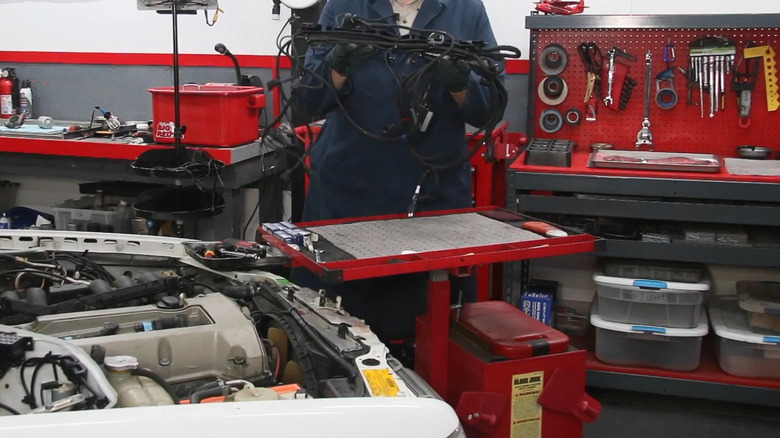
Imagine making a very important part of your engine wiring system completely and 100 percent biodegradable. If it sounds like a bad idea, that's because it was -– yet that's exactly what Mercedes did with their M104 engine, though the company has never officially admitted it. This was done ostensibly to be of benefit to the environment; indeed we don't think that Mercedes set out for the wiring harness to biodegrade and disintegrate. It's just that the recycled biodegradable material that the harness was made out of just ended up being quite, well, biodegradable. Given that the entire wiring harness disintegrates, any number of wires (contained within the harness) could be exposed. When exposed, these can rub against metal bits and bobs in the engine (such as, we don't know – the engine block) and short circuit.
The problems could be anything from a particular switch in the cabin not working and a loss of power, to complete engine stalling in severe cases. Other issues that the M104 owners faced were oil seals failing that led to huge oil leaks from different places, and the head gaskets leaking after a few years of ownership –- both of which are potentially expensive fixes. Other than these "small" issues, the cars that the M104 powered, such as several early 1990s E and C classes, were amazing examples of that late 90s Mercedes design. It's a pity that the manufacturer dropped the ball so hard on a vehicle that collectors would love to own today.