

4 Car Accessories Consumer Reports Says You Should Avoid (For Good Reason)
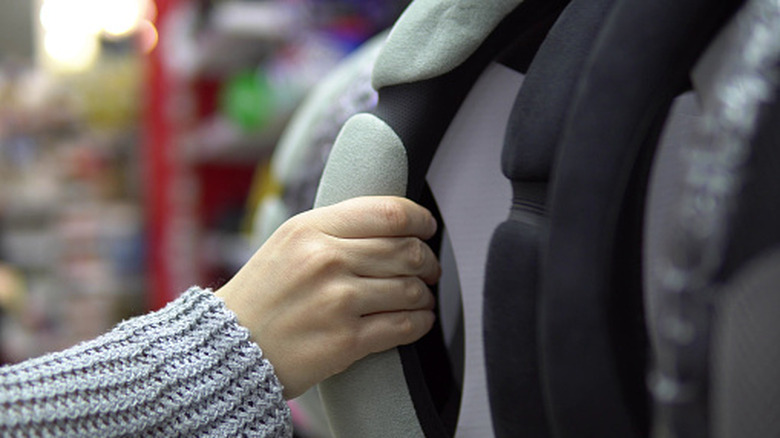
There are a lot of car accessories that can completely revolutionize your ride, including some that will make your trips safer. However, as discussed by Consumer Reports in a February 2026 article, there are some accessories that you should definitely avoid for safety reasons. To be clear, we're not just talking about bad investments here; the real issue is that these accessories can pose a danger to your vehicle and to yourself. This happens predominantly with products that interfere with safety measures like seat belts and airbag systems.
As is often the case with these articles, reader discretion is advised. While Consumer Reports warns against these types of accessories, you may very well have a tried and tested model that poses no danger and may even make your vehicle safer. The reason this list exists is that, if you didn't pick an explicitly safe model, there's a good chance it poses a threat to your vehicle. You should make sure the accessory you do have is safe if you want to keep using it.
Seat belt extenders are a great example, and that's probably why they're absent from CR's list. While aftermarket models have a high chance of being too dangerous to use, the NHTSA says that a seat belt extender sold or offered by the vehicle manufacturer directly is the recommended choice for drivers and passengers looking to make time spent inside their vehicle safer.
Seat belt pads
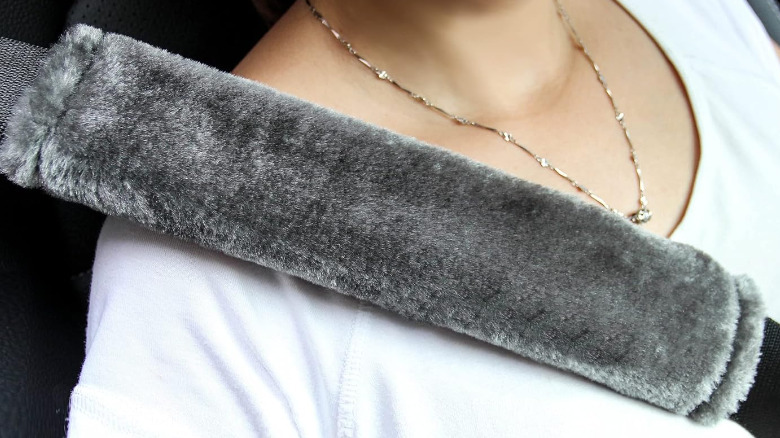
To work properly, a seat belt needs to sit reasonably close to your body in order to activate correctly during a crash. It also needs to rest on a specific area — over the collarbone and the rib cage, and then across the hips — to guarantee it will work. Some seat belt pads can interfere with these precautions, and so can some seat belt adjusters.
It's possible that the specific model you're using right now is perfectly safe. The problem is that, at least with many of these products, there's no way to know which one is going to interfere with the safety system in your car. Seat belts have a very specific way of operating, so even small variations can cause serious issues.
That said, it might not be entirely accurate when Consumer Reports claim that seat belt accessories can make advanced seat belt technologies in your car less effective. This warning is possibly referencing Volvo's multi-adaptive safety belt system and other "smart" seat belts, which are supposed to adapt to their user and the environment to offer the best protection possible. Will a system like this be thrown for a loop by a fuzzy shoulder pad in ways that are fundamentally different from what happens to regular shoulder pads? It seems unlikely, but it's impossible to say. However, you should still avoid seat belt pads unless you know they're compatible with your specific vehicle.
Seat cushions
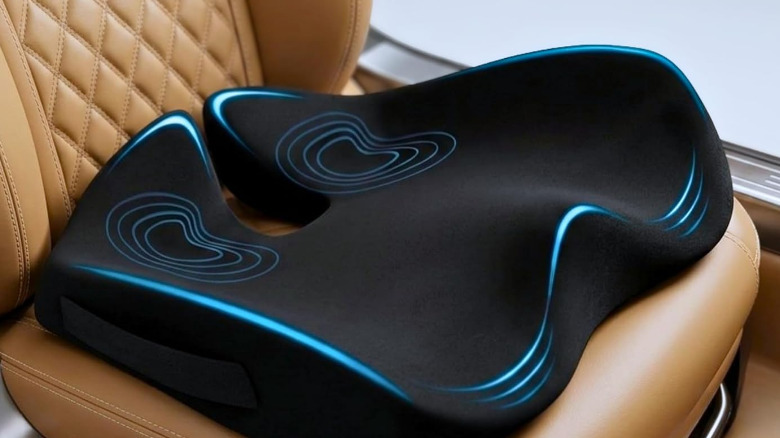
There are two reasons why Consumer Reports calls car seat and back cushions dangerous. The website claims they can interfere with airbag deployment systems and potentially trick the vehicle into thinking no one is sitting on the cushion, which could prevent the airbag from deploying correctly. Sure enough, owners of vehicles like Kias, Teslas, Mazdas can be found all over the internet, asking each other why a small back cushion disables their car's passenger airbag. And while some have found a solution (or rather, a hack) to force their car to keep the airbag operational, messing with the safety systems of your vehicle is not something we'll suggest you do.
Another problem that seat cushions could have is letting your body move in ways that are less than ideal during a crash. However, this possibility seems to have been inspired by a concern rather than any specific events. Consumer Reports suggests that those who use a seat cushion could slip under the seat belts, which is certainly a nightmarish scenario, but one that might be exceedingly rare, as we couldn't find any reporting about it.
It's a little easier to imagine this happening with swivel seat cushions, the kind that rotate to make it easier to get in and out of the car. One of these swivel cushions might conceivably your body into an odd position right before an accident, but even that seems unlikely; these things move very slowly once you sit on them. That said, if you want a swivel seat, the best option is to get a car that comes with one. It's much safer than messing with the airbag deployment system.
Steering wheel covers
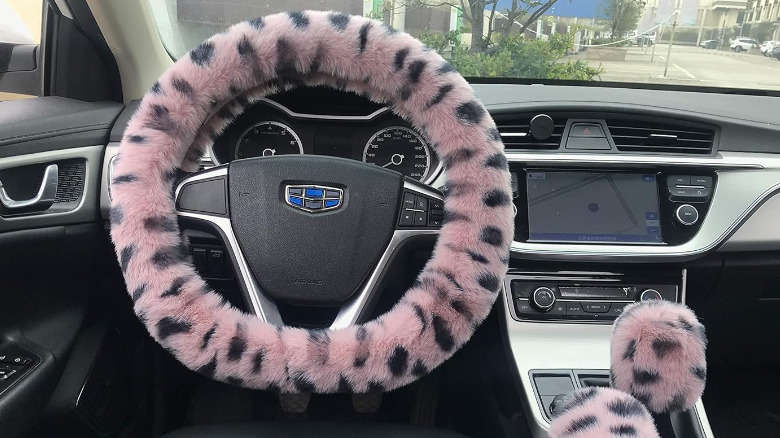
Will every steering wheel cover interfere with the airbag deployment system? Not necessarily, and some covers are even described as airbag safe. But if there's a chance that your steering wheel is going to prevent your airbag from operating properly in a crash, it just isn't worth it. This is Consumer Reports' biggest problem with steering wheel covers, though the website also adds that these accessories can make it difficult to grip and rotate the steering wheel, depending on the specific model.
Anecdotally, a steering wheel cover can also damage the steering wheel itself, especially if it has a very snug fit, so you should be wary of "safe" covers as well. My own car's steering wheel got scratched pretty badly after I used a very tight cover that was airbag-safe and easy to grip, but did not exactly respect the fake leather surface it was placed on.
The only valid reason to use a steering wheel cover that we can think of, and the reason I started using one, is to protect the wheel from intense temperatures. Not just because they can damage it (they can damage the wheel cover, too), but because a steaming hot steering wheel is impossible to use safely. But a steering wheel cover not the only way to keep your car cool. A better solution is to just get a reflective sunshade. There's no way that one will backfire, as long as you take it off before driving.
Cupholder extenders
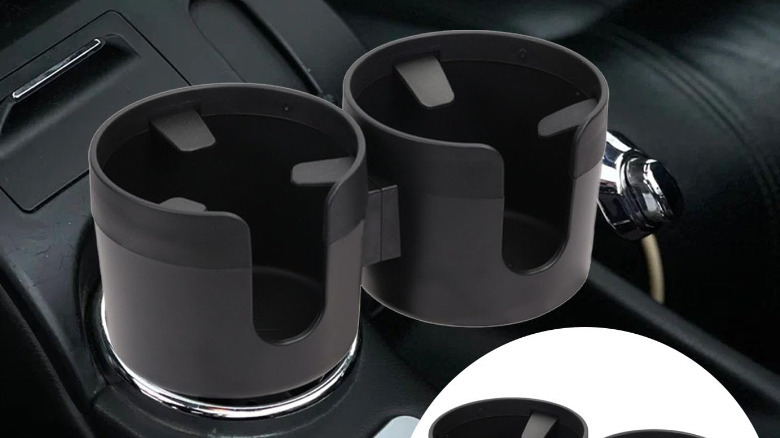
An upsized cupholder for your big water bottle seems like a no-brainer, but it takes just one sentence to understand why that's a bad idea. What if the extender comes off and the bottle rolls under your brake pedal? You don't need any personal anecdotes to understand why that's something you want to avoid, but as someone who saw that happening while driving, I can confirm that it was not a fun experience.
Stick to a smaller water bottle (and make sure it fits snugly in the cupholder), or put your large bottle in a backpack and stick that on the passenger seat. Or, as Consumer Reports suggests, use one of the door pockets, which are usually big enough even for large containers.
And while we're talking about water bottles and car safety, you should also avoid leaving plastic bottles inside a car under direct sunlight. These bottles are known to have caused fires when the water inside acts like the lens in a magnifying class, though though this is a very unlikely occurrence. There's also the risk of some plastic from the bottle leaching into the water. While we don't know exactly how dangerous this is, it's best to avoid it. Hot water infused with plastic isn't especially tasty, either.