

5 Helpful Tools And Gadgets Campers And Hikers Tend To Forget

We may receive a commission on purchases made from links.
The National Park Service recently released the results of a study conducted in 2024, intended to gauge the level of preparedness of day hikers and trail runners in Rocky Mountain National Park. This study, summarized here, surveyed hikers and runners about the gear they carried with them, along with personal data and their own opinions about their level of wilderness-readiness. Results showed that most of those surveyed didn't bring several items from the National Park Service's 10 Essentials — a list of emergency items posted at most trailheads in national parks, including Rocky Mountain National Park, that includes first aid, navigation, shelter, and hydration.
As a Colorado resident, very amateur hiker, and husband to an impressive person that completed the Colorado Trail by herself, I can attest to a lot of the findings of the field survey. My partner is absolutely capable and incredibly wilderness-prepared on her longer hikes, and often talks about people she's met on the trail that were woefully underprepared for weather or accidents. While she's always happy to help, the very nature of, well, nature, means you may not encounter another person if an emergency strikes.
With that in mind, SlashGear has compiled five helpful tools and gadgets campers and hikers tend to forget. These items represent the most-forgotten categories on the survey we mentioned previously — hydration, tools/knife, fire starter, navigation, and emergency shelter — and are products my wife and I have experience with. Hopefully they'll help readers be prepared for anything on their next trip into the great outdoors.
LifeStraw Peak Squeeze
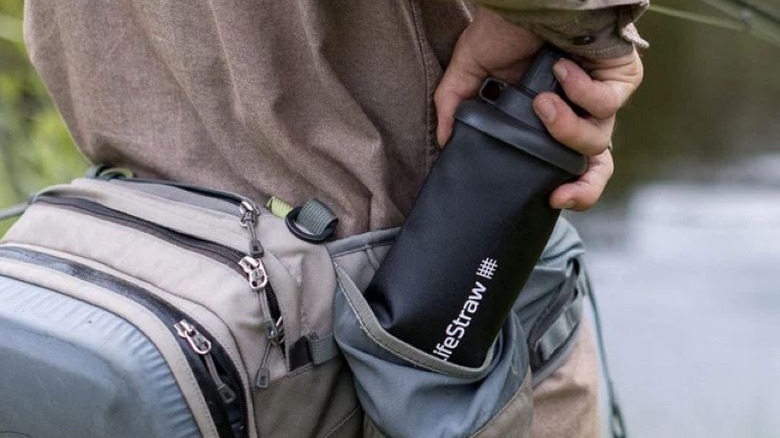
While the study we're referencing indicates that most outdoorspeople carry extra water, it also shows that most forget to bring some form of water treatment along for the journey. To some degree, that makes sense — say you're on a short hike and you've brought a big, heavy water bottle (like Shark Tank's LARQ Water Bottle) in your pack — why waste the space? However, that's when emergencies happen. One minute you're wandering off trail to inspect a neat tree. The next, you're propped up against that tree with a broken ankle, no passersby, and a rapidly depleting water supply. In that instance, the ability to filter water for safe drinking is paramount.
One of the best known brands in water treatment is LifeStraw, the company that makes the popular personal water filter that allows users to drink from questionable sources without worry. While that's a great gadget to have in a pinch, a better option for most folks is the LifeStraw Peak Squeeze. It combines a lightweight pouch with a removable microfilter, meaning you can use the filter as a straw, or threaded onto another bottle. The pouch and filter are also incredibly pack-friendly, rolling up to about the size of a Twinkie. It's a logical evolution of the popular straw, allowing you to dip the bag in a stream or pond and filter out almost everything that could leave you regretting that decision.
You can order a LifeStraw Peak Squeeze for around $40 on Amazon.
Ontario RAT 2
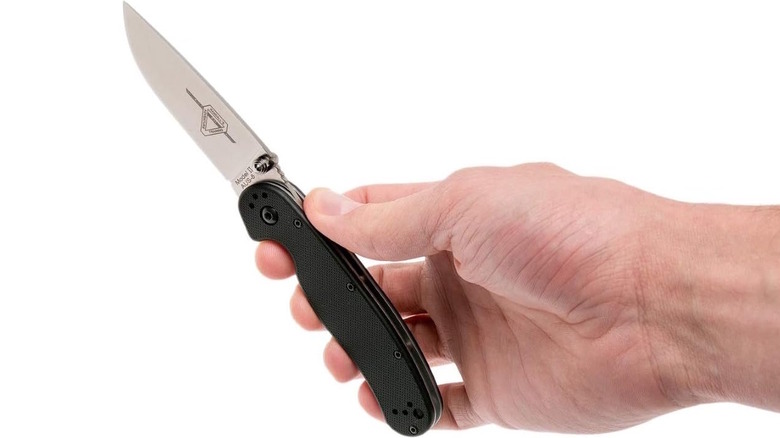
Purists will tell you a fixed-blade knife is the way to go when choosing an outdoor knife. They're correct in that a fixed blade is often stronger and more useful for the tasks you'll be performing when backcountry camping or in survival situations. For a day hike or overnight camping, something that's strong and durable, but perhaps easier to pack and carry is a folding knife. While it may not be as sturdy as a fixed-blade knife, that trade off comes with a little more safety and portability. If you're looking to carry something a little more versatile on your outdoor adventures, check out SlashGear's guide to multitool alternatives to Leatherman.
A knife I purchased last year after reading multiple positive reviews is the Ontario RAT 2. This is one of the best pocket knives out there. It's incredibly durable, comfortable in hand, small enough to comfortably carry in a pocket, and super affordable. The RAT 2 features a three-inch blade, a nylon handle, and a little lanyard hole. It's a no-frills tool, but sometimes that's what you want in a knife. Mine has kept its edge after a few hikes and several hundred boxes that needed breaking down at work, which is a testament to the quality AUS-8 steel used in the blade.
The Ontario RAT 2 can be ordered from Amazon for about $40; for a more robust selection of handle and blade colors, order direct from Ontario Knife Company's website.
Pyro Putty Elite Rechargeable Dual Arc Lighter
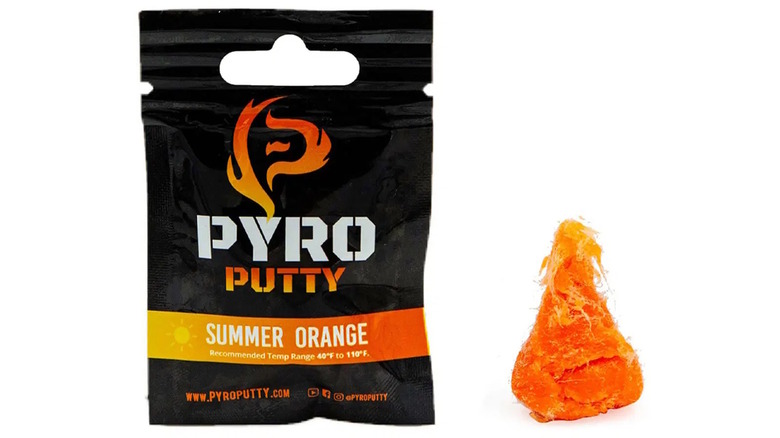
Fire starters aren't necessarily something you'd think about while packing a light bag for a day trip, but it never hurts to be prepared. You could bring a lighter and hope for the best with whatever tinder you can find, but if you're caught by a storm or forced to make camp, having something like Pyro Putty could be a life saver. These little bundles are waterproof, quick to light, and keep burning even in high winds. They're sticky, allowing you to attach them directly to wood, and even come in special formulas for the season and temperatures in which you'll be using them.
You'll still need a fire source to ignite Pyro Putty, like a lighter, match, or ferro rod. You could also invest in the handy Pyro Putty Elite Rechargeable Dual Arc Lighter, a gadget that features a little waterproof storage compartment in its base for a bit of Pyro Putty. It's rechargeable via mini-USB, glows in the dark, and Phoneskope claims you'll get 300 arcs out of a single charge. While I'd still suggest keeping a few waterproof matches in your pack just in case, this is a great starter kit for the outdoorsperson or campfire enthusiast in your life. The Pyro Putty Elite Rechargeable Dual Arc Lighter comes with a single pouch of Pyro Putty (which the manufacturer claims can start up to 30 fires) and can be purchased from Amazon for about $30.
McMurdo FAST FIND 220 & Spot X
Most of us consider our cell phones to be our link to the rest of the world, but what happens when you're outside of cell service range? While that's not as common an occurrence as it once was, areas where service is still lacking also happen to be some of the most popular areas for hiking and camping — they call it "going off grid" for a reason, after all.
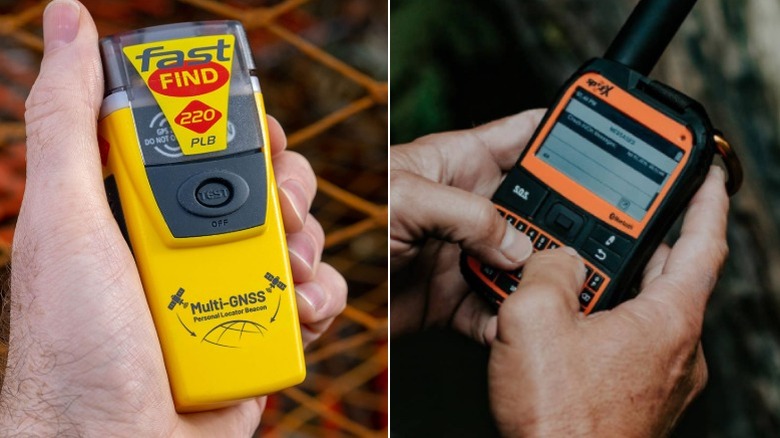
For emergency situations where a phone can't get a signal, a Personal Locator Beacon is a life-saving last resort. Personal Locator Devices, or PLBs, are devices that send a one-way signal to search and rescue. The McMurdo FAST FIND 220 is among the most popular due to its relatively low price and a lack of subscription fees. It's waterproof, has a battery life of over six years, and produces a signal to rescue services for a minimum of 24 hours. The Fast Find also includes an LED flashlight programmed for SOS morse code, and can be ordered from Amazon for $275.
There are also two-way satellite messengers like the Spot X, off-grid tech essentials which trade off the super-powerful beacon of a PLB for the ability to send messages and location data to friends. There's still emergency functionality along with text messaging, but these devices typically require a subscription for service. The Spot X is available on Amazon for $250.
SOL Emergency Bivvy
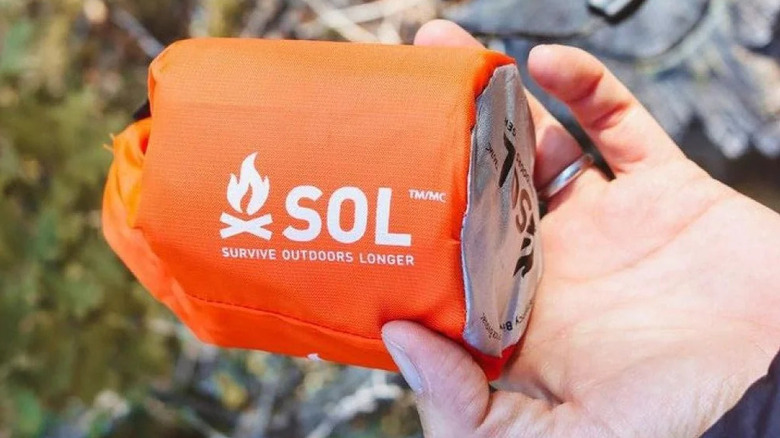
The most commonly forgotten piece of gear from the National Park Service survey we're referencing for this article was some form of emergency shelter. Campers or thru-hikers often carry tents for overnight stops, but anyone venturing out into the wilderness, including trail runners, cyclists, and day hikers, should have some kind of shelter on hand, even if it's just an ultralight space blanket or a tarp they picked up at Harbor Freight.
Bivy sacks, like the SOL Emergency Bivvy, are kind of like an emergency sleeping bag. They're lightweight, easy to pack, and waterproof, windproof, and heat-reflective. Anyone with a backpack can easily fit this pop-can-sized emergency bag into the bottom of their pack, and at less than four ounces, you probably won't even notice it's in there. The bivvy is reusable, and the manufacturer says it reflects up to 90% of the user's body heat, making it a valuable resource if caught by harsh weather. The SOL Emergency Bivvy includes a rescue whistle and a paracord drawstring that doubles as tinder for starting a fire, comes in safety orange or green, and can be delivered via Amazon for about $25.