

5 Under-The-Radar Auto Races Worth Checking Out In Spring 2026
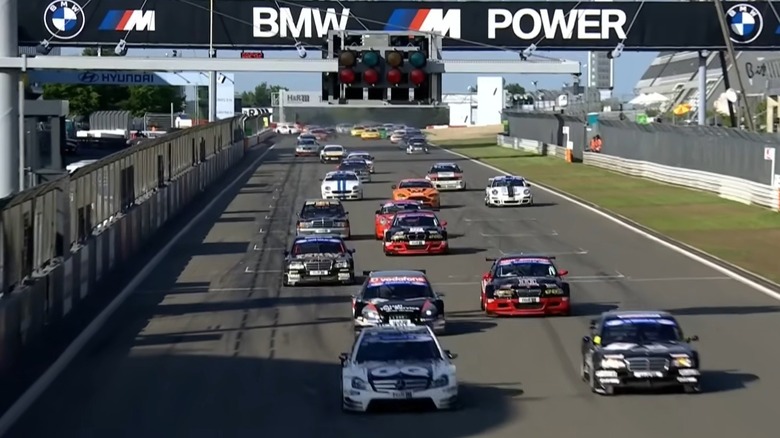
If there's one common thread that unites car enthusiasts, it's motorsports. From NASCAR to drag racing, and from IndyCar to drifting, there's generally something for everyone, with many events to choose from. Naturally, most of these take place between spring and autumn, with perennial favorites like the 24 Hours of Le Mans, Brickyard 400, and much of the F1 schedule among them. But virtually every weekend between then and now is packed with racing if you know where to look for it, and that's where we come in.
Because the world of racing is so diverse, we'll narrow our scope to a specific type of motorsport — circuit racing. We can further divide this again, discussing everything from clubman and amateur track days to big-league races on world-renowned circuits. However, the nice thing about race weekends is that you often get a variety of experiences: Much like a music festival, there are opening acts — in this case, the less noteworthy (but just as exciting) competitions — that lead up to the main event.
It's these more minor races (and big-time but lesser-known races in the United States) that we'll focus on here. These are the events that typically fall under the radar, often encountered waiting for the big race, but deserve recognition as fast, competitive, and fun to watch. Let's check them out, keeping the horizons broad to help you find something that's your speed.
IMSA Michelin Pilot Challenge (Laguna Seca): May 2-3
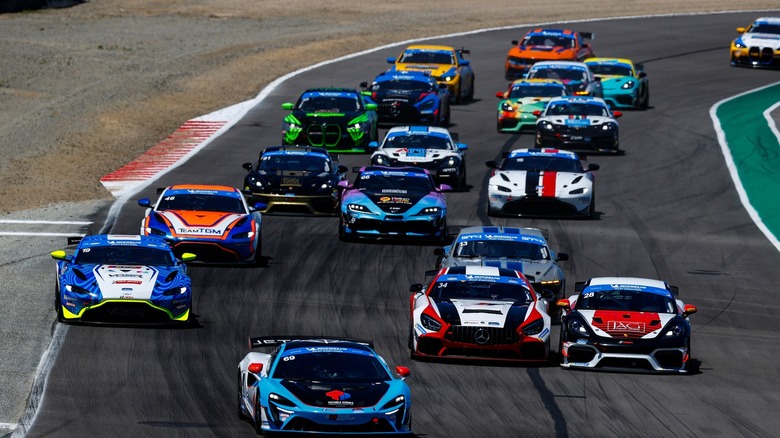
Taking place at Laguna Seca, the 2026 running of the Monterey SportsCar Championship offers close-quarters multi-class racing on the relatively technical circuit. The circuit has been a mainstay on sports car racing calendars since the 1950s, hosting everything from Trans-Am to MotoGP, and has such a reputation that Ford even named a limited-edition Mustang Boss 302 after it.
The opening weekend of May is going to be packed, with races taking place throughout the 48 hours. The racing starts on Saturday with the Mustang Challenge, a one-make race featuring an all-Mustang cast. One-make races, for those wondering, are events where all competitors drive identical vehicles. After it comes the Michelin Pilot Challenge race, a multi-class event featuring GT4 and touring cars — and plenty of famous drivers and cars to boot. It's not the race many people will likely show up for (that happens on Sunday with the Monterey SportsCar Championship race), but it's arguably just as exciting.
Multi-class racing is inherently perilous and relies on strategy to mitigate the risks of traffic, for one. Combine that with a tight, twisty circuit and cars that are just fast enough to make it interesting, and you have an excellent racing formula. The Michelin Pilot Challenge proved somewhat more exciting than anticipated at 2026's Sebring outing in March, owing to a massive accident off the starting grid, and we're absolutely betting on another banger of a race this time around.
GT World Pirelli GT4 and TC America (Sebring International Raceway): May 7-10
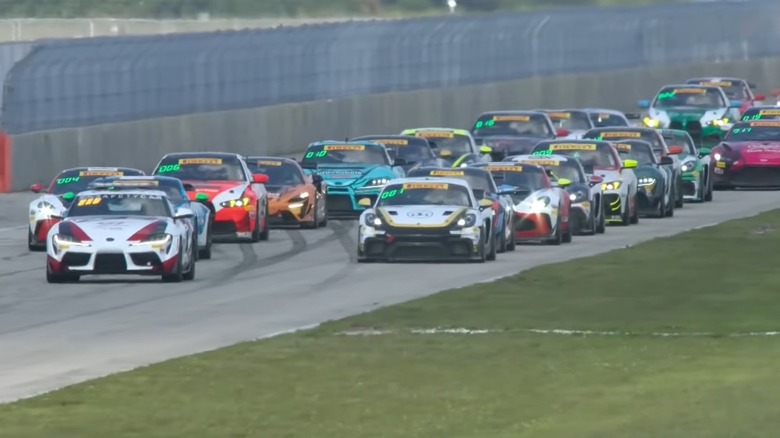
The GT World Challenge America series hosts single-class GT3 racing, packing the field with the same type of car and separating the classes by driver skill and experience. Anyone could theoretically take an overall win, since their cars are all technically competitive due to Balance of Performance (BoP), which is one reason why these events are so exciting. However, those same rules apply to the preceding competitions featuring GT4s and touring cars, respectively: the Pirelli GT4 and TC America races.
Sebring International Raceway in Sebring, Florida, is famous for being situated at an old airfield. The first and final corners are still paved with the original concrete slats, providing an uneven, bumpy surface for cars to race on. It's one of the most iconic circuits in America, hosting the 12 Hours of Sebring as its main event. But the track is just as exciting for slower vehicles as well, especially dozens of them racing in proximity.
Touring cars (not to be confused with classic grand touring cars) are particularly infamous for their paint-trading antics and close battles, and TC America is no exception. The last round featured several close battles right up to the line, despite a field of only 11 cars. GT4 is even more hectic, with a grid of 25 drivers of various skill levels all battling right up to the line. It serves as an excellent appetizer for the GT3 main event, which generally mirrors the GT4 race in every way, just with faster cars and a longer duration.
ADAC RAVENOL 24h Nürburgring Tourenwagen Legenden (Nürburgring GP Circuit): May 15-16
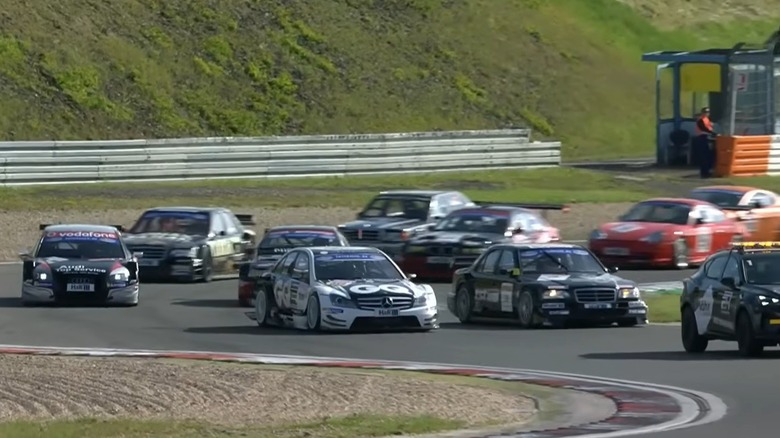
At first glance, sure, the 24 Hours of Nürburgring is hardly an overlooked event. It's one of the most famous endurance races in the world, in fact, due in no small part to the track, which is surpassed in length by only a few courses, including the infamous Isle of Man TT circuit. And yes, while that race is particularly special for its length and variety, it's preceded by another race that's noteworthy for entirely different reasons.
Enter the Touring Car Legends race (or Tourenwagen Legenden, to be correct). It's one of numerous classic events that takes place at the 'Ring, and grants viewers a privilege not seen in decades — cars from the 1980s to 2010s absolutely sending it, in the spirit of classic Group A and GT2 endurance races. Sure, the cars only race for around half an hour and aren't running on the full 13-mile Green Hell, but where else will you see an air-cooled Porsche 997 GT3 R battling wheel-to-wheel with a Mercedes 190E 2.5 Cosworth?
These classic races take place all over Europe, but the Tourenwagen Legenden race is relatively unique in its makeup and the ferociousness of the battles, with classic cars of similar pace going multiple vehicles wide and exchanging paint as they did in the 1980s and 1990s. It's a blast from the past, and one which is often glossed over in favor of the 24 Hours of Nürburgring proper.
GT World Challenge Europe GT2 and GT4 European Series (Monza): May 29-31
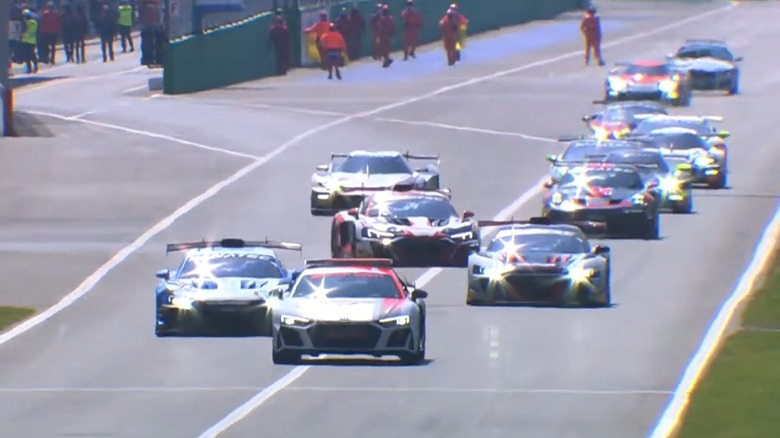
If someone told you to picture a fast car, what would come to mind? Certainly, many of us might think of a race car not unlike a Formula 1 car – especially the older ones with the screaming V10s – but many more would instead jump to supercars or hypercars. Indeed, while we have many streetable cars that reach over 1,000 hp, we don't see many exotics on the racing circuit anymore, not since the GT1 days of the 2000s, anyway. That is, unless you know where to look — enter the totally unappreciated GT2 class, a budding category composed of a few noteworthy supercars.
This year's grid isn't exactly stacked; just nine drivers headed up the first race. But the cars are spectacular regardless — Maseratis, Lamborghinis, Mercedes-AMGs, KTMs, and more all battle wheel-to-wheel here. Similar to the other races that weekend, the GT2 classes are separated by driver skill, with all cars theoretically competitive. This equally applies, of course, to the GT4 races happening that same weekend.
Unlike GT2s, the GT4 field is absolutely packed with cars, with over three dozen entries on the opening race at Circuit Paul Ricard. Monza is a notoriously fast circuit (the fastest on the F1 calendar), with a tight opening chicane that's witnessed many accidents. Close battles in the GT4 class are virtually guaranteed here, offering the promise of protracted battles to complement the screaming engines of the GT2s later on in the day. You also have a three-hour GT3 skirmish to round things off — there are far worse ways for a racing fanatic to spend a weekend.
Super Taikyu 24 Hours of Fuji (Fuji Speedway): June 5-7
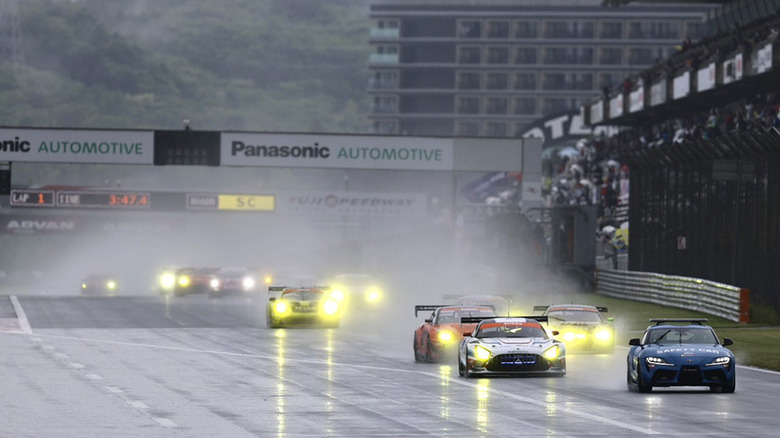
Super Taikyu is relatively underappreciated in Western countries, certainly not helped by a lack of English-language broadcasts. Nevertheless, it offers an absolutely superb and unique racing experience, arguably on par with the 24 Hours of Nürburgring in terms of variety. That's a bold statement, but let's take a look at the classes. We have GT3s, GT4s, front-wheel-drive hatchbacks, touring cars, MX-5 Cup cars, and more, all sharing the same track.
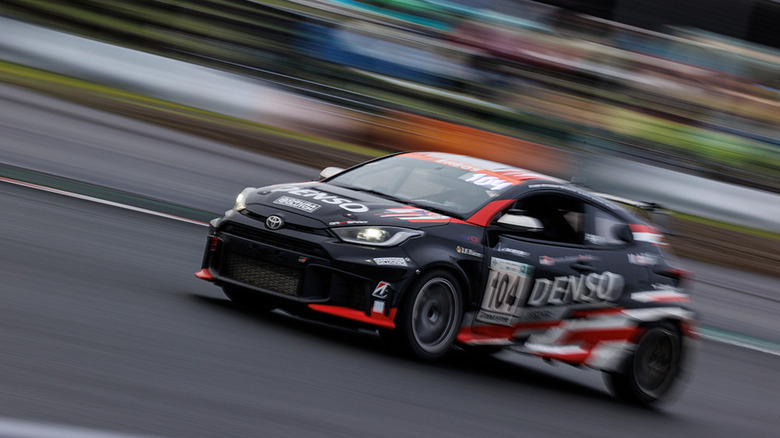
These are cars with wildly different performance levels competing for a full 24 hours, putting the following weekend's 24 Hours of Le Mans to shame in terms of sheer variety (though not outright speed). Other Super Taikyu events split them up into two races by general pace, but the 24-hour run has every class running simultaneously, making for a truly unique spectacle. As for the cars themselves, you have everything from the world-class Mercedes-AMG GT3 Evo and Lexus RC-F GT3 down to Toyota GR86s and Honda Civics, with most classes fielding enough drivers to provide healthy competition across the board. Then you have some oddball entries like a Suzuki Swift Sport and Toyota Supra GT4, rare sights on Western racetracks.
Likely the main issue preventing this race from being more widely recognized is the broadcasting, as it's only viewable in Japanese. But good racing isn't burdened by language barriers; if you can look past the localization (or, indeed, if you're brushing up on your Japanese), then the 24 Hours of Fuji is the best-kept secret of long-distance endurance circuit racing.
How we selected the races
It's tough to say what races are "underappreciated" at a glance because the world of motorsport is so vast and spread out. Obscurity is a virtual guarantee when it comes to oddball events and championships. Therefore, we instead stuck with more mainstream circuit racing events, narrowing our selection based on overall viewership, entries, and general cultural popularity.
We aimed to select series that coincide with other, more popular racing events. These may typically be seen as ways to kill time until the main event starts, but they often provide enjoyable racing. Similarly, we looked at international racing series not otherwise popular in the English-speaking world that fit a conventional definition of "automotive circuit racing." The selections were not made on numbers alone; if they were, the list would be filled with clubman races at local tracks. Rather, we went for professional-level competitions and points-based championships under otherwise well-known banners.
Finally, we aimed for variety, with each of these races offering something different for everyone. From one-make racing to multi-class, we wanted something for everyone, either as an introductory course to the underappreciated disciplines or as a reminder that these events are alive and kicking.