

BMW's 7 Series Facelift Looks Better Outside, But I Can't Get Over The New Interior
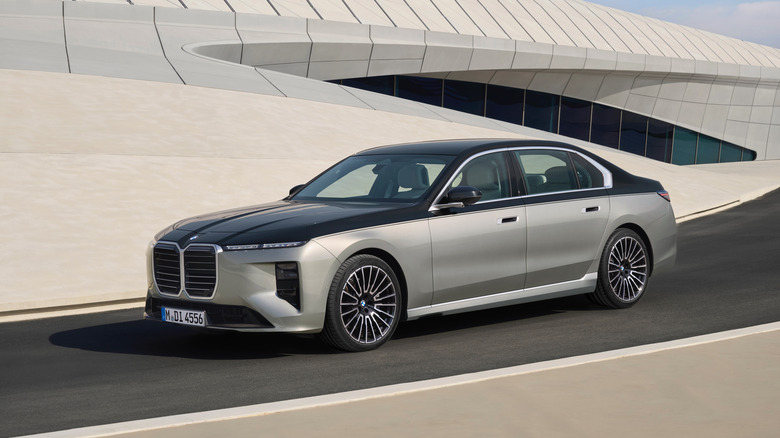
The midcycle refresh of BMW's flagship 7 Series sedan is here, but BMW didn't change the one thing everyone expected it to. The 7 Series still looks it was designed based on a dare, perhaps because substantially changing the big sedan's looks would be an admission of defeat. This time, though, looks aren't everything.
Since this generation of 7 Series arrived (as a 2023 model), BMW underwent a technological metamorphosis—with new electric powertrain hardware and a new interior-design aesthetic based on dashboard-spanning screens—with its Neue Klasse family of EVs. The 7 Series wouldn't be a proper flagship if it didn't incorporate the latest and greatest tech, so BMW made sure to include it with this refresh.
 BMW
BMW
The new 7 Series may not look that different on the outside, but with the addition of BMW's panoramic display, it's a different story on the inside. The electric i7 also gets an efficiency boost from the same battery cells used in the iX3 crossover and i3 sedan. It should all make for a more effective Mercedes-Benz S-Class competitor, even if the styling is still an acquired taste.
Über sedan
Since 1977, the BMW 7 Series has been the car of choice for plutocrats and action-movie couriers alike because it combines old-school-luxury size and space with the moves that made BMW's "Ultimate Driving Machine" tagline palatable. BMW is backing away from the latter (it it's trying to bring the less-definitive "Freude am Fahren" or "Joy of Driving" back to the fore) but not the 7 Series' commanding status.
That's not something to take for granted. The Mercedes-Benz S-Class is also getting a midcycle refresh, but the Audi A8 is laying fallow as SUVs present strong competition. A big sedan was once the last word in automotive status, but now those wanting to flaunt their wealth are just as likely to go for a Range Rover or Escalade. That would seem to make the BMW X7 the more relevant high-end model, but BMW still believes there's space for both.
 BMW
BMW
"The 7 is the flagship," BMW senior vice president of product and brand management Bernd Koerber said in a media roundtable in the automaker's hometown of Munich, "but the X7 is gaining more ground."
Hopefully not too much ground. Big sedans—even one as immodestly proportioned as the current 7 Series—have a classiness that the biggest and fanciest SUVs can't match. It helps that a 7 Series is designed purely for the road and doesn't have to feign off-road capability that customers outside the Middle East won't care about.
Welcome styling refinements
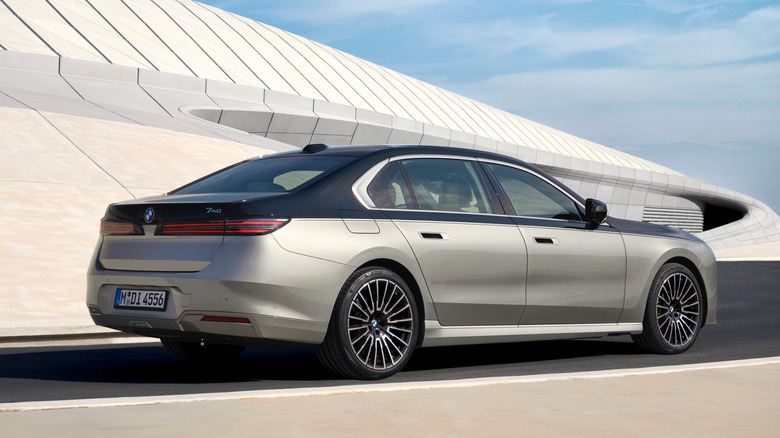
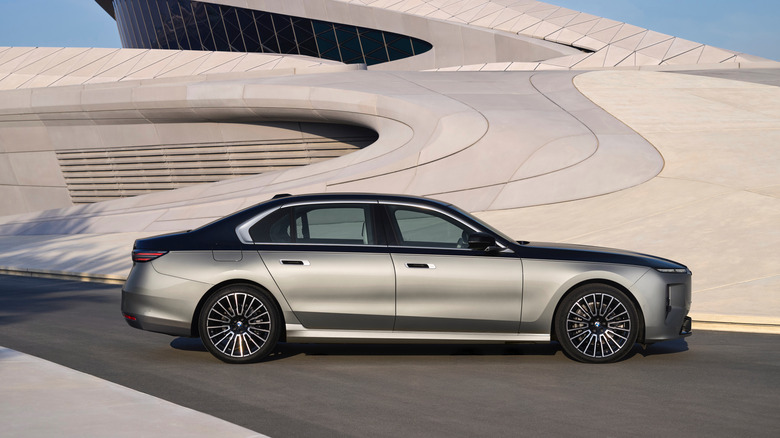
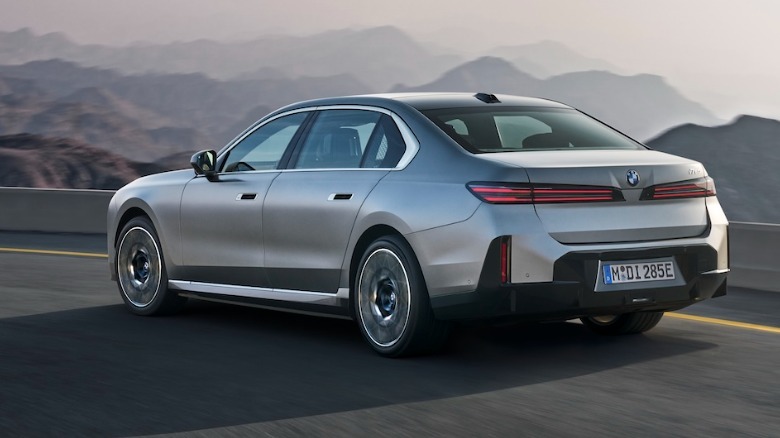
That being said, the 7 Series still lacks the stately proportions of an S-Class, Bentley Flying Spur, or its platform-mate, the Rolls-Royce Ghost. BMW designers were unwilling (or unable) to hide this sedan's bulk, but this refreshed model is definitely an improvement.
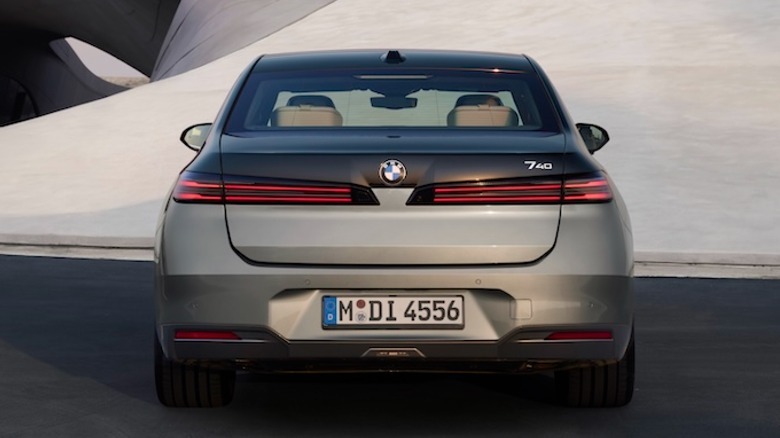
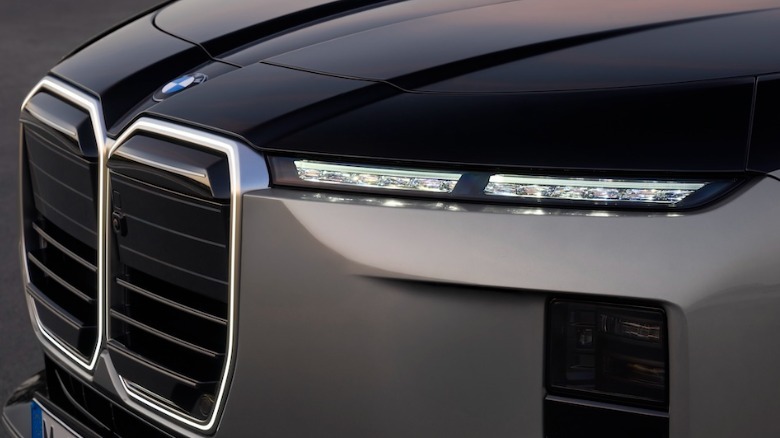
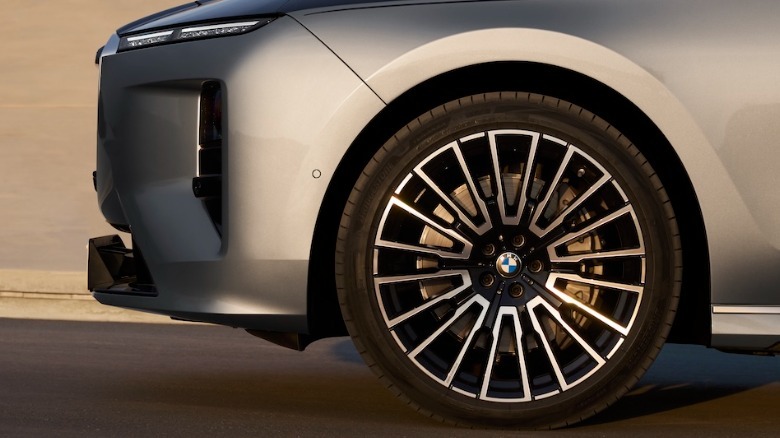
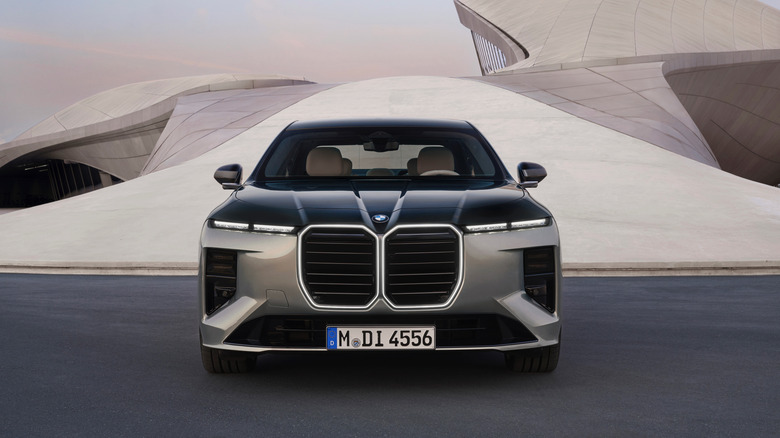
The overall look is a lot cleaner than before. The rear bumper has lost one of its chins, and a new stacked headlight arrangement makes the front end look less busy. A ribbed hood—shared with the Neue Klasse EVs—better frames the oversized grille which, with its optional illumination, makes it appear as if a ghostly butterflied steak is approaching in your rearview mirror at night.
 BMW
BMW
Seeing the 7 Series in a Munich studio, its size is still apparent. Even a crowd of gawking journalists couldn't swallow BMW's biggest sedan. That was also true of the old version, but now the 7 Series feels more confident in its size. In addition to the tweaks at both ends, the overall more restrained use of styling details really helps. Excessive detailing previously made the 7 Series look both big and awkward. Now it looks imposing, if not genuinely pretty.
The styling also remains far from traditional. The 7 Series can't encroach too much on Rolls-Royce Ghost territory, after all. So the BMW must play the role of noveau riche to the Rolls' old money, even at the cost of aesthetic appeal.
So many screens
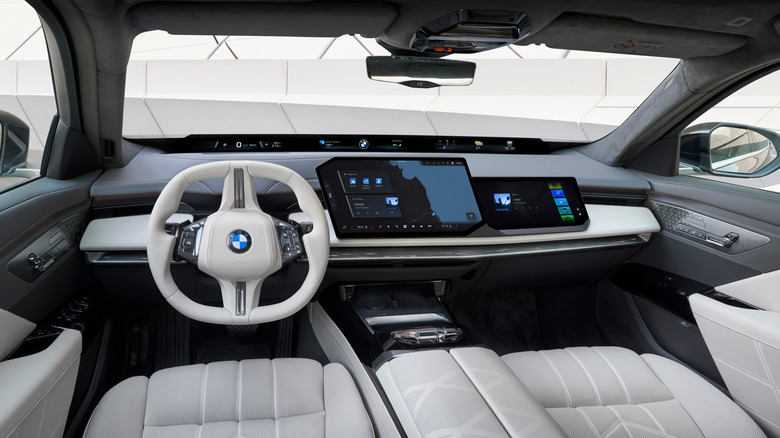
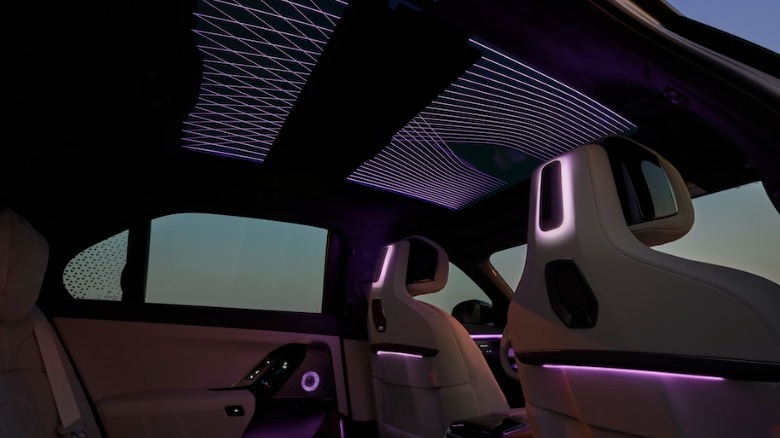
The interior is where the 7 Series most strongly asserts its identity as a high-tech luxury flagship that can go pixel to pixel with the S-Class while still serving as a counterpoint to its Ghost platform-mate.
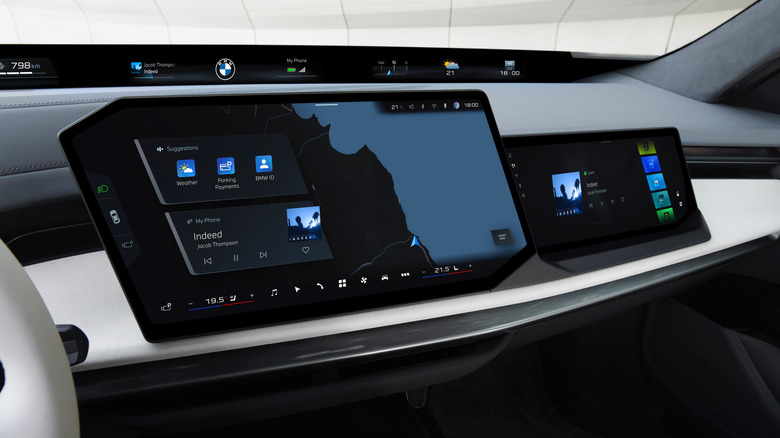
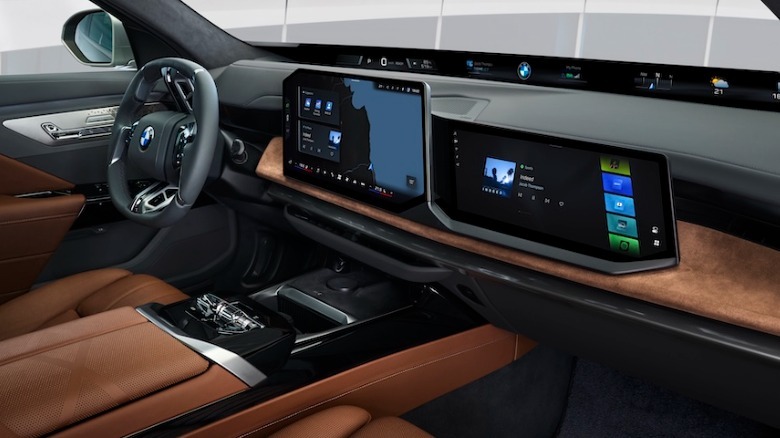
The Panoramic iDrive display from the iX3 and i3 gives the new 7 Series screen-size bragging rights. It stretches from one side of the dash to another, and is positioned high enough to stay in the driver's line of sight. The long, thin shape also means some information that would normally be crammed into a digital instrument cluster is shifted to the side. It's there when you need it but won't distract from vital things like the speedometer.
 BMW
BMW
Controls are handled by a 17.9-inch touchscreen positioned below the Panoramic iDrive screen, as well as haptic steering-wheel controls that illuminate when a given function is selected. For the first time in a BMW, the front passenger also gets a touchscreen of their own. I couldn't find out how well any of this works during the brief time available with the car, but the utility of a dedicated passenger screen remains questionable given the size of the main touchscreen and the panoramic display above it.
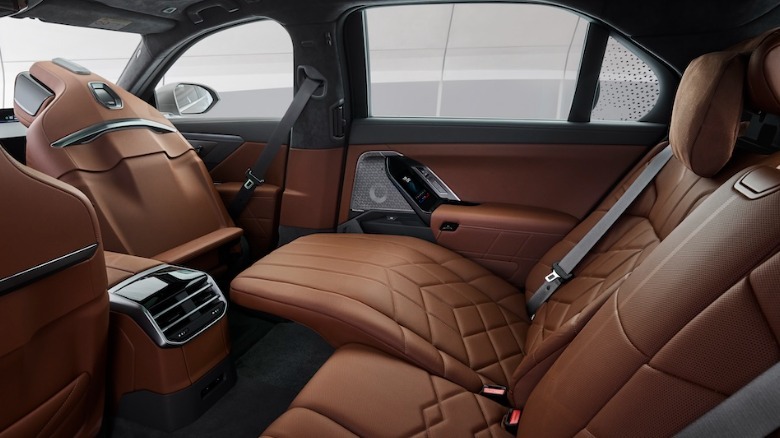
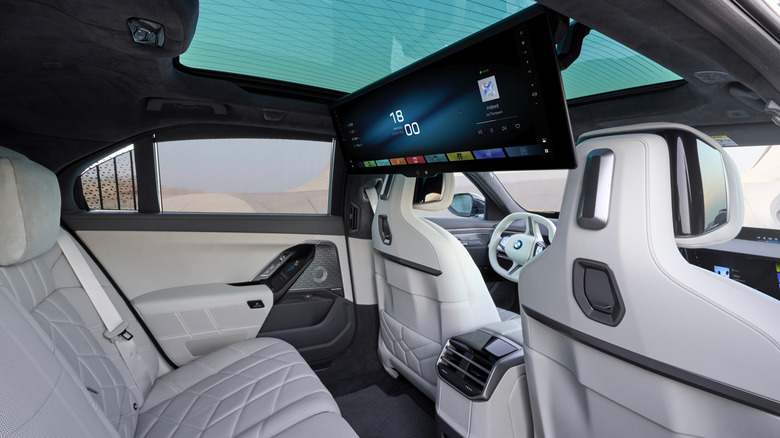
As if that wasn't enough, the 8K 31.3-inch Theatre Screen for rear-seat passengers returns. You can now use it to make Zoom calls, but doing anything other than watching movies (taking advantage of a standard Bowers & Wilkins surround-sound system) seems like a waste.
So many powertrains
As before, the 7 Series lineup will encompass gasoline, plug-in hybrid, and all-electric powertrain options (plus diesels for Europe). There will be nine total variants sold globally, but the U.S. lineup hadn't been confirmed at the time of this preview.
"If you want to be a global car manufacturer, you have to have everything," Koerber, the BMW product SVP, said of the myriad powertrain choices. And if the pre-facelift 7 Series is any indication, the powertrain will make less of an impression than the overall chassis setup and avalanche of tech anyway.
 BMW
BMW
But there's one choice missing on the internal-combustion side—a V8 engine. A turbocharged 3.0-liter inline-six is the only available engine, with or without plug-in hybrid augmentation. First up is the rear-wheel drive 740 and all-wheel drive 740 xDrive, rated at 394 horsepower and 398 pound-feet of torque. That will get the xDrive version from zero to 60 mph in less than five seconds, and up to an electronically-limited top speed of 155 mph.
Scheduled to reach showrooms in the 2027 calendar year, the 750e xDrive plug-in hybrid adds an electric motor, boosting output to 483 hp and 516 lb-ft of torque, and locking in a 4.6-second zero to 60 mph time that's just a few tenths behind the current twin-turbo V8 760i xDrive. Top speed is still 155 mph, or 87 mph in electric mode. Europe gets a more powerful M760e xDrive plug-in hybrid, but wasn't confirmed for the U.S. at press time.
i7 improvements via the Neue Klasse
The BMW i7 has received more positive reviews than its ill-fated rival, the Mercedes-Benz EQS, but the lack of a dedicated EV architecture shows when it comes to efficiency. BMW hopes to improve on that with an infusion of tech from the Neue Klasse.
BMW says the smaller EVs' cylindrical cells and an increase in usable battery capacity from 101.7-kilowatt-hours to 112.5 kWh should net at least miles of EPA range—a significant bump over the current i7's 314-mile range, but still far from Lucid Air territory.
 BMW
BMW
Charging performance also improves, with an increased maximum power rate of 250 kilowatts (up from 195 kW) through a standard NACS port that should allow for a 10%-80% recharge of that big pack in 28 minutes with appropriate fast-charging hardware, BMW claims. Integrated route planning and predictive thermal-management software should get the most out of that charging hardware on road trips.
In the U.S., the i7 launches in 50 xDrive and 60 xDrive forms, with dual-motor powertrains producing 449 hp and 487 lb-ft and 536 hp and 549 lb-ft, respectively. The more powerful i7 60 xDrive will be just as quick to 60 mph as the 750e xDrive plug-in hybrid. But if the current i7 is any indication, it'll be so much smoother and quieter that you won't miss the combustion engine.
A refresh that realizes the 7's potential
There'll be plenty more to experience when it's time to drive the new 7 Series. An active anti-roll system should ensure that the BMW remains one of the best big sedans to drive, while adaptive air suspension will keep rear-seat passengers from spilling their popcorn while enjoying the Theatre Screen.
Alternatively, next-generation driver aids like a hands-free system that works on highways on speeds up to 81 mph, and City Assistant, which BMW says will enable "address to address" semi-automated driving on surface streets when using the navigation system (the car still needs to know where it's going) will raise the driving tech stakes. This is already looking pretty impressive for a refresh.
 BMW
BMW
The new 7 Series does a good job of integrating new features derived from the Neue Klasse with the bones of an existing model. The Panoramic iDrive display looks like it was always meant to go in this car, and adapting the existing CLAR platform for cylindrical cells is something I could imagine other automakers not bothering with. And while it's still not graceful, the exterior styling now at least seems to better reflect the design team's original intent.
So if you're looking to spend at least $101,350 ($107,750 for the i7) on a luxury sedan, you could do worse. The 7 Series is once again a car that will get noticed for the right reasons.