

5 Chinese Smartphones That Could Outshine The iPhone 17
We may receive a commission on purchases made from links.
There's no question that the base iPhone 17 is a genuinely excellent phone. After years of making thew 120Hz display exclusive to Pro models, Apple has finally brought it to its base model. This model also comes with a brighter screen and a 48MP ultrawide camera upgrade. The battery has improved, too, now lasting for more than 24 hours with continuous streaming. For most people, the iPhone 17 is a great phone. But most people aren't all people.
With the iPhone 17's camera topping out at 2x optical zoom with no dedicated telephoto lens, 30W wired and 25W wireless charging, 8GB of RAM, and a USB-C port running on the 2.0 standard, it's clear that there are still issues. For buyers who want a lens with some serious zoom, a fast-charging phone with better performance, or simply more hardware for their money, premium Android phone have been quietly pulling ahead, particularly those coming out of China.
Some Chinese companies' flagship phones now compete at the very top of the market. However, don't start thinking these are cheaper alternatives to the iPhone. They are often priced higher — and they are usually engineered around specific ambitions that Apple simply hasn't prioritized in its base model. The catch, however, is their availability. Most are not officially sold through US carriers, and walk-in retail support is limited or non-existent. Band compatibility also needs to be checked if you are considering importing one. But for the right buyer, the extra effort could well be worth it. Here are five Chinese smartphones that offer something above and beyond what the iPhone 17 has.
Oppo Find X9 Pro
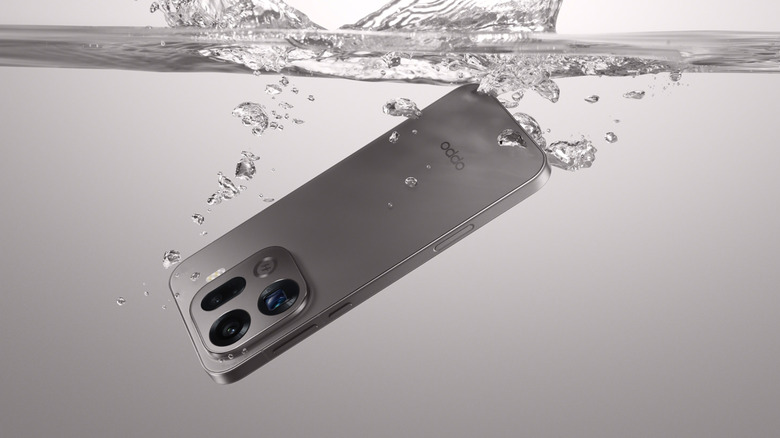
The Oppo Find X9 Pro's headline act is its camera — specifically its 200MP periscope telephoto that puts it in a different league altogether. It can zoom in and capture extraordinary details from distances that are completely alien to most phones, including the iPhone 17. That's not all the Find X9 Pro's camera offers. Hasselblad color calibration and a dedicated spectrum sensor keep everything consistent when switching between lenses, which is something many multi-camera phones tend to struggle with. Additionally, the front camera is 50MP, although it needs good lighting to really shine. In dull conditions, it can fall back to 14MP without warning. AI processing can also be a bit heavy-handed, and it sometimes smears out fine details you may have wanted to keep.
The Oppo's battery is substantially bigger than the iPhone 17's 3,692mAh. This phone carries a 7,500mAh cell that easily delivers enough power to last a full day, and can even go upto 48 hours, with lighter use. 80W wired and 50W wireless charging means going from zero to a full tank takes roughly an hour, although you do need a proprietary SuperVOOC-compatible charger for that 80W speed. The international version gives you 16GB of RAM — that's enough to beat the iPhone — and 512 GB of storage. The USB-C port uses the 3.2 standard, which means transferring files to your computer is very fast.
The Oppo Find X9 Pro costs more than the iPhone 17. If you want one, and you live in the U.S., you'll have to buy it through unofficial channels like eBay.
Honor Magic 8 Pro
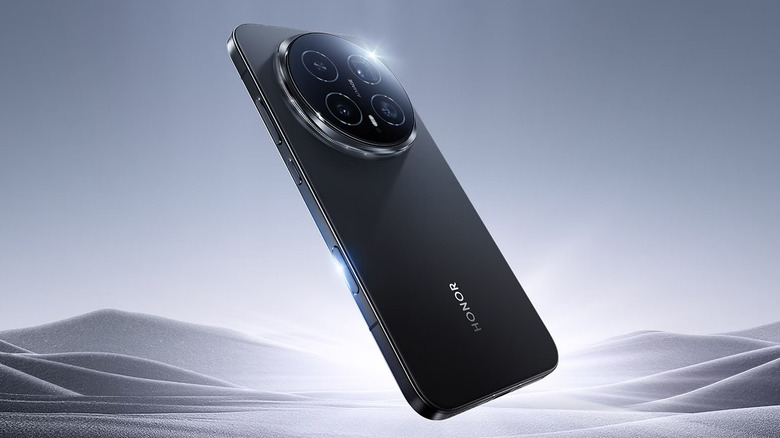
Despite its slim profile, the Honor Magic 8 Pro has a large 7,100 mAh battery for its global model (a little more in the Chinese market, smaller in the EU) that you can charge from zero to full in around 40 minutes with its 100W wired and 80W wireless charging. This is possible thanks to its silicon-carbon battery, which stores more energy per space than a standard lithium-ion cell. GSMArena's testing returned a score of just over 19 hours of active use (for the smaller European battery).
The speakers are genuinely impressive, too — if it's Spotify or YouTube you use your phone for, PhoneArena rated the Magic 8 Pro's audio on a par with BOSE-powered rivals. Watching those music videos is also a joy thanks to the incredibly bright display. At 6,000 nits (Honor's claim), it's bright enough for tasks like video editing on-the-go in direct sunlight. The phone features built-in AI de-focus tech, too, which is designed to reduce eye strain by softening the edges of the screen.
The Honor Magic 8 Pro really caught SlashGear's eye on day one of CES 2026, even if the camera is a bit of a mixed bag. Its telephoto is the standout feature: a 200MP periscope lens with a 3.7x optical zoom. The main camera is also solid, but the ultrawide can sometimes struggle with detail and shadow definition. Furthermore, the selfie camera is impressive at 50MP, but it is fixed-focus only. This phone is unavailable through official channels in the U.S., and if you're looking to buy through other avenues, the price will likely be around $170 more than the iPhone 17.
Xiaomi 17
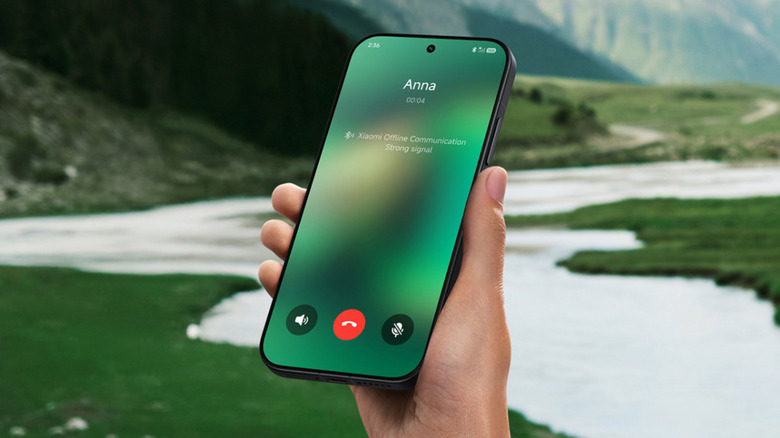
If you prefer a compact-yet-powerful phone, the Xiaomi 17 weighs in at 6.7oz (191g). It's the lightest on this list and compact enough for comfortable one-handed use, which is surprising given it has a 6,330mAh battery inside that's almost double that of the iPhone's. Battery tests are not entirely consistent. PhoneArena tested the Xiaomi 17 and found it ran close to 25 hours of continuous browsing and over 15 hours of video playback, but only 6h 40m of game time. GSM Arena reported a significantly better video playback score, slightly worse browsing score, and a whole 11 hours of gaming.
The 100W wired charging is impressive. Plug it in for around a half-hour, and you should have enough charge to last you well into the next day. You can fill it full from empty in about 45 minutes, too. The display isn't so bright that it will drain the power quickly, either. That said, with a peak of 3,500 nits, it still beats the iPhone 17, and with Dolby Vision and HDR10+ support, streaming content looks genuinely good. However, the software, HyperOS, is bloated with unnecessary apps out of the box and requires a bit of a cleanup.
Still, the camera rounds out an excellent smartphone. Its Leica-tuned triple 50MP system includes a 2.6x optical zoom lens. It also shoots 8K video at 30fps against the iPhone's 4K cap, and that Leica tuning keeps colors consistent and natural across the three lenses when shooting in good light. Buyers in the U.S. will have to look for a phone through unofficial channels, but the Xiaomi 17 is similarly priced to the iPhone 17 — and it offers a good bit more.
OnePlus 15
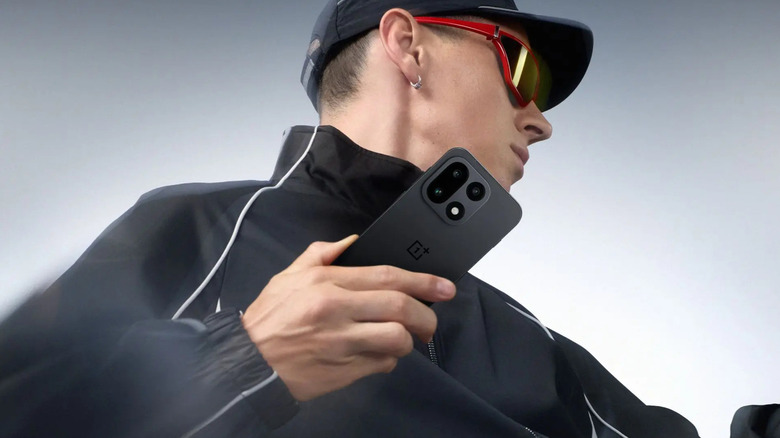
The OnePlus 15 is the most accessible phone on this list for buyers in the U.S., and it was the first mainstream flagship to offer a 165Hz display. That means genuinely smooth scrolling and seamless transitions. And for gamers, well, TechRadar's reviewer pushed "Call of Duty Mobile" to its limits and barely got a flinch back from the phone.
Then there's the battery. The OnePlus 15 packs in a 7,300mAh cell into a body that sits at around the same thickness as the iPhone 17, which has a battery with half the capacity. In fact, SlashGear's review of the OnePlus 15 reveals that you can use it heavily across a full day and still have battery to spare. For a full day of regular use, you only need to plug it in for a quarter-hour, while 30 minutes of wired charging should see the phone well past 80% full, and a full charge takes around 45 minutes.
Camera-wise, you have a triple 50MP system with a 3.5x periscope telephoto. You can also shoot video in 8K, or 4K at 120fps, for footage you can crop or watch on a big screen without losing quality. And that zoom used with action mode makes this phone a good shout for action photography, whether that's sports, pets, or anything that just won't sit still.
Vivo X300 Pro
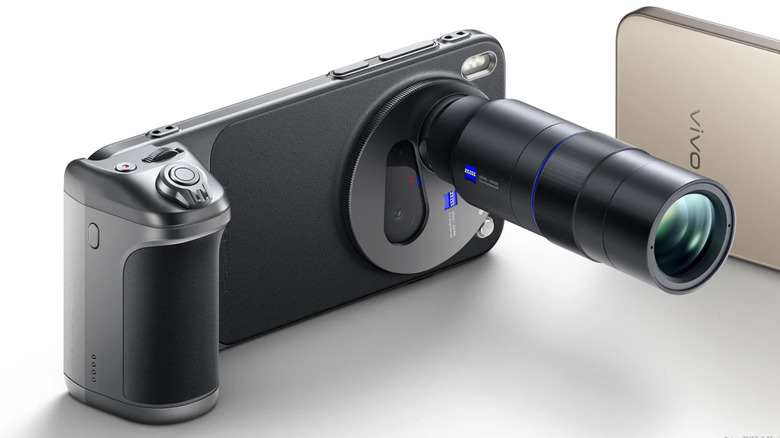
Vivo made a deliberate choice with the Vivo X300 Pro. Instead of putting its 200MP sensor on the main camera, it put it on the telephoto. The result is a zoom that earned the X300 Pro the highest telephoto score PhoneArena had given to any phone at the time of its review. With a 3.7x optical zoom, the lens can pull in detailed subjects from a distance where many smartphones fail — and that high-resolution sensor means you can also crop into those shots without losing much detail. There's even an optional telephoto extender kit that pushes things further to deliver even more detail without AI guessing what might have been there.
On top of outstanding telephoto capabilities, Zeiss optics and T* lens coating handle the color science. You can also shoot ideo in 8K at 30fps or in 4K at 120fps. All in all, it's a phone camera that tops the iPhone 17 Pro, never mind the base iPhone 17. However, battery life only compares favorably with the standard iPhone 17, despite carrying a much bigger cell. But when you consider the large bright screen with a claimed 4,500-nit peak and a GPU that beats the Samsung Galaxy S25 Ultra, the Google Pixel 10 Pro XL, and the iPhone 17 Pro Max, you can start to see why this phone uses a lot of battery.
Unfortunately, the Vivo X300 Pro is not sold through official channels in the U.S. It can be obtained through other sources, but check band compatibility before buying. It should also be noted that the pricing reflects its premium flagship territory — but you do get what you pay for.
Methodology

We compared the specs of the latest Chinese flagships directly against the iPhone 17 and then validated those findings with professional reviews. We considered various stats, but focused on camera quality, battery life and charging speeds, and general performance. The result is a list of phones that have genuinely pulled ahead of Apple — but remember, most are not officially available in U.S. stores.