

12 Overpowered Motorcycles Beginners Should Steer Clear Of
When it comes to starting out in the world of motorcycling, there's a lot of marketing speak that gets tossed around. You'll hear things like "race technology," "so and so horsepower," "carbon fiber," and other terms that make very little sense. For a beginner who is looking to get their first motorcycle, all this jargon is quite confusing and can lead to some very impractical — or downright dangerous — decisions being made. So then, what should a beginner would-be biker look for in their first motorcycle? We can get a pretty good idea by trawling through the many "best beginner motorcycle" lists from publishers like Visordown, MotorcycleNews, MotorcyclistOnline, and MotorcycleCruiser, all of which are review-focused brands that are very respected by the community.
Many of the bikes on these brands' lists come with engines around the 500cc mark or lower, with horsepower figures hovering between 50 and 80 hp. Additionally, when you look at motorbikes marketed as "entry-level" by big legacy brands, things like the torque curves and peak RPM figures are also much more docile.
However, there are a great many bikes that an inexperienced beginner might think are good starter motorcycles, the truth is that they're actually not. Many of the ones we're about to list have extreme amounts of power from an otherwise innocuously-sized engine, while others would have unmanageable torque from low RPMs. The point is, none of these bikes look inherently bad for a beginner, but they are — they should be saved for later down the line.
Harley-Davidson Sportster S
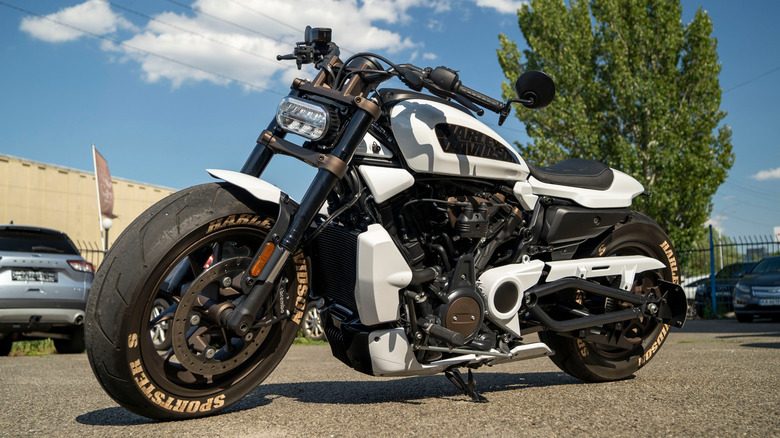
Throughout the history of Harley-Davidson, the company has produced some of the most iconic motorcycles known to mankind. There is absolutely no doubt that Harley is one of the greats when it comes to making bikes, but this doesn't mean that every bike it makes is suitable for beginners; very few are, actually. Take the Harley-Davidson Sportster S for instance. In recent years, the bike has shipped with the Revolution Max 1250T engine from Milwaukee House. Displacing a gigantic 1,252 cc across the now-legendary V-twin dual-cylinder layout with a bore of 105 mm and a stroke of 72.3 mm, the engine makes a whopping 121 hp along with 92 lb-ft of torque.
The peak figures for the power and torque come in at 7,500 and 6,000 RPMs respectively, which are points that could catch a beginner off-guard as the delivery is anything but smooth. Furthermore, the weight of the bike is quite unmanageable for beginner riders, coming in at 503 pounds with all fluids in place. Now, normally, that weight wouldn't be too bad all things considered, but when you look at the overall length of the bike — just 89 inches long — and the very set-back seat position, the problem becomes clear. The majority of the bike's quarter-ton weight would be concentrated towards the front, which gives it that sporty handling characteristic but also makes it easy to over or understeer for beginner riders.
Yamaha MT-07
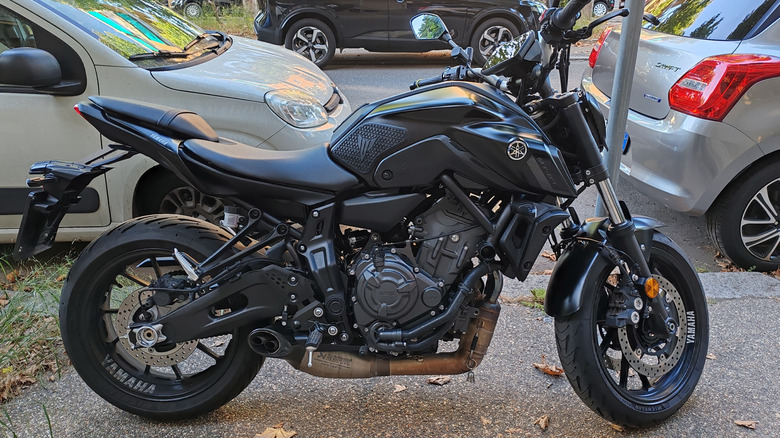
Reports abound of the MT-07, a rather plain-jane-looking offering from the Japanese company, Yamaha, being described as a "wheelie monster," with many owners posting videos to YouTube and sharing stories on forums about how their MT-07 suddenly decided to pop the front wheel in the air. In terms of specifications, the figures aren't too bad, coming in with a wet weight (which means with all fluids accounted for) of 403 pounds, a seat height of 32 inches, and an overall length of 81 inches.
The engine in the MT-07 is, in 2026, a 42 cubic inch (689 cc) twin-cylinder unit that is paired to a six-speed transmission, routing power to the rear wheel via chain final drive. All that is pretty standard; and even the power output stands at a fairly reasonable-but-on-the-higher-side 73.4 hp, along with 50 lb-ft of torque.
The main issue comes in when one looks at the torque curve of the MT-07, because the bike makes peak torque from just 6400 RPM. Furthermore, while the curve is "linear" (or smooth in other words), the horsepower is not, with a significant way to go to peak hp while peak torque is met. In other words, peak power comes in much later at about 8600 RPM. This delta in torque though relatively few RPM cycle increases is what makes the bike bad for beginners, leading novice riders popping wheelies left and right.
Yamaha MT-09
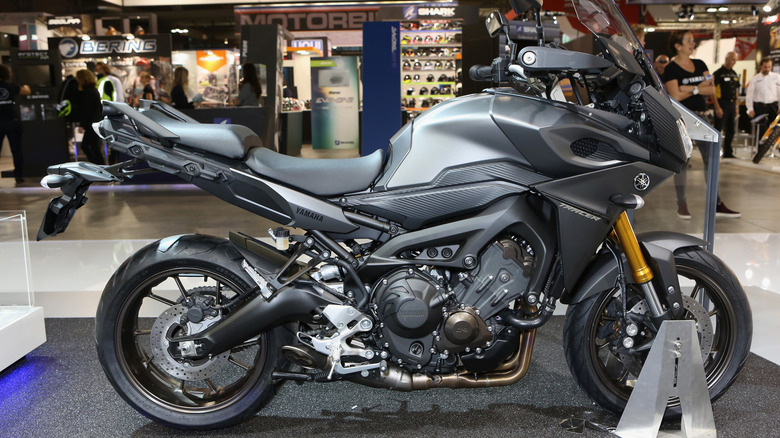
To the untrained eye, the Yamaha MT-09 looks like nothing out of the ordinary. It's even a bit of a sleeper bike. While it looked like your run-of-the-mill commuter motorcycle that wouldn't look out of place in an office parking lot, it's actually quite performant. Too much so for beginners, in fact — it ships with a wet weight of 425 pounds, an overall length of 82 inches, and a seat height of 33 inches. All those features are not the deal breaker; the engine is. It is a 54 cubic inch (890 cc) unit that spreads that displacement across two cylinders, via a bore of 78 mm and a stroke of 62.1 mm.
The final power output figures stand at an eye-watering 115 hp, along with 68 lb-ft of torque, which gets sent to the wheel via a six-speed transmission. Peak torque comes about at a reasonable 7,000 RPM, while peak horsepower takes a lot longer, coming in at 10,000 RPM. As such, the MT-09 is not only too powerful for a beginner; like the MT-07, it has a somewhat unpredictable power delivery. The good news is that as riders get more experience riding more beginner-friendly bikes around, this will cease to be a problem. In other words, the MT-09 has all the makings of a great bike, just not for absolute novices.
KTM 790/890 Duke
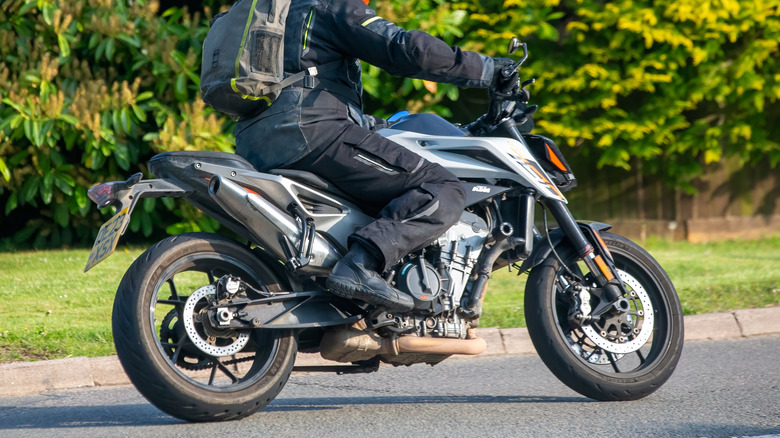
Austrian manufacturer KTM, which stands for Kraftfahrzeuge Trunkenpolz Mattighofen, makes the Duke 390, one of the most beginner-friendly bikes out there. It's therefore confusing to see the same model line included on our list. However, the Duke 790 and 890, while being from the same family, are extremely different beasts. For starters, the 790 weighs just 412 pounds in running order, and comes with a 799 cc, two-cylinder engine making 95 hp and 64 lb-ft of torque.
The 890 isn't much better in this regard, making 120 hp and 73 lb-ft of torque from an engine that displaces 890 cc across the same twin cylinders. Both bikes utilize a six-speed transmission and feature liquid cooling, as is expected. Peak torque for the 780 comes in at 8,000 RPMs, while the 890 makes its peak torque slightly earlier, at 7,750 RPMs.
That's the main issue of both of these bikes — they're massively overpowered. Smooth power delivery aside, they're just unsuitable for beginner riders. For those who are fans of the brand or who like the design aesthetics of the bike, choosing a smaller, more manageable option like the KTM 390 is definitely the way to go. You can always upgrade to a larger-displacement bike down the line once you've gotten more experience as a rider.
Suzuki SV650
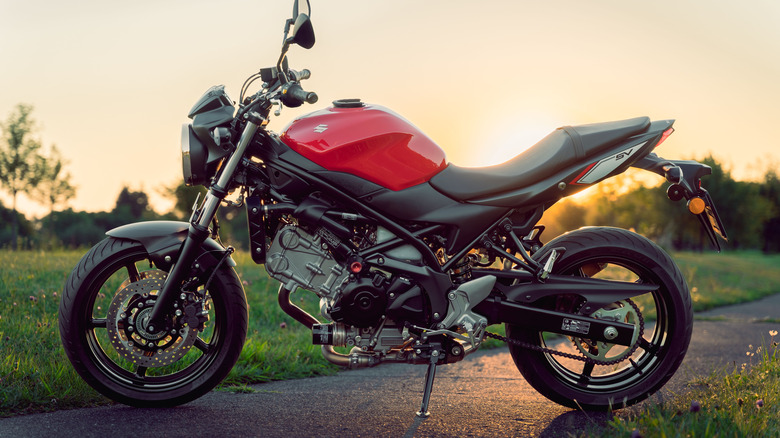
The SV650 from Suzuki comes with a 645 cc, V-twin cylinder engine making 75 hp along with 47 lb-ft of torque, featuring a six-speed transmission. A key benefit of the SV650, touted by many reviewers, is its stellar fuel economy, which comes in at about 40 mpg. With a fuel capacity of 3.8 gallons, that means riders can expect about 152 miles of range between fill-ups. Sadly though, the SV650 from Suzuki remains a poor choice (in our eyes) for a beginner motorcycle, partly due to most of the torque from its V-twin becoming available from a mind-bogglingly-low 3000 RPMs.
For reference, if one was to turn the accelerator handle just half of the way (on most models), you would reach 3000 RPMs without breaking a sweat. Now, this early torque does mean that the SV650 will almost never struggle to accelerate no matter what speed you're at or what gear you're in, but it's just not beginner-friendly in the long run. Aside from getting riders used to an uncommon power delivery system, the low-RPM torque also makes it difficult to adjust to other models down the line. When you move to another bike after growing accustomed to not having to account for RPM jumps and torque kicking in late, it's a disaster waiting to happen. However, in all other regards, the SV650 remains a fantastic offering that should be explored later down the line.
Kawasaki Z900
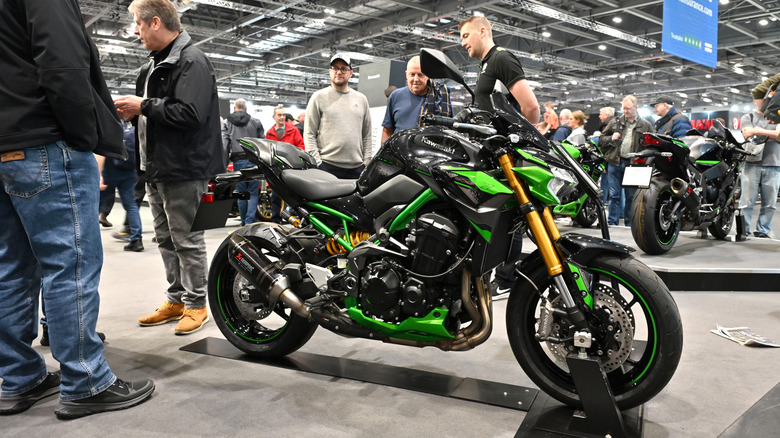
The "Z" line of motorbikes from Kawasaki has the naked versions (bikes with minimal fairing and body paneling) of their regular sportbike lines. To the untrained eye, the Kawasaki Z900 simply looks like a bored-out version of the Z650 — which is a good beginner bike, to be clear — but the truth is anything but. Under this sleek, tubular, matt-black frame lies a 948 cc, four-cylinder engine that arrives paired to a six-speed transmission.
Almost being a liter-bike itself, its power figures are expectedly insane, coming in at 124 hp and 73 lb-ft of torque. Furthermore, peak torque kicks in at 7,700 RPM, while peak RPMs come in a tad bit later at 9,500 RPM. There's also the topic of bulk; the Z900 comes in with a running-order weight of 467 pounds and is a manageable 82 inches in length. So, while the bike certainly isn't for beginners or the faint of heart, it's certainly an exciting model that every biker should ride at least once. After all, it's not every day that a legacy brand makes a street-legal hypernaked rocket bike.
Honda CB1000R
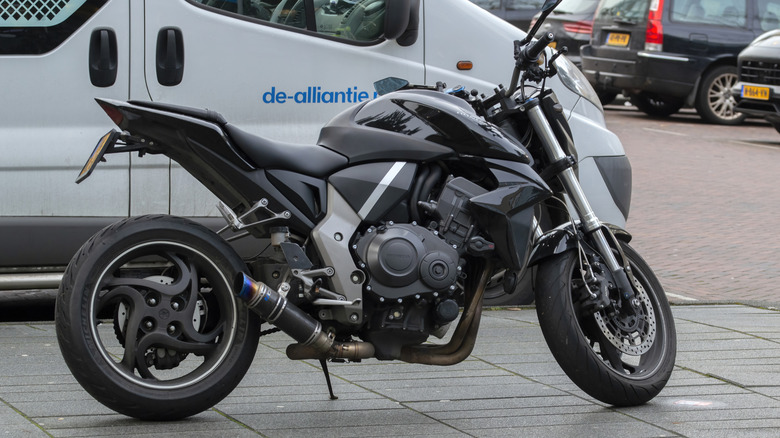
There is a common consensus in the motorbiking community: A liter-bike (a bike with a displacement of a cubic liter or more) is definitely not the place to start out. Bikes like the Honda CB1000R are exactly why this even needed to be a discussion in the first place, especially since its looks belie its true performance.
At first glance, you'd be forgiven for thinking that the CB1000R is just another run-of-the-mill weekend sportbike meant to make a lot of noise, and that's about it. However, with 143 hp and 77 lb-ft of torque delivered from its 998 cc, quad-cylinder engine, this notion is put to rest with a half-turn of the accelerator. All that power is shot straight to the rear wheel via a six-speed transmission featuring chain final drive.
In terms of the bike's dimensions, the overall length sits at 83 inches, while the 33 inch seat height with a fairly upright riding position makes the CB1000R quite comfortable, even for long distances. The bike is also on the heftier side — another con for beginner riders — as it tips the scales at 466 pounds with all fluids accounted for. With that said, we'll take you back to the rule of thumb when looking for a beginner bike: Try to find something under 500 cc and around 70 hp, and you'll be golden.
Suzuki GSX-S750
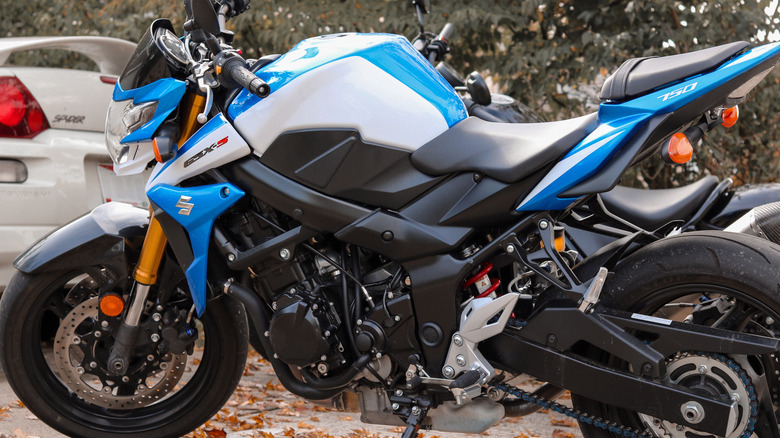
750 cc isn't an insanely-high displacement. It's certainly on the heftier side, but that isn't too implausible for talented riders. At least, that's the argument that many beginners have in their heads when looking at one. However, we present the best counter-argument to this sentiment in the form of the Suzuki GSX-S750. It is essentially just a scaled-down version of the company's sport-focused Suzuki GSX-R750, known as the "Gixxer" fondly in the community.
Yet even the most die-hard GSXR fans will never tell you that it is a good beginner bike, and that's with good reason. The slightly-scaled-down GSX-S750 comes with a 749 cc engine that has a bore of 72 mm and a stroke of 46 mm, spreading its displacement across four cylinders.
The bike features chain final drive, and has a six-speed transmission that has a wet multiplate clutch, like many of the other models on this list. However, the GSX-S750 makes an insane 113 hp, along with 60 lb-ft of torque, while weighing a reasonable 465 pounds; in totality; taken altogether, that's gextremely unmanageable for a beginner rider. The scary bit is that the 750 probably seems like a good middle ground between 500 and 1000 cc bikes, perfect for those who "want a little more power" but not too much. Well, considering that the 750 makes borderline econobox car hp, it should be shelved — at least for novices.
Triumph Speed Twin
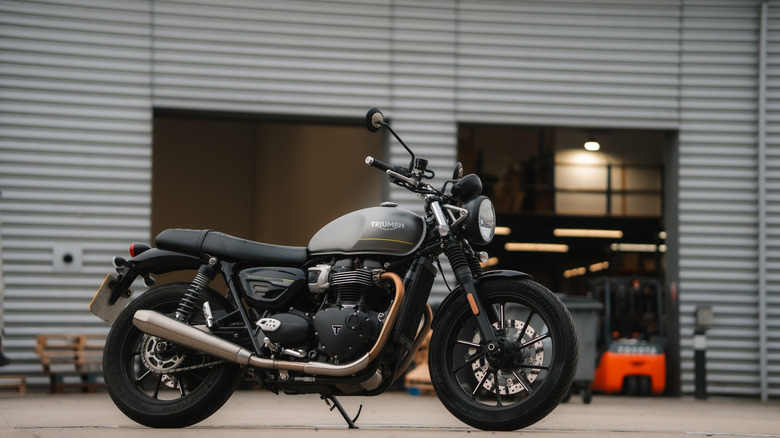
For starters, the Speed Twin from Triumph is pretty hefty, coming in with a running-order weight of 476 pounds. It's not exactly compact either, with a wheelbase length of 56 inches and a seat height of 32 inches. Speaking of the seat, it too, like the Harley-Davidson Sportster S, features one that is significantly behind the bike's center of gravity, which gives it great handling characteristics.
The main con of this layout is that it would require a lot of experience to know how to get the most out of that great handling. That's not something beginner riders would have. The engine in the Speed Twin is a 1,200 cc, twin-cylinder unit that makes a whopping 104 hp, along with a respectable 83 lb-ft of torque. However, the delivery of that torque is exciting for experienced riders but borderline sketchy for novices.
At just a hair over 3,000 RPM, the bike would be making the majority of its 77 lb-ft of torque (about 70 hp at 3,150 RPM); but the hp curve takes a while to catch up. Until about 5,000 RPM, the bike makes more torque than hp — which is okay — but between 5,000 and 6,000 RPM, the opposite happens. There is a jump to about 90 hp with a fall-off in torque to about 60 hp at this time, which would create unmanageable lurching for inexperienced riders. So, while it's a brilliant bike overall, beginners should stay away from it.
BMW F850GS and F900R
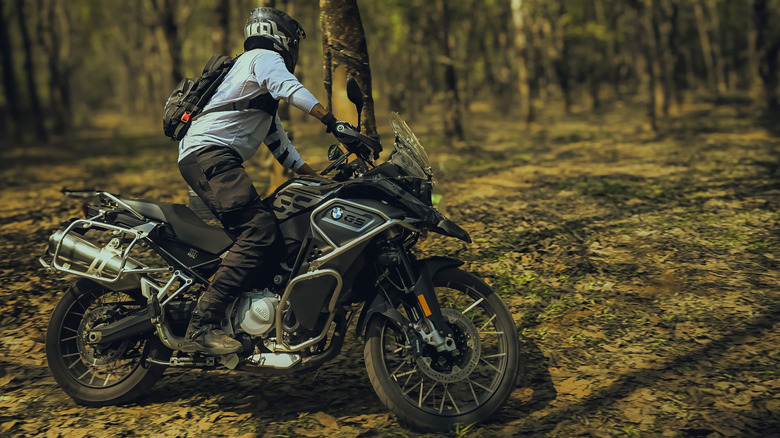
These two bikes, much like the KTM Dukes above, have performance that belies both the looks and reputation of the model line. For starters, the two seem like perfectly decent middleweight bikes, but both have three-digit horsepower figures, with power delivery that many beginners would find unmanageable unless they are extremely familiar with controlling rev ranges.
The F850GS has an 853 cc, two-cylinder engine that makes 95 hp with 68 lb-ft of torque, with peak power arriving at 8,250 hp, and peak torque coming much faster, at 6,250 RPM. The F900R, for its part, comes with a very similar 895 cc, twin-cylinder engine; though it makes 105 hp and 68 lb-ft of torque, with similar RPM peaks.
Where the F850GS weighs 505 pounds and is 91 inches long, the F900R comes in at 459 pounds in running order, with a length of 84 inches. Furthermore, both bikes have a six-speed transmission that drives the rear wheel through chain final drive. Much like some other units that we've looked at so far, the torque curve (in turn, the power delivery) are what make both of these bikes problematic for new riders. With jumps between the power seen at the rear wheel in relatively low RPMs, novices would struggle to control the throttle.
Indian FTR 1200
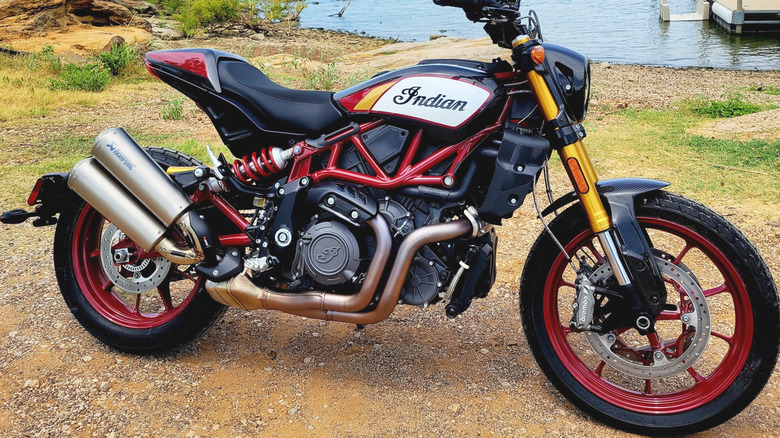
For those who are unaware, the Indian FTR is a series of sport-naked bikes from the major American company that is best-known for its long-distance cruiser motorcycles. In recent years, the FTR has shipped with a 1,203 cc engine that spreads its displacement across the brand's legendary twin cylinders and comes with a six-speed transmission.
The total power output for this monster stands at 123 hp, along with 87 lb-ft of torque; peak torque clocks in fairly low, at 6,000 RPM. The bike is also quite light (for a 1200 cc bike, anyway), coming in with a weight of 508 pounds with all fluids installed. This means the Indian FTR is supremely overpowered, while being decently light for the class. This is a good thing for bikers that know how to control it. The length is also on the higher end, coming in at 88 inches in total; the seat height is an admittedly decent 31 inches. The reason this bike doesn't suit beginners is power, plain and simple: There's too much of it, delivered too quickly and in an unpredictable fashion.
Indian Scout
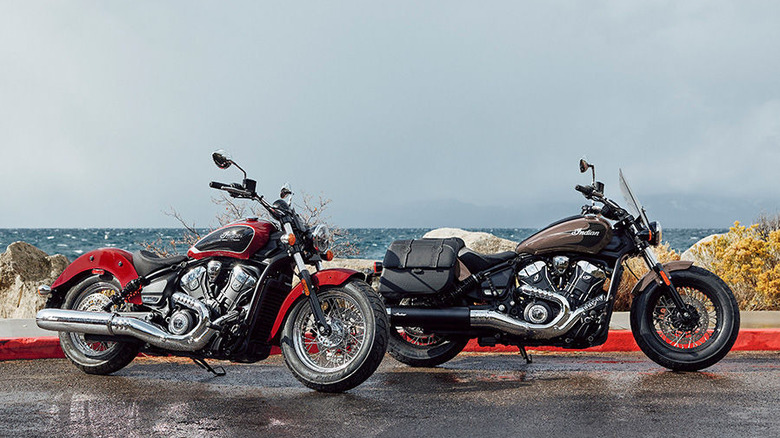
In much the same vein as the Indian FTR above is the Indian Scout. As of early 2026, the Scout is offered in five different variations, all of which are priced in the low five figures. Both engines are V-twin units; but it's the flagship bike, called the Indian Super Scout, that we want to talk about.
When it comes to the Super Scout, it produces a massive 105 hp, along with 82 lb-ft of torque while weighing a (relatively) hefty 587 pounds. It's quite sporty for a cruiser, and is the kind of bike that would encourage riders to give the throttle just a little bit more oomph — which is why it's problematic. The Super Scout isn't suited to new riders simply because the torque delivery doesn't match the vast amounts of power it has; the "road feel" while riding would be very different from reality.
Methodology
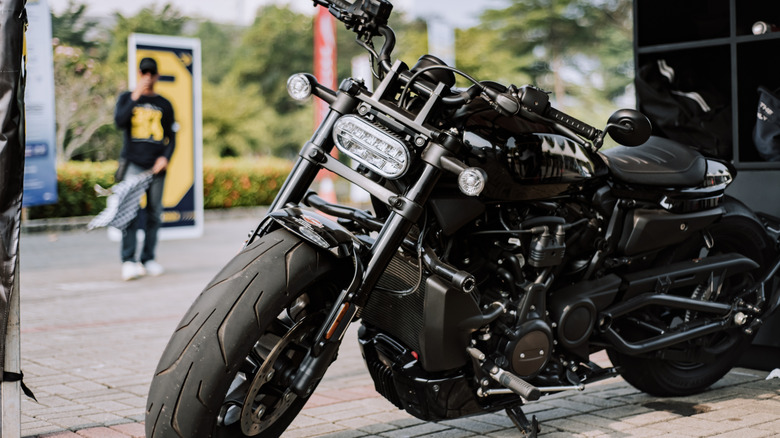
We wanted this to be a list of bikes that beginners might consider that aren't suitable for novices. First, we began by narrowing our search to bikes above 500 cc and below 1200 cc — which is a range that new riders are likely to want to buy in. Then, we identified which of these models made above 70 hp, as this would result in a power-to-weight ratio of 1:6.5 or at least something in that range.
Having factored in the weight, we analyzed a dyno torque curve for each model that we listed, published by reputable companies like CycleWorld. We looked for models where there was mismatch between the power and torque kicking in, which would be a problem for beginners. Lastly, we made sure that every model on this list was still on sale within the past five years, as we think that no beginner would be buying a bike older than that for a starter.